
Have Questions? Talk to Expert (Binod)
The Upper Dolpo Trek is one of the most remote, spectacular, and culturally fascinating trekking adventures in Nepal. Located in the far western Himalayas, Upper Dolpo remains a hidden world where ancient Tibetan traditions, pristine wilderness, sacred monasteries, and dramatic mountain landscapes have remained virtually unchanged for centuries.
Opened to foreign trekkers only in 1989, Upper Dolpo is a restricted region that offers a rare opportunity to experience an untouched Himalayan environment far away from crowded trekking routes. Unlike Everest Base Camp or Annapurna Circuit, Upper Dolpo receives only a small number of visitors each year, preserving its authentic culture and natural beauty.
Himalayan Adventure Intl Treks proudly offers a fully supported 27-day Upper Dolpo Trek designed for adventure seekers who want to explore Nepal's most isolated and mystical region. This extraordinary camping trek takes you through the breathtaking landscapes of Shey Phoksundo National Park, turquoise alpine lakes, hidden valleys, high mountain passes above 5,000 meters, traditional Tibetan villages, and centuries-old Buddhist and Bon monasteries.
Upper Dolpo lies in the rain-shadow region of the Himalayas, bordering Tibet. The area is deeply influenced by Tibetan culture, language, religion, architecture, and lifestyle. Walking through the villages of Ringmo, Dho Tarap, Saldang, and Yangtser feels like stepping back in time into an ancient Himalayan civilization.
The trek features stunning natural wonders including the world-famous Shey Phoksundo Lake, sacred Crystal Mountain, Shey Gompa Monastery, Kang La Pass (5,360m), and remote trans-Himalayan landscapes that resemble the Tibetan Plateau. Along the route, trekkers may encounter blue sheep, Himalayan griffons, musk deer, Himalayan wolves, yaks, and even signs of the elusive snow leopard.
For those seeking a genuine wilderness experience, the Upper Dolpo Trek is one of Nepal's finest adventures. The journey combines challenging trekking, extraordinary scenery, rich cultural immersion, and complete isolation from modern civilization.
Upper Dolpo is not just another trekking destination. It is a journey into one of the last hidden Himalayan kingdoms where traditions, landscapes, and spirituality remain intact.
Reasons to choose Upper Dolpo Trek include:
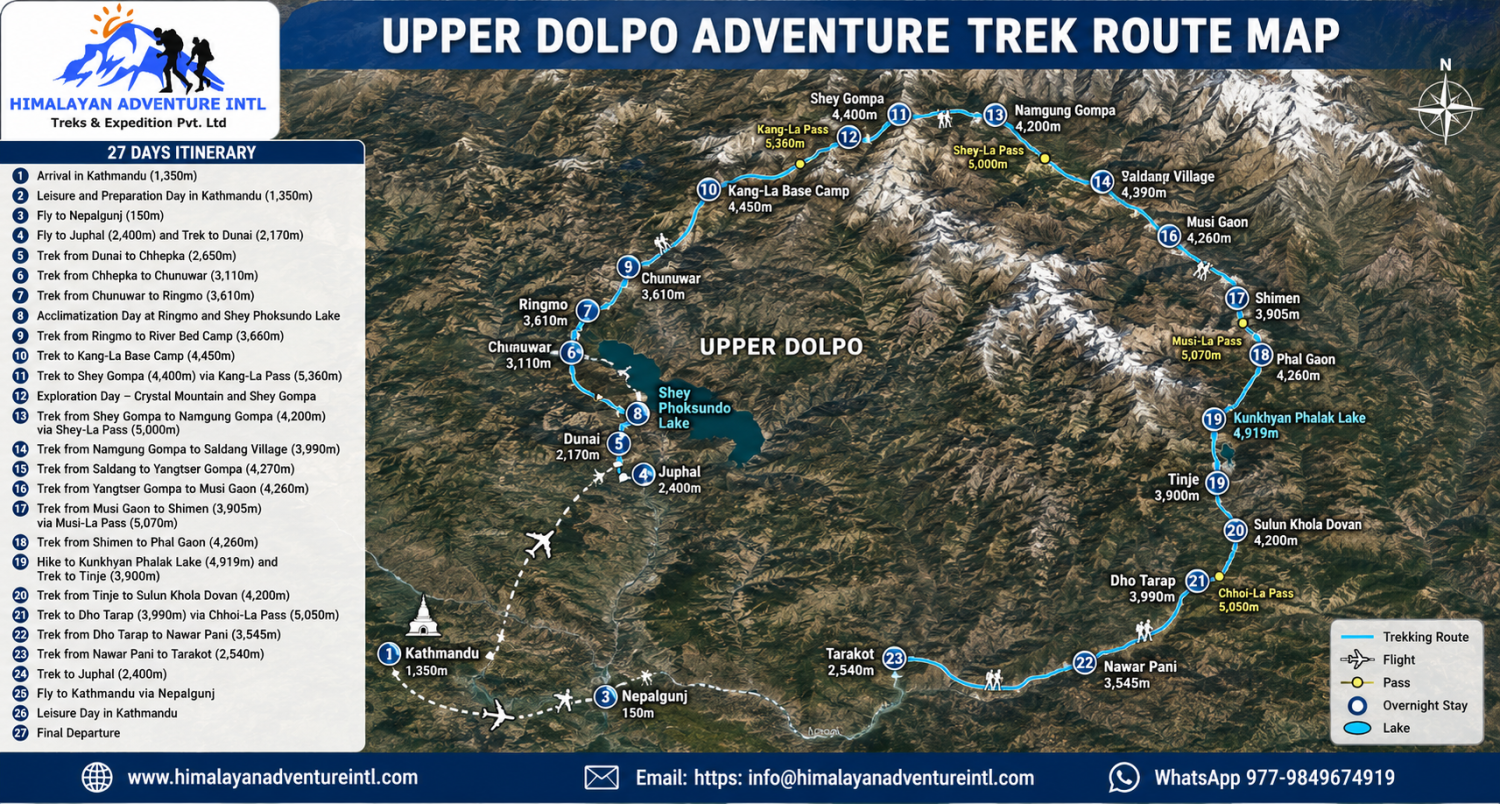
The journey begins with a scenic flight from Kathmandu to Nepalgunj and another mountain flight to Juphal, the gateway to Dolpo.
From Juphal, the trail follows the Bheri River Valley through Dunai and enters Shey Phoksundo National Park. Trekkers gradually ascend through forests, waterfalls, and remote settlements until reaching the breathtaking Shey Phoksundo Lake.
After acclimatization, the trek continues into Upper Dolpo's restricted region. The route crosses the challenging Kang La Pass before reaching the sacred Shey Gompa Monastery and Crystal Mountain.
The adventure then continues through remote settlements such as Namgung, Saldang, Yangtser, Musi Village, Shimen, Tinje, and Dho Tarap. Multiple mountain passes connect isolated valleys where centuries-old traditions still flourish.
The final section follows the Tarap Valley and Bheri River back toward Juphal before returning to Kathmandu via Nepalgunj.
One of the major highlights of the Upper Dolpo Trek is Shey Phoksundo Lake.
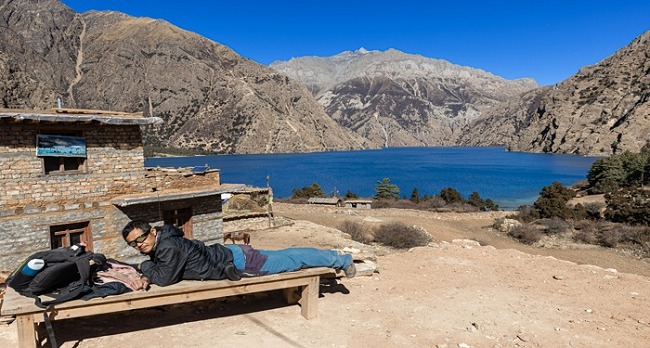
Situated at 3,611 meters above sea level, this magnificent lake is famous for its brilliant turquoise color and stunning mountain backdrop. The lake is Nepal's deepest lake and one of the most beautiful alpine lakes in the Himalayas.
The surrounding cliffs, pine forests, waterfalls, and snow-capped peaks create a magical atmosphere that leaves a lasting impression on every visitor.
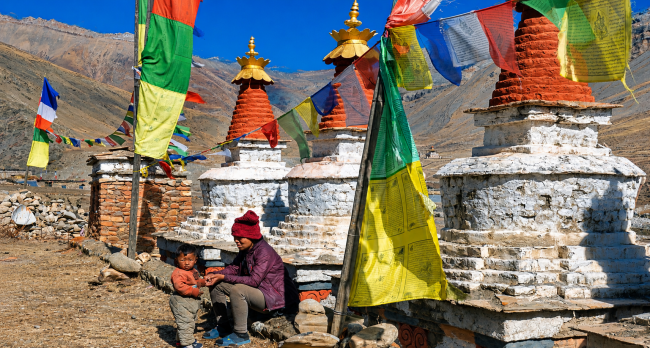
Ringmo Village, located near the lake, offers a fascinating glimpse into traditional Tibetan culture. The village is home to stone houses, prayer flags, monasteries, and welcoming local communities.
Shey Gompa is one of the oldest and most sacred monasteries in Dolpo.
Built more than 800 years ago, the monastery serves as an important center of Tibetan Buddhism and attracts pilgrims from across the Himalayan region.
Located beneath the sacred Crystal Mountain, Shey Gompa is considered one of the holiest religious sites in western Nepal.
Every twelve years, the famous Shey Festival attracts thousands of pilgrims who gather for spiritual ceremonies, rituals, and prayers.
The peaceful environment surrounding the monastery provides a unique opportunity to experience Himalayan spirituality in its purest form.
Known locally as Riwo Drugdra, Crystal Mountain is regarded as a sacred mountain by both Buddhists and Bon followers.
Pilgrims believe that completing a circumambulation around Crystal Mountain brings spiritual purification and blessings.
The mountain's unique geological formations, quartz-rich cliffs, and spiritual significance make it one of the most revered landmarks in Upper Dolpo.
Upper Dolpo preserves one of the oldest surviving Tibetan cultures in the Himalayas.
The local communities maintain traditional lifestyles centered around agriculture, yak herding, trade, and Buddhism. Ancient customs, festivals, language, dress, and architecture continue to thrive despite the region's remoteness.
The majority of residents practice Tibetan Buddhism while some villages continue to follow the Bon religion, which predates Buddhism.
Visitors often encounter:
The warmth and hospitality of Dolpo's people create memorable cultural experiences throughout the trek.
Upper Dolpo lies within Shey Phoksundo National Park, Nepal's largest national park.
The park protects diverse ecosystems ranging from dense forests to alpine meadows and high-altitude deserts.
Wildlife found in the region includes:
The region is also famous for valuable medicinal herbs such as Yarsagumba and other alpine plants.
The Upper Dolpo Trek is primarily a fully camping-supported expedition.
Due to the remoteness of the region, tea houses and lodges are limited. Himalayan Adventure Intl Treks provides complete camping logistics throughout the journey.
Our camping services include:
Camping allows trekkers to explore areas where tourism infrastructure does not exist while enjoying maximum flexibility and comfort.
USD 4,550 Per Person
Includes:
USD 3,850 Per Person
Includes all services mentioned above.
USD 3,550 Per Person
Includes all services mentioned above.
Upper Dolpo is a restricted region requiring special permits.
All permits are arranged by Himalayan Adventure Intl Treks.
Trekkers must obtain:
The permit contributes to conservation efforts and protection of wildlife and cultural heritage.
Road travel is possible but requires long driving hours and depends on road conditions.
For comfort and time efficiency, flights remain the preferred transportation option.
Spring is one of the best seasons for Upper Dolpo Trek.
Advantages:
Unlike most regions of Nepal, Dolpo lies in a rain-shadow area.
Advantages:
Autumn is considered the most popular trekking season.
Advantages:
Winter trekking is possible but extremely challenging.
Challenges:
Most trekkers avoid Upper Dolpo during winter.
The Upper Dolpo Trek is classified as a strenuous trekking adventure.
Challenges include:
Trekkers should have:
Proper acclimatization is essential.
Highest points include:
Our itinerary includes acclimatization days and gradual altitude gain to minimize the risk of Acute Mountain Sickness (AMS).
Our experienced camping crew prepares nutritious meals throughout the journey.
Meals include:
Breakfast:
Lunch:
Dinner:
Special dietary requirements can be arranged upon request.
Himalayan Adventure Intl Treks is a trusted local trekking company specializing in remote Himalayan expeditions.
Our advantages include:
Our mission is to provide authentic trekking experiences while supporting local communities and protecting the fragile Himalayan environment.
Recommended gear includes:
Comprehensive travel insurance is mandatory.
Coverage should include:
The Upper Dolpo Trek is one of Nepal's most extraordinary trekking adventures. Combining breathtaking landscapes, sacred monasteries, remote villages, wildlife encounters, and authentic Tibetan culture, this trek offers a rare opportunity to explore one of the world's last hidden Himalayan regions.
From the stunning turquoise waters of Shey Phoksundo Lake to the spiritual atmosphere of Shey Gompa and the challenging mountain passes above 5,000 meters, every day brings new discoveries and unforgettable experiences.
For travelers seeking a true wilderness expedition far beyond conventional trekking routes, the Upper Dolpo Trek with Himalayan Adventure Intl Treks is the ultimate Himalayan journey.
Join us for this remarkable 27-day camping-supported adventure into the hidden kingdom of Upper Dolpo and discover a side of Nepal few travelers ever experience.
Welcome to Nepal, the gateway to the Himalayas and the beginning of your unforgettable Upper Dolpo adventure. Upon arrival at Tribhuvan International Airport in Kathmandu, a representative from Himalayan Adventure Intl Treks will warmly welcome you and transfer you to your comfortable hotel. During the drive through the lively streets of Kathmandu, you will get your first glimpse of Nepal's fascinating mix of ancient traditions and modern city life.
After checking into your hotel, take some time to relax and recover from your international journey. Depending on your arrival time, you may explore the nearby neighborhoods, visit local cafés, or stroll through the colorful streets of Thamel, Kathmandu's famous tourist district. The area is filled with trekking shops, traditional handicrafts, restaurants, and cultural attractions.
In the evening, our trekking team will conduct a welcome briefing. During this session, you will meet your guide and fellow trekkers, review the complete itinerary, discuss safety procedures, and receive important information about altitude, weather conditions, and equipment requirements for the remote Upper Dolpo region.
Kathmandu, surrounded by hills and dotted with ancient temples, offers a perfect introduction to Nepal's rich cultural heritage. The city has served as a crossroads of trade, religion, and mountain exploration for centuries. As you settle into your hotel, excitement builds for the incredible journey ahead into one of Nepal's most isolated and culturally preserved Himalayan regions.
Overnight at a hotel in Kathmandu.
Today is reserved for relaxation, sightseeing, and final preparations before entering the remote mountains of Dolpo. After breakfast, you have the freedom to explore Kathmandu at your own pace. Many trekkers choose to visit UNESCO World Heritage Sites such as Swayambhunath (Monkey Temple), Boudhanath Stupa, Pashupatinath Temple, or Kathmandu Durbar Square.
For those interested in culture, Kathmandu offers an excellent opportunity to observe daily Nepalese life. The bustling markets, sacred shrines, prayer flags, and incense-filled courtyards create a unique atmosphere found nowhere else in the world. Every corner of the city reveals centuries of history and spiritual tradition.
This day is also important for last-minute shopping. Since Upper Dolpo is one of Nepal's most remote trekking destinations, it is essential to ensure all personal gear is complete. Trekking poles, warm clothing, batteries, snacks, and personal medications can be purchased in Thamel if needed.
In the afternoon, your guide will conduct a detailed gear inspection to make sure everyone is properly equipped for the high-altitude wilderness. Any questions regarding the trek, camping arrangements, or health concerns can be addressed during this session.
As evening approaches, enjoy a traditional Nepalese dinner and prepare mentally for the extraordinary expedition ahead. Tomorrow you leave Kathmandu and begin your journey toward western Nepal and the hidden valleys of Dolpo.
Overnight at a hotel in Kathmandu
After breakfast, transfer to the domestic airport for a scenic flight to Nepalgunj, a bustling city located in Nepal's western Terai region near the Indian border. The flight takes approximately 55 minutes and provides spectacular views of Nepal's diverse landscapes.
As the aircraft leaves Kathmandu Valley behind, the scenery gradually changes from green hills and mountain ridges to the flat tropical plains of western Nepal. On clear days, magnificent Himalayan peaks can be seen stretching across the northern horizon.
Upon arrival in Nepalgunj, you will immediately notice the dramatic difference in climate and culture compared to Kathmandu. The city sits at a much lower elevation and experiences warmer temperatures throughout the year. Nepalgunj serves as an important transportation hub connecting remote mountain districts with the rest of Nepal.
The afternoon is free for relaxation and exploration. You may walk through local markets, observe the multicultural communities that live here, and experience the unique atmosphere of Nepal's western lowlands. This stop also allows travelers to acclimatize gradually before entering the higher elevations of Dolpo.
In the evening, your guide will review the next day's mountain flight to Juphal and explain the trekking schedule. Since flights into Dolpo depend heavily on weather conditions, flexibility and patience are essential.
Overnight at a comfortable hotel in Nepalgunj.
An early morning flight takes you deep into Nepal's remote mountain regions. The short but spectacular flight to Juphal offers breathtaking aerial views of rugged valleys, snow-capped peaks, and untouched wilderness. As the aircraft lands on the small mountain airstrip, the true adventure begins.
After meeting the trekking crew and organizing equipment, the trail descends gently through terraced fields and traditional villages. Farmers can often be seen working their fields while children greet passing trekkers with friendly smiles.
The route follows the Thuli Bheri River through beautiful landscapes characterized by pine forests, stone houses, and cultivated farmland. The trail is relatively easy today, allowing trekkers to adjust gradually to the trekking rhythm.
After approximately three hours of walking, you arrive at Dunai, the administrative center of Dolpa District. This charming settlement sits beside the river and serves as the gateway to Shey Phoksundo National Park.
The evening provides an opportunity to explore the village, interact with local residents, and observe the unique lifestyle of western Nepal's mountain communities. Surrounded by hills and rivers, Dunai offers a peaceful introduction to the remote world of Dolpo.
Overnight camping in Dunai.
After breakfast, your Upper Dolpo adventure officially enters the wilderness as you leave Dunai behind and begin following the beautiful trail toward Chhepka. The route follows the crystal-clear waters of the Suligad River, one of the major waterways flowing from the high mountains of Shey Phoksundo National Park. Today's journey introduces trekkers to the incredible biodiversity and natural beauty that make this region one of Nepal's most protected conservation areas.
The trail gradually ascends through pine forests, cedar groves, and small settlements inhabited by local communities. As you walk deeper into the valley, the sounds of civilization slowly disappear and are replaced by rushing rivers, birdsong, and the peaceful atmosphere of the Himalayan wilderness. Along the route, you will pass several traditional villages where local people continue to live according to ancient customs and agricultural traditions.
After crossing a suspension bridge, the trail enters the official boundary of Shey Phoksundo National Park, Nepal's largest national park. The region is home to diverse wildlife, including Himalayan blue sheep, musk deer, Himalayan black bears, and the elusive snow leopard. Although sightings are rare, your guide will point out tracks and signs of wildlife whenever possible.
Throughout the day, magnificent views of steep cliffs, forested slopes, and distant mountain ridges accompany your walk. The gradual climb allows your body to adapt naturally to the increasing altitude while maintaining a comfortable trekking pace.
After approximately six to seven hours of trekking, you arrive at Chhepka, a peaceful settlement surrounded by forests and mountain scenery. The campsite offers a wonderful opportunity to relax beside nature and enjoy the serenity of Dolpo's untouched landscapes.
Overnight camping at Chhepka.
Today the trail continues deeper into the remote valleys of Dolpo as you journey toward Chunuwar. After an early breakfast, you follow the Suligad River through dense forests filled with pine, fir, juniper, and rhododendron trees. The route steadily gains elevation, offering increasingly impressive views of the surrounding mountains.
The atmosphere changes noticeably as you move higher into the national park. The vegetation becomes more alpine in character, and the valleys narrow between towering cliffs. Waterfalls cascade down rocky slopes, creating dramatic scenery at every turn. During spring and summer, colorful wildflowers bloom across the hillsides, adding vibrant colors to the landscape.
The trail crosses several suspension bridges and small streams fed by glaciers high above the valley. Along the way, your guide may share stories about the history of Dolpo, its ancient trade routes, and the unique cultures that have thrived in isolation for centuries.
As the altitude increases, the pace remains steady and relaxed. Acclimatization is important for the success of the expedition, and today's gradual ascent helps prepare your body for the higher passes that lie ahead.
After approximately six hours of trekking, you reach Chunuwar, a scenic camping area surrounded by alpine meadows and rugged mountain terrain. The location provides a peaceful environment where trekkers can rest while enjoying the pristine beauty of the Himalayas.
As evening falls, the stars begin to illuminate the clear mountain sky. Far from modern cities, the night sky here offers an unforgettable display of countless stars and constellations.
Overnight camping at Chunuwar.
Today's journey is one of the highlights of the early trekking days as you approach the famous village of Ringmo and the breathtaking Shey Phoksundo Lake. The trail climbs gradually through forests and open landscapes, revealing increasingly spectacular mountain views.
As you gain elevation, the terrain becomes more rugged and dramatic. The path follows high ridges overlooking deep river gorges carved by centuries of glacial activity. Every turn reveals new scenery, making this one of the most rewarding trekking days of the expedition.
The first glimpse of Shey Phoksundo Lake is unforgettable. Its brilliant turquoise waters contrast beautifully against the barren cliffs and snow-capped peaks surrounding the basin. The lake is considered one of Nepal's most beautiful natural wonders and is renowned for its extraordinary color and pristine environment.
Nearby lies the traditional Bon village of Ringmo. Unlike much of Nepal, where Buddhism dominates, Bon is an ancient spiritual tradition that predates Buddhism. Ringmo preserves many of these unique customs and offers fascinating cultural experiences for visitors.
After arriving in Ringmo, there is time to explore the stone-built village, observe local life, and enjoy panoramic views of the lake. Prayer flags flutter in the mountain wind while yaks graze peacefully on nearby slopes.
This remarkable setting provides a perfect place to rest and appreciate the extraordinary landscapes of western Nepal.
Overnight camping near Ringmo.
Today is dedicated to acclimatization and exploration around Ringmo and Shey Phoksundo Lake. Rest days are essential during high-altitude expeditions, allowing your body to adjust properly while reducing the risk of altitude-related illnesses.
After breakfast, you take a rewarding hike around the surrounding hills and viewpoints overlooking the lake. From elevated positions, the incredible turquoise waters appear even more impressive against the stark mountain backdrop. The reflections of clouds and peaks on the lake surface create stunning photographic opportunities.
You will also visit the ancient Bon monastery located near Ringmo. This sacred site provides insight into the region's spiritual heritage and cultural traditions. The monastery contains prayer rooms, religious artifacts, and centuries of history preserved by local monks.
Your guide will explain the importance of Bon religion in Dolpo and how it continues to influence daily life in the region. The people here maintain traditions that have remained largely unchanged for generations.
The afternoon is spent relaxing, exploring the village, and enjoying the peaceful atmosphere surrounding the lake. Acclimatization hikes help stimulate adaptation to higher elevations while allowing trekkers to experience more of the area's beauty.
As the sun sets over Shey Phoksundo Lake, the changing colors create a magical scene that many travelers consider one of the most memorable moments of the entire trek.
Overnight camping at Ringmo.
Leaving the beautiful shores of Shey Phoksundo Lake behind, today's route follows one of the most dramatic sections of the entire Upper Dolpo Trek. The trail hugs the cliffs above the lake, offering continuous panoramic views of the turquoise waters below.
The path is carved into steep rocky slopes and traverses sections of rugged terrain that showcase the wild nature of Dolpo. Although the trekking hours are relatively short, the scenery is exceptionally rewarding. Every step reveals spectacular views of the lake, towering cliffs, and distant snow-covered mountains.
Gradually, the landscape becomes more remote and less vegetated. Alpine meadows replace forests, and signs of human settlement become increasingly rare. The sense of isolation grows stronger as you venture deeper into one of Nepal's least-visited regions.
The route eventually leaves the lakeside and enters a broad valley where glacial rivers flow through open terrain. Small herds of yak and blue sheep may occasionally be seen grazing among the high pastures.
After approximately four to five hours of trekking, you arrive at River Bed Camp. Surrounded by dramatic mountain scenery and open wilderness, the campsite offers a true sense of adventure and remoteness.
This peaceful location serves as an important staging point before the higher elevations and challenging mountain passes ahead.
Overnight camping at River Bed Camp.
Today marks the transition from the lake region into the high mountain wilderness leading toward Kang-La Pass. The trail follows a remote valley through rocky landscapes shaped by glaciers, wind, and centuries of natural erosion.
The route gradually ascends along the river, crossing several streams and traversing broad alpine terrain. The scenery becomes increasingly barren yet incredibly beautiful. Massive cliffs rise on both sides of the valley, while distant snow-covered peaks dominate the skyline.
Unlike lower trekking routes in Nepal, this section of Dolpo feels completely untouched by modern development. There are no permanent villages, lodges, or roads. The landscape is pure Himalayan wilderness where only trekkers, yak caravans, and local herders occasionally pass.
As altitude increases, trekking becomes more demanding. The pace remains slow and steady to encourage proper acclimatization. Frequent breaks allow time to admire the dramatic scenery and maintain energy levels.
The campsite at Kang-La Base Camp sits in a broad alpine basin surrounded by rugged mountains. This spectacular setting provides magnificent views of tomorrow's objective, the mighty Kang-La Pass, which rises high above the valley.
As evening approaches, temperatures become significantly colder. The high-altitude environment creates an unforgettable atmosphere of adventure as you prepare for one of the most exciting days of the Upper Dolpo Trek.
Overnight camping at Kang-La Base Camp.
Today is one of the most challenging and rewarding days of the entire Upper Dolpo Trek. Before sunrise, the trekking crew prepares breakfast while the surrounding mountains glow with the first light of dawn. An early start is essential as you cross the spectacular Kang-La Pass, one of the highest points of the expedition.
The trail climbs steadily from base camp through rocky alpine terrain. As altitude increases, the air becomes thinner and every step requires patience and determination. The ascent is gradual but demanding, rewarding trekkers with increasingly dramatic views of snow-covered peaks, glaciers, and remote valleys stretching toward Tibet.
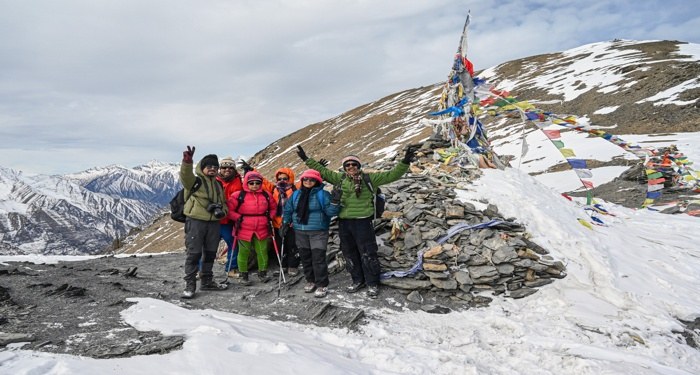
Upon reaching Kang-La Pass at 5,360 meters, you are rewarded with breathtaking panoramic views of the mystical Upper Dolpo region. Prayer flags flutter in the mountain wind, creating a colorful contrast against the rugged Himalayan landscape. The scenery from the pass is simply unforgettable and offers a true sense of accomplishment.
After spending time enjoying the views and taking photographs, the trail descends carefully into the sacred valley of Shey. The terrain becomes gentler as you approach one of Dolpo's most important spiritual destinations.
By afternoon, you arrive at the historic Shey Gompa, an ancient monastery believed to be over 800 years old. Surrounded by dramatic cliffs and high mountain peaks, the monastery stands as a symbol of spirituality and cultural heritage in the Himalayas.
This sacred sanctuary has attracted pilgrims, monks, and travelers for centuries. The peaceful atmosphere and spectacular setting make Shey Gompa one of the most memorable locations of the entire trek.
Overnight camping near Shey Gompa.
Today is dedicated to exploring the sacred sites surrounding Shey Gompa, including the famous Crystal Mountain, often referred to as the "Mini Kailash" of Dolpo. This is one of the most spiritually significant places in western Nepal and an important pilgrimage destination for both Buddhists and Bon practitioners.
After breakfast, you begin a day hike around Crystal Mountain. According to local belief, completing a circumambulation (kora) around the mountain brings blessings similar to those received from a pilgrimage around Mount Kailash in Tibet. Pilgrims from across the Himalayas visit this sacred landscape to perform religious rituals and prayers.
The trail passes ancient caves, meditation sites, and small shrines hidden among the cliffs. These caves were once used by great Buddhist masters seeking solitude for spiritual practice. The atmosphere is deeply peaceful, and the silence of the mountains creates a powerful spiritual experience.
You will also have time to explore Shey Gompa itself. The monastery houses ancient statues, manuscripts, prayer wheels, and sacred relics that reflect centuries of Himalayan Buddhist tradition. Monks living here continue to preserve spiritual practices passed down through generations.
During the afternoon, your guide shares fascinating stories about local legends, religious traditions, and the famous Shey Festival, which takes place every twelve years during the Year of the Dragon.
The entire day combines culture, spirituality, and mountain scenery, making it one of the most enriching experiences of the Upper Dolpo adventure.
Overnight camping at Shey Gompa.
Leaving the sacred valley of Shey behind, today's journey leads across another spectacular Himalayan pass. The morning begins with a gradual ascent through beautiful alpine meadows where yaks graze peacefully among wildflowers and rocky hillsides.
The trail eventually enters a narrow gorge before climbing steeply toward Shey-La Pass. As you gain altitude, the landscape becomes increasingly dramatic. Snow-capped peaks dominate the horizon while deep valleys stretch far below.
Reaching Shey-La Pass at approximately 5,000 meters offers magnificent panoramic views of Upper Dolpo's remote mountain wilderness. This region remains largely untouched by modern development and preserves a sense of isolation rarely found elsewhere in the Himalayas.
After enjoying the scenery, the route descends along a ridge with sweeping views of distant villages and grazing pastures. The trail then follows traditional yak herding routes across open plateaus before descending toward Namgung Valley.
Namgung Gompa appears dramatically perched against a steep cliff face overlooking the valley below. The monastery's unique location creates one of the most striking scenes of the trek.
Upon arrival, there is time to visit the monastery and interact with local monks. The peaceful environment and spectacular mountain backdrop provide a perfect setting for reflection after crossing another high Himalayan pass.
Overnight camping near Namgung Gompa.
Today's trek is shorter and less demanding, allowing time to fully appreciate the culture and landscapes of Upper Dolpo. After breakfast, the trail traverses gentle hills and open terrain overlooking vast valleys and rugged mountain ridges.
The route gradually descends through traditional grazing areas used by local pastoral communities. Along the way, you may encounter yak caravans transporting goods between remote villages and trade routes leading toward Tibet.
As you continue walking, the landscape reveals the unique character of Upper Dolpo. Dry mountain slopes, ancient stone walls, and scattered settlements create an atmosphere that feels remarkably similar to the Tibetan Plateau.
After several hours of pleasant trekking, you arrive at Saldang, the largest and most prosperous village in Upper Dolpo. Historically, Saldang served as an important trading center linking Nepal and Tibet through ancient salt routes.
The village is home to traditional stone houses, terraced fields, monasteries, and welcoming local communities. Exploring Saldang provides valuable insight into the lifestyle of people who have adapted to life in this remote high-altitude environment for centuries.
The afternoon is free to wander through the village, observe daily activities, and learn about local customs and traditions.
Overnight camping near Saldang Village.
Today you journey toward one of the oldest and most significant monasteries in Upper Dolpo. Leaving Saldang behind, the trail follows the beautiful Nagon Khola Valley through spectacular landscapes rich in history and spiritual significance.
The route passes ancient chortens, mani walls, and sacred sites associated with centuries of Himalayan culture. Your guide will explain the traditions of sky burial and other unique customs practiced in this region.
As the trail follows the Panjyan Khola Valley, magnificent mountain scenery unfolds in every direction. The terrain is relatively gentle, allowing trekkers to enjoy the peaceful atmosphere and appreciate the isolation of Upper Dolpo.
After crossing streams and climbing gradually through alpine terrain, Yangtser Gompa finally comes into view. Founded over a thousand years ago, this ancient monastery remains one of the most important religious centers in the region.
The monastery contains historic murals, sacred texts, and religious artifacts that provide valuable insight into the spiritual heritage of Dolpo. The surrounding landscape adds to the monastery's beauty, creating an unforgettable setting high in the Himalayas.
The evening offers opportunities to interact with monks, explore the monastery grounds, and enjoy stunning views of the surrounding mountains.
Overnight camping at Yangtser Gompa.
Today's trek follows remote valleys and high mountain terrain as you continue deeper into Upper Dolpo. The route initially follows the Panjyan Khola before ascending toward a lesser-known mountain pass at approximately 4,900 meters.
The climb offers magnificent views of alpine meadows, rocky ridges, and distant snow-covered peaks. The landscape feels vast and untouched, emphasizing the extraordinary remoteness of this region.
Wildlife sightings are sometimes possible along this route. Himalayan blue sheep, marmots, and various mountain birds inhabit these high-altitude ecosystems. The area also serves as important habitat for the elusive snow leopard.
After crossing the pass, the trail descends gradually toward the Musi Khola Valley. Green pastures and seasonal grazing areas provide a pleasant contrast to the rocky terrain encountered earlier in the day.
The final section follows the valley toward Musi Gaon, a small settlement surrounded by dramatic mountain scenery. The village offers a glimpse into the simple and resilient lifestyle of Dolpo's highland communities.
After approximately six hours of trekking, you arrive at camp and enjoy a well-earned rest while surrounded by some of Nepal's most remote landscapes.
Overnight camping at Musi Gaon.
Today is another major highlight of the expedition as you cross the impressive Musi-La Pass. The morning begins with a gradual ascent through alpine terrain before the climb becomes steeper near the upper slopes of the pass.
The route traverses remote landscapes where signs of human habitation are extremely rare. The only companions are often grazing yaks, mountain birds, and the vast silence of the Himalayas.
Upon reaching Musi-La Pass at 5,070 meters, spectacular views unfold across multiple valleys and mountain ranges. The panorama showcases the immense scale of Dolpo's wilderness and highlights the isolation that makes this region so special.
After spending time at the pass, the trail descends into the beautiful Bentsang Valley. The scenery changes gradually as rocky slopes give way to gentler terrain and seasonal grazing areas.
The final approach to Shimen follows traditional yak trails through wide open valleys surrounded by towering ridges. The peaceful setting provides an excellent place to rest after another challenging day in the mountains.
Overnight camping at Shimen.
Compared to previous days, today's trek is relatively short and relaxed, allowing time to enjoy the cultural treasures of the Bentsang Valley. The route follows gentle terrain through landscapes rich in history, spirituality, and traditional Himalayan culture.
Along the way, you may visit hidden caves, ancient meditation sites, and centuries-old monasteries associated with the famous spiritual leaders known as the Four Lamas of Dolpo. These sacred locations remain important pilgrimage destinations for local communities.
The valley itself is exceptionally beautiful, characterized by open grasslands, rocky cliffs, and distant mountain views. Yak herders often move through the area during the summer months, maintaining traditions that have existed for generations.
After several hours of walking, you arrive at Phal Gaon, a peaceful settlement surrounded by spectacular mountain scenery. The village serves as an important cultural center within the valley and offers a fascinating glimpse into life in one of Nepal's most remote regions.
The remainder of the day can be spent exploring the surroundings, interacting with local residents, and enjoying the tranquility of Upper Dolpo.
Overnight camping at Phal Gaon.
Today is one of Upper Dolpo's best-kept secrets and a true highlight for adventurous trekkers. After an early breakfast, the trail heads toward the remote Kunkhyan Phalak Lake, a hidden alpine gem rarely visited by outsiders. Unlike many popular trekking destinations, this route remains largely unknown, providing a genuine wilderness experience.
The trail gradually ascends through high-altitude valleys toward the Tibetan frontier. As you climb higher, the scenery becomes increasingly dramatic, with vast open landscapes stretching across the Himalayan plateau. The terrain is rugged yet rewarding, offering magnificent views of distant snow-covered peaks and untouched valleys.
After several hours of steady climbing, the beautiful Kunkhyan Phalak Lake comes into view. Situated at nearly 5,000 meters above sea level, the lake reflects the surrounding mountains like a giant mirror. Its crystal-clear waters and isolated location create an atmosphere of serenity and wonder. Few trekkers ever reach this remarkable destination, making the experience truly special.
After spending time exploring and photographing the lake, the trail descends toward Tinje. The descent provides excellent views of the surrounding valleys and ancient trade routes that once connected Nepal and Tibet. By late afternoon, you arrive at Tinje, one of the most important traditional villages in Upper Dolpo.
Tinje is known for its rich Tibetan-influenced culture, traditional stone houses, and centuries-old agricultural practices. The village offers a fascinating glimpse into life in one of Nepal's most remote Himalayan communities.
After a long but rewarding day of exploration, relax at camp and enjoy the peaceful mountain atmosphere.
Overnight camping at Tinje.
After breakfast, the trail leaves Tinje and follows an ancient trading route that once served as a vital connection between Nepal and Tibet. Today's walk is relatively gentle compared to previous high-pass crossings, allowing trekkers to enjoy the surrounding landscapes and historical significance of the region.
The route follows broad valleys and open terrain characterized by rolling hills, grazing pastures, and expansive mountain views. Along the way, your guide may point out remnants of historical trade routes used for transporting salt, wool, grain, and other goods between the Himalayan communities of Nepal and Tibet.
This area is also associated with several important historical events, including conflicts between Nepal and Tibet and the Khampa resistance movement. The landscape itself tells stories of centuries of cultural exchange, migration, and trade.
As you continue along the valley, dramatic cliffs and rugged ridges rise on both sides. The environment feels vast and untouched, emphasizing the extraordinary remoteness of Upper Dolpo. Occasional yak caravans and herders provide reminders that traditional lifestyles continue to thrive in this isolated region.
After four to five hours of walking, you reach Sulun Khola Dovan, a beautiful campsite located at the confluence of mountain streams. Surrounded by alpine meadows and panoramic mountain scenery, this peaceful location provides an excellent place to rest before tomorrow's challenging pass crossing.
The evening offers time to relax, enjoy the natural surroundings, and prepare for another high-altitude adventure.
Overnight camping at Sulun Khola Dovan.
Today is another major challenge and one of the most rewarding trekking days of the expedition. The trail follows a narrow valley before beginning a steep ascent toward Chhoi-La Pass. The climb requires patience and determination, but the scenery makes every step worthwhile.
As you gain altitude, spectacular views of Dhaulagiri and the surrounding Himalayan peaks emerge. The rugged mountain landscape becomes increasingly dramatic, with glaciers, rocky ridges, and remote valleys stretching in every direction.
Upon reaching Chhoi-La Pass at approximately 5,050 meters, trekkers are rewarded with breathtaking panoramic views across Upper Dolpo and the high Himalayas. Colorful prayer flags flutter in the wind, marking another successful pass crossing and providing a wonderful opportunity for photographs.
After enjoying the scenery, the trail descends steeply toward the Tarap Valley. The landscape gradually changes from barren alpine terrain to more hospitable grazing areas and scattered settlements. Along the way, you pass small villages that preserve traditional Tibetan Buddhist culture and ancient lifestyles.
By late afternoon, you arrive at Dho Tarap, one of the highest permanent settlements in Nepal. Surrounded by wide valleys and towering mountains, Dho Tarap is famous for its unique culture, beautiful monasteries, and welcoming local people.
This remarkable village provides one of the most memorable cultural experiences of the entire Upper Dolpo Trek.
Overnight camping at Dho Tarap.
Leaving Dho Tarap behind, today's route follows the spectacular Tarap Chu River through one of the most dramatic gorges in Nepal. The trail descends steadily, entering a landscape of towering cliffs, narrow canyons, and fascinating geological formations.
The river has carved deep passages through the mountains over thousands of years, creating a dramatic environment unlike any other section of the trek. In some places, the gorge becomes so narrow that sunlight only briefly reaches the valley floor.
Throughout the day, trekkers encounter hanging ridges, rocky cliffs, and winding trails that seem to disappear into the mountains. The constant sound of rushing water adds excitement to the journey while highlighting the raw power of nature.
This section of the trek offers excellent opportunities to observe Himalayan wildlife and birdlife. Eagles frequently soar above the canyon, while blue sheep can occasionally be spotted on steep rocky slopes.
After approximately six to seven hours of trekking, you reach Nawar Pani, a beautiful campsite situated beside the river. The surrounding scenery is rugged, dramatic, and unforgettable.
As evening approaches, enjoy the peaceful atmosphere and reflect on the incredible landscapes encountered throughout the day.
Overnight camping at Nawar Pani.
Today's journey continues downstream through the Tarap Valley and gradually transitions from high mountain desert landscapes to greener and more fertile terrain. The change in scenery is remarkable and highlights the ecological diversity of Dolpo.
The trail follows the river through forests, rocky pathways, and traditional villages. Along the way, you pass impressive rock formations and ancient trails that have connected mountain communities for centuries.
As the altitude decreases, vegetation becomes more abundant. Pine forests, cultivated fields, and terraced farmland begin to appear, creating a refreshing contrast to the barren high-altitude landscapes of Upper Dolpo.
The route includes several short climbs and descents across rocky terrain before eventually reaching the historic village of Tarakot. Once an important fortress and trading center, Tarakot played a significant role in regional commerce and governance.
The village sits beside the Bheri River and is surrounded by green hills, traditional houses, and cultivated farmland. Exploring Tarakot provides insight into the history and culture of lower Dolpo.
After a long day of trekking, enjoy a relaxing evening surrounded by the beauty of this historic Himalayan settlement.
Overnight camping at Tarakot.
Today marks the final trekking day of your incredible Upper Dolpo adventure. Although the major mountain crossings are now behind you, the trail still offers beautiful scenery and enjoyable walking.
The route follows the Bheri River and Barbung Khola through forests, villages, and cultivated fields. The atmosphere gradually changes as you return toward more populated areas and reconnect with the outside world.
The first section leads to Dunai, where many trekkers pause for lunch and celebrate the successful completion of the remote Upper Dolpo circuit. From Dunai, a final ascent brings you to Juphal, home to the small mountain airstrip that serves the region.
As you walk through villages and farmland, you may reflect on the extraordinary experiences of the past weeks—crossing high mountain passes, visiting ancient monasteries, exploring hidden valleys, and immersing yourself in one of Nepal's most authentic cultural regions.
Upon arrival in Juphal, there is time to relax, organize gear, and enjoy your final evening in the mountains with the trekking crew.
Tonight is often filled with celebrations, storytelling, and memories shared among fellow adventurers.
An early morning flight departs Juphal, offering one final opportunity to admire the spectacular mountains of western Nepal from the air. As the aircraft climbs above the valleys, breathtaking views of remote Himalayan landscapes unfold below.
The short flight brings you to Nepalgunj, where you connect with a domestic flight to Kathmandu. During the journey, the dramatic transition from rugged mountain wilderness to bustling city life becomes evident.
Upon arrival in Kathmandu, transfer to your hotel and enjoy the comforts of civilization after weeks in the remote Himalayas. A hot shower, comfortable bed, and delicious meal are welcome rewards following your remarkable expedition.
The afternoon is free for relaxation, shopping, or exploring the city. Many trekkers choose to revisit Thamel, purchase souvenirs, or simply enjoy a leisurely meal while reflecting on their achievements.
In the evening, Himalayan Adventure Intl Treks may host a farewell dinner to celebrate the successful completion of one of Nepal's most challenging and rewarding trekking adventures.
Overnight at a hotel in Kathmandu.
Today serves as both a relaxation day and a contingency day in case of weather-related flight delays from Dolpo. Assuming flights operate as scheduled, you have a full day to explore Kathmandu and enjoy the city's rich cultural heritage.
You may visit UNESCO World Heritage Sites, stroll through local markets, or enjoy a traditional Nepalese cultural performance. Kathmandu offers countless opportunities to experience the history, architecture, and spirituality that make Nepal such a fascinating destination.
Many trekkers use this day for souvenir shopping, photography, or simply relaxing after the demanding trek. Popular destinations include Boudhanath Stupa, Pashupatinath Temple, Patan Durbar Square, and Swayambhunath.
The day also provides time to organize photographs, share travel stories, and celebrate the successful completion of the Upper Dolpo Trek. Having explored one of the most remote regions in the Himalayas, you return with unforgettable memories and a deep appreciation for the landscapes and cultures of western Nepal.
Overnight at a hotel in Kathmandu.
Your incredible Upper Dolpo Trek with Himalayan Adventure Intl Treks comes to an end today. After breakfast, enjoy some final moments in Kathmandu before transferring to Tribhuvan International Airport for your departure flight.
As you leave Nepal, you carry home memories of remote mountain passes, turquoise lakes, sacred monasteries, traditional villages, and some of the most spectacular wilderness landscapes on Earth. Upper Dolpo remains one of the last truly untouched trekking regions in the Himalayas, offering experiences that few travelers ever encounter.
The friendships formed, challenges overcome, and cultural discoveries made throughout the journey will remain with you long after the trek has ended. From the sacred shores of Shey Phoksundo Lake to the spiritual heart of Shey Gompa and the hidden valleys beyond, every day has contributed to an unforgettable Himalayan adventure.
Our team thanks you for choosing Himalayan Adventure Intl Treks and looks forward to welcoming you again for future trekking, climbing, and cultural journeys throughout Nepal.
Transfer to the airport for your onward flight.
End of Services.
Upper Dolpo Trekking in Nepal is one of the most extraordinary and remote trekking adventures in the Himalayas. Hidden behind the mighty Dhaulagiri massif and bordering Tibet, Upper Dolpo remains one of the least explored trekking destinations in Nepal. Unlike the popular Everest Base Camp Trek or Annapurna Circuit Trek, Upper Dolpo offers a rare opportunity to experience untouched Himalayan wilderness, ancient Tibetan culture, sacred monasteries, high mountain passes, and breathtaking desert-like landscapes far from modern development.
For trekkers seeking a genuine off-the-beaten-path adventure, Upper Dolpo is a dream destination. The region is famous for its pristine environment, turquoise Phoksundo Lake, centuries-old Bon and Buddhist traditions, high-altitude villages, and dramatic Himalayan scenery. The trek follows ancient trade routes used by Tibetan traders and local nomadic communities for centuries.
Himalayan Adventure Intl Treks proudly organizes professionally guided Upper Dolpo trekking expeditions with experienced local guides, strong camping support teams, permit arrangements, domestic flights, and carefully designed itineraries that ensure safety, proper acclimatization, and an unforgettable trekking experience.
This detailed guide covers everything you need to know about Upper Dolpo Trekking in Nepal, including highlights, culture, permits, trekking routes, difficulty, accommodation, transportation, packing lists, best seasons, wildlife, costs, and essential travel tips.
Upper Dolpo is often described as the last hidden Himalayan kingdom. Due to its geographical isolation and restricted area status, very few trekkers visit the region each year compared to Everest or Annapurna.
Major reasons to choose Upper Dolpo Trek include:
Upper Dolpo is ideal for experienced trekkers, photographers, cultural explorers, wildlife enthusiasts, and adventure seekers looking for a once-in-a-lifetime Himalayan expedition.
Dolpo lies in western Nepal within the Dolpa District. It covers a vast area characterized by high mountains, deep valleys, barren plateaus, glacial rivers, and traditional Tibetan settlements.
The region is divided into:
Lower Dolpo includes villages such as Dunai, Tarakot, Dho Tarap, and Ringmo. It is relatively more accessible and requires fewer permits.
Upper Dolpo is a restricted area bordering Tibet. It consists of remote settlements including:
These villages preserve centuries-old Tibetan traditions and remain isolated from major modern influences.
The region sits within the rain-shadow zone of the Himalayas, creating a landscape similar to Tibet with dry valleys, rocky cliffs, colorful canyons, and expansive high-altitude plateaus.
One of the most remarkable aspects of Upper Dolpo Trekking is its incredible geographical diversity.
Trekkers encounter:
The trek offers spectacular views of:
These towering peaks dominate the skyline throughout much of the journey.
The jewel of Dolpo is the breathtaking Shey Phoksundo Lake, situated at approximately 3,611 meters.
Its vivid turquoise waters are considered among the most beautiful lakes in Nepal. The lake stretches through dramatic cliffs and alpine landscapes, creating one of the most photographed scenes in the Himalayas.
Ancient rivers have carved spectacular gorges through the mountains over thousands of years. These dramatic landscapes create exciting trekking routes and impressive natural scenery.
Beyond the forested lower valleys, Upper Dolpo transforms into an expansive high-altitude desert characterized by:
These features closely resemble the Tibetan Plateau.
Upper Dolpo is not only a trekking destination but also a living cultural museum.
Because of its remoteness, traditional customs have survived remarkably well.
The majority of local people follow Tibetan Buddhism. Throughout the trek, visitors encounter:
Religious traditions influence daily life in nearly every village.
Upper Dolpo is one of the few remaining strongholds of Bon, the ancient spiritual tradition that predates Buddhism in Tibet.
Bon practices include:
Visitors can observe unique Bon monasteries that preserve traditions dating back thousands of years.
Most local communities depend on:
Many families continue living as their ancestors did centuries ago.
One of the most important destinations during the trek is Shey Gompa.
Built over 800 years ago, this sacred monastery sits beneath Crystal Mountain, one of the most revered pilgrimage sites in western Nepal.
Pilgrims travel from Tibet and remote Himalayan regions to visit Shey Gompa and perform spiritual circumambulations around Crystal Mountain.
The monastery gained international fame through Peter Matthiessen's classic book The Snow Leopard.
Upper Dolpo lies within Shey Phoksundo National Park, Nepal's largest national park.
The region hosts remarkable biodiversity despite its harsh environment.
Wildlife species include:
The park is considered one of the world's most important habitats for snow leopards.
Birdwatchers can also enjoy sightings of numerous high-altitude bird species.
Several routes are available depending on the duration and objectives of the trek.
A popular Upper Dolpo to Jomsom route follows:
Kathmandu → Nepalgunj → Juphal → Dunai → Chhepka → Ringmo → Phoksundo Lake → Phoksundo Khola → Shey Gompa → Namgung → Saldang → Yangze → Tinje → Chharka Bhot → Niwar Pass → Jungben La Pass → Jomsom → Pokhara → Kathmandu
Major highlights include:
This route typically requires approximately 24–28 days.
The trek involves crossing several spectacular mountain passes.
Offers magnificent panoramic mountain views.
A challenging crossing connecting remote valleys.
One of the most scenic sections of the trek.
The final major pass connecting Dolpo with Mustang.
Crossing these passes requires good fitness, acclimatization, and proper preparation.
Upper Dolpo Trek is considered one of Nepal's most challenging trekking adventures.
Trekkers should have prior high-altitude trekking experience.
Good physical conditioning is strongly recommended.
Altitude sickness remains one of the biggest concerns during Upper Dolpo Trekking.
Himalayan Adventure Intl Treks designs itineraries with proper acclimatization schedules to minimize risks.
The duration depends on the chosen route.
Longer itineraries provide deeper exploration and better acclimatization opportunities.
Reaching Upper Dolpo requires multiple transportation stages.
International travelers arrive in Kathmandu.
Approximately one-hour flight from Kathmandu.
A scenic mountain flight connects Nepalgunj to Juphal Airstrip.
The trek officially starts from Juphal.
Because flights operate in mountainous terrain, delays due to weather are common.
Extra travel days are highly recommended.
Upper Dolpo is a restricted region.
Trekkers must obtain several permits.
All permits must be arranged through a registered Nepal trekking company.
Independent trekking is not permitted in Upper Dolpo.
Unlike Everest and Annapurna regions, Upper Dolpo has very limited tea house infrastructure.
Therefore, most Upper Dolpo treks operate as fully supported camping expeditions.
Camping services generally include:
Camping allows access to remote areas where lodges do not exist.
Nutritious meals are essential at high altitude.
Typical meals include:
Freshly prepared meals provide energy throughout the expedition.
Dolpo's rain-shadow location allows trekking during periods when many other Nepal trekking regions receive heavy rainfall.
Advantages:
Advantages:
Unlike many trekking areas, Dolpo remains relatively dry and can still be trekked.
Heavy snowfall may close high passes, making trekking difficult.
Proper equipment is critical for a successful Upper Dolpo Trek.
Upper Dolpo requires excellent endurance.
Recommended training includes:
Multi-day hikes carrying a backpack help prepare for trekking conditions.
Training should ideally begin at least three months before departure.
Safety remains a top priority during Upper Dolpo Trekking.
Important precautions include:
Emergency evacuation options are limited, making prevention extremely important.
Upper Dolpo is a paradise for photographers.
Highlights include:
Every day offers unique photographic opportunities.
The cost varies according to:
A professionally organized Upper Dolpo expedition generally ranges from USD 4,500 to USD 7,000 per person depending on itinerary length and service level.
Because permit fees are substantial, Upper Dolpo is among Nepal's more expensive trekking adventures.
However, the experience is truly exceptional and unmatched.
Himalayan Adventure Intl Treks specializes in remote Himalayan expeditions throughout Nepal.
Our Upper Dolpo services include:
With years of experience operating remote wilderness treks, our team ensures safe, responsible, and memorable adventures in one of Nepal's most fascinating trekking destinations.
Upper Dolpo Trekking in Nepal represents one of the finest wilderness adventures in the Himalayas. Combining breathtaking mountain scenery, pristine lakes, ancient Tibetan culture, sacred monasteries, rare wildlife, and challenging high-altitude passes, Upper Dolpo delivers an experience unlike any other trekking destination in Nepal.
Far removed from busy trekking routes, Upper Dolpo offers solitude, authenticity, and a deep connection with nature and Himalayan culture. Whether you are captivated by the turquoise beauty of Shey Phoksundo Lake, fascinated by centuries-old Bon traditions, or inspired by crossing remote Himalayan passes, Upper Dolpo promises a life-changing journey.
For trekkers seeking a true expedition into Nepal's hidden Himalayas, Himalayan Adventure Intl Treks invites you to discover the extraordinary landscapes and timeless culture of Upper Dolpo through a professionally guided adventure crafted with safety, expertise, and local knowledge.