
Have Questions? Talk to Expert (Binod)
The Ganja La Pass Trek is one of the most adventurous and rewarding high-altitude trekking journeys in Nepal’s Langtang region. Reaching an elevation of approximately 5,130 meters (16,830 feet), Ganja La Pass connects the spectacular Langtang Valley with the quieter and culturally rich Helambu region. This demanding trek is designed for experienced trekkers and adventure lovers who want to explore remote Himalayan landscapes away from Nepal’s busier trekking routes.
Organized by Himalayan Adventure Intl Treks, the Ganja La Pass Trek combines beautiful mountain scenery, traditional Tamang and Sherpa villages, ancient Buddhist monasteries, rhododendron and pine forests, glaciers, high-altitude wilderness, and a challenging snow-covered mountain pass.
Unlike a standard teahouse trek, the Ganja La route includes a remote camping section after Kyanjin Gompa. Trekkers must cross rugged terrain and spend several nights camping before reaching the Helambu settlements. This makes the journey a genuine Himalayan adventure rather than simply a village-to-village hiking experience.
The trek begins with a scenic drive from Kathmandu to Syabrubesi, follows the Langtang Valley toward Kyanjin Gompa, and then heads into a remote high-altitude wilderness before crossing Ganja La Pass. After the pass, the trail descends toward Keldang, Tarkeghyang and Sermathang before reaching Melamchi Pul Bazaar and returning to Kathmandu.
With proper acclimatization, physical preparation, an experienced guide, suitable equipment, and favorable weather, the Ganja La Pass Trek can become one of the most memorable trekking experiences in Nepal.
The Ganja La Pass Trek is a demanding trans-Himalayan journey through one of Nepal’s most scenic mountain regions. The route starts in the lower Langtang Valley, where the trail passes through forests, waterfalls, suspension bridges and traditional villages before entering increasingly rugged high-altitude terrain.
After reaching Kyanjin Gompa, the landscape changes dramatically. The forests become thinner, the mountains appear closer, and the trail enters a remote wilderness where accommodation and food facilities are extremely limited. From here, Himalayan Adventure Intl Treks arranges the necessary camping equipment, food, cooking facilities and trekking staff.
The ultimate challenge is crossing Ganja La Pass. Depending on snow and weather conditions, the pass can require crampons, ropes and other technical equipment. The final section of the ascent can be steep and difficult, and the descent on the opposite side can also be challenging.
After crossing the pass, the route enters the Helambu region. The landscape gradually changes from high alpine terrain to green hills, forests and traditional villages. The journey eventually reaches Melamchi Pul Bazaar before returning to Kathmandu.
This combination of high-altitude adventure, wilderness camping, Himalayan scenery and cultural exploration makes Ganja La Pass one of the most distinctive treks in the Langtang region.
| Category | Details |
|---|---|
| Trek Duration | 14 Days |
| Destination | Nepal |
| Region | Langtang and Helambu |
| Trek Grade | Challenging |
| Maximum Elevation | Ganja La Pass – approximately 5,130 m |
| Starting Point | Kathmandu |
| Trek Starting Point | Syabrubesi |
| Trek Ending Point | Melamchi Pul Bazaar |
| Accommodation | Teahouse/Lodge and Tented Camp |
| Meals | Breakfast, Lunch and Dinner during trek |
| Activity | Trekking, camping and high-pass crossing |
| Group Size | 1–10 people |
| Best Seasons | Spring and Autumn |
| Suitable For | Experienced and physically prepared trekkers |
Himalayan Adventure Intl Treks accepts private bookings and group joining requests for the Ganja La Pass Trek.
Solo trekkers can join a scheduled group when available, while couples, families, friends, student groups, research teams and private groups can arrange customized departures.
We can also arrange:
Because Ganja La Pass is highly dependent on weather and trail conditions, we recommend booking early and allowing flexibility in the itinerary.
Himalayan Adventure Intl Treks provides several pricing options according to group size and service requirements.
A private solo trek includes the essential trekking arrangements such as guide, porter, accommodation, meals, permits and transportation according to the selected package.
This option is suitable for two travelers who want a private guide, porter support, accommodation, meals, transportation and organized camping arrangements.
Small groups receive a better per-person rate while retaining personalized guiding and porter services.
Larger groups can benefit from group pricing while receiving standard trekking services.
Note: Prices can vary depending on transportation, accommodation category, itinerary changes, camping requirements, group size and seasonal conditions. Contact Himalayan Adventure Intl Treks for the latest quotation before booking.
The trek passes through Langtang National Park, so trekkers need the appropriate national park entry permit.
Permit regulations and government fees can change, so the applicable fee at the time of travel will be confirmed before departure.
Himalayan Adventure Intl Treks can arrange the required trekking permits and documentation on behalf of clients.
The normal starting point of the trek is Syabrubesi.
Kathmandu–Syabrubesi–Kathmandu transportation is approximately:
A private jeep from Kathmandu to Syabrubesi and back from the finishing point can be arranged for approximately USD 180 per vehicle, depending on route, vehicle type and current transportation rates.
Private transportation is particularly convenient for families and groups because it offers greater flexibility and comfort.
A professional guide is strongly recommended for the Ganja La Pass Trek because the route includes a remote camping section and a high-altitude pass.
USD 30 per day
Our guides assist with navigation, accommodation, meals, permits, safety, altitude monitoring and communication with local communities.
USD 30 per day
Female guides are available on request, particularly for women traveling alone or in groups who prefer a female trekking companion.
USD 25 per day
A porter can normally carry up to approximately 20 kg, subject to company and local regulations.
USD 28 per day
This is an economical option for trekkers who need both basic guiding support and luggage-carrying assistance. However, for the technical and remote Ganja La section, a fully licensed and experienced trekking guide is recommended.
The exact distance varies according to the final itinerary and camping locations, but the major sections are approximately:
| Route | Approx. Distance | Walking Time | Elevation |
| Syabrubesi – Lama Hotel | 11 km | 6–7 hrs | 2,460 m |
| Lama Hotel – Langtang Village | 14–15 km | 5–6 hrs | 3,450 m |
| Langtang Village – Kyanjin Gompa | 6–7 km | 3–4 hrs | 3,870 m |
| Kyanjin Gompa – High Camp Area | 10–11 km | 4–5 hrs | Around 4,400 m |
| High Camp – Ganja La Pass – Keldang | Variable | 7–9 hrs | 5,130 m |
| Keldang – Dhukpa | Around 7 km | 6–7 hrs | Around 4,040 m |
| Dhukpa – Tarkeghyang | Around 11 km | 5–7 hrs | Around 2,600 m |
| Tarkeghyang – Sermathang | Around 13 km | 4–5 hrs | Around 2,590 m |
| Sermathang – Melamchi Pul Bazaar | Around 20 km | 5–6 hrs | Around 870 m |
Distances can change depending on the exact campsite, trail conditions and itinerary.
Arrive at Tribhuvan International Airport in Kathmandu. Our representative welcomes you and transfers you to your hotel.
After checking in, you can rest or explore the surrounding area. In the evening, our trekking team provides a briefing about the Ganja La Pass adventure.
Overnight: Kathmandu
After breakfast, drive from Kathmandu toward Syabrubesi. The road passes through green hills, rivers, terraced farmland and mountain settlements.
The journey generally takes around 6–7 hours depending on road and traffic conditions.
Overnight: Syabrubesi
The trek begins through beautiful forest. The trail follows the Langtang Khola and passes through bamboo and rhododendron forests.
The trail gradually climbs toward Lama Hotel.
Overnight: Lama Hotel
Continue along the Langtang Valley. The forest gradually opens as you approach higher settlements.
The landscape becomes increasingly mountainous, and Langtang Lirung begins to dominate the scenery.
Overnight: Langtang Village
The trail continues through traditional mountain settlements and yak pastures toward Kyanjin Gompa.
This is one of the most scenic sections of the trek, with magnificent views of the surrounding Himalayan peaks.
Overnight: Kyanjin Gompa
An acclimatization day is important before attempting the high pass.
Depending on fitness, weather and trail conditions, trekkers can hike toward Kyanjin Ri or Tserko Ri for panoramic mountain views.
The day also allows the body to adapt to the elevation before entering the remote Ganja La section.
Overnight: Kyanjin Gompa
Leave the main Langtang Valley and enter a more remote landscape.
The trail becomes less developed and accommodation facilities disappear. Our camping team prepares the campsite and meals.
Trekkers should carry sufficient water and personal essentials.
Overnight: Tented Camp
This is the most challenging day of the trek.
An early start is essential because weather conditions at high altitude can deteriorate later in the day.
The ascent toward Ganja La Pass involves steep and rugged terrain. Snow conditions may require crampons, ropes and other technical equipment.
After reaching the approximately 5,130-meter pass, enjoy breathtaking Himalayan views if weather permits. The descent is also steep and requires careful footing.
Continue toward Keldang and camp for the night.
Overnight: Tented Camp
After crossing the pass, the trail gradually descends through remote wilderness.
The landscape changes as elevation decreases. After several demanding days, the lower altitude provides some relief.
Overnight: Tented Camp
Continue descending toward the Helambu region.
Eventually, the trail reaches more established villages and accommodation facilities. Tarkeghyang is a culturally important settlement with strong Buddhist and Himalayan traditions.
Overnight: Tarkeghyang
Walk through beautiful forests and traditional settlements toward Sermathang.
The trail is generally more comfortable compared with the high-altitude section.
Overnight: Sermathang
Continue downhill through villages, forests and agricultural areas toward Melamchi Pul Bazaar.
The dramatic change from high alpine landscapes to green hills is one of the memorable aspects of this trek.
Overnight: Melamchi area
Drive back to Kathmandu.
After arriving, enjoy a free afternoon for rest, shopping or exploring the city.
Overnight: Kathmandu
Transfer to Tribhuvan International Airport for your international flight.
Your Ganja La Pass adventure ends with Himalayan Adventure Intl Treks.
The Ganja La Pass Trek combines teahouse/lodge accommodation and wilderness camping.
Before Kyanjin Gompa, trekkers normally stay in local lodges and teahouses offering twin-sharing rooms, beds, blankets and basic dining facilities.
After Kyanjin Gompa, accommodation becomes extremely limited. Therefore, the remote section requires tented camping.
Our camping arrangements can include:
Camping adds logistical complexity but gives trekkers access to some of the most remote landscapes in the Langtang region.
Meals are an important part of a successful high-altitude trek.
In teahouses, common breakfast choices include:
Lunch and dinner can include:
Dal bhat is especially popular because it provides carbohydrates, protein and energy for long trekking days.
During the camping section, our cooks prepare meals based on available ingredients and the requirements of the trekking group.
The best seasons are spring and autumn.
Spring provides relatively stable conditions, pleasant daytime temperatures and spectacular rhododendron blooms.
The forests can become colorful, and wildlife activity increases after winter. Mountain visibility is often good, although afternoon clouds may occur.
Autumn is generally considered the best season for the Ganja La Pass Trek.
After the monsoon, the atmosphere becomes clearer and the mountain views can be spectacular. The trails are usually drier, and the weather is more predictable.
Winter brings heavy snow and extremely cold temperatures to the high pass. Crossing Ganja La can become technically difficult or impossible depending on conditions.
June to August brings heavy rainfall, slippery trails, landslides and cloud cover. The high pass can also become difficult to access.
The Ganja La Pass Trek is classified as challenging.
It is more demanding than the standard Langtang Valley Trek because it involves:
Trekkers should be able to walk approximately 6–8 hours on many days while carrying a daypack.
Previous high-altitude trekking experience is highly beneficial.
Safety is our highest priority.
Our guides monitor weather, trail conditions, physical condition and altitude symptoms throughout the journey.
For the pass crossing, the team may carry or arrange appropriate equipment according to conditions, including ropes and crampons when required.
If weather conditions become unsafe, the itinerary may need to be adjusted. No mountain pass should be crossed simply to maintain a fixed schedule.
Altitude sickness can occur when the body cannot adapt adequately to reduced oxygen at higher elevations.
Possible symptoms include:
The best prevention is gradual acclimatization.
Medication such as acetazolamide may be useful for some travelers, but it should only be taken after consulting a qualified medical professional.
Comprehensive travel insurance is strongly recommended.
Because the Ganja La Pass reaches above 5,000 meters and the route includes remote areas, insurance should ideally cover:
Check the altitude limit of your policy carefully before purchasing it.
Physical preparation is important.
A good training program should include:
Practice carrying a small backpack during training.
The objective is not speed. Endurance, balance and the ability to walk steadily for several hours are more important.
Mental preparation is equally important because the pass section may involve cold temperatures, snow, steep terrain and basic camping conditions.
A suitable packing list includes:
Depending on snow and ice conditions:
Our trekking team will advise you about technical equipment before departure based on current trail conditions.
The Ganja La Pass Trek offers an exceptional combination of nature, culture and adventure.
You begin among forests and traditional villages, enter the spectacular Langtang Valley, reach the high Himalayan environment around Kyanjin Gompa, cross a challenging mountain pass and eventually descend into the culturally rich Helambu region.
Few treks provide such a dramatic transition within a single journey.
You can experience:
The trail passes through Langtang National Park, which protects a wide range of Himalayan ecosystems.
The region is home to numerous species of birds and mammals. Lucky trekkers may encounter wildlife such as the red panda, although sightings are never guaranteed.
The forest changes with elevation, from bamboo and broadleaf vegetation at lower elevations to coniferous forests and alpine vegetation higher up.
The combination of forests, rivers, waterfalls, glaciers and snow-covered mountains makes the region particularly attractive to nature lovers and photographers.
Culture is an important part of the trek.
Tamang communities have traditionally inhabited much of the Langtang region, while Sherpa and other Himalayan communities are prominent in parts of the higher and Helambu areas.
Tibetan Buddhist influence can be seen throughout the route through:
Trekking through these villages offers travelers an opportunity to observe traditional Himalayan lifestyles while respecting local customs and religious practices.
Depending on the selected package, Himalayan Adventure Intl Treks can include:
The following expenses are generally excluded:
Himalayan Adventure Intl Treks specializes in trekking, tours, peak climbing and adventure travel in Nepal.
For the Ganja La Pass Trek, we focus on careful preparation, responsible trekking and personalized service.
Our services include:
Our guides understand the trail, weather patterns, villages, culture and high-altitude challenges.
We can customize the itinerary according to your available time, fitness and trekking experience.
Small groups provide greater flexibility and a more personal trekking experience.
Our team monitors altitude, weather and trail conditions and makes decisions based on safety.
Our local team provides insight into Himalayan culture and communities that cannot be gained simply by following a map.
Camping and technical equipment can be arranged according to the requirements of the route and current conditions.
You can choose between a private trek and group joining.
A private trek gives you greater flexibility regarding departure dates, walking pace, accommodation and itinerary.
A group joining trek is ideal for solo travelers who want to meet other adventurers and potentially reduce the overall cost.
We can organize departures for:
Booking your Ganja La Pass Trek with Himalayan Adventure Intl Treks is straightforward.
After confirming your travel dates, we prepare the itinerary and quotation according to your requirements. Once the booking is confirmed, our team handles the necessary trekking arrangements.
You should provide:
For customized itineraries or group departures, we recommend contacting us well in advance.
The Ganja La Pass Trek is ideal for travelers who want more than a conventional teahouse trek.
It is particularly suitable if you:
If you are a beginner, the standard Langtang Valley Trek may be a better introduction to the region. However, with sufficient preparation, training and professional support, adventurous trekkers can work toward the Ganja La Pass route.
The Ganja La Pass Trek Nepal is a journey for adventurous travelers who want to experience the raw beauty of the Himalayas. From the traditional villages of the Langtang Valley to the high-altitude wilderness around Ganja La, every section of the trek offers a different landscape and cultural experience.
The approximately 5,130-meter Ganja La Pass is the defining challenge of the journey, while Kyanjin Gompa, Langtang Lirung, alpine valleys, Buddhist heritage and the Helambu villages provide unforgettable experiences along the way.
The route demands good preparation and should not be underestimated. Snow, ice, altitude and rapidly changing weather can make the pass difficult. For this reason, traveling with an experienced guide and a properly equipped trekking team is highly recommended.
Himalayan Adventure Intl Treks can arrange your Ganja La Pass Trek as a private adventure or group departure, including permits, guides, porters, transportation, accommodation, meals and camping logistics.
Whether you are planning your first high-pass adventure or looking for a challenging alternative to Nepal's more crowded trekking routes, the Ganja La Pass Trek offers an exceptional opportunity to discover the quieter side of the Langtang Himalayas.
For booking, customized itineraries, group joining dates and the latest Ganja La Pass Trek cost, contact Himalayan Adventure Intl Treks.
Your Ganja La Pass adventure begins with your arrival in Kathmandu, the vibrant capital city of Nepal. After landing at Tribhuvan International Airport, a representative from Himalayan Adventure Intl Treks will welcome you and transfer you to your hotel.
Kathmandu is a fascinating combination of ancient heritage, traditional neighborhoods and modern tourist facilities. Depending on your arrival time, you can relax at the hotel or take a short walk around the nearby streets.
In the evening, your trekking team can organize a briefing about the Ganja La Pass Trek. Your guide will explain the trekking route, expected weather conditions, high-altitude challenges, packing requirements, safety procedures and daily schedule.
This is also a good opportunity to check your trekking equipment and make any final arrangements before heading toward the Langtang region.
Accommodation: Hotel in Kathmandu
Meals: Welcome/Breakfast depending on package
Maximum Altitude: 1,350m
Trekking: No trekking
Welcome to Kathmandu and preparation for your challenging Himalayan adventure.
After breakfast, the journey begins with a scenic drive from Kathmandu toward Syabrubesi, the gateway to the Langtang region.
The road gradually leaves the Kathmandu Valley and follows winding mountain roads through green hills, terraced farmland and traditional settlements. Along the journey, you will see changing landscapes, local villages, rivers and forest-covered hills.
The drive takes several hours depending on road and traffic conditions. Although the journey can be long, it provides an interesting introduction to rural Nepal.
As you approach Syabrubesi, the scenery becomes increasingly mountainous. Syabrubesi is a lively trekking settlement situated near the Langtang River and serves as the starting point for several treks in the region.
After checking into your lodge, you can rest and prepare your backpack for the first trekking day.
Accommodation: Lodge in Syabrubesi
Meals: Breakfast, Lunch and Dinner
Driving: Approximately 6–8 hours, depending on road conditions
Altitude: 1,460m
A scenic Himalayan road journey from Kathmandu into the Langtang region.
Today you officially begin trekking.
After breakfast, the trail follows the Langtang River through beautiful forests. The route initially passes through settlements and cultivated land before entering a more heavily forested section.
You will cross suspension bridges and walk through forests containing oak, rhododendron, maple, bamboo and other Himalayan vegetation. Depending on the season, the forest can be particularly beautiful when rhododendrons are flowering.
The trail gradually gains elevation as it follows the river upstream. You will pass small settlements and resting places before reaching Lama Hotel, a popular overnight stop on the Langtang trail.
The trek is moderately demanding because of the continuous ascent, but the forest environment provides shade and beautiful natural scenery.
Your guide will maintain a comfortable pace, allowing you to gradually adjust to the increasing altitude.
Accommodation: Lodge in Lama Hotel
Meals: Breakfast, Lunch and Dinner
Walking: Approximately 6 hours
Altitude: 2,460m
Forest trails, suspension bridges, the Langtang River and the first major Himalayan trekking experience.
Today the trail continues deeper into the Langtang Valley.
After breakfast, you walk through dense forests, following the Langtang River upstream. As the altitude increases, the vegetation gradually becomes less dense and the surrounding mountains become more prominent.
The trail passes through places such as Ghoda Tabela, where the valley begins to open and the mountain scenery becomes increasingly spectacular.
From this section onward, you can begin to appreciate the scale of the Langtang Himalayas. Snow-covered peaks rise dramatically around the valley, creating an unforgettable Himalayan landscape.
Eventually, you reach the traditional settlement of Langtang Village.
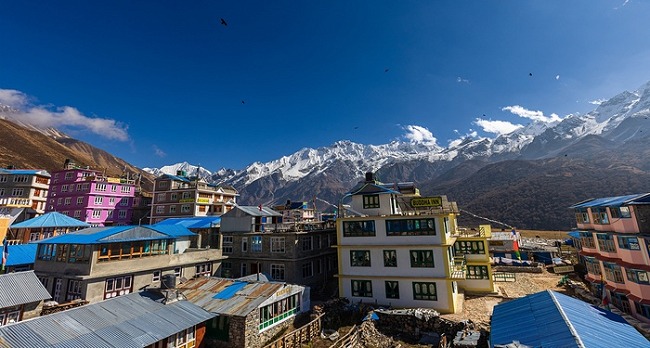
Langtang is an important cultural settlement inhabited mainly by people of Tamang heritage. The village and surrounding communities have a strong connection with Tibetan Buddhist traditions.
After reaching the lodge, you can explore the village and interact with local residents if time and energy permit.
Accommodation: Lodge in Langtang Village
Meals: Breakfast, Lunch and Dinner
Walking: Approximately 6–7 hours
Altitude: 3,450m
Entering the dramatic upper Langtang Valley with spectacular mountain views and traditional Tamang culture.
Today is one of the most scenic days of the trek.
After breakfast, you leave Langtang Village and continue toward Kyanjin Gompa, the highest major settlement on the main Langtang Valley route.
The trail gradually climbs through alpine landscapes and passes several small settlements and grazing areas. As you gain elevation, the surrounding mountains appear increasingly close and impressive.
The landscape changes dramatically. Forests become sparse, alpine meadows become more common, and rocky mountain slopes dominate the horizon.
After several hours of walking, you arrive at Kyanjin Gompa, situated at approximately 3,870 meters.
Kyanjin Gompa is a culturally significant Buddhist settlement and one of the most beautiful places in the Langtang Valley. The surrounding area offers extraordinary views of Langtang Lirung and numerous other Himalayan peaks.
After checking into your lodge, you can take a short walk around the settlement and enjoy the mountain scenery.
Accommodation: Lodge in Kyanjin Gompa
Meals: Breakfast, Lunch and Dinner
Walking: Approximately 4–5 hours
Altitude: 3,870m
Arrival at Kyanjin Gompa surrounded by spectacular Himalayan peaks and alpine scenery.
Today is an important acclimatization day.
Instead of immediately continuing toward the high-altitude section of the Ganja La route, you spend another night at Kyanjin Gompa. This gives your body valuable time to adjust to the altitude.
There are several possible activities depending on weather, physical condition and the group's preference.
You can explore the surrounding valley, visit the local Buddhist monastery, walk toward nearby viewpoints or undertake a higher acclimatization hike.
The Kyanjin area is surrounded by spectacular mountains, including Langtang Lirung and other peaks of the Langtang range.
For stronger trekkers and when conditions are suitable, your guide may recommend an acclimatization hike toward a nearby higher viewpoint. The exact destination can depend on weather, snow conditions and the group's fitness.
The purpose of today's activity is not simply sightseeing. Acclimatization is particularly important because the next stages involve sleeping and walking at significantly higher elevations.
Your guide will monitor everyone's condition and provide advice regarding hydration, nutrition, walking pace and symptoms associated with altitude sickness.
Accommodation: Lodge in Kyanjin Gompa
Meals: Breakfast, Lunch and Dinner
Walking: Optional acclimatization hike
Altitude: 3,870m
Acclimatization, mountain exploration and spectacular views around Kyanjin Gompa.
Today the trek becomes considerably more remote and challenging.
After leaving Kyanjin Gompa, the trail heads toward Nyengang Kharka, an alpine grazing area situated at approximately 4,430 meters.
The landscape changes quickly as you leave the more developed Langtang Valley trekking route. You encounter fewer settlements, fewer lodges and more rugged mountain terrain.
The trail climbs through rocky ground, alpine meadows and high mountain landscapes. Depending on the season, snow may cover sections of the route.
The surroundings become increasingly dramatic. The enormous Himalayan peaks, glaciers and steep mountain slopes create an impressive wilderness environment.
Because today's overnight elevation is high, your guide will maintain a slow and steady pace. Adequate hydration and regular rest breaks are important.
Nyengang Kharka is a remote location and accommodation is generally much more basic than the lodges available in the lower Langtang Valley. Camping arrangements may be required depending on current local conditions and the trekking package.
This is an important preparation day for the following day's crossing of Ganja La Pass.
Accommodation: Camping/basic high-altitude shelter depending on conditions
Meals: Breakfast, Lunch and Dinner
Walking: Approximately 5–6 hours
Altitude: 4,430m
Entering remote alpine wilderness and spending the night at high altitude before crossing Ganja La.
Today is the most demanding and adventurous day of the entire Ganja La Pass Trek.
You begin early because weather conditions at high altitude can change rapidly. The route climbs toward Ganja La Pass, reaching approximately 5,130 meters (16,830 feet).
The approach to the pass is steep and rugged. Depending on the season and recent weather, the trail may contain snow, ice, loose rocks or other difficult terrain.
Your trekking guide will assess the route and weather before the group proceeds. The crossing should only be attempted when conditions are considered suitable.
As you approach the pass, the air becomes noticeably thinner and every step requires greater effort. The combination of steep terrain and altitude makes this a physically demanding section.
Finally, you reach the top of Ganja La Pass.
Standing at more than 5,000 meters, you are surrounded by an extraordinary Himalayan panorama. Snow-covered peaks, deep valleys, glaciers and rugged mountain ridges stretch across the horizon.
After celebrating the successful crossing and taking photographs when conditions permit, you begin the descent toward Keldang.
The descent can be equally challenging because sections may be steep, rocky or covered with snow. Careful foot placement and following your guide's instructions are essential.
Eventually, the trail reaches Keldang, where you spend the night.
Accommodation: Camping/basic shelter
Meals: Breakfast, Lunch and Dinner
Walking: Approximately 7–9 hours, depending on conditions
Highest Point: 5,130m at Ganja La Pass
Overnight Altitude: 4,270m
Crossing the spectacular and challenging Ganja La Pass at 5,130 meters.
Ganja La Pass is a high-altitude mountain crossing. Snow, ice, wind, visibility and trail conditions can vary significantly. The exact crossing route and timing may need to be adjusted according to weather and mountain conditions. The guide has the authority to change or postpone the crossing if conditions are unsafe.
After the demanding Ganja La crossing, today offers a gradual change in scenery as the route continues toward the Helambu side of the mountains.
You leave Keldang and follow a remote mountain trail through rugged landscapes. The trail gradually descends, although there may still be several uphill sections.
The environment begins to change as you lose elevation. Alpine vegetation becomes more noticeable, and the landscape slowly transitions from barren high-altitude terrain toward greener mountain slopes.
This section is considerably quieter than the main Langtang Valley route. The feeling of remoteness is one of the major attractions of the Ganja La Pass Trek.
After several hours of trekking, you reach Dhukpa, situated at approximately 4,040 meters.
Because the previous day was physically demanding, your guide will encourage a comfortable pace and sufficient rest.
Accommodation: Camping/basic shelter
Meals: Breakfast, Lunch and Dinner
Walking: Approximately 5–6 hours
Altitude: 4,040m
A peaceful remote trail through rugged highland landscapes after the Ganja La crossing.
Today brings a significant descent and a dramatic transformation of the landscape.
From Dhukpa, the trail gradually descends through forests, rocky paths and mountain slopes toward Tarkeghyang, one of the important cultural settlements of the Helambu region.
As you lose altitude, vegetation becomes greener and more abundant. The harsh alpine environment gives way to forests and cultivated landscapes.
Tarkeghyang is traditionally associated with the Hyolmo people and Tibetan Buddhist culture. The village contains traditional houses, Buddhist prayer flags, mani walls and monasteries.
After reaching Tarkeghyang, you can explore the village and experience the peaceful atmosphere of this Himalayan community.
Compared with the remote high-altitude sections of the trek, Tarkeghyang offers a welcome return to a more established settlement.
Accommodation: Lodge in Tarkeghyang
Meals: Breakfast, Lunch and Dinner
Walking: Approximately 5–7 hours
Altitude: 2,600m
A dramatic descent from the high mountains into the culturally rich Helambu region.
After breakfast at Tarkeghyang, your Ganja La Pass adventure begins its final journey back toward Kathmandu. Today is primarily a scenic drive of approximately 6 hours, depending on road and traffic conditions.
Leaving Tarkeghyang, the road gradually descends through the beautiful Helambu hills. Along the way, you can enjoy views of green forests, terraced farmland, traditional villages and winding mountain roads. The scenery provides a pleasant contrast to the high-altitude landscapes and rugged terrain experienced during the Ganja La Pass section.
The journey continues toward the lower valleys before connecting with the road leading to Kathmandu. As you approach the Kathmandu Valley, the landscape becomes more developed, with increasing numbers of settlements, shops and local communities.
Upon arrival in Kathmandu at approximately 1,350 meters, you will be transferred to your hotel. The remainder of the day is free for relaxation, shopping or exploring the vibrant streets of Kathmandu.
After several challenging days in the mountains, this is an excellent opportunity to rest, enjoy a comfortable shower and prepare for your departure or any additional sightseeing in Nepal.
Accommodation: Hotel in Kathmandu
Meals: Breakfast and Lunch
Driving: Approximately 6 hours
Destination: Kathmandu – 1,350m
Scenic descent from the Helambu mountains to Kathmandu, marking the return from the remote Ganja La Pass region to Nepal's capital city.
Your Ganja La Pass Trek officially comes to an end today.
Depending on your flight schedule, you can enjoy breakfast at the hotel before being transferred to Tribhuvan International Airport for your onward journey.
A representative from Himalayan Adventure Intl Treks will assist with your airport transfer and departure arrangements.
If you have additional time in Nepal, the company can also arrange extensions such as a Kathmandu cultural tour, Chitwan jungle safari, Pokhara tour, Lumbini visit, additional trekking, peak climbing or other adventure activities.
We hope the memories of the Langtang mountains, Ganja La Pass, Himalayan villages and warm Nepalese hospitality remain with you long after you return home.
Accommodation: Not included unless an additional night is requested
Meals: Breakfast depending on package
Activity: Airport transfer and departure
Farewell to Nepal after an unforgettable Himalayan adventure.
The Ganja La Pass Trek is one of the most adventurous and rewarding high-altitude trekking journeys in Nepal. Located in the spectacular Langtang region north of Kathmandu, this challenging route combines dramatic Himalayan scenery, traditional Tamang and Sherpa culture, ancient monasteries, alpine landscapes, glaciers, forests, and remote mountain settlements. The highlight of the journey is crossing Ganja La Pass at approximately 5,122 meters, depending on the mapping reference used, making it one of the highest and most demanding passes in the Langtang region.
For adventure-seeking trekkers, the Ganja La Pass Trek offers an experience that is considerably more remote than many of Nepal's popular trekking routes. The trail passes through the beautiful Langtang Valley before heading toward the high mountains and crossing the formidable Ganja La. Along the way, trekkers can experience the changing Himalayan environment, from subtropical forests and traditional villages to high alpine meadows, rocky terrain, snow-covered landscapes, and magnificent mountain panoramas.
Himalayan Adventure Intl Treks organizes carefully planned trekking experiences in Nepal, including private and customized adventures in the Langtang region. Depending on the season, weather, trail conditions, group requirements, and trekking experience, the itinerary can be adapted to provide a comfortable and responsible Himalayan experience.
Ganja La Pass is situated in the Langtang region of northern Nepal, close to the Tibetan border. The pass connects different sections of the Langtang trekking area and provides an adventurous route between the Langtang Valley and areas toward the Helambu side.
The trail initially follows the well-known Langtang Valley route, but instead of simply returning through the valley, trekkers venture toward the high mountain terrain surrounding Ganja La. The pass itself is surrounded by rugged Himalayan scenery, and the landscape can become extremely remote and exposed.
The approach to Ganja La is considerably more demanding than the lower sections of the Langtang Valley. Snow, ice, loose rock, steep terrain and rapidly changing mountain weather can make conditions difficult. Consequently, this trek is best undertaken with an experienced trekking team familiar with the region and current trail conditions.
The Ganja La Pass Trek is considered a challenging high-altitude trek. It is not simply an ordinary village-to-village hiking route because the itinerary reaches more than 5,000 meters and involves a high mountain pass.
The principal challenges include:
Altitude is one of the most important considerations. As trekkers move from the lower Langtang Valley toward the high mountains, the amount of available oxygen decreases. The body needs time to adapt to the changing altitude.
A responsible itinerary therefore allows sufficient time for gradual altitude gain and acclimatization. The exact schedule should be adjusted according to weather, trail conditions, group fitness and individual response to altitude.
The pass crossing is the most demanding part of the trek. Depending on the season, the route can contain snow, ice, steep sections and unstable mountain terrain.
Conditions vary significantly from one season to another. A route that is relatively accessible during one period can become much more difficult after heavy snowfall or adverse weather.
Weather in the high Himalayas can change quickly. Clear conditions can turn into cloud, wind, snowfall or poor visibility in a short period of time.
For this reason, the Ganja La Pass crossing should always remain flexible. Experienced local guides can assess the conditions and determine whether the pass is appropriate to cross.
Some sections of the route can involve long and physically demanding walking days. Trekkers should be comfortable walking for several hours on consecutive days over uneven terrain.
The trek is generally more appropriate for experienced and physically prepared trekkers who understand the demands of high-altitude trekking.
Previous experience at altitude can be helpful, although suitability depends on individual circumstances. A good general level of fitness, endurance and mental preparedness is important.
Anyone considering a high-altitude trek should discuss their plans with a qualified medical professional, particularly if they have any health concerns.
The Ganja La Pass Trek should not be approached as a race. Maintaining a sensible pace and listening to the guidance of an experienced trekking team are important elements of a safe Himalayan journey.
The best trekking periods generally correspond with Nepal's established high-altitude trekking seasons.
Spring is one of the most attractive periods for trekking in the Langtang region. The weather is often favorable, mountain visibility can be excellent, and forests come alive with blooming rhododendrons.
The lower sections of the route can be particularly colorful during spring. However, snow may still remain around the high pass, and conditions must be assessed carefully before attempting the crossing.
Autumn is another excellent trekking season. After the summer monsoon, the atmosphere is often clearer, producing spectacular Himalayan views.
September, October and November are traditionally popular months for trekking in Nepal. October is especially attractive because of generally stable weather and excellent mountain visibility.
Winter brings much colder temperatures and significantly more snow to the high-altitude sections. Ganja La can become extremely challenging or inaccessible depending on snowfall and current conditions.
Winter trekking should therefore be considered only with appropriate local assessment and experience.
The monsoon season brings rain to many lower sections of Nepal. Trails may become wet and muddy, while clouds can reduce mountain visibility.
The Ganja La Pass itself can present additional challenges because of snow and unpredictable high-altitude conditions. Trekkers should carefully consider seasonal conditions before choosing this period.
A typical Ganja La Pass Trek can take approximately 12 to 15 days, depending on the chosen itinerary, acclimatization requirements, transportation arrangements and trail conditions.
A sample itinerary may follow this general structure:
Your Himalayan adventure begins with arrival in Kathmandu. After meeting the Himalayan Adventure Intl Treks team, you can receive information about the trek and make final preparations.
Kathmandu provides an opportunity to experience Nepal's historic architecture, temples, markets and vibrant streets before heading toward the Langtang region.
The journey toward the Langtang region begins by road. The route gradually leaves the Kathmandu Valley and enters the hills and mountain landscapes of northern Nepal.
The drive itself provides an interesting introduction to rural Nepal, passing through villages, agricultural land, rivers and forested hills.
The trekking journey begins through forested landscapes and traditional settlements. The lower valley contains dense vegetation and a variety of Himalayan flora.
As the elevation increases, the scenery gradually changes, and the mountains begin to dominate the horizon.
The route continues deeper into Langtang Valley. Traditional settlements, prayer flags, mani walls and Buddhist cultural features become increasingly visible.
The surrounding mountains provide a dramatic backdrop throughout the journey.
The landscape becomes more alpine as the trail approaches Kyanjin Gompa.
Kyanjin is one of the most important destinations in the Langtang Valley and serves as a base for exploring the surrounding high mountains.
An acclimatization and exploration day provides an opportunity to experience the spectacular mountain environment without immediately continuing to higher elevations.
The surrounding area offers extraordinary views and opportunities to explore the cultural and natural environment.
The trail leaves the more established Langtang Valley route and moves toward increasingly remote terrain.
The landscape becomes rugged, with fewer settlements and more exposed mountain scenery.
The Ganja La Pass crossing represents the major adventure of the trek.
At approximately 5,122 meters, the pass is located in a demanding high-altitude environment. Depending on the season, the trail can involve snow and difficult terrain.
The crossing should be undertaken only when the guide determines that conditions are appropriate.
From the high point, the surrounding Himalayan landscape can be spectacular, with enormous mountains and valleys stretching across the horizon.
After crossing Ganja La, the trail begins descending toward lower elevations.
The descent provides a noticeable change in landscape. The harsh alpine environment gradually gives way to greener valleys and forests.
The journey continues through remote mountain landscapes and traditional settlements.
This section offers a quieter trekking experience and an opportunity to observe local life away from the more heavily visited trails.
The trail continues toward the Helambu area, where the landscape and cultural environment gradually change.
Traditional villages, agricultural terraces and forested hills become more prominent.
The trekking section concludes, followed by transportation toward Kathmandu or another agreed destination depending on the selected itinerary.
Because the Ganja La route is strongly influenced by weather and trail conditions, additional days can be incorporated into a customized itinerary.
These days may be useful for acclimatization, weather delays, cultural sightseeing or recovery before returning home.
Kyanjin Gompa is one of the most memorable places on the Langtang journey. Surrounded by magnificent Himalayan peaks, the settlement has a strong Buddhist cultural identity.
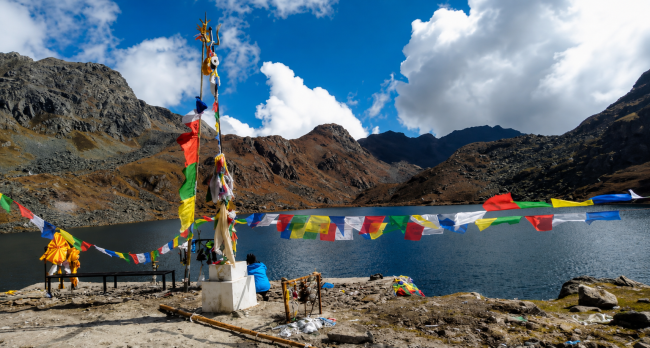
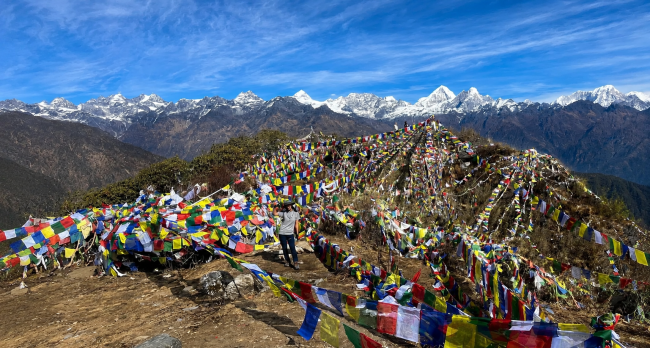
Prayer flags flutter in the mountain wind, while mani walls and Buddhist symbols reflect the spiritual traditions of the region.
The area is also surrounded by remarkable landscapes, making it an ideal location for experiencing the relationship between Himalayan culture and the natural environment.
The Ganja La Pass Trek offers extensive views of the Langtang Himalayas.
Depending on weather and visibility, trekkers may see impressive peaks including:
The scenery changes dramatically throughout the journey. Lower sections feature forests and cultivated hills, while the upper sections contain alpine meadows, rocky slopes, snowfields and dramatic mountain valleys.
The Langtang region is renowned for its biological diversity.
The lower trekking route passes through forests containing species such as oak, pine, rhododendron and bamboo. In spring, rhododendrons can transform sections of the forest with colorful blossoms.
Higher elevations contain increasingly sparse vegetation adapted to the cold alpine environment.
The wider Langtang landscape is also known for Himalayan wildlife. Depending on location, season and luck, trekkers may encounter birds and other wildlife native to the region.
The Langtang National Park area provides important habitat for species including the red panda, Himalayan black bear and various Himalayan birds, although wildlife sightings are never guaranteed.
One of the great strengths of the Ganja La Pass Trek is its cultural dimension.
The Langtang region has a strong Tamang cultural heritage, while Buddhist traditions influence the architecture, religious practices and daily life of mountain communities.
Traditional houses, stone walls, prayer flags, monasteries, mani walls and local festivals provide insight into the region's cultural identity.
Meeting local people and staying in mountain communities allows visitors to experience a side of Nepal that cannot be understood simply by looking at the mountains.
Accommodation generally consists of locally operated teahouses or lodges where available.
Facilities become simpler as the route moves farther from established settlements. In remote high-altitude sections, accommodation arrangements may be more basic and can depend heavily on the chosen itinerary and current trail conditions.
Himalayan Adventure Intl Treks can discuss accommodation arrangements with trekkers before departure and customize the program according to the group's requirements.
Teahouses and lodges generally provide a range of traditional and familiar meals.
Typical trekking meals can include rice and lentils, vegetables, noodles, soups, potatoes, pasta and other simple dishes.
Food options can become more limited in remote areas because supplies must be transported from lower elevations.
Maintaining adequate nutrition and hydration is an important part of any high-altitude trekking journey.
Trekkers traveling through the Langtang region may require the applicable national park and trekking permits.
Permit requirements and fees can change according to government regulations, nationality and route. Himalayan Adventure Intl Treks can assist clients with the required trekking documentation and explain the applicable charges before departure.
Because the Ganja La route is remote and involves a high-altitude pass, professional local support is particularly valuable.
A knowledgeable guide can help with:
The guide's knowledge of current mountain conditions can be especially important around the Ganja La section.
The cost of the Ganja La Pass Trek commonly varies according to the itinerary, group size, accommodation standard, transportation, guide services, permits and other inclusions.
A general package range can be approximately US$800 to US$1,500 per person, although the final price depends on the services selected.
Himalayan Adventure Intl Treks can provide customized options according to the traveler's requirements, including private trekking arrangements and different service levels.
A detailed quotation should clearly identify what is included and excluded so travelers can plan their budget appropriately.
Depending on the selected package, trekking arrangements may include:
Exact inclusions should always be confirmed in the final quotation.
Common exclusions may include:
The final list depends on the package selected.
Because this is a high-altitude trek, travelers should be properly prepared for changing temperatures and weather.
Important categories to consider include:
The exact requirements vary by season and itinerary. Himalayan Adventure Intl Treks can provide a recommended preparation list before departure.
Altitude is one of the most important considerations on the Ganja La Pass Trek.
Symptoms associated with altitude illness can include headache, unusual tiredness, dizziness, nausea and difficulty sleeping. More serious symptoms require immediate attention.
The most important principles are gradual acclimatization, sensible pacing, adequate rest and listening to the trekking guide.
If a trekker develops concerning symptoms, the trekking team should assess the situation and make appropriate decisions regarding descent or medical assistance.
The high-altitude portion of the journey should never be treated casually.
Safety is a priority throughout the Ganja La Pass Trek.
Mountain conditions can change quickly, particularly around the high pass. Heavy snowfall, strong winds, poor visibility and icy conditions may affect the route.
The itinerary should therefore remain flexible.
If conditions are unsuitable, a responsible trekking team may delay the crossing or modify the route rather than taking unnecessary risks.
Travel insurance that covers the planned trekking altitude and emergency evacuation is strongly recommended.
The Langtang region is environmentally and culturally sensitive. Visitors can contribute to sustainable tourism by respecting local communities and protecting the natural environment.
Trekkers should:
Responsible trekking helps preserve the Langtang region for future generations.
Himalayan Adventure Intl Treks provides trekking and adventure services throughout Nepal, with a focus on personalized Himalayan experiences.
For a challenging journey such as the Ganja La Pass Trek, the company can help travelers organize transportation, trekking staff, permits, accommodation and other logistical arrangements.
The itinerary can also be adapted according to trekking experience, available time, group size and preferred service level.
Whether you are traveling privately, with friends, as a small group or as part of a customized adventure, the trekking program can be discussed before arrival in Nepal.
Every traveler has different expectations. Some prefer a straightforward trekking package, while others want additional acclimatization days, cultural experiences or a customized itinerary.
Himalayan Adventure Intl Treks can arrange customized Ganja La Pass trekking programs according to the group's requirements.
Possible customization areas include:
The Ganja La Pass Trek is more than a walk through the Himalayas. It is a journey through changing landscapes, ancient culture and demanding mountain terrain.
From the forests of the lower Langtang Valley to the high alpine environment around Ganja La, every section of the route offers a different experience. The peaceful atmosphere of Kyanjin Gompa, traditional Himalayan villages, Buddhist heritage, dramatic mountain views and the challenge of reaching a high mountain pass combine to create an unforgettable adventure.
The journey also offers an opportunity to experience a less-crowded side of the Langtang region. Rather than following only the most popular trekking routes, travelers venture into remote terrain where nature and traditional mountain culture remain strongly connected.
For experienced trekkers looking for a challenging Himalayan adventure, the Ganja La Pass Trek can be an exceptional choice.
The Ganja La Pass Trek in Nepal is a demanding but rewarding Himalayan adventure combining high-altitude trekking, spectacular mountain scenery, cultural discovery and remote wilderness.
Crossing a pass at approximately 5,122 meters requires appropriate preparation, good physical condition, careful acclimatization and experienced local support. Weather and trail conditions can change rapidly, so flexibility and responsible decision-making are essential.
The journey through Langtang Valley, the visit to Kyanjin Gompa, encounters with Tamang and Sherpa communities, spectacular Himalayan panoramas and the dramatic Ganja La crossing make this trek particularly attractive to adventurous travelers seeking an experience beyond Nepal's more established trekking routes.
With an itinerary generally lasting around 12 to 15 days and package prices commonly ranging from approximately US$800 to US$1,500 per person, the trek can be organized in different ways depending on group size, services and itinerary requirements.
Himalayan Adventure Intl Treks can help organize the necessary trekking arrangements and develop a program suited to the group's requirements. Because high-pass conditions are highly seasonal, the final itinerary should always be confirmed according to current weather, trail and safety conditions.
For travelers seeking dramatic Himalayan landscapes, authentic mountain culture and the challenge of a high-altitude pass, the Ganja La Pass Trek is one of the most memorable adventures available in the Langtang region of Nepal.
Plan your Ganja La Pass Trek with Himalayan Adventure Intl Treks and discover the remote beauty, culture and spectacular landscapes of the Langtang Himalayas.