
Have Questions? Talk to Expert (Binod)
The Lower Mustang Trek is one of Nepal’s most fascinating short Himalayan adventures, combining dramatic mountain scenery, ancient settlements, Tibetan-influenced culture, sacred pilgrimage sites, and the distinctive dry landscapes of the Kali Gandaki Valley. Unlike many popular Himalayan trekking routes, Lower Mustang feels strikingly different from the greener middle hills and forested valleys of Nepal. Here, the mountains rise from a landscape of wind-carved cliffs, barren slopes, sandy riverbeds, irrigated fields, and centuries-old villages.
For travelers who want to experience Mustang without committing to a long and demanding expedition, the Lower Mustang Trek offers an excellent introduction. The journey can generally be arranged in around 7 to 10 days, depending on the starting point, transportation, walking itinerary, acclimatization requirements, and preferred stops. The trek reaches approximately 3,710 meters at Muktinath, although some itineraries describe the maximum elevation more broadly around 3,760 meters.
The route traditionally centers on Jomsom, Marpha, Kagbeni, Jharkot, Muktinath, and Lubra Village. Each settlement offers something different. Jomsom introduces travelers to the distinctive atmosphere of the Mustang district. Marpha is celebrated for its apple orchards and Thakali heritage. Kagbeni preserves the character of an ancient Himalayan fortress settlement and stands at the transition between Lower and Upper Mustang. Muktinath is one of the most important pilgrimage destinations in the Himalaya, revered by both Hindus and Buddhists. Lubra, meanwhile, provides a rare opportunity to learn about the ancient Bon tradition and one of the remaining Bon communities in the region.
The journey is not simply a walk from one village to another. It is an exploration of a landscape shaped by religion, trade, geography, climate, and generations of Himalayan communities.
Nepal has countless trekking possibilities, but Lower Mustang has a character all its own. The region sits behind the major Himalayan ranges and receives comparatively little precipitation. This creates a remarkably dry environment where the scenery can resemble the Tibetan Plateau more than the lush landscapes commonly associated with Nepal.
The contrast begins dramatically when traveling from Pokhara toward Jomsom. The route follows the Kali Gandaki corridor, a spectacular Himalayan landscape dominated by some of the world’s highest peaks. Once you arrive in Jomsom, the climate, architecture, vegetation, and appearance of the villages begin to change.
The trek is particularly attractive to travelers who want:
The moderate nature of the trek also makes it appealing to trekkers who have limited time but still want to experience the high Himalaya.
One of the defining features of Lower Mustang is its location in the rain shadow of the Himalaya. The massive mountain ranges block much of the moisture coming from the south, leaving Mustang significantly drier than many other parts of Nepal.
This geographical position has influenced almost every aspect of life in the region.
The landscape consists of steep mountain walls, exposed rock, dry hillsides, sandy riverbanks, and narrow areas of fertile land around settlements. Where water is available for irrigation, communities have developed green fields and orchards that appear almost unexpectedly amid the barren surroundings.
The Kali Gandaki River is central to the geography and history of the region. The valley has long served as an important route through the Himalaya, linking communities and supporting trade and pilgrimage.
Traveling through the valley also provides opportunities to see extraordinary Himalayan peaks, including:
The proximity of these mountains creates dramatic scenery throughout the trek.
The trek commonly begins in Jomsom, the administrative center of Mustang and one of the best-known settlements in the Kali Gandaki Valley.
For many travelers, reaching Jomsom is an adventure in itself. The flight from Pokhara takes roughly half an hour and follows the spectacular Kali Gandaki corridor. Weather permitting, passengers can enjoy views of enormous Himalayan peaks and the dramatic terrain below.
Jomsom immediately feels different from Pokhara or Kathmandu. The air is cooler and noticeably drier, the surrounding slopes are largely barren, and strong winds frequently develop later in the day.
The town is also an excellent place to begin adapting to the altitude and environment.
A relaxed exploration of Jomsom can include walking through local streets, observing traditional architecture, meeting residents, and visiting cultural attractions. Travelers interested in the history and heritage of Mustang can also visit the Mustang Eco Museum, where local culture, artifacts, architecture, and history provide additional context for the journey.
The afternoon winds are an important part of the local environment. Trekkers should generally plan their walking hours accordingly, beginning earlier in the day when conditions are often more comfortable.
A short journey from Jomsom brings trekkers toward Marpha, one of Lower Mustang’s most charming villages.
Marpha is widely associated with apples and the agricultural traditions of the Mustang region. Apple orchards create a striking contrast against the surrounding dry mountains, demonstrating how communities have adapted to the difficult Himalayan environment.
The village is also closely associated with Thakali culture, an important part of the cultural identity of the Kali Gandaki Valley.
Marpha’s traditional architecture is another attraction. Whitewashed buildings, narrow lanes, flat roofs, and carefully organized settlements reflect practical adaptations to the local climate. Flat roofs, for example, have traditionally provided useful space for drying agricultural products during the warmer months.
Walking through Marpha is therefore more than sightseeing. It offers an opportunity to see how architecture, agriculture, climate, and culture have developed together.
Visitors may encounter locally produced apple products and traditional foods associated with the region. The village provides a peaceful introduction to the cultural richness that becomes even more apparent farther north.
The Kali Gandaki Valley is the geographical backbone of the Lower Mustang Trek.
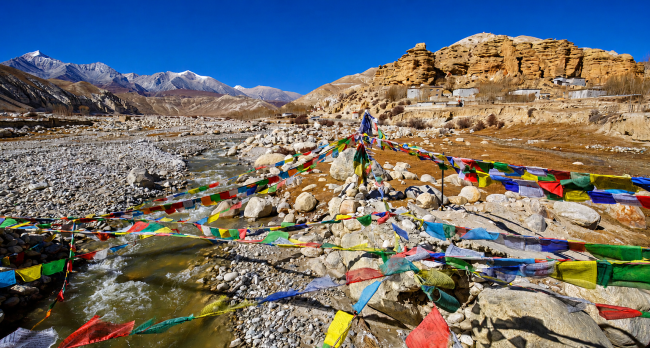
Walking along this historic corridor reveals constantly changing scenery. At times, the trail passes close to the river and its broad, sandy bed. Elsewhere, it climbs above the valley, providing expansive views of the surrounding peaks and settlements.
The valley has long been important as a route through the Himalaya. Its location between major mountain ranges helped make it a natural corridor for movement, trade, cultural exchange, and pilgrimage.
The river is also famous for Shaligram, fossilized stones associated with Lord Vishnu in Hindu tradition. These stones are especially significant to Hindu pilgrims, and the Kali Gandaki is regarded as an important source of Shaligram.
The combination of geological, religious, and cultural significance makes the Kali Gandaki much more than a scenic river valley.
Among all the settlements on the Lower Mustang route, Kagbeni is perhaps one of the most atmospheric.
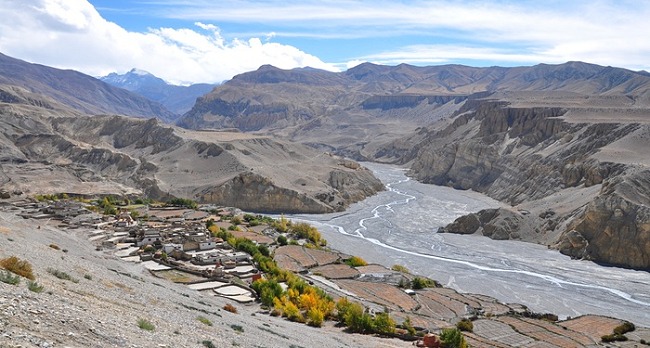
Positioned above the meeting point of the Kali Gandaki and Jhong Khola rivers, Kagbeni has the appearance of an ancient Himalayan fortress. Narrow passageways, traditional buildings, irrigation channels, cultivated fields, monasteries, and old defensive structures create an atmosphere unlike almost anywhere else in Nepal.
Kagbeni is historically significant as the northern gateway toward Upper Mustang. Travelers continuing beyond the designated Lower Mustang area toward destinations such as Lo Manthang enter the restricted Upper Mustang region and require additional authorization.
For Lower Mustang trekkers, Kagbeni represents a fascinating destination in its own right.
The village is surrounded by an arid landscape, yet irrigation allows green fields to flourish around the settlement. This contrast between cultivated land and barren mountains is one of the visual signatures of Mustang.
The local Buddhist heritage is particularly important. Monasteries and prayer wheels form part of the daily cultural landscape, while traditional architecture reflects the strong Tibetan influence that has shaped Mustang over generations.
Kagbeni is also important to Hindu pilgrims, particularly because of traditions associated with ancestral rituals.
Many Hindu pilgrims travel through Kagbeni on their way to Muktinath. The area is associated with ceremonies performed for deceased ancestors, including rituals intended to provide spiritual peace and liberation.
This religious dimension gives Kagbeni a special atmosphere. Trekkers may encounter pilgrims alongside local residents, monks, guides, and fellow travelers, creating a meeting point between different cultural and religious traditions.
The presence of both Hindu and Buddhist traditions demonstrates one of the most remarkable characteristics of the Lower Mustang region: different spiritual practices have existed side by side for generations.
After Kagbeni, the route gradually climbs toward the higher villages surrounding Muktinath.
The trail from Kagbeni toward Jharkot provides a noticeable change in elevation and landscape. Trekkers should take their time because the dry air and increasing altitude can make an otherwise manageable climb feel more demanding.
Jharkot is an old fortified settlement with impressive views over the surrounding valley.
One of its major cultural landmarks is the distinctive red monastery associated with the Sakya tradition of Tibetan Buddhism. The monastery and village provide another opportunity to appreciate the depth of Mustang’s religious heritage.
The area also offers views toward the mountains and the route leading toward the Thorong La region.
For trekkers who have arrived from lower elevations, Jharkot is a valuable place to slow down, explore, and allow the body to adjust to the altitude.
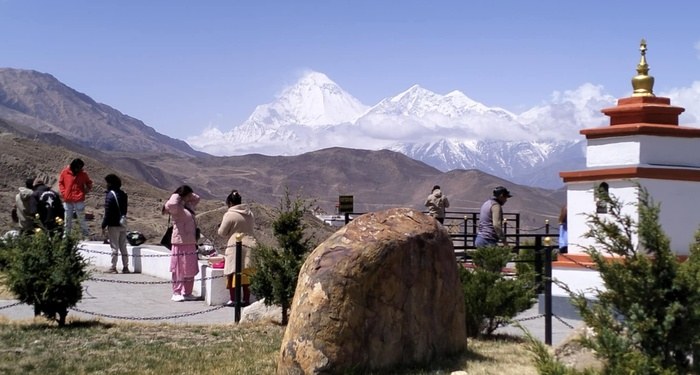
Muktinath, at around 3,710 meters, is the spiritual centerpiece of many Lower Mustang journeys.
The site is sacred to both Hindus and Buddhists, making it one of Nepal’s most significant examples of a shared pilgrimage landscape.
Hindu pilgrims visit Muktinath seeking spiritual purification and liberation. Buddhist traditions also consider the area deeply sacred, and the shrine is associated with important Buddhist religious figures and practices.
One of the best-known features of the pilgrimage area is the collection of 108 water spouts. Pilgrims traditionally participate in rituals involving the sacred water.
Another remarkable feature is the eternal flame, traditionally associated with natural gas emerging from the ground.
The atmosphere around Muktinath can be deeply moving even for visitors who are not traveling for religious reasons. The combination of mountains, ancient religious traditions, pilgrimage activity, and the stark Mustang landscape creates an extraordinary sense of place.
Trekkers should allow enough time to explore respectfully and observe local religious customs.
One of the most distinctive experiences on the Lower Mustang Trek is the visit to Lubra Village, also known as Lupra in some spellings.
Located at approximately 2,770 meters, Lubra sits away from the main trekking route and offers a quieter cultural experience.
The village is particularly significant because of its association with the Bon tradition, an ancient spiritual tradition that predates the widespread establishment of Tibetan Buddhism in the region.
Lubra is home to one of the remaining Bon communities in the Mustang area. Its monastery provides visitors with an opportunity to learn about a religious tradition that is far less commonly encountered than mainstream Buddhist traditions.
The journey to Lubra also provides a welcome change from the busier road corridors. Instead of simply following the principal route, trekkers can explore a more secluded valley and experience a different side of Mustang.
For culturally curious travelers, this can become one of the most memorable days of the entire trek.
Staying overnight in or near Lubra, when accommodation is available, can provide an even deeper experience. Local hospitality offers a chance to observe village life, understand traditional routines, and appreciate the relationship between the community and its surrounding landscape.
Many travelers focus on the major destinations such as Jomsom, Kagbeni, and Muktinath. Lubra is less prominent, but precisely because of this, it can provide a more intimate trekking experience.
The route allows trekkers to escape some of the traffic associated with the main road and discover an ancient cultural landscape at a slower pace.
The Bon monastery is the primary cultural attraction, but the surrounding scenery is equally rewarding. Dry hills, mountain slopes, river valleys, and traditional settlements form the backdrop.
For Himalayan Adventure Intl Treks, incorporating Lubra into a Lower Mustang itinerary is an excellent way to make the trek more than a simple pilgrimage or sightseeing journey.
It adds cultural depth and gives travelers a chance to encounter a lesser-known part of Mustang.
If your travel dates coincide with the festival season, the Yartung Horse Festival can add another unforgettable dimension to a Lower Mustang journey.
The festival is associated particularly with Jomsom and the surrounding Mustang communities and features horse racing and traditional celebrations.
Horses have historically played an important role in Himalayan transportation and culture, particularly in high-altitude regions where rugged terrain made travel difficult.
During the festival, communities gather for several days of cultural activities, celebrations, and horse events.
Travelers visiting Mustang around this period may have an opportunity to see a livelier side of local culture that is not always visible during an ordinary trekking itinerary.
Festival dates can vary, so travelers interested in attending should confirm the current dates before finalizing their plans.
The Lower Mustang landscape is dominated by spectacular Himalayan peaks.
Among the most impressive is Dhaulagiri, rising to 8,167 meters. Its massive presence can be appreciated from different points along the Kali Gandaki corridor.
Annapurna I, at 8,091 meters, is another major Himalayan giant visible from the region.
The sharp profile of Nilgiri Himal creates a particularly dramatic backdrop around Jomsom and Kagbeni, while Tukuche Peak adds another distinctive summit to the skyline.
The scenery constantly changes as the trek progresses. Mountain views are combined with barren cliffs, cultivated terraces, monasteries, river valleys, and traditional villages.
Unlike heavily forested trekking routes, Lower Mustang often provides long-distance visibility, allowing trekkers to appreciate the scale of the Himalayan terrain.
Depending on the selected itinerary and route direction, Tatopani can be included as part of a broader Lower Mustang journey.
The village is particularly famous for its natural hot springs.
After several days of walking, soaking in naturally warm water can be an enjoyable way to relax tired muscles and unwind.
Tatopani is especially appealing for trekkers who want to combine mountain adventure with a little recovery time.
The hot springs are naturally occurring, and local communities and visitors have long used them as a place to relax.
The Lower Mustang Trek is generally considered moderate.
It does not involve technical climbing, glacier crossings, or difficult mountaineering skills. The principal challenges are associated with:
Although the maximum elevation is relatively moderate compared with many Himalayan trekking destinations, trekkers should still take altitude seriously.
The route from Kagbeni toward Jharkot and Muktinath involves climbing, and the combination of elevation and dry conditions can increase fatigue.
A reasonable level of physical fitness is recommended. Regular walking, hiking, stair climbing, or cardiovascular training before the trip can make the journey much more enjoyable.
Lower Mustang has one major advantage compared with many other trekking destinations in Nepal: its rain-shadow location.
While much of Nepal experiences substantial rainfall during the monsoon, Mustang remains comparatively dry.
Spring is one of the most attractive periods for trekking. Temperatures are generally comfortable, visibility can be excellent, and the landscapes are pleasant for walking.
Autumn is another excellent season. The atmosphere is generally clear after the monsoon, making it a popular period for mountain trekking.
September can also be interesting for travelers hoping to experience Mustang’s cultural festivals, depending on the annual festival calendar.
Lower Mustang can remain accessible during the monsoon because it lies in the Himalayan rain shadow.
However, transportation needs careful planning. Flights between Pokhara and Jomsom can be affected by poor weather, particularly when conditions elsewhere in the region deteriorate.
Travelers choosing a monsoon itinerary should therefore build flexibility into their schedule.
Winter is considerably less convenient. Temperatures become very cold, and some businesses and accommodation providers close during the season.
Water availability and food supplies can also become more limited.
For most trekkers, spring and autumn are the most practical choices.
The traditional and fastest approach to Jomsom is by flight from Pokhara.
The flight takes around 30 minutes and offers spectacular views when weather conditions permit.
However, Himalayan aviation is highly weather-dependent. Morning flights are generally preferred because winds tend to become stronger later in the day.
Road access has also expanded significantly in the Mustang region. Travelers can reach Jomsom by road, although the journey can be long and rough in sections.
Road travel may be appropriate for travelers who prefer overland transportation, have flexible schedules, or wish to reduce flight costs.
Himalayan Adventure Intl Treks can help determine whether flying or driving is better suited to your itinerary.
One of the major advantages of Lower Mustang is that trekkers do not need the expensive restricted-area permit required for Upper Mustang as long as they remain within the Lower Mustang trekking area.
The supplied itinerary identifies the Annapurna Conservation Area Permit (ACAP) and TIMS requirements for trekking around Jomsom.
Permit and registration rules can change, so travelers should always confirm the latest requirements before departure.
This is an important distinction between Lower and Upper Mustang.
Travelers continuing north from Kagbeni into the restricted Upper Mustang area need additional authorization and must follow the regulations applicable to that region.
For people who want to experience Mustang without the higher cost and longer commitment of an Upper Mustang expedition, Lower Mustang is therefore a highly practical alternative.
The trekking infrastructure around Jomsom, Kagbeni, Muktinath, and the surrounding villages is relatively well developed.
Accommodation generally consists of teahouses, guesthouses, lodges, and hotels, depending on the settlement.
Jomsom offers a broader range of accommodation, while smaller villages provide simpler lodging.
Most trekking lodges provide basic rooms and bedding. Facilities vary between villages, and hot water is not guaranteed everywhere.
Travelers should approach accommodation with realistic expectations. The attraction of Lower Mustang is its cultural and natural environment rather than luxury infrastructure.
Staying in locally operated lodges also provides an opportunity to support mountain communities directly.
Food availability in the Lower Mustang trekking region is generally good.
Typical meals include:
Dal bhat remains one of the most useful trekking meals because it provides carbohydrates, vegetables, and protein in a filling combination.
Travelers should drink sufficient water throughout the trek, particularly because Mustang’s dry climate can increase fluid loss without the same obvious sensation of sweating experienced in humid environments.
Packing appropriately can make a major difference.
The region is dry and exposed, and strong winds can carry dust and grit through the valley.
Important items include:
A scarf, buff, or face covering is particularly useful when the afternoon winds become strong.
Sunglasses are also valuable because of the combination of bright sunlight, dust, and exposed terrain.
Mustang is culturally and environmentally sensitive.
Visitors should travel respectfully and avoid treating villages simply as photographic backgrounds.
When visiting monasteries and religious sites:
Environmental responsibility is equally important.
Trekkers should minimize plastic waste, use refillable bottles when possible, avoid littering, and follow local waste-management practices.
Supporting local guesthouses, guides, restaurants, and small businesses is another meaningful way to contribute to the communities through which you travel.
Lower Mustang and Upper Mustang are connected geographically but offer somewhat different trekking experiences.
Lower Mustang is generally easier to access, requires less time, and does not require the expensive restricted-area permit associated with Upper Mustang.
It includes major destinations such as Jomsom, Marpha, Kagbeni, Jharkot, Muktinath, and Lubra.
Upper Mustang, by contrast, extends toward Lo Manthang and deeper into the formerly restricted northern region. It requires additional permits and a longer itinerary.
Travelers with limited time can therefore choose Lower Mustang as an excellent introduction to Mustang’s landscape and culture.
Those with more time and a larger budget may consider extending their adventure into Upper Mustang.
Yes, depending on the itinerary and trekking conditions.
From Muktinath, trekkers can connect toward the Thorong La route and continue onto the Annapurna Circuit.
However, this is a much more demanding proposition.
Thorong La rises to approximately 5,416 meters, considerably higher than Muktinath. Crossing the pass requires proper acclimatization, preparation, favorable weather, and careful itinerary planning.
The Lower Mustang Trek should therefore not automatically be considered preparation for crossing Thorong La unless the itinerary has been specifically designed for that purpose.
For travelers seeking a moderate cultural trek, staying within Lower Mustang is often the more comfortable choice.
A classic itinerary can begin with travel from Kathmandu to Pokhara before continuing to Jomsom.
After arriving in Jomsom, travelers can explore the town and potentially walk toward Marpha.
The following days can take trekkers north toward Kagbeni, where ancient architecture, Buddhist traditions, river landscapes, and the cultural gateway toward Upper Mustang create an unforgettable experience.
From Kagbeni, the route climbs toward Jharkot and Muktinath.
After exploring the sacred pilgrimage area, the journey can return toward Jomsom using the quieter Lubra route.
This itinerary creates a satisfying circular-style experience, allowing travelers to see different landscapes rather than simply retracing the same trail.
A final flight from Jomsom to Pokhara can then connect the journey back toward Kathmandu.
Because flights are weather-dependent, flexible scheduling is recommended.
What makes Lower Mustang exceptional is the way several forms of travel come together.
It is a trekking experience, but it is also a cultural journey.
It is a mountain adventure, but it is also a pilgrimage landscape.
It is a geographical expedition through one of Nepal’s most unusual environments, but it is also a chance to meet communities that have adapted to life in a harsh Himalayan setting for generations.
A traveler may begin the day among the orchards and traditional buildings of Marpha, walk beside the Kali Gandaki, explore the ancient lanes of Kagbeni, observe Buddhist traditions in Jharkot, experience the sacred atmosphere of Muktinath, and then discover the Bon heritage of Lubra.
Few short Himalayan treks offer such a diverse combination.
At Himalayan Adventure Intl Treks, we understand that a successful trek is about much more than reaching the destination.
Our goal is to create a journey in which travelers can enjoy the scenery while also understanding the culture, history, religion, and everyday life of the communities they visit.
Our Lower Mustang trekking programs can be organized around your available time, preferred pace, transportation preferences, and interests.
Experienced local guides are an important part of this experience. A knowledgeable guide can help with navigation, altitude awareness, cultural interpretation, accommodation arrangements, transportation coordination, and communication with local communities.
We place strong emphasis on responsible trekking, guest safety, and reliable organization.
Whether you are a first-time Himalayan trekker or an experienced traveler looking for a shorter cultural adventure, our team can help design a Lower Mustang journey that fits your expectations.
The Lower Mustang Trek is an ideal choice for travelers who want to experience the Himalaya from a different perspective.
Instead of dense forests and heavily traveled trails, the journey leads into a dry mountain world shaped by the rain shadow of the Himalaya. The Kali Gandaki River cuts through dramatic terrain while enormous peaks rise above the valley.
Yet the mountains are only part of the story.
The ancient settlement of Kagbeni reveals centuries of Himalayan history. Marpha introduces travelers to Thakali culture and apple-growing traditions. Jomsom provides a gateway into Mustang’s distinctive way of life. Muktinath brings together Hindu and Buddhist pilgrimage traditions. Lubra offers a rare encounter with the ancient Bon heritage of the region.
The journey is moderate rather than technical, making it accessible to travelers with a reasonable level of fitness. Its relatively short duration makes it particularly attractive to people who cannot dedicate several weeks to a Himalayan expedition.
With careful planning, the trek can be enjoyed during spring and autumn and, because of Mustang’s rain-shadow geography, can also be considered during the monsoon season.
For those searching for a Himalayan adventure that combines mountains, culture, spirituality, traditional villages, dramatic landscapes, and meaningful local encounters, Lower Mustang stands among Nepal’s most rewarding choices.
Join Himalayan Adventure Intl Treks and journey beyond the familiar Himalayan trails into a landscape where ancient traditions remain closely connected to the mountains, rivers, monasteries, and villages that have shaped Mustang for generations.
Lower Mustang is not simply a destination to reach—it is a region to experience, understand, and remember.
Welcome to Nepal! Your Lower Mustang adventure begins with your arrival in Kathmandu, the vibrant capital city surrounded by the Himalayan foothills. Upon landing at Tribhuvan International Airport, you will be welcomed by a representative from Himalayan Adventure Intl Treks and transferred comfortably to your hotel. After checking in and taking some time to rest, you may explore the nearby streets and experience your first impressions of Nepalese culture.
Kathmandu is a fascinating blend of ancient traditions and modern life. Its historic courtyards, colorful temples, prayer flags, traditional architecture, and bustling markets provide an exciting introduction to the country. Depending on your arrival time, you can take a relaxed walk around Thamel, a popular tourist district filled with restaurants, cafés, handicraft shops, trekking stores, and cultural attractions.
Later in the day, your trekking team will meet you for a detailed briefing about the journey ahead. Your guide will explain the route, expected walking conditions, altitude considerations, transportation arrangements, and essential preparations for the trek. This is also a good opportunity to check your trekking equipment and organize your bags.
Enjoy a welcome dinner featuring traditional Nepalese cuisine, where you can sample local specialties and meet members of your trekking team. Overnight at a comfortable hotel in Kathmandu.
Accommodation: Hotel
Meals: Welcome Dinner
Maximum Altitude: 1,350 m
Activities: Arrival, transfer, trek briefing, cultural orientation
Today, you leave Kathmandu and travel toward Pokhara, one of Nepal’s most beautiful and relaxing cities. Depending on your preference, road conditions, and flight availability, you can travel by scenic tourist vehicle or take a short domestic flight.
The overland journey offers an excellent opportunity to observe Nepal’s changing landscapes. The road follows winding mountain highways, passing through traditional villages, terraced hillsides, rivers, forests, and agricultural settlements. Along the way, you can see everyday rural life and appreciate how communities have adapted to the steep Himalayan terrain. The drive generally takes several hours, depending on traffic and road conditions.
Alternatively, a flight provides a much quicker journey and spectacular aerial views of the Himalayan region when weather conditions are clear. As you approach Pokhara, the landscape becomes increasingly dramatic, with mountain scenery appearing around the valley.
After arriving in Pokhara, transfer to your hotel and enjoy a relaxed afternoon. Pokhara is situated beside the tranquil Phewa Lake and is famous for its spectacular views of the Annapurna and Dhaulagiri ranges. If time permits, you can stroll along Lakeside, enjoy a peaceful boat ride, or relax at a lakeside café.
Your guide will also ensure that everything is prepared for the journey into Lower Mustang. The evening can be spent enjoying Pokhara’s peaceful atmosphere before beginning the mountain adventure.
Accommodation: Hotel
Meals: Breakfast
Transportation: Tourist vehicle or domestic flight
Activities: Scenic journey, Pokhara exploration
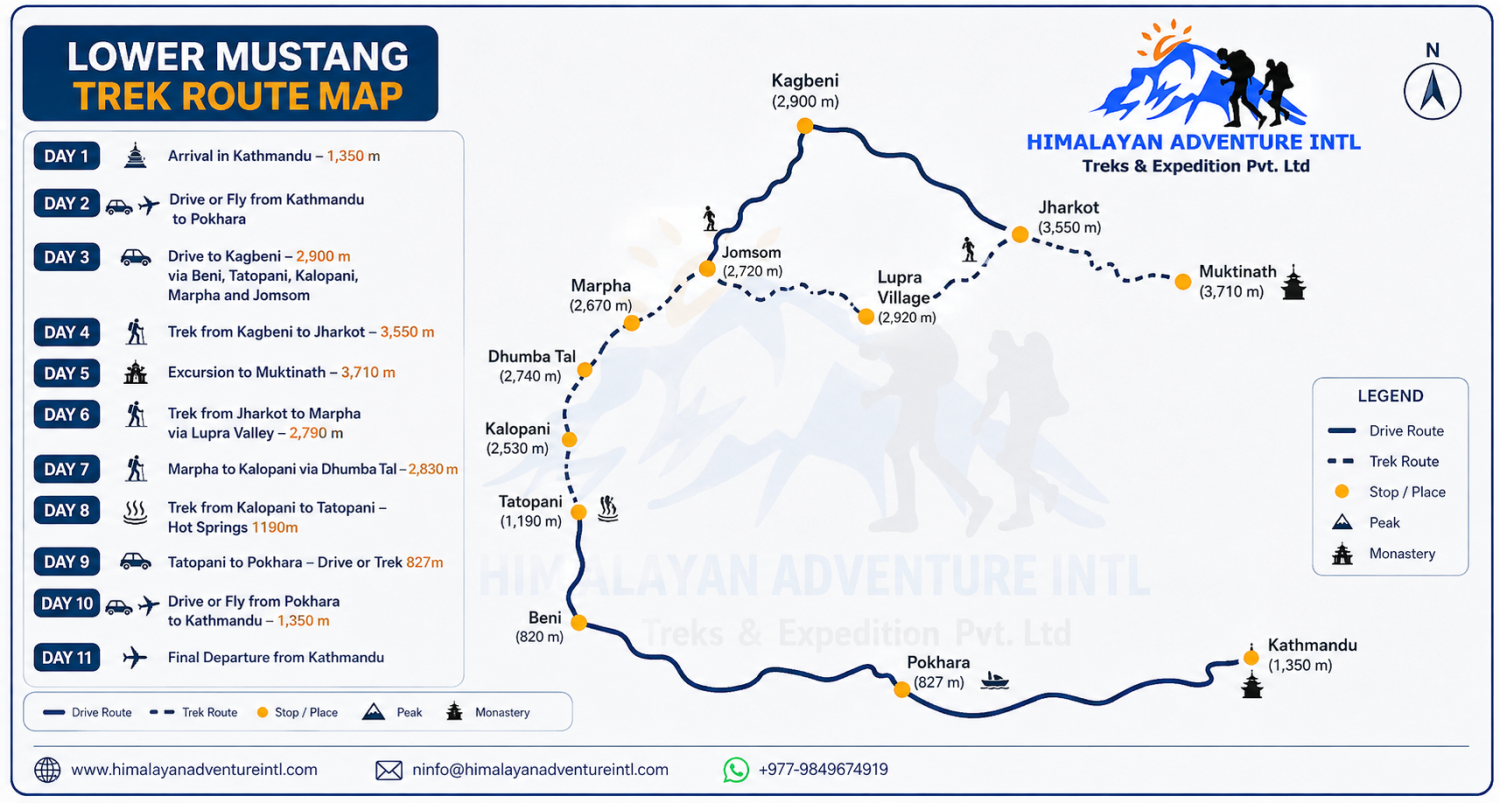
Today marks the beginning of your journey into the spectacular Mustang region. After breakfast, you travel toward Kagbeni, following one of Nepal’s most fascinating mountain routes. The journey passes through Beni, Tatopani, Kalopani, Marpha, and Jomsom before reaching the ancient settlement of Kagbeni.
The road gradually climbs from the lower valleys into increasingly rugged Himalayan landscapes. You will pass terraced farmland, rushing rivers, waterfalls, forested hills, and traditional mountain settlements. At Tatopani, the landscape remains relatively lush, while higher elevations gradually become drier and more dramatic.
As you continue toward Kalopani and Marpha, views of the surrounding Himalayan peaks become increasingly impressive. Marpha is particularly famous for its whitewashed houses, narrow stone-paved lanes, orchards, and traditional Thakali culture. A short stop here allows you to appreciate the unique character of the village.
From Marpha, continue toward Jomsom, an important administrative and trading center of Mustang. The landscape around Jomsom changes dramatically, with barren cliffs, windswept valleys, and distinctive rock formations creating the characteristic appearance of the Kali Gandaki Valley.
Finally, arrive at Kagbeni, a remarkable medieval-style village located near the junction of the Kali Gandaki and Jhong Rivers. The settlement features narrow alleys, mud-brick houses, prayer wheels, monasteries, and ancient Tibetan-influenced architecture.
After checking into your accommodation, enjoy the peaceful mountain surroundings and prepare for the trekking days ahead.
Accommodation: Teahouse/Lodge
Meals: Breakfast, Lunch and Dinner
Driving Duration: Approximately 6–7 hours
Maximum Altitude: 2,900 m
After breakfast, begin your first significant trekking day through the remarkable landscapes of Lower Mustang. Leaving Kagbeni behind, the trail follows the Kali Gandaki Valley before gradually climbing toward the traditional village of Jharkot.
The morning begins with spectacular views of the surrounding dry mountain terrain. The landscape here is very different from the lush foothills of Nepal. Towering cliffs, barren hills, wind-carved formations, and distant snow-covered peaks create a dramatic Himalayan environment. Along the trail, you may encounter mule caravans and local residents transporting goods between villages.
The route passes through traditional settlements where Tibetan Buddhist culture remains deeply rooted. Stone walls, prayer flags, mani walls, chortens, and ancient monasteries appear throughout the journey, giving the trail a distinctly spiritual atmosphere.
As you climb higher, the air becomes cooler and thinner. Your guide will maintain a comfortable pace, allowing your body to gradually adjust to the increasing altitude. Regular rest stops provide opportunities to drink water, enjoy snacks, and photograph the spectacular scenery.
Jharkot is a beautifully preserved mountain village situated on a hillside above the valley. Its traditional houses and surrounding fields provide a fascinating glimpse into the lifestyle of the local people. The village is also known for its historic Buddhist monastery and impressive views toward the surrounding mountains.
Upon arrival, settle into your teahouse and enjoy a warm meal. The afternoon can be spent exploring the village or simply relaxing while taking in the Himalayan scenery.
Accommodation: Teahouse/Lodge
Meals: Breakfast, Lunch and Dinner
Trekking: Moderate mountain trail
Maximum Altitude: 3,550 m
Today is one of the most important days of your Lower Mustang journey as you visit the sacred pilgrimage destination of Muktinath. After breakfast, begin your excursion from Jharkot toward Muktinath, either on foot or using local transportation depending on your preference and trail conditions.
Muktinath is revered by both Hindus and Buddhists and is one of the most significant spiritual destinations in the Himalayas. The site is surrounded by an extraordinary combination of high-altitude landscapes, ancient religious traditions, and dramatic mountain scenery.
As you approach the temple area, you will notice prayer flags fluttering in the mountain wind and pilgrims arriving from different parts of Nepal and India. The famous temple complex includes the sacred natural flame, believed to be a manifestation of the elements, and the traditional water spouts where pilgrims perform ritual bathing.
For Buddhist visitors, the nearby Jwala Mai Temple and surrounding monasteries hold deep spiritual significance. The area represents an important meeting point between Hindu and Buddhist traditions, making Muktinath culturally unique.
Spend time respectfully exploring the sacred complex and enjoying the panoramic views of the surrounding mountains. The dry, windswept terrain provides an impressive contrast to the lush landscapes found at lower elevations.
After completing your visit, return to Jharkot. The remainder of the afternoon is free for rest and acclimatization. You may explore the village, interact with local residents, or enjoy views of the surrounding valleys.
This relatively flexible day also allows your body additional time to adapt to the altitude before continuing the trek.
Accommodation: Teahouse/Lodge
Meals: Breakfast, Lunch and Dinner
Maximum Altitude: 3,710 m
Activities: Muktinath pilgrimage, cultural exploration, acclimatization
Today brings a particularly scenic and culturally interesting section of the journey as you leave Jharkot and trek toward the famous village of Marpha through the beautiful Lupra Valley.
After breakfast, begin descending and traversing the mountain landscape toward the less-frequented Lupra Valley. This route offers a quieter trekking experience away from some of the busier sections of the Mustang trail. The valley is known for its distinctive Himalayan scenery and strong connection with the Bon tradition, an ancient spiritual tradition that predates the widespread influence of Tibetan Buddhism in the region.
As you walk through the valley, you will encounter rugged cliffs, barren slopes, open grazing areas, and spectacular views of the surrounding peaks. The trail may involve several ascents and descents, making the journey physically engaging while providing constantly changing scenery.
Continue toward the Kali Gandaki Valley and eventually reach Marpha, one of the most attractive traditional settlements in Mustang. Marpha is renowned for its beautifully maintained whitewashed houses, stone-paved lanes, wooden balconies, orchards, and traditional Thakali culture.
Upon arrival, take time to explore the village. You can wander through its narrow lanes, visit the local monastery, observe traditional architecture, and enjoy views across the surrounding valley. Marpha is also famous for its apple orchards, which thrive in the region’s cool, dry climate.
The peaceful atmosphere of Marpha makes it an ideal place to relax after the day’s trek. Enjoy a warm dinner and spend the evening experiencing the traditional mountain village environment.
Accommodation: Teahouse/Lodge
Meals: Breakfast, Lunch and Dinner
Maximum Altitude: 2,790 m
Route: Jharkot – Lupra Valley – Marpha
Today combines trekking, natural beauty, and a rewarding side excursion. After breakfast in Marpha, begin your journey toward Kalopani, with an optional hike to the beautiful Dhumba Tal, a peaceful alpine lake surrounded by the rugged landscapes of Mustang.
The side hike to Dhumba Tal provides a refreshing contrast to the dry mountain scenery. The trail passes through quieter surroundings and offers excellent opportunities to appreciate the unique natural environment. The lake is considered culturally significant by local communities and is surrounded by an atmosphere of tranquility.
After enjoying the lake and its surroundings, return toward the main route and continue through the Kali Gandaki Valley. Depending on trail conditions, group preference, and transportation arrangements, this section can be completed partly by trekking and partly by local vehicle.
The landscape gradually becomes greener as you descend toward Kalopani. Forests and vegetation begin to reappear, creating a striking transition from Mustang’s dry upper valleys to the more humid lower Himalayan environment.
Throughout the journey, you can enjoy views of dramatic mountain peaks, deep river valleys, waterfalls, and traditional settlements. Your guide will help maintain a suitable pace and arrange breaks along the route.
Kalopani is a peaceful mountain settlement with excellent views of the surrounding Himalayan peaks. After reaching the village, check into your lodge and enjoy a relaxing evening.
This is a wonderful opportunity to reflect on the diverse landscapes experienced during the trek—from barren high-altitude valleys to greener mountain forests.
Accommodation: Teahouse/Lodge
Meals: Breakfast, Lunch and Dinner
Maximum Altitude: 2,830 m
Activities: Trekking, Dhumba Tal excursion, scenic exploration
Today, the trail takes you further downhill from Kalopani toward Tatopani, a famous village known for its natural hot springs. After breakfast, begin walking through a landscape that gradually becomes greener and warmer as you lose altitude.
The trail follows the Kali Gandaki Valley through forests, terraced farmland, small settlements, and mountain streams. Compared with the dry landscapes of Upper and Lower Mustang, this section feels lush and refreshing. The sound of flowing water, birds, and surrounding vegetation creates a pleasant trekking atmosphere.
As you descend, the Himalayan environment changes noticeably. Pine and other vegetation become increasingly abundant, while traditional farming communities appear along the route. You will pass through villages where local people continue to practice traditional agriculture and livestock farming.
The journey provides excellent opportunities to observe rural Nepalese life. Terraced fields, suspension bridges, traditional houses, and riverside settlements form an important part of the scenery.
Eventually, you reach Tatopani, whose name literally means “hot water.” The village is famous for its natural hot springs, making it a perfect place to relax after several days of trekking.
After checking into your accommodation, take the opportunity to visit the hot springs. Soaking in the naturally warm mineral-rich water can be a wonderfully relaxing experience after the physical effort of the trek.
Spend the evening enjoying the peaceful surroundings and reflecting on the journey through Mustang. The combination of mountain scenery and rejuvenating hot springs makes Tatopani one of the memorable stops on this itinerary.
Accommodation: Teahouse/Lodge
Meals: Breakfast, Lunch and Dinner
Activities: Trekking, village exploration, natural hot spring experience
Today you begin your return journey toward Pokhara. Depending on your preference, road conditions, and available time, you may travel by road or continue trekking along the scenic Kali Gandaki corridor before connecting with transportation.
The drive from Tatopani provides a final opportunity to enjoy the changing Himalayan landscape. As you descend toward lower elevations, the environment becomes increasingly green and subtropical. Terraced hillsides, waterfalls, rivers, forests, and villages replace the dry landscapes experienced in Mustang.
If you choose to continue trekking, the route provides a more immersive experience of rural Nepal. Walking allows you to appreciate details that can easily be missed while traveling by vehicle, including traditional agricultural practices, local architecture, mountain vegetation, and village life.
Eventually, continue onward toward Pokhara. After arriving, transfer to your hotel and enjoy a well-earned rest.
Pokhara offers a completely different atmosphere from the high mountain villages. Situated beside Phewa Lake and surrounded by green hills, it is an ideal place to relax after the trek. Depending on your arrival time, you may enjoy a peaceful walk along Lakeside, take a boat ride, visit local shops, or simply relax at your hotel.
The evening can be spent enjoying a comfortable dinner at one of the city’s many restaurants. This is also a good time to celebrate the successful completion of your Mustang trekking adventure with your guides and fellow travelers.
Accommodation: Hotel
Meals: Breakfast and Lunch
Transportation: Drive or trek
Destination: Pokhara
After breakfast, your journey continues back to Kathmandu. Depending on your preference, you can travel by scenic road or take a domestic flight.
The overland journey offers one final opportunity to observe Nepal’s diverse landscapes. The road passes through green hills, rivers, terraced farmland, roadside settlements, and winding mountain highways. The scenery provides a pleasant contrast to the high-altitude terrain of Mustang.
If you choose to fly, the journey is much shorter and may provide beautiful aerial views of Nepal’s hills and Himalayan ranges when weather conditions are favorable.
Upon arrival in Kathmandu, transfer to your hotel and enjoy some free time. After several days in the mountains, the comforts and lively atmosphere of the capital provide a welcome change.
You may use your remaining time to purchase souvenirs, explore Thamel, visit a cultural attraction, or simply relax at your hotel. Kathmandu offers a wide variety of traditional handicrafts, clothing, artwork, and Nepalese products that make excellent memories of your journey.
In the evening, Himalayan Adventure Intl Treks can arrange a farewell dinner to celebrate the completion of your Lower Mustang adventure. Share stories and memories from the trek while enjoying authentic Nepalese cuisine and cultural hospitality.
Overnight at your hotel in Kathmandu.
Accommodation: Hotel
Meals: Breakfast and Farewell Dinner
Transportation: Tourist vehicle or domestic flight
Maximum Altitude: 1,350 m
Your unforgettable Nepal adventure comes to an end today. Depending on your international flight schedule, you will have some free time in Kathmandu before being transferred to Tribhuvan International Airport.
After breakfast, you can enjoy a relaxed final morning at your hotel. If your flight is later in the day, there may be time for some last-minute shopping or a short walk around the nearby area. You can purchase traditional handicrafts, handmade souvenirs, Nepalese tea, prayer flags, artwork, or other gifts to take home.
At the appropriate time, a representative from Himalayan Adventure Intl Treks will meet you at the hotel and arrange your transfer to the airport. We recommend arriving at the airport with sufficient time for international check-in and security procedures.
As you depart Nepal, you will carry memories of ancient villages, sacred Muktinath, the remote Lupra Valley, dramatic Mustang landscapes, traditional Himalayan culture, peaceful Dhumba Tal, and relaxing Tatopani hot springs.
Himalayan Adventure Intl Treks sincerely thanks you for choosing us for your journey through Nepal. We hope the experience has provided you with wonderful memories and a deeper appreciation of the country’s landscapes, cultures, and mountain communities.
We look forward to welcoming you again for another Himalayan adventure in the future.
Accommodation: None
Meals: Breakfast
Activities: Airport transfer and departure
The Lower Mustang Trek is one of the most fascinating and rewarding trekking journeys in Nepal, combining spectacular Himalayan scenery, ancient villages, Tibetan-influenced traditions, Buddhist monasteries, sacred pilgrimage sites, dramatic river valleys, and the unique landscapes of the trans-Himalayan region. Unlike many high-altitude trekking routes in Nepal, Lower Mustang can be explored throughout much of the year, including the monsoon season, making it an excellent choice for travelers searching for a culturally rich Himalayan adventure.
Organized by Himalayan Adventure Intl Treks, the Lower Mustang Trek takes travelers from the lush hills and subtropical landscapes around Pokhara toward the dry, windswept valleys of Mustang. Along the way, the scenery changes dramatically. Green forests gradually give way to barren cliffs, rocky hillsides, deep river gorges, ancient settlements, apple orchards, and the spectacular peaks of the Annapurna and Dhaulagiri mountain ranges.
The journey also provides an opportunity to experience the distinctive culture of the Mustang region. Traditional stone and mud-brick houses, Buddhist prayer flags, chortens, mani walls, monasteries, traditional farming practices, and warm local hospitality are part of everyday life along the trail.
One of the major highlights is Muktinath, located at an elevation of approximately 3,800 meters. This sacred pilgrimage destination is revered by both Hindus and Buddhists and attracts pilgrims from Nepal, India, Tibet, and beyond. Other important stops include Jomsom, Marpha, Tukuche, Kagbeni, and several traditional villages along the Kali Gandaki Valley.
Whether you are planning a solo Lower Mustang Trek, couple trek, family adventure, private trek, or group joining trek, Himalayan Adventure Intl Treks can arrange a journey according to your preferred pace, budget, accommodation level, and travel schedule.
Himalayan Adventure Intl Treks is accepting bookings for the Lower Mustang Trek for the trekking season.
We provide several trekking options so travelers can select a package that best suits their needs:
Booking early is recommended, particularly during the popular spring and autumn trekking seasons. Early reservations can make it easier to arrange preferred accommodation, transportation, guides, porters, and domestic flights.
Our experienced local team takes care of the major logistics so you can concentrate on enjoying the landscapes, villages, culture, and Himalayan experience.
Lower Mustang is an ideal destination for travelers who want something different from the more heavily visited Everest and Annapurna Base Camp routes.
The region combines the beauty of the Himalayas with a distinctive trans-Himalayan environment. Within a relatively short journey, you can experience green valleys, pine and rhododendron forests, waterfalls, agricultural terraces, dramatic cliffs, dry landscapes, and snow-covered mountain peaks.
The Lower Mustang trail follows sections of the Kali Gandaki Valley, one of the most dramatic river valleys in the Himalayas. The landscape changes considerably as you move north.
The route provides impressive views of mountains including Annapurna, Dhaulagiri, Nilgiri, and other surrounding Himalayan peaks. The contrast between snow-covered mountains and the dry, rocky terrain of Mustang creates some of the most memorable scenery in Nepal.
Lower Mustang has a strong Tibetan cultural and Buddhist influence. Ancient monasteries, chortens, mani walls, prayer flags, traditional homes, and religious symbols can be seen throughout the region.
The local communities have preserved many traditional customs despite increasing tourism and modern transportation.
Muktinath is one of the most important attractions of the trek. For Hindu pilgrims, the temple is associated with Lord Vishnu and is considered a sacred pilgrimage destination. Buddhists also consider the area highly significant.
The coexistence of Hindu and Buddhist traditions makes Muktinath an especially interesting cultural destination.
The trail passes through historic settlements where traditional architecture and village life remain an important part of the local identity.
Kagbeni is particularly famous for its narrow alleys, old houses, monasteries, prayer flags, and Tibetan-influenced atmosphere.
Compared with some of Nepal's more demanding high-altitude trekking routes, Lower Mustang is relatively accessible. Travelers can reach the region by road or by flying from Pokhara to Jomsom, depending on weather and transportation conditions.
This makes the trek suitable for people who have limited time but still want to experience the Himalayas.
The Lower Mustang Trek offers an impressive combination of nature, culture, religion, and adventure.
Major highlights include:
A typical Lower Mustang trekking route can begin with a journey from Kathmandu to Pokhara, followed by transportation toward Jomsom.
One popular itinerary is:
Kathmandu → Pokhara → Jomsom → Marpha → Tukuche → Kalopani → Tatopani → Ghorepani → Pokhara
Another variation can include:
Pokhara → Jomsom → Kagbeni → Muktinath → Jomsom → Marpha → Tukuche → Kalopani → Tatopani → Pokhara
The exact itinerary can be adjusted depending on the number of trekking days, transportation arrangements, fitness level, weather, and places travelers want to visit.
Himalayan Adventure Intl Treks can also create a customized itinerary for travelers who want additional cultural excursions or more relaxed trekking days.
Jomsom is the administrative and transportation hub of the Mustang region and is situated at around 2,720 meters.
The town is famous for its strong afternoon winds, mountain scenery, local markets, hotels, lodges, and airport. It is often the starting or ending point for Lower Mustang trekking adventures.
Jomsom is also an important gateway to Muktinath and Upper Mustang.
Marpha is one of the most beautiful traditional villages in Lower Mustang. It is particularly famous for its apple orchards, whitewashed houses, stone-paved paths, and traditional architecture.
Visitors can enjoy locally produced apple products and explore the peaceful village environment.
Marpha is also an excellent place to experience Thakali culture and hospitality.
Tukuche is another historic settlement along the Kali Gandaki Valley. The village was historically important because of its position along the old trade route between the Tibetan Plateau and the lower Himalayan regions.
Its traditional houses and surrounding mountain scenery make it an interesting cultural stop.
Kagbeni is one of the most distinctive villages in Mustang.
Located at around 2,840 meters, it is famous for its ancient architecture, narrow alleyways, Buddhist monasteries, prayer flags, and dramatic surrounding landscapes.
Kagbeni also serves as the gateway toward Upper Mustang.
At approximately 3,800 meters, Muktinath is the highest major destination on many Lower Mustang itineraries.
The area is considered sacred by both Hindus and Buddhists. Pilgrims visit the temple complex, natural springs, and religious sites throughout the year.
For trekkers, Muktinath is also an opportunity to experience the dramatic high-altitude environment of Mustang.
Lupra is known for its connection to the Bon tradition and provides an opportunity to learn about one of the region's older spiritual traditions.
A visit to Lupra can add a cultural dimension to a Lower Mustang itinerary.
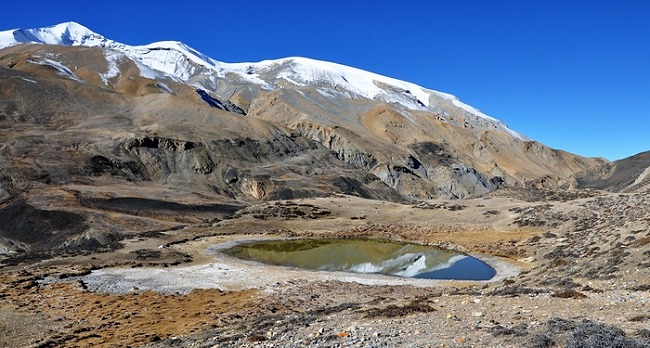
Dhumba Lake is a small but beautiful turquoise-colored lake near Jomsom. It can be visited as a short side excursion depending on the itinerary and available time.
The peaceful surroundings make it a worthwhile destination for travelers interested in photography and nature.
The cost of the Lower Mustang Trek depends on the trekking duration, group size, accommodation standard, transportation, guide and porter services, and whether you choose a private or group joining trek.
As an approximate guide, the cost may range from:
USD 900–1,200 per person for a standard group joining package
Private, solo, couple, and customized packages may cost more or less depending on the services included.
Himalayan Adventure Intl Treks provides customized quotations based on your preferred itinerary and travel arrangements.
A group joining trek is a good choice for travelers who want to reduce the cost of a private trek while meeting other adventure travelers.
The approximate cost for a group joining Lower Mustang Trek is:
USD 900–1,200 per person
The exact price depends on:
Larger groups can sometimes benefit from shared transportation and guide expenses.
Himalayan Adventure Intl Treks organizes fixed departures as well as group joining trips based on demand.
Solo travelers can choose a private trekking arrangement with a local guide.
An approximate standard cost is:
USD 1,200–1,500 per person
A solo trek generally costs more per person because transportation, guide, and other operational expenses cannot be divided among several trekkers.
A solo traveler can nevertheless benefit from a flexible itinerary, personalized walking pace, and greater freedom to spend additional time in villages or cultural sites.
A porter can also be added if required.
Couples can enjoy a private Lower Mustang Trek with an itinerary designed around their preferred pace and interests.
The estimated cost is approximately:
USD 1,000–1,300 per person
The cost can change depending on accommodation, transportation, guide and porter arrangements, and the duration of the trip.
Couple trekking is particularly suitable for travelers who want a more private and comfortable Himalayan experience.
Nepali citizens generally have different transportation and tourism costs compared with international visitors.
A budget Lower Mustang trip may cost approximately:
NPR 12,000–18,000 per person
A more comfortable guided trip may cost approximately:
NPR 25,000–35,000 per person
The final cost depends heavily on whether you use public transportation, private jeeps, hotels, meals, guides, and other services.
Nepali travelers should contact Himalayan Adventure Intl Treks for a current quotation based on their planned route.
Indian travelers can also explore Lower Mustang by combining road or air transportation with trekking.
An approximate budget may be:
INR 15,000–20,000 for a budget journey
A guided and more comfortable trek may cost:
INR 25,000–35,000 per person
Costs vary according to transportation, accommodation, meals, group size, and itinerary.
The permit requirements should always be confirmed before departure because trekking regulations can change.
For the standard Lower Mustang trekking area, travelers have traditionally needed the following permits:
Approximately USD 30 per person
The Lower Mustang route falls within the Annapurna Conservation Area, so an ACAP is generally required.
Approximately USD 20 per person
The Trekkers' Information Management System (TIMS) requirement and applicable fee can vary depending on current regulations and trekking arrangements.
Himalayan Adventure Intl Treks can assist with the necessary permits and documentation before the trek begins.
Important: Lower Mustang should not be confused with Upper Mustang. Upper Mustang has separate restricted-area regulations and substantially higher permit costs.
Transportation represents an important part of the total cost.
Tourist bus:
Approximately USD 10–30 per person
Flight is another option for travelers who prefer to save time.
A one-way flight may cost approximately:
USD 125–185 per person
Flight schedules and prices can change, and flights are highly dependent on weather conditions.
Local jeep transportation may cost approximately:
USD 15–25 per person
The price depends on the vehicle, season, route, and number of passengers.
Travelers can also reach Mustang by road via Beni and Jomsom. This can be more economical but generally takes longer and may involve rough mountain roads.
Himalayan Adventure Intl Treks can arrange transportation according to your preferred budget and comfort level.
A professional guide can make the Lower Mustang Trek easier, safer, and more informative.
Approximate daily rates are:
A guide can assist with navigation, accommodation, local communication, cultural interpretation, and basic trekking support.
Porters can carry the majority of your trekking equipment, allowing you to enjoy the trail with a lighter daypack.
Accommodation along the Lower Mustang route ranges from simple teahouses to more comfortable hotels and lodges.
Approximately:
USD 5–30 per night
The price depends on the location, season, room type, and standard of the property.
Meals generally include traditional Nepali, Tibetan, and international dishes.
Popular choices include:
A food budget of approximately USD 20–25 per day is reasonable for many budget-to-standard trekking arrangements, although actual spending can vary.
Bottled or treated drinking water may cost approximately USD 1–3 per liter, depending on location.
We recommend carrying a reusable bottle and using boiled or properly treated water to reduce plastic waste.
One of the greatest advantages of Lower Mustang is its relatively flexible trekking season.
Spring is one of the best seasons for trekking.
The weather is generally pleasant, mountain visibility is often good, and lower elevations can display colorful rhododendron blossoms.
March, April, and May are excellent months for travelers who want a combination of comfortable temperatures and mountain scenery.
Autumn is another excellent season.
The monsoon rains usually clear the atmosphere, producing crisp mountain views and pleasant trekking conditions.
September, October, and November are especially popular.
Winter trekking is possible, but temperatures can become very cold, particularly at night and around higher elevations.
Snowfall can affect some sections of the route.
However, winter can be a good choice for experienced travelers seeking quieter trails and a more peaceful Himalayan environment.
Lower Mustang is located within the rain-shadow region of the Annapurna and Dhaulagiri mountains.
As a result, Mustang receives considerably less rainfall than many other parts of Nepal during the monsoon.
This makes Lower Mustang one of the better trekking destinations in Nepal during June, July, and August.
Road and flight conditions can still be affected by weather, so transportation should be planned with flexibility.
For the most predictable combination of weather, mountain views, and trekking conditions, spring and autumn are generally the preferred seasons.
Many travelers ask whether Mustang can be visited during the rainy season.
The answer is generally yes.
The rain-shadow geography means that Lower Mustang is considerably drier than many destinations south of the Himalayas. While heavy rain can affect travel to and from Pokhara and Beni, the Mustang valleys themselves can remain relatively dry.
This makes the region particularly attractive for travelers who want to trek in Nepal during the monsoon.
The approximate elevations along the route include:
Muktinath is generally the highest point on a standard Lower Mustang itinerary.
Although the maximum elevation is considerably lower than some famous Himalayan trekking destinations, altitude awareness is still important.
Acute Mountain Sickness (AMS) can affect travelers even at moderate high elevations.
To reduce the risk:
Medication such as Diamox may be used by some travelers, but medication decisions should be discussed with a qualified medical professional before the trek.
A good itinerary should allow the body time to adapt naturally to increasing elevation.
The Lower Mustang Trek is generally considered a moderate trekking experience.
You do not need advanced mountaineering skills or technical climbing experience.
However, you should be prepared for:
Regular walking, hiking, cycling, or other cardiovascular exercise before the trip can help improve your trekking fitness.
Lower Mustang's geography creates a remarkable transition between forested Himalayan landscapes and dry trans-Himalayan terrain.
At lower elevations, trekkers may encounter:
Wildlife sightings can include Himalayan birds, marmots, Himalayan tahr, blue sheep, and other mountain animals.
The wider Mustang region is also known for rare wildlife, including the elusive snow leopard, although seeing one in the wild is extremely uncommon.
Culture is one of the strongest reasons to visit Lower Mustang.
The region has been influenced by Tibetan Buddhism, traditional Himalayan practices, and the Thakali community.
Travelers encounter:
The Thakali people are particularly well known for their hospitality and cuisine.
A traditional Thakali meal is a must-try experience for food lovers.
Lower Mustang represents a remarkable meeting point between Hinduism, Buddhism, and older Himalayan spiritual traditions.
Muktinath is the best-known example of this religious harmony.
Buddhist monasteries and Hindu temples exist within the same broader cultural landscape, and travelers can observe how different traditions have coexisted for generations.
Visitors should behave respectfully at religious sites.
When visiting monasteries and temples:
Traveling during a local festival can provide a particularly memorable cultural experience.
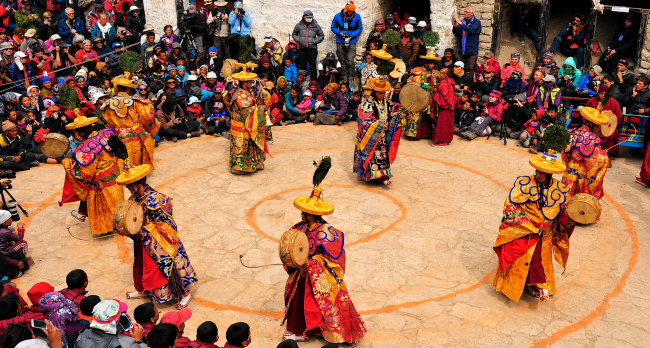
Festivals such as Yartung showcase the traditional lifestyle and cultural identity of Mustang communities.
Other major Nepali festivals, including Dashain and Tihar, may also influence the atmosphere of villages during the trekking season.
Festival dates follow traditional calendars and change from year to year, so travelers interested in a specific celebration should ask Himalayan Adventure Intl Treks for current dates.
Packing correctly is important for a comfortable trekking experience.
Recommended items include:
Your guide or trekking company can provide additional recommendations based on the season and specific itinerary.
There are two main approaches to Lower Mustang.
A common route is:
Kathmandu → Pokhara → Jomsom → Trek
Travelers can reach Pokhara by tourist bus or flight and then take a domestic flight from Pokhara to Jomsom.
This is the fastest and most convenient option when flights are operating normally.
However, Jomsom flights can be affected by wind and weather conditions, particularly later in the morning.
Another option is:
Kathmandu → Pokhara → Beni → Jomsom → Trek
Traveling by road can be more economical and offers an overland adventure through the Himalayan foothills.
The road journey can be long and rough in some sections, so travelers should allow additional time and maintain flexibility.
Solo travelers are welcome in Lower Mustang.
A private guide can provide assistance while allowing you to maintain a personalized schedule.
Solo trekking is particularly attractive to travelers who want:
Himalayan Adventure Intl Treks can arrange a private guide, porter, accommodation, permits, and transportation.
A couple's trek can be designed around comfort, privacy, and cultural exploration.
Couples can choose comfortable accommodation, private transportation where appropriate, and a flexible itinerary.
A private couple trek is ideal for honeymoon travelers, partners celebrating a special occasion, or anyone who simply wants to explore Mustang together without joining a large group.
Lower Mustang can also be suitable for families when the itinerary is designed at an appropriate pace.
A family package can include:
Families should discuss the ages and fitness levels of children with the trekking company before selecting an itinerary.
Travelers interested in Lower Mustang may also consider several other Himalayan routes.
Upper Mustang offers a deeper journey into the remote Tibetan-influenced landscape.
Approximate cost:
USD 1,800–2,500 per person
The restricted area permit is substantially more expensive than the standard Lower Mustang permit and must be arranged according to current government regulations.
The Tiji Festival is one of Mustang's most famous cultural celebrations.
An approximate package cost may be:
USD 2,500–2,800 per person
Restricted-area permit costs are separate and subject to current regulations.
A Kali Gandaki Valley itinerary can focus more extensively on the historic river valley and its surrounding settlements.
Approximate cost:
USD 800–1,200 per person
The Annapurna Circuit is another excellent option for travelers wanting a longer and more varied Himalayan journey.
Approximate cost:
USD 1,000–1,500 per person
The exact permit requirements and fees should be confirmed before travel.
Choosing a reliable local trekking company can make a significant difference in your overall experience.
Himalayan Adventure Intl Treks provides practical local knowledge, experienced guides, transportation coordination, accommodation arrangements, permit assistance, and customized trekking services.
Our guides understand the trails, weather patterns, local communities, culture, and logistics of the region.
Every traveler has different interests and fitness levels. We can modify the itinerary according to your schedule and preferences.
We offer trekking packages designed for different budgets, from group joining trips to customized private adventures.
Our team provides assistance before and during your trek, helping coordinate transportation, accommodation, permits, guides, and porters.
We encourage responsible travel practices that respect local communities, culture, wildlife, and the fragile Himalayan environment.
Mustang is a culturally and environmentally sensitive region. Travelers have an important role in helping preserve its natural and cultural heritage.
During the trek:
Responsible tourism helps ensure that future generations can continue to experience Mustang's unique heritage.
Absolutely.
The Lower Mustang Trek is an excellent choice for travelers who want to experience the Himalayas without committing to an extremely long or technically demanding trek.
It combines some of Nepal's most impressive characteristics in a relatively compact journey:
mountains + culture + spirituality + traditional villages + dramatic landscapes + Himalayan adventure.
The transition from the green hills around Pokhara to the dry landscapes of Mustang is particularly impressive.
Add the sacred destination of Muktinath, ancient Kagbeni, beautiful Marpha, the Kali Gandaki Valley, and views of Annapurna and Dhaulagiri, and the result is a trekking experience that is both scenic and culturally meaningful.
A typical Lower Mustang itinerary can take approximately 7–12 days, depending on the route, transportation, acclimatization requirements, and places included.
Customized itineraries can be shorter or longer.
Lower Mustang is generally considered moderate. No technical climbing experience is required, but travelers should be prepared for several hours of walking each day and changing mountain conditions.
Muktinath, at approximately 3,800 meters, is commonly the highest major destination on a standard Lower Mustang itinerary.
Yes. Lower Mustang lies within the rain-shadow area of the Annapurna and Dhaulagiri ranges, making it one of Nepal's better monsoon trekking destinations.
Transportation to the region can still be affected by rainfall and weather.
The applicable guide and TIMS requirements can change according to current government regulations and traveler nationality. Himalayan Adventure Intl Treks can advise you on the latest requirements when you book.
Yes, many beginners can complete the trek with appropriate preparation and a well-designed itinerary. A private guide can make the journey more comfortable for first-time trekkers.
Yes. Himalayan Adventure Intl Treks can arrange a private guide and porter if required.
Dal bhat, momos, noodles, Tibetan bread, soups, pasta, potatoes, eggs, pancakes, and local Thakali dishes are commonly available along the route.
Travel insurance is strongly recommended for trekking in Nepal. Your policy should be appropriate for the elevations and activities included in your itinerary and should provide coverage suitable for emergency evacuation where applicable.
The Lower Mustang Trek 2025/26 is an opportunity to explore one of Nepal's most distinctive Himalayan regions.
From the lively streets of Pokhara to the windy valley of Jomsom, from the apple orchards of Marpha to the ancient alleys of Kagbeni, and from the Kali Gandaki Valley to the sacred sanctuary of Muktinath, every section of the journey offers something different.
The trek is particularly appealing because of its combination of accessibility and cultural depth. You do not need to be an experienced mountaineer to enjoy the region, yet the landscape provides the feeling of a genuine Himalayan expedition.
Whether you are traveling alone, with a partner, with friends, with family, or as part of a group, Himalayan Adventure Intl Treks can create an itinerary that matches your expectations.
Our services can include:
If you are looking for an authentic Himalayan experience that combines breathtaking landscapes, ancient culture, spiritual heritage, and adventure, Lower Mustang should be high on your Nepal trekking list.
The Himalayas are more than mountains. They are living landscapes shaped by centuries of culture, religion, trade, agriculture, and community life.
Lower Mustang allows you to experience this extraordinary combination within a single journey.
Walk beneath the towering Annapurna and Dhaulagiri ranges. Explore the ancient settlement of Kagbeni. Experience the peaceful atmosphere of Marpha. Discover the spiritual importance of Muktinath. Taste traditional Thakali food. Follow the Kali Gandaki Valley and witness the dramatic transition from green Himalayan foothills to the dry landscapes of the Tibetan Plateau.
Himalayan Adventure Intl Treks is ready to help you turn that journey into reality.
Contact our team for the latest Lower Mustang Trek cost, available departure dates, permit information, transportation options, and customized itinerary.
Book your Lower Mustang Trek with Himalayan Adventure Intl Treks and discover the hidden beauty, culture, spirituality, and adventure of Mustang, Nepal.