
Have Questions? Talk to Expert (Binod)
The Manaslu Circuit Tsum Valley Trek is an extraordinary Himalayan adventure that brings together spectacular mountain scenery, remote villages, ancient Buddhist culture, high-altitude landscapes, and the challenging crossing of Larkya La Pass. For travelers searching for an authentic trekking experience away from the busiest trails of Nepal, this combined journey offers an exceptional opportunity to explore the hidden side of the Himalayas.
Organized by Himalayan Adventure Intl Treks, the trek takes you through the remote valleys of northern-central Nepal, where traditional settlements, monasteries, prayer flags, suspension bridges, forests, rivers, and enormous Himalayan peaks create an unforgettable trekking environment.
The journey combines two remarkable regions: the culturally fascinating Tsum Valley and the spectacular Manaslu Circuit. Tsum Valley introduces trekkers to Tibetan-influenced Buddhist traditions and traditional mountain communities, while the Manaslu Circuit takes you around Mount Manaslu, 8,163 meters, the eighth-highest mountain in the world.
The route begins at lower elevations, where green hills and river valleys dominate the landscape. As the trek progresses, the surroundings gradually transform into dense forests, narrow gorges, alpine settlements, rocky mountain terrain, glaciers, and high Himalayan passes.
The highlight for many trekkers is crossing Larkya La Pass at approximately 5,160 meters. Reaching the pass requires physical preparation, appropriate acclimatization, patience, and good trekking support, but the mountain scenery from the high point makes the effort worthwhile.
At Himalayan Adventure Intl Treks, we organize the major logistics required for this extended Himalayan adventure, including trekking permits, transportation, accommodation, meals, professional guides, porters, and pre-trek preparation.
If your goal is to discover Nepal through a combination of mountains, culture, wilderness, monasteries, and challenging trekking, the Manaslu Circuit Tsum Valley Trek is an excellent choice.
The main attraction of this trek is the opportunity to experience two very different Himalayan environments during one journey.
The Tsum Valley is known for its remote location, Tibetan-influenced culture, traditional villages, Buddhist monasteries, prayer flags, chortens, and peaceful mountain surroundings. The valley provides a slower and more cultural trekking experience.
The Manaslu Circuit, on the other hand, delivers dramatic Himalayan scenery and challenging high-altitude trekking. The trail follows the Budhi Gandaki River through changing landscapes before reaching the high mountain environment around Larkya La.
The combined trek offers:
Rather than simply visiting one destination and returning, the route allows you to experience the gradual transformation of Nepal's Himalayan landscape.
At Himalayan Adventure Intl Treks, our trekking experience comes directly from years of working on Nepal's mountain trails.
Our founder began his tourism career in 2006 as a porter. Through experience, training, and professional development, he progressed to trekking leadership and spent approximately 14 years leading trekking, peak climbing, and mountain expedition groups throughout Nepal.
His experience includes trekking and expedition destinations such as Kanchenjunga, Makalu, Dolpo, Manaslu, Annapurna Base Camp, Everest Base Camp, Island Peak, Mera Peak, Tharpu Chuli, Chulu East, Chulu West, Lobuche East, Ama Dablam, Baruntse, and Himlung Himal.
This practical experience helps us understand what trekkers need before and during a long Himalayan journey.
The Manaslu and Tsum Valley region is particularly rewarding because it combines challenging trekking with rich culture and remote communities. The mountains are spectacular, but the people, monasteries, traditions, and quiet villages are equally important parts of the experience.
Our goal is to organize your trek carefully so you can concentrate on walking, exploring, meeting local people, and enjoying the Himalayas rather than worrying about complicated logistics.
Tsum Valley is one of the cultural highlights of the entire journey.
Located in a remote Himalayan area, the valley has maintained many traditional customs and ways of life. Its communities have strong connections with Tibetan Buddhist traditions, which can be seen throughout the villages and monasteries.
The trail passes through traditional settlements including Chhekampar, where trekkers can observe local houses, agricultural practices, prayer flags, chortens, and mountain lifestyles.
The peaceful environment makes Tsum Valley particularly attractive to travelers interested in culture rather than only mountain views.
Mount Manaslu stands at 8,163 meters and is the eighth-highest mountain in the world.
The mountain dominates the surrounding landscape as you travel through the Manaslu region. Depending on weather and location, trekkers may also enjoy views of several other Himalayan peaks, including Manaslu, Ganesh Himal, Larkya Peak, Himlung Himal, Cheo Himal, Kang Guru, and Annapurna II.
One of the greatest advantages of the Manaslu Circuit is the constantly changing scenery.
The lower trail features green vegetation and river valleys. Higher sections become increasingly rugged, with alpine landscapes, rocky slopes, snow-covered peaks, and glaciers.
Tsum Valley is a fascinating destination for travelers interested in Himalayan Buddhism.
Important religious sites include Mu Gompa and Rachen Gompa, as well as smaller monasteries, chortens, prayer wheels, and other Buddhist structures.
These sites are not merely tourist attractions. They remain important parts of local religious and community life.
Visitors should behave respectfully around monasteries and religious locations. Modest clothing, quiet behavior, and permission before taking photographs are recommended.
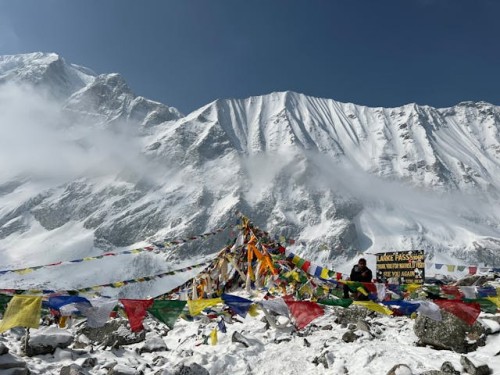
Crossing Larkya La Pass, approximately 5,160 meters, is one of the greatest achievements of the Manaslu Circuit.
The approach to the pass is physically demanding. At this elevation, the air contains less oxygen, temperatures can be very cold, and weather conditions may change rapidly.
A gradual itinerary and proper acclimatization are therefore essential.
The reward is a magnificent high-altitude Himalayan environment with panoramic views and a strong sense of achievement after completing the crossing.
The Manaslu Circuit Tsum Valley Trek is a strenuous Himalayan trek.
It is not a technical mountaineering expedition, but travelers should have good physical fitness and be prepared for long walking days, significant elevation changes, remote conditions, and high-altitude terrain.
The highest point of the trek is approximately 5,160 meters at Larkya La.
Altitude can affect anyone, regardless of age or previous trekking experience. Proper acclimatization is therefore one of the most important elements of the itinerary.
Many trekking days require approximately six to seven hours of walking. The actual duration depends on terrain, weather, fitness, altitude, and group pace.
The route includes regular uphill and downhill sections. Rocky and uneven trails can make some days physically demanding.
Some sections have limited medical facilities, communication services, and transportation access.
Weather can change quickly in the Himalayas. Rain, strong wind, snow, clouds, and cold temperatures may affect trekking conditions.
For these reasons, experienced guide support is highly valuable.
Good preparation can significantly improve your experience.
You do not need to be a professional athlete, but you should be comfortable walking uphill for several hours.
Walking, hiking, cycling, jogging, swimming, and stair climbing can improve endurance.
Start gradually and increase the duration and intensity over time.
Useful exercises include:
Regular hikes before departure are one of the best ways to prepare.
Gradually increase your hiking distance and elevation. You can also practice carrying a light backpack.
Long Himalayan treks require patience.
Some days may be cold, tiring, wet, or uncomfortable. A positive attitude and willingness to maintain a steady pace can make the journey much easier.
The best seasons are generally spring and autumn.
Spring offers warmer temperatures, greener landscapes, blooming rhododendrons, and generally favorable trekking conditions.
Mountain views can be excellent when skies are clear.
Autumn is another highly recommended season.
After the monsoon period, the atmosphere is often clearer, and mountain visibility can be excellent. October is particularly popular for Himalayan trekking.
Winter brings very cold conditions at high elevations.
Snow, icy trails, freezing temperatures, and difficult high-pass conditions can make the journey significantly more challenging.
The monsoon season brings frequent rainfall to lower sections.
Trails can become muddy and slippery, while landslides and road disruptions may affect transportation.
For most trekkers, March to May and September to November are the preferred seasons.
The total cost depends on your itinerary, group size, trekking duration, transportation, permits, guide, porter, accommodation, meals, and personal expenses.
At Himalayan Adventure Intl Treks, an indicative cost structure for an 18-day combined trek is:
| Group Size | Indicative Cost |
|---|---|
| Solo Traveller | USD 1,850 |
| 2 Persons | USD 1,450 per person |
| 3–5 Persons | USD 1,370 per person |
| 6–10 Persons | USD 1,295 per person |
| 11+ Persons | USD 1,215 per person |
These are indicative prices based on the supplied package information. Final pricing may vary according to travel dates, group size, exact itinerary, current permit regulations, transportation, accommodation, and selected services.
We can prepare a customized quotation for solo travelers, couples, families, private groups, and larger groups.
A professional guide is extremely important for the Manaslu Tsum Valley Trek.
At Himalayan Adventure Intl Treks, the guide hiring cost is USD 30 per day.
The guide assists with navigation, accommodation arrangements, communication, daily schedules, cultural interpretation, and general trekking support.
A local guide also provides valuable knowledge about the villages, monasteries, traditions, mountains, weather, and trail conditions.
A guide can help you:
For restricted trekking areas, it is also important to follow the applicable rules regarding licensed guide and agency arrangements.
Female travelers who prefer a female trekking professional can request a female guide.
This can be particularly attractive for solo female travelers or women traveling together who prefer a female guide for comfort and communication.
Female guides are trained trekking professionals and can provide navigation, cultural interpretation, accommodation assistance, and general trekking support.
Guide availability should be confirmed according to your preferred travel dates.
A porter can make a long trek considerably more comfortable by carrying your main luggage.
The supplied porter cost is approximately USD 20 per day, depending on the arrangement.
Instead of carrying a heavy backpack throughout the trek, you can walk with a lighter daypack containing water, clothing, snacks, personal items, and other essentials.
We believe responsible trekking includes providing porters with reasonable loads and appropriate working conditions.
Several permits are required because the trek passes through restricted and conservation areas.
September to November:
December to August:
September to November:
December to August:
The supplied cost is:
USD 30 per person
The supplied cost is:
USD 30 per person
The supplied information lists a local Tsum Nubri Municipality fee of approximately USD 10–15 per person.
Permit fees and regulations can change. Therefore, current requirements should always be confirmed when your trek is booked.
Transportation forms another important part of the trekking budget.
A private jeep from Kathmandu toward Soti Khola is estimated at approximately USD 200–250 one way, depending on the vehicle and transportation arrangement.
A private jeep offers greater comfort and flexibility.
For budget-conscious travelers, local buses may cost approximately USD 10–15 per person.
The local bus is less expensive but can take longer and may be less comfortable because mountain roads can be rough.
After completing the circuit, transportation from the Dharapani side toward Kathmandu can be arranged by local or private vehicle depending on your preference and road conditions.
Food is essential for maintaining energy during a long Himalayan journey.
Tea houses commonly provide:
Dal bhat is one of the most popular trekking meals because it provides carbohydrates, protein, and vegetables.
Vegetarian food is generally available.
Travelers with specific dietary requirements should inform the agency before departure. Food choices can become more limited in remote sections.
We also recommend carrying lightweight snacks such as nuts, energy bars, chocolate, dried fruit, and biscuits.
Accommodation is primarily available in tea houses and homestays.
Rooms are generally simple and practical. Facilities become more basic as you move into remote and higher areas.
The supplied accommodation estimate is approximately USD 5–10 per night, depending on location and arrangement.
Travelers should be prepared for shared facilities in some places and cold nights at higher elevations.
Staying in tea houses and homestays also provides an opportunity to experience local mountain hospitality.
Altitude sickness is one of the most important concerns on this trek because the route reaches above 5,000 meters.
Possible symptoms include:
Never ignore symptoms or hide them from your guide.
Ascend Gradually: Allow your body enough time to adapt.
Stay Hydrated: Drink water regularly.
Avoid Excessive Exercise: Maintain a steady pace rather than racing uphill.
Acclimatize Properly: Rest and acclimatization days are important.
Communicate Symptoms: Inform your guide immediately if you feel unwell.
Medication such as Diamox is sometimes used for altitude acclimatization, but medication decisions should be discussed with a qualified medical professional before the trek.
Because temperatures vary significantly along the route, proper packing is important.
Layering allows you to adjust easily to changing temperatures.
Bring:
Water-resistant boots with good grip are recommended.
Carry:
Keep important documents protected from rain and moisture.
Comprehensive travel insurance is strongly recommended for the Manaslu Tsum Valley Trek.
Because the route reaches approximately 5,160 meters, your policy should specifically cover high-altitude trekking to the maximum elevation of your itinerary.
Where applicable, travelers should consider coverage for:
Always read your insurance policy carefully before departure.
The Manaslu region contains diverse ecosystems ranging from subtropical forests to alpine environments.
The area is associated with wildlife such as Himalayan thar, while rare species including the red panda and snow leopard are also associated with the broader Himalayan environment.
Wildlife sightings are never guaranteed.
Trekkers should avoid disturbing animals and should not remove plants, rocks, religious objects, or other natural and cultural materials.
Protecting the environment helps preserve the region for future generations.
Responsible tourism is particularly important in remote mountain communities.
Travelers can support the region by:
Remember that villages are people's homes. Treat residents, religious places, and cultural traditions with respect.
The trek can be completed by well-prepared beginners, but it should not be considered an easy trekking holiday.
A first-time Himalayan trekker should be physically fit, prepared for long walking days, comfortable with uphill hiking, and willing to follow the recommended acclimatization schedule.
Previous trekking experience is helpful but not always essential.
Good preparation and experienced guide support can make a significant difference.
Depending on the package selected, Himalayan Adventure Intl Treks can arrange:
The exact inclusions should be confirmed in your final trekking quotation.
Personal expenses normally include:
A personal spending budget should therefore be prepared separately.
It is located in northern-central Nepal and combines the restricted Tsum Valley with the Manaslu Circuit.
Mount Manaslu is 8,163 meters high.
Larkya La Pass is approximately 5,160 meters.
A combined itinerary generally takes more than two weeks. An 18-day itinerary is one possible option.
Yes. It is a strenuous trek involving long walking days, significant altitude, rugged trails, remote areas, and the Larkya La crossing.
Yes, properly prepared beginners with good fitness can undertake the trek with professional support.
Travelers must follow the applicable restricted-area regulations, including required guide and agency arrangements.
Himalayan Adventure Intl Treks charges USD 30 per day for guide hiring.
The supplied porter estimate is approximately USD 20 per day.
The trek requires applicable Manaslu Restricted Area, Tsum Valley Restricted Area, Manaslu Conservation Area, and Annapurna Conservation Area permits.
The stated cost is USD 100 for seven days plus USD 15 per additional day during September–November, and USD 75 for seven days plus USD 10 per additional day during December–August.
The stated cost is USD 40 for seven days plus USD 7 per additional day during September–November, and USD 30 for seven days plus USD 7 per additional day during December–August.
The supplied information lists both MCAP and ACAP at USD 30 per person.
Spring and autumn are generally the preferred seasons.
Yes. October is generally a popular month for Himalayan trekking because of favorable weather and mountain visibility.
Winter trekking is possible but considerably more challenging because of cold, snow, ice, and high-pass conditions.
It is possible but rain can create muddy trails, landslides, slippery paths, and transportation difficulties.
Tea houses and homestays are the main accommodation options.
Yes, vegetarian food is generally available.
Special diets can often be arranged, but choices may become limited in remote sections.
Yes. Energy bars, nuts, dried fruit, chocolate, and biscuits are useful.
Many days involve approximately six to seven hours, depending on terrain and group pace.
Yes. The trek reaches more than 5,000 meters, so altitude awareness is essential.
Ascend gradually, drink sufficient water, avoid excessive exertion, acclimatize properly, and tell your guide about symptoms.
Yes, comprehensive high-altitude trekking insurance is strongly recommended.
Yes. Porters can be arranged according to your luggage and group requirements.
A warm sleeping bag is strongly recommended, particularly at higher elevations and during colder seasons.
Yes, but natural water should be treated, filtered, or boiled before drinking.
Medical services are limited in remote areas, so preparation and appropriate insurance are important.
Yes. Many travelers continue to Pokhara after completing the trek.
Yes. You can combine the trek with Kathmandu sightseeing, Pokhara, Chitwan, rafting, paragliding, or other destinations.
Tipping is customary when travelers are satisfied with the service. The amount is a personal decision based on service and trek duration.
Many trekking items can be purchased or rented in Kathmandu, although essential equipment should be prepared before entering remote areas.
The highest major point is approximately Larkya La Pass at 5,160 meters.
Yes. Tsum Valley is especially known for Tibetan-influenced Buddhist traditions, monasteries, chortens, prayer flags, and traditional communities.
Compared with Nepal's most established trekking routes, the Manaslu and Tsum Valley regions generally offer a quieter and more remote trekking experience.
Yes. Himalayan Adventure Intl Treks can arrange private trekking groups according to your preferred dates and requirements.
Contact Himalayan Adventure Intl Treks with your preferred travel dates, number of travelers, and trekking requirements. We can help arrange the appropriate permits, transportation, guide, porter, accommodation, meals, and other logistics.
A remote Himalayan trek requires more than simply following a trail.
It requires careful preparation, reliable logistics, knowledgeable trekking staff, appropriate permits, transportation planning, accommodation arrangements, and attention to altitude and weather.
At Himalayan Adventure Intl Treks, we focus on these details so travelers can enjoy their Himalayan journey with greater confidence.
Our trekking experience has been developed over many years, beginning with practical work on the trail and continuing through trekking leadership and mountain expedition experience.
We understand that every traveler is different. Some want a private journey, some prefer a small group, while others are looking for a more budget-friendly option.
We can help tailor the trek according to:
Our guide hiring rate of USD 30 per day provides an affordable option for travelers who want professional local support.
The Manaslu Circuit Tsum Valley Trek is a journey for travelers who want to experience Nepal beyond the ordinary.
It combines the peaceful and culturally rich Tsum Valley, the spectacular mountain environment of the Manaslu Circuit, and the demanding high-altitude crossing of Larkya La Pass.
Along the way, you will encounter traditional villages, Buddhist monasteries, prayer flags, chortens, suspension bridges, forests, waterfalls, alpine landscapes, glaciers, and some of the most impressive Himalayan scenery in Nepal.
The journey is challenging, but that challenge is part of its appeal.
You walk for several hours each day.
You climb gradually into thinner air.
You experience basic mountain accommodation.
You adapt to changing weather.
You cross high mountain terrain.
And you discover communities that have maintained their traditions for generations.
The Tsum Valley offers the cultural heart of the journey. The Manaslu Circuit provides the wilderness and mountain adventure. Larkya La provides the physical challenge, while Mount Manaslu creates the spectacular Himalayan backdrop.
At Himalayan Adventure Intl Treks, our responsibility is to bring these elements together into a carefully organized trekking experience.
From permits and transportation to guides, porters, accommodation, meals, preparation, and trekking logistics, we work to make your journey as smooth as possible.
If you are searching for a trek that combines remote Himalayan wilderness, Tibetan-influenced culture, Buddhist heritage, traditional villages, dramatic mountain scenery, and high-altitude adventure, the Manaslu Circuit Tsum Valley Trek is an outstanding choice.
The Himalayas are not simply a place to visit.
They are a place to walk through slowly, meet people, experience different cultures, challenge yourself, and create memories that remain long after you return home.
Plan your Manaslu Circuit Tsum Valley Trek with Himalayan Adventure Intl Treks and discover one of Nepal's most fascinating and rewarding Himalayan adventures.
Welcome to Nepal and Kathmandu, the vibrant capital surrounded by Himalayan scenery. Today marks the beginning of your Manaslu Tsum Valley adventure with Himalayan Adventure Intl Treks. Upon your arrival at Tribhuvan International Airport, our representative will meet you and assist you with your transfer to the hotel.
After checking in, you can take some time to relax after your journey. Depending on your arrival schedule, you may have an opportunity to walk around the nearby streets and experience the lively atmosphere of Kathmandu. The city is a fascinating mixture of ancient traditions, historic architecture, colorful markets, temples, and modern conveniences.
Later, our trekking team will meet you for a detailed briefing about the upcoming journey. Your guide will explain the trekking route, accommodation arrangements, meals, permits, transportation, safety procedures, and the conditions you may encounter along the trail. This is also a good opportunity to check your trekking equipment and make sure everything required for the remote sections of the Manaslu and Tsum Valley routes is properly prepared.
The Manaslu Tsum Valley Trek combines dramatic Himalayan landscapes with traditional mountain settlements and Tibetan Buddhist heritage. Because several portions of the journey are located in remote areas, preparation and good communication with your guide are important.
You will spend the night at a comfortable hotel in Kathmandu. Take advantage of the evening to rest well before the long road journey tomorrow.
Accommodation: Hotel in Kathmandu
Meals: Not specified
Altitude: 1,350 m
Activity: Arrival, trek preparation and briefing
Today begins with an extended road journey from Kathmandu toward Machha Khola, covering approximately 160 km. The drive usually takes around 7–8 hours, although actual travel time can vary according to traffic, road construction, weather, and surface conditions.
Leaving Kathmandu, the road passes through Naubise and continues toward Malekhu and Dhading Besi. From the busy highway section, the scenery gradually changes as green hills, small settlements, agricultural areas, and rivers become increasingly prominent.
The journey follows the Trishuli River for a substantial portion before continuing toward Dhading Besi and onward to Jyamire, where we stop for lunch. After the meal, the road becomes progressively more rural. Sections beyond the paved road include rough and uneven surfaces, making the final portion of the journey slower and more adventurous.
The overall route passes through areas including Dhading Besi, Jyamire, Gola Bhanjyang, Aarughat, Soti Khola, and finally Machha Khola. Around three-quarters of the road is described as blacktopped, while the remaining section is off-road. Along the way, you can observe village markets, forests, rivers, terraced hillsides, and everyday rural life.
Machha Khola, situated at approximately 869 m, is a popular starting point for the Tsum Valley and Manaslu Circuit trekking routes. The settlement is inhabited by communities including Magar and Gurung people, with local livelihoods connected to farming, tourism, teahouses, guiding, and portering.
After reaching Machha Khola, check into your teahouse and relax. Facilities here are basic but adequate for trekkers, with several teahouses offering rooms, meals, limited internet, electricity, and hot showers at additional cost.
Accommodation: Teahouse
Meals: Breakfast, Lunch and Dinner
Altitude: 869 m
Driving: Approximately 7–8 hours
Distance: About 160 km
Enjoy a warm dinner and prepare for your first walking day tomorrow.
After breakfast, your walking adventure officially begins. We leave Machha Khola in the morning and follow the Budhi Gandaki River toward Jagat. The day's route passes through Khorla Besi, Tatopani, Dovan, Thulo Dhunga, and finally Jagat.
The trail provides an enjoyable introduction to the landscapes of the Manaslu region. As you leave Machha Khola, the path follows the river through forested hills and narrow valleys. Gradually, the surrounding environment becomes more rugged, with steep slopes, river gorges, suspension bridges, and traditional settlements appearing along the route.
One of today's memorable stops is Tatopani, a natural hot spring. After approximately two hours of walking, you can take a short break here and enjoy the warm water. The hot spring provides a refreshing opportunity to relax before continuing toward Thulo Dhunga.
We continue walking for several hours before reaching the lunch stop. After lunch and a short rest, the afternoon section takes us farther into the valley. The trail follows the river and passes through forested terrain where langur monkeys and other wildlife may sometimes be seen.
By late afternoon, we reach Jagat, positioned at approximately 1,340 m. This attractive mountain settlement is surrounded by hills and serves as an important point along the Manaslu trekking route.
Jagat has several teahouses and guesthouses, along with local homes and useful facilities. You may also see mani walls, the MCAP office, a customs office, a church, and viewpoints toward Shringi Himal.
Once settled into your teahouse, take time to relax and enjoy the mountain atmosphere. The village offers a pleasant contrast to the lower-altitude road journey of the previous day.
Accommodation: Teahouse
Meals: Breakfast, Lunch and Dinner
Altitude: 1,340 m
Walking: Approximately 6–7 hours
Distance: About 20 km
After breakfast, we leave Jagat and continue deeper into the Manaslu region. Today's route takes us through Salleri, Sirdibas, Philim, Ekle Bhatti, and onward to Lokpa. The trail becomes increasingly remote as we gain elevation and move farther away from the lower river settlements.
Jagat is an important checkpoint for the Manaslu Restricted Area, and your trekking guide will assist with the necessary permit verification before we proceed. The trail initially follows a clearly established path through forests and hillside terrain.
Not long after leaving Jagat, we encounter one of the first waterfalls and suspension bridges of the day. Crossing the bridge, we continue along a gradual uphill section toward Philim. The walk provides excellent opportunities to appreciate the Budhi Gandaki River and the dramatic landscape surrounding the valley.
Philim is a significant settlement and an important permit checkpoint for trekkers heading toward both Manaslu and Tsum Valley. It is also one of the last larger villages where a selection of trekking supplies, clothing, shoes, and other useful items may be available. We stop here for lunch and have time to observe the local surroundings.
After Philim, the trail continues toward Chisapani. From the route, the Budhi Gandaki River remains a major feature of the landscape. We then proceed through Ekle Bhatti and Nyak Phedi, where the Manaslu Circuit and Tsum Valley trails separate.
The path toward Lokpa becomes quieter and more isolated. Eventually, the Shiar River comes into view as we approach the first settlement associated with the Tsum Valley.
Lokpa, at approximately 2,240 m, is a small and peaceful village surrounded by Himalayan scenery. Local tradition associates the settlement with Padmasambhava, giving the area an additional spiritual significance.
Accommodation is basic, with only a few teahouses. Facilities generally include simple rooms, basic meals, electricity, Wi-Fi, and bucket showers.
Accommodation: Teahouse
Meals: Breakfast, Lunch and Dinner
Altitude: 2,240 m
Walking: Approximately 5–6 hours
From Lokpa onward, the landscape and culture begin to feel distinctly Tibetan, making the next stage particularly rewarding.
Today we leave the quiet settlement of Lokpa and enter deeper into the culturally fascinating Tsum Valley. The trail follows a route through Sarti Gorge and Gumlung before reaching Chumling, one of the charming villages of the lower Tsum Valley.
The morning walk begins among dense pine and rhododendron forests. The sound of flowing water from the Shiar Khola accompanies much of the journey, creating a peaceful atmosphere as we move through the secluded valley.
The trail includes several narrow hillside sections and crossings over wooden and suspension bridges. These bridges span deep gorges and rushing mountain streams, adding an adventurous character to today's walk. Between the trees, impressive glimpses of Ganesh Himal and Boudha Himal may appear.
The landscape gradually opens as we approach Chumling. After several hours of trekking, the village comes into view across the river. Traditional houses, prayer flags, mani walls, and Buddhist structures give Chumling a distinctive Himalayan character.
Chumling is a small settlement inhabited mainly by people following Tibetan Buddhist traditions. Many houses are constructed using traditional local materials, and several monasteries are located within the surrounding area. The village provides an excellent opportunity to observe the lifestyle and architecture of the Tsum Valley.
The local teahouses are simple because of the remote nature of the region. Accommodation is comfortable enough for trekkers, while meals focus on nutritious local and trekking dishes. Electricity, Wi-Fi, and bucket showers may be available, although services can be limited.
After arriving, settle into your teahouse and enjoy the peaceful environment. You may spend the afternoon exploring the village or simply relaxing after the walk.
Accommodation: Teahouse
Meals: Breakfast, Lunch and Dinner
Altitude: Approximately 2,385 m
Walking: Around 4–5 hours
Distance: About 8 km
Our journey continues from Chumling toward Chhekampar, taking us farther into the upper sections of Tsum Valley. Today's trail passes through Gho and Kowo before reaching the twin settlement commonly associated with Chhokang Paro and the destination of Chhekampar.
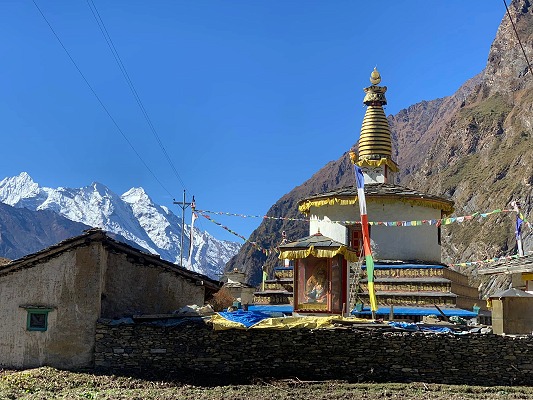
The morning begins with a gradual ascent through pine woodland. As the altitude increases, the scenery changes and the distinctive Tibetan influence becomes more noticeable. Prayer flags flutter above the trail, while chortens, mani walls, monasteries, and traditional settlements provide a fascinating glimpse into the spiritual life of the valley.
The route passes through smaller communities such as Ripchet and Rainjam. Local residents continue traditional livelihoods based on agriculture and animal husbandry. Fields, grazing animals, stone houses, and mountain paths create an atmosphere far removed from Nepal's busy urban centers.
The walking is generally moderate, although the increasing altitude requires a steady pace. Our guide will encourage regular breaks and appropriate hydration throughout the day.
After approximately four to five hours, the dramatic mountain surroundings open around Chhokang Paro. We stop here for lunch and take time to appreciate the landscape before settling into the village.
Chhekampar stands at about 3,031 m and is surrounded by open mountain terrain. The settlement contains dozens of traditional homes, along with a school, health post, micro-hydropower facilities, monasteries, and telephone services. Buddhist traditions remain an important part of local life.
Residents are involved in farming, livestock raising, and the production of local products such as chhurpi. Yaks and goats are commonly associated with the area's traditional economy.
The teahouses are basic but provide the essentials needed for an overnight stay. Wi-Fi, bucket hot showers, and mobile network services may be available depending on local conditions.
Accommodation: Teahouse
Meals: Breakfast, Lunch and Dinner
Altitude: 3,031 m
Walking: Approximately 4–5 hours
Distance: About 9 km
Today we continue from Chhekampar toward Nile, entering an increasingly remote section of the Tsum Valley. The route passes through Lamagaon, Lar, Phurbe, Pangdun, and Chule before arriving at Nile.
The morning trail moves through traditional Tibetan-influenced settlements and open agricultural areas. Barley fields, mani walls, chortens, and stone-built houses appear along the route, while the surrounding peaks create an impressive Himalayan backdrop.
After around two hours of walking, we reach Lamagaon, where we stop for lunch. This gives us an opportunity to rest and enjoy the quiet surroundings before continuing toward Nile.
The afternoon section is relatively short. From Lamagaon, the trail proceeds through Phurbe and Pangdun and eventually crosses a bridge over the Shiar Khola. The river remains an important companion as the path gradually approaches Nile.
Nile is regarded as the last permanent settlement of the Upper Tsum Valley before Mu Gompa. The village consists of traditional stone, mud, and wooden houses and features mani walls, stupas, and a primary school. A small health facility also serves the local population.
One of the cultural highlights near today's route is the ancient Milarepa Cave, also known as the Pigeon Cave. This sacred meditation site is associated with Buddhist traditions and contains religious carvings, murals, and prayer flags. The site provides an opportunity to understand the deep spiritual heritage of the valley.
Nile offers several basic teahouses where trekkers can spend the night. Although facilities are simple, visitors can generally find warm accommodation, food, hot showers, charging, and limited internet services.
After checking in, enjoy the peaceful mountain surroundings and prepare for tomorrow's journey to Mu Gompa.
Accommodation: Teahouse
Meals: Breakfast, Lunch and Dinner
Altitude: 3,361 m
Walking: Approximately 3.5–4 hours
Distance: About 7 km
Today is one of the most culturally significant stages of the Tsum Valley journey as we leave Nile and climb toward Mu Gompa, the largest monastery in the valley.
We begin the morning with breakfast before setting off at a comfortable pace. The trail gradually rises through open landscapes and sections of pine forest. Because we are now trekking at higher elevations, maintaining a slow and steady rhythm is important.
One of the major highlights along today's route is Dephu Doma Nunnery Gompa. The monastery is situated at a high elevation and is traditionally regarded as one of the earliest monastic sites in the Tsum Valley. Buddhist scriptures, prayer spaces, religious artwork, and rituals contribute to its spiritual importance.
From the nunnery, the trail continues toward Mu Gompa. The route provides broad views across surrounding valleys and mountains, while the increasingly barren landscape reflects the higher altitude.
After roughly two and a half to three hours of walking from Nile, we reach Mu Gompa before noon. We have lunch and settle into the monastic accommodation.
Mu Gompa stands at approximately 3,700 m and is considered the largest monastery in Tsum Valley. The monastery is an important center of Tibetan Buddhist culture and follows the Gelugpa tradition. Ancient murals, scriptures, religious objects, and traditional architecture contribute to its atmosphere.
After lunch, trekkers who feel comfortable can undertake an optional hike toward a higher viewpoint. The climb takes around one and a half hours and offers expansive views of surrounding mountains and deep valleys. It can also serve as a useful acclimatization walk.
The night is spent at Mu Gompa. Accommodation is simple but warm, and nutritious meals are available. Wi-Fi and regular electricity are not available here, although local telecommunications may function.
Accommodation: Monastic accommodation/teahouse
Meals: Breakfast, Lunch and Dinner
Altitude: 3,700 m
Walking: Approximately 3 hours
Today we begin our return journey through the Tsum Valley. After breakfast, we leave Mu Gompa and descend through the same general valley system toward Chhekampar. The return route gives us a different perspective of landscapes and villages previously seen from the opposite direction.
The morning descent is generally easier on the lungs, although care is still needed on rocky and uneven sections. As we lose elevation, the mountain environment gradually becomes greener.
A major cultural attraction today is Rachen Gompa, one of the most important Buddhist nunneries in the Tsum region. The monastery is situated at approximately 3,240 m near Chhokangparo and is surrounded by open valleys and Himalayan peaks.
Rachen Gompa has long been associated with Buddhist spiritual practice. The complex features prayer areas, traditional murals, religious scriptures, and colorful decorations. Buddhist nuns live and practice here, maintaining traditions that have shaped the cultural identity of Tsum Valley for generations.
We spend time exploring the monastery and have lunch nearby before continuing along the trail.
After lunch, the route descends through smaller settlements and cultivated areas. The scenery includes traditional houses, terraced fields, grazing yaks, and mountain slopes. The trail eventually brings us back toward Chhokangparo.
By late afternoon, we arrive at the village and check into our teahouse. The evening can be spent relaxing, enjoying the surrounding mountain views, and reflecting on the cultural experiences of the upper valley.
Today's walk is longer than the previous day, but the predominantly descending character makes the journey manageable when taken at a comfortable pace.
Accommodation: Teahouse
Meals: Breakfast, Lunch and Dinner
Altitude: Approximately 3,031 m
Walking: Around 6 hours
Distance: About 14 km
Today's route takes us away from the main Tsum Valley trail toward the peaceful monastery settlement of Gumba Lungdang. We leave Chhekampar after breakfast and descend through traditional surroundings before crossing the Shiar Khola.
The path leads through Domche and then enters a more forested environment. The route becomes particularly quiet because this section receives fewer trekkers and has very limited accommodation facilities.
We may carry a packed lunch or arrange lunch at Gho, depending on local conditions. Gho is approximately one and a half to two hours from Chhekampar and provides an appropriate place for a short rest.
After crossing the bridge near Domche, the trail separates from the principal Tsum Valley route. We then climb through silver pine and rhododendron forests. The combination of dense woodland, mountain air, and limited human settlement gives this section a wonderfully secluded character.
After several hours of walking, Gumba Lungdang comes into view. Located at approximately 3,200 m, the monastery is known for its tranquil setting and spiritual atmosphere.
Gumba Lungdang is home to a community of Buddhist nuns. Visitors who arrive at the appropriate time may have an opportunity to observe the evening puja, traditionally held between approximately 6:00 PM and 7:30 PM. The experience offers a meaningful introduction to the religious traditions practiced in this remote part of Nepal.
The monastery is also famous for its impressive views toward the Ganesh Himal Range. Sunrise and clear-weather periods can provide particularly beautiful photographic opportunities.
Accommodation is provided within or near the monastery itself. Facilities are basic, with simple warm lodging, healthy food, and bucket showers.
Accommodation: Monastery
Meals: Breakfast, Lunch and Dinner
Altitude: 3,200 m
Walking: Approximately 5–6 hours
Today is dedicated to a challenging high-altitude excursion from Gumba Lungdang toward Ganesh Himal Base Camp before returning to the monastery for another overnight stay.
We begin early because the day involves a substantial amount of walking at higher elevation. After breakfast, we follow the mountain trail toward Landan Kharka and continue gradually upward.
There are no regular teahouses along this section, so your guide will arrange a packed lunch. We can stop at a suitable scenic location to eat while enjoying the mountain panorama.
As the trail rises, the terrain becomes increasingly demanding. The thinner air at higher elevation makes walking slower, so maintaining a steady pace and taking regular breaks is essential. The route eventually reaches the Ganesh Himal Base Camp area, situated at approximately 4,800 m.
Standing among the high mountains at this elevation provides an extraordinary Himalayan experience. The surrounding landscape feels remote and dramatic, with enormous peaks, rugged slopes, and deep valleys creating a spectacular natural setting.
After spending time at the base camp area, taking photographs, and appreciating the surroundings, we begin our descent toward Gumba Lungdang. The return journey follows the mountain trail back toward the monastery.
The complete excursion takes approximately six to seven hours, depending on pace, weather, trail conditions, and the amount of time spent at the base camp.
Because today's highest point is significantly above our overnight elevation, the excursion also provides an opportunity for gradual adaptation to altitude. However, everyone should walk according to their physical condition and follow the guide's recommendations.
We return to Gumba Lungdang in the afternoon or evening and enjoy a well-earned meal before resting.
Accommodation: Monastery
Meals: Breakfast, Packed Lunch and Dinner
Highest Point: Approximately 4,800 m
Walking: Around 6–7 hours return
After breakfast, we leave Gumba Lungdang and begin a long descent toward Lokpa. Today's route passes through Thulung Danda, Ripchet, and Gumlung before reconnecting with Lokpa.
The morning begins with views of Ganesh Himal and the surrounding mountain landscape. Prayer flags around the monastery move gently in the mountain breeze as we begin descending through forested terrain.
Although descending generally requires less cardiovascular effort than climbing, steep downhill trails can place considerable pressure on the knees. We therefore maintain a controlled pace and pay close attention to rocky and uneven sections.
As we lose elevation, the environment gradually becomes warmer and greener. Forests, valleys, streams, and traditional mountain landscapes replace the high-altitude surroundings of the previous days.
After approximately three to four hours of walking, we reach Ripchet, where we stop for lunch and take a well-deserved break.
Following lunch, the trail continues through the remote mountain landscape toward Lokpa. The afternoon walk remains mostly downhill, although some sections may involve short climbs and uneven terrain.
By the time Lokpa comes into view, the long day of walking will feel rewarding. Returning to this village also marks our reconnection with the lower section of the Tsum Valley route.
Lokpa is a small settlement with only a handful of houses and basic teahouse facilities. Its isolated setting provides an authentic mountain experience. Depending on local conditions, trekkers can access simple meals, electricity, Wi-Fi, and bucket showers.
Once we arrive, check into the teahouse, enjoy dinner, and relax. This is an ideal evening to recover after the high-altitude excursion and prepare for the next stage, when we leave the Tsum Valley section and continue along the Manaslu Circuit route.
Accommodation: Teahouse
Meals: Breakfast, Lunch and Dinner
Altitude: 2,240 m
Walking: Approximately 6–7 hours
Distance: About 15 km
Today we leave Lokpa and continue toward Ghap, reconnecting fully with the Manaslu Circuit trail. The route passes through Nyak Phedi, Deng, Bihi Phedi, and Banrung before reaching Ghap.
After breakfast, we descend toward the Budhi Gandaki River and follow the valley through a combination of forest and mountain terrain. Several suspension bridges cross the river and its tributaries, adding variety to the day's walking.
The forest is alive with birds and, occasionally, monkeys can be seen among the trees. Waterfalls descend from steep cliffs, while the sound of flowing water accompanies us along much of the trail.
After approximately three to four hours, we reach Deng, a small riverside settlement surrounded by mountain scenery. We stop here for lunch and take time to rest.
The afternoon section continues through bamboo forest and across several bridges over the Budhi Gandaki. The valley gradually changes as we move toward Ghap.
The final approach takes us through traditional Himalayan surroundings, where prayer flags, mani walls, stone houses, and forested slopes create a peaceful atmosphere.
Ghap is a small village with approximately 15–20 local houses. Its position beside the forest and river makes it a pleasant overnight stop. Monasteries and traditional cultural features can also be found in the surrounding area.
Teahouse accommodation in Ghap is simple. Basic services such as electricity, Wi-Fi, and hot showers may be available depending on current local conditions.
After arriving, settle into your room and enjoy the evening with your trekking companions. The gradual change in landscape is noticeable as we move deeper into the Nubri region.
Accommodation: Teahouse
Meals: Breakfast, Lunch and Dinner
Altitude: 2,397 m
Walking: Approximately 6–7 hours
Distance: About 12.5 km
We begin today's trek from Ghap after breakfast and follow the Budhi Gandaki Valley toward Lho. The trail passes through Ghyapsa, Namrung, Lihi, and Sho before reaching our overnight destination.
The morning route moves through pine and rhododendron forests. We cross suspension bridges, pass waterfalls, and walk along narrow sections beside the river. The changing vegetation reflects our gradual increase in elevation.
After around two hours, we arrive at Namrung, an important settlement and gateway to the Nubri region. From here onward, Tibetan cultural influence becomes increasingly visible in the architecture, prayer walls, language, monasteries, and traditional way of life.
The trail continues through villages and past Buddhist structures before reaching Lihi, our lunch destination. After a rest and meal, we continue toward Lho.
The afternoon section climbs gradually through beautiful mountain scenery. As the altitude increases, the surrounding peaks become more impressive and the air becomes noticeably cooler.
Lho is one of the major highlights of the Manaslu Circuit. The village contains numerous traditional stone houses, a monastery, a primary school, and local facilities. One of its greatest attractions is the spectacular view of Mount Manaslu from the monastery area.
If weather and timing are favorable, sunrise and sunset can produce exceptional views of Manaslu and the surrounding peaks.
Lho's teahouses offer a higher level of comfort compared with some of the more remote settlements encountered earlier. Depending on the property and current conditions, facilities may include Wi-Fi, electricity, hot showers, attached bathrooms, and charging facilities.
After checking in, you can explore the village or relax in the dining area while enjoying the mountain views.
Accommodation: Teahouse
Meals: Breakfast, Lunch and Dinner
Altitude: 3,180 m
Walking: Approximately 6–7 hours
Distance: About 16.3 km
Today's journey takes us from Lho to Samagaon, one of the most important settlements on the Manaslu Circuit. The route passes through Shyala and gradually brings us beneath the towering Himalayan peaks.
We begin after breakfast and follow a relatively comfortable trail from Lho. The route continues through mountain landscapes with impressive views of Manaslu and surrounding peaks.
After approximately two hours, we reach Shyala. This village is widely appreciated for its spectacular location, traditional alpine homes, monastery architecture, and panoramic mountain scenery.
We stop in Shyala for lunch and spend some time enjoying the surroundings. From here, trekkers may also have the option of visiting Pungyen Monastery, situated beside the Pungyen Glacier beneath Mount Manaslu. The side excursion is optional and depends on time, weather, and physical condition.
Continuing toward Samagaon, the trail passes cultivated fields, including potato fields, and settlements where residents depend on agriculture, animal husbandry, and tourism.
Eventually, Samagaon appears beneath the imposing Manaslu range. The village is home to the Nubri people, whose cultural heritage has strong Tibetan roots and whose religious traditions are connected with Tibetan Buddhism.
Samagaon is a relatively large settlement compared with many of the villages we have passed. Traditional stone houses, teahouses, monasteries, and mountain scenery make it a memorable stop.
Many residents are involved in yak herding and tourism. Trekkers can find several teahouses offering food, accommodation, electricity, Wi-Fi, hot showers, and bathroom facilities, depending on current conditions.
The arrival at Samagaon is particularly significant because this village serves as an important acclimatization and preparation point before the route climbs toward Samdo and Larkya Pass.
Accommodation: Teahouse
Meals: Breakfast, Lunch and Dinner
Altitude: 3,520 m
Walking: Approximately 4–5 hours
Distance: About 17.2 km
Today is designed as an acclimatization and exploration day in Samagaon. Rather than continuing immediately toward higher elevations, we spend time allowing the body to adapt while exploring some of the remarkable attractions around the village.
Samagaon is an important settlement for trekkers and mountaineers heading toward Mount Manaslu. Its location beneath the surrounding Himalayan peaks makes it an excellent place to rest and enjoy the natural and cultural environment.
One popular excursion is Birendra Lake, situated at approximately 3,644 m beneath the Manaslu glacier. The blue waters of the lake contrast beautifully with the surrounding mountain landscape. Along the way, you may see yaks and dzopkyos grazing across open pastureland.
Another cultural attraction is Kargyu Chholing Monastery, an old Buddhist monastery known for traditional woodwork and its connection with the Tibetan Buddhist heritage of the Nubri region. The monastery also contains a significant representation of Guru Rinpoche.
For stronger trekkers, an optional excursion toward Manaslu Base Camp may be considered. The round trip can take approximately seven to eight hours and reaches around 4,800 m. Because this is a demanding high-altitude excursion, it is not compulsory. Your guide will assess conditions and your physical condition before proceeding.
The Manaslu Base Camp side trip provides impressive glacier and mountain scenery and can contribute to acclimatization. If undertaken, a packed lunch is carried for the excursion.
Those who prefer a quieter day can remain around Samagaon, explore the village, visit nearby cultural sites, or simply rest.
The main objective today is to prepare the body for the higher elevations ahead, particularly the route toward Samdo, Dharmasala, and eventually Larkya La Pass.
Accommodation: Teahouse in Samagaon
Meals: Breakfast, Lunch and Dinner
Altitude: 3,520 m
Activity: Acclimatization and optional exploration
After breakfast, we leave Samagaon and continue toward Samdo. Compared with several earlier trekking days, today's route is relatively short and gentle, making it suitable for gradual altitude progression.
The trail initially crosses the Budhi Gandaki and follows broad mountain terrain toward Samdo. Much of the route is comparatively open and less steep than the trails experienced in the lower valley.
We walk for approximately three to four hours, maintaining a relaxed pace and taking regular breaks. The surrounding landscape becomes increasingly barren as we approach higher elevations, while snow-covered peaks dominate the horizon.
Before reaching Samdo, we cross the Budhi Gandaki once more and climb a short section before entering the village.
Samdo sits at approximately 3,875 m and is one of the highest permanent settlements in this section of the trek. It is also considered one of the last villages on the Nepal side toward Tibet.
The settlement consists of traditional houses and is closely connected with yak herding, animal husbandry, and tourism. Its location provides a fascinating glimpse into life in a high-altitude Himalayan community.
Because temperatures can fall significantly at this elevation, trekkers should take care with water and clothing. During cold conditions, water pipes can freeze, and drying wet clothes outside may be difficult. Keeping a warm water bottle close to your sleeping area can be useful during the night and early morning.
Samdo has several teahouses offering basic accommodation and meals. Depending on local conditions, electricity, Wi-Fi, and hot showers may be available, although facilities remain limited compared with lower villages.
The afternoon can be spent resting, hydrating, and preparing equipment for the next stage. Tomorrow we move to Dharmasala, where the altitude rises further and the environment becomes much more remote.
Accommodation: Teahouse
Meals: Breakfast, Lunch and Dinner
Altitude: 3,875 m
Walking: Approximately 3–4 hours
Distance: About 9.1 km
Today we move into one of the highest sections of the Manaslu Circuit before crossing Larkya La Pass. After an early breakfast, we leave Samdo and gradually climb toward Dharmasala.
The first section is relatively gentle. After roughly ten to fifteen minutes, we pass through Larke Bazaar, a small and historically significant settlement associated with the old salt-trading route between Tibet and Nepal.
At the trail junction near Larke Bazaar, one route continues toward the Tibetan border while our path heads toward Dharmasala.
The landscape becomes progressively more rugged and barren as we gain elevation. Although today's walking distance is comparatively short, the high altitude makes even moderate climbs feel demanding. We therefore maintain a slow rhythm, take frequent breaks, and drink plenty of water.
The trail consists of gradual uphill and downhill sections before becoming increasingly rocky. Eventually, Dharmasala comes into view.
Dharmasala, also known as Larke Phedi, sits at approximately 4,460 m and serves as the principal overnight base before the Larkya La crossing. The settlement is extremely remote and has only a small number of basic teahouses.
Accommodation here can be limited, particularly during busy trekking seasons. Depending on availability, trekkers may need to share rooms or sleeping areas, and in very busy periods dining halls or temporary spaces may be used.
Facilities are minimal. Regular electricity, internet, and Wi-Fi may not be available, although solar power can sometimes provide limited charging opportunities.
Because of the cold and altitude, it is important to stay warm. Spending time in the dining area, drinking warm soup, and avoiding unnecessary exposure to cold conditions can help you prepare for tomorrow's demanding crossing.
Your guide will also provide a briefing about the Larkya La Pass day, including the early departure time, clothing, equipment, hydration, and pacing.
Accommodation: Teahouse
Meals: Breakfast, Lunch and Dinner
Altitude: 4,460 m
Walking: Approximately 3–4 hours
Distance: About 6.1 km
Today is the most challenging and rewarding day of the entire Manaslu Tsum Valley journey. We begin extremely early, generally around 3:45 AM, preparing for departure at approximately 4:30 AM.
The reason for the early start is to allow sufficient daylight for crossing Larkya La Pass and completing the long descent toward Bimthang.
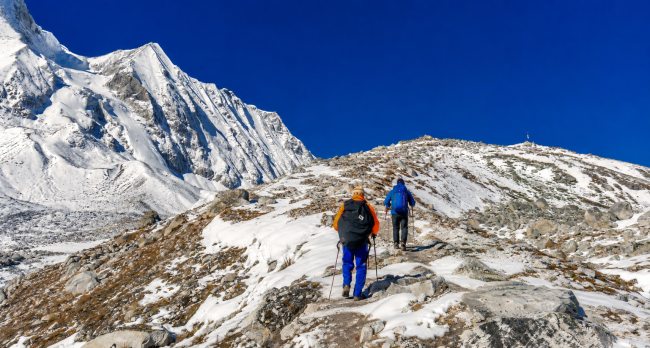
After leaving Dharmasala, the trail climbs gradually over rocky terrain. The high elevation makes the ascent physically demanding even when the gradient is moderate. The route passes glacial moraine, frozen sections, loose stones, and potentially snowy terrain depending on the season.
As we climb higher, spectacular Himalayan peaks begin to surround us. Views may include Himlung Himal, Cheo Himal, Kang Guru, Gyanji Kang, Larkey Peak, Ratna Chuli, Namjung Himal, and Annapurna II.
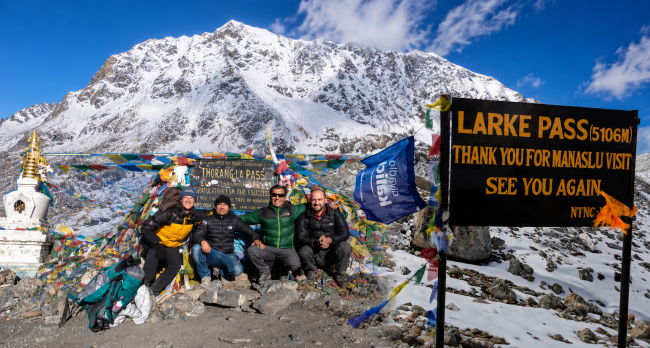
Eventually, we reach Larkya La Pass at approximately 5,106 m. Standing at the pass is a major achievement and one of the defining moments of the trek. After taking photographs and enjoying a short celebration, we begin the descent.
The downhill section requires concentration because parts of the trail are steep, rocky, and uneven. We carefully negotiate rockfall areas and rough ground before gradually reaching more open alpine terrain.
Further down, the landscape becomes greener, and Ponkar Lake may be visible from the route. We continue toward Larke Phedi, where we stop for lunch.
After lunch, the trail continues for several hours toward Bimthang. As we descend, rhododendron and pine forests, clear streams, and broad green meadows gradually replace the barren high-altitude landscape.
Bimthang is situated at approximately 3,590 m and provides a wonderful reward after the demanding pass crossing. The village is surrounded by impressive mountains and offers views toward the Manaslu, Lamjung, and Cheo ranges.
Accommodation: Teahouse
Meals: Breakfast, Lunch and Dinner
Altitude: Larkya La 5,106 m; Bimthang 3,590 m
Walking: Approximately 9–10 hours
Distance: About 16 km
After breakfast, we leave Bimthang and begin a long descent toward Tilje. Today's walking route passes through Hampuk, Yak Kharka, Kharche, and Gho before reaching Tilje.
The landscape is dramatically different from the high mountain environment of yesterday. We descend through forests of pine and rhododendron, following valleys and streams toward lower elevations.
Yak Kharka provides an opportunity to observe open alpine meadows and grazing animals. We continue alongside the Dudh Khola and cross small streams using wooden bridges.
As the elevation decreases, vegetation becomes increasingly dense. Pine, rhododendron, and oak forests surround the trail, creating a refreshing contrast to the rocky terrain near Larkya La.
After approximately four to five hours, we arrive at Gho, a traditional settlement where we can rest and enjoy a meal. The village provides a pleasant opportunity to interact with local residents and appreciate the slower pace of mountain life.
From Gho, the route becomes gentler as we continue toward Tilje. After approximately one and a half hours, we reach Tilje, a larger settlement with several teahouses.
Tilje contains around 30–40 local homes and reflects a mixture of Buddhist and Hindu traditions with strong Tibetan cultural influence. Local hospitality makes it an enjoyable final trekking settlement.
After reaching Tilje, the walking portion of this stage concludes. Depending on the transportation arrangement and road conditions, the journey continues by vehicle toward Besisahar.
The road section can be rough in places, but the changing scenery provides an interesting conclusion to the mountain portion of the adventure.
Accommodation: Teahouse/arrangement according to final transport plan
Meals: Breakfast, Lunch and Dinner
Altitude: Tilje approximately 2,300 m
Walking: Approximately 5–6 hours
After breakfast, we begin our final road journey from Besisahar to Kathmandu, bringing our unforgettable Manaslu Tsum Valley Trek to a close. The drive takes approximately 6 hours, depending on traffic and road conditions.
Leaving Besisahar behind, we follow the scenic highway through Nepal’s beautiful mid-hill countryside. The route passes along river valleys, green hills, terraced farmland, small settlements, and lively roadside markets. As we travel toward Kathmandu, you can enjoy one last look at the diverse landscapes of Nepal that have accompanied us throughout the journey.
We will make suitable stops along the way for refreshments and lunch. The changing scenery makes the drive enjoyable, with the peaceful mountain environment gradually giving way to busier towns and urban areas as we approach the Kathmandu Valley.
After approximately six hours on the road, we arrive in Kathmandu at 1,350 meters. Once in the city, you can check into your hotel and take some well-deserved time to relax after your long Himalayan adventure.
The remainder of the day is free for personal activities. You may explore the nearby streets, visit local shops, purchase traditional Nepali handicrafts and souvenirs, or simply rest at your hotel.
This final day provides a comfortable conclusion to the journey, giving you time to reflect on the incredible experiences of the Manaslu and Tsum Valley—remote villages, Buddhist monasteries, dramatic valleys, high mountain landscapes, and the challenging Larkya La Pass.
Drive Duration: Approximately 6 hours
Starting Point: Besisahar
Ending Point: Kathmandu – 1,350 m
Meals: Breakfast and Lunch
Accommodation: Hotel in Kathmandu
Today marks the end of your memorable Manaslu Tsum Valley Trek with Himalayan Adventure Intl Treks. After breakfast at your hotel, you will have some free time to relax, organize your belongings, and prepare for your international flight.
Depending on your flight schedule, you may enjoy a final walk around Kathmandu or do some last-minute shopping for souvenirs and traditional Nepali handicrafts. Our team will ensure that your airport transfer is arranged according to your departure time.
At the appropriate time, our representative will meet you at your hotel and transfer you to Tribhuvan International Airport. We recommend reaching the airport well in advance to complete check-in, security, and other departure procedures comfortably.
As you leave Nepal, you take home unforgettable memories of the spectacular Himalayan scenery, remote mountain villages, ancient monasteries, warm local hospitality, and the challenging trails of the Manaslu and Tsum Valley region.
Thank you for choosing Himalayan Adventure Intl Treks. We sincerely appreciate the opportunity to be part of your Himalayan journey and look forward to welcoming you back to Nepal for another adventure in the future.
Meals: Breakfast
Accommodation: Not included
Activity: Airport transfer and international departure
Destination: Tribhuvan International Airport, Kathmandu
Note: The Trip cost will depend on the group size duration of days and Services required please contact us via our email binod6000@gmail.com with your details to obtain a quote.
The Manaslu Tsum Valley Trek is one of Nepal’s most remarkable off-the-beaten-path trekking adventures, combining the spectacular landscapes of the Manaslu region with the culturally rich and spiritually significant Tsum Valley. This remote Himalayan journey takes trekkers away from Nepal’s busier trekking routes and into a preserved mountain environment where ancient Tibetan Buddhist traditions, traditional villages, terraced farmland, dramatic rivers, deep gorges, forests, glaciers, and towering Himalayan peaks come together.
Organized by Himalayan Adventure Intl Treks, the Manaslu Tsum Valley Trek is an excellent choice for adventurous travelers who want to experience a quieter and more authentic side of Nepal. The route passes through restricted and conservation areas, meaning that trekking requires proper permits, a licensed guide, and careful planning. Tsum Valley is particularly special because foreign trekkers were permitted to enter the valley only from 2008, helping preserve its distinctive culture and traditional way of life.
The trek is not simply a mountain walk. It is a journey through a living Himalayan culture. The people of Tsum Valley, known as Tsumbas, have maintained strong Tibetan Buddhist traditions for generations. Ancient monasteries, prayer flags, mani walls, chortens, traditional homes, seasonal agricultural practices, and welcoming mountain communities give the valley a character that is very different from more developed trekking destinations.
The wider Manaslu region is also culturally diverse, with communities including the Nubri and Tsum people. Their clothing, architecture, religious practices, festivals, hospitality, and daily lifestyles make the journey especially rewarding for travelers interested in Himalayan culture.
For trekkers seeking adventure, the route offers demanding mountain trails, steep ascents and descents, narrow pathways, suspension bridges, rocky sections, and high-altitude landscapes. Depending on the itinerary, the journey can reach elevations of around 5,000 meters and may be combined with the Manaslu Circuit and the famous Larkya La Pass.
The Manaslu Tsum Valley Trek stands apart from many of Nepal’s popular trekking routes because it combines wilderness, culture, spirituality, and adventure in one journey.
One of the greatest attractions is the feeling of remoteness. As you walk deeper into the valley, settlements become smaller, roads become scarce, and the landscape becomes increasingly wild. Mountains rise dramatically above the trail, while the Budhi Gandaki River and its tributaries carve deep valleys through the Himalayan landscape.
The trek also provides opportunities to experience traditional Himalayan villages that have retained much of their original character. Stone houses, wooden structures, agricultural terraces, prayer wheels, mani walls, monasteries, and chortens appear throughout the route.
The Tsum Valley itself is particularly significant for Tibetan Buddhist culture. Religious institutions such as Mu Gompa and other monasteries remain important parts of local community life. Mu Gompa, situated at approximately 3,700 meters, is an active religious site rather than simply a tourist viewpoint. Visitors should therefore approach monasteries and religious areas with respect.
The Manaslu Tsum Valley Trek offers an exceptional combination of natural and cultural attractions.
The route follows remote trails away from Nepal’s busiest trekking destinations. Trekkers can enjoy peaceful mountain surroundings, traditional villages, forests, rivers, and dramatic landscapes without the level of crowding found on some of Nepal’s more established trekking routes.
The trail can be physically demanding, with steep and narrow sections, rocky terrain, bridges, and challenging mountain paths. This makes the trek particularly appealing to experienced hikers and adventurous travelers.
The journey offers impressive views of numerous Himalayan peaks and mountain ranges. Depending on the exact route and weather conditions, trekkers may see Manaslu, Annapurna, Dhaulagiri, Ganesh Himal, Larkya Peak, Himalchuli, and other surrounding mountains.
The changing landscape is one of the trek’s greatest attractions. Lower sections may feature lush vegetation and terraced fields, while higher elevations gradually transform into alpine terrain, barren mountain slopes, glaciers, and snow-covered peaks.
Tsum Valley is renowned for its Tibetan-influenced culture. The local people have maintained traditional religious practices and lifestyles for generations.
Travelers can observe traditional architecture, Buddhist monuments, prayer flags, mani walls, prayer wheels, monasteries, and village customs. The experience becomes even more meaningful when trekkers take time to interact respectfully with local people and learn about their daily lives.
Religion is deeply connected to everyday life in Tsum Valley. Buddhist monasteries and religious monuments are found throughout the region.
Mu Gompa is one of the most significant monasteries in the upper valley. The monastery is an active religious institution, so trekkers should behave respectfully, follow local instructions, and avoid treating sacred spaces simply as photographic attractions.
Lower and middle sections of the journey reveal beautifully shaped agricultural terraces. Local communities cultivate crops according to altitude, climate, and seasonal conditions.
The terraces create a striking contrast with the surrounding mountains. In one direction, trekkers may see cultivated fields and villages; in another, enormous Himalayan peaks rise above the valley.
The Manaslu region contains a diverse natural environment ranging from subtropical vegetation to high alpine terrain. Forests, rivers, waterfalls, cliffs, glaciers, and mountain ecosystems create a constantly changing landscape.
Because the region remains relatively remote, trekkers should respect the environment and avoid littering. Carrying reusable water bottles and minimizing single-use plastics are practical ways to support responsible trekking.
Tsum Valley is located in northern Gorkha near the Tibetan border. Its geographic isolation and restricted status have helped protect its cultural identity and traditional lifestyle.
The valley was opened to foreign trekkers in 2008, making it one of Nepal’s more recently opened trekking destinations. Controlled tourism is part of the reason Tsum Valley remains quieter and less commercialized than many other trekking regions.
For visitors, this means that the trek should be approached as a cultural journey as much as a physical adventure. Local monasteries are active religious places, villages are living communities, and the trails are part of the daily transportation system for local residents.
Himalayan Adventure Intl Treks encourages guests to travel respectfully, support local businesses, minimize waste, and appreciate the valley without expecting the same infrastructure available in major tourist destinations.
The Manaslu Tsum Valley Trek is generally considered a challenging Himalayan trekking adventure. The difficulty comes from several factors rather than from one single climb.
Trekkers encounter long walking days, steep ascents and descents, uneven paths, remote terrain, limited infrastructure, and significant altitude gain. If the Tsum Valley journey is combined with the Manaslu Circuit, the difficulty increases because the itinerary may include the high Larkya La Pass, which reaches approximately 5,160 meters.
Physical preparation is therefore important. You should be comfortable walking for several hours a day on mountainous terrain and should prepare for consecutive days of trekking.
A regular training program before departure can include:
You do not need to be an elite athlete, but you should have good physical fitness and mental preparation.
Altitude is one of the most important considerations on the Manaslu Tsum Valley Trek. The trail begins at a relatively low elevation and gradually enters increasingly high mountain environments.
A properly designed itinerary should allow the body enough time to adapt to increasing altitude. Trekkers should avoid rushing the ascent and should communicate with their guide if they develop symptoms such as severe headache, dizziness, unusual fatigue, nausea, breathing difficulty, or other signs of altitude-related illness.
Himalayan Adventure Intl Treks recommends following the guide’s acclimatization advice and maintaining adequate hydration throughout the journey.
Travel insurance is also essential for a remote high-altitude trek. The supplied source recommends insurance that specifically covers high-altitude trekking and helicopter evacuation.
Because Tsum Valley is a restricted trekking area, permits are an essential part of the preparation.
According to the supplied 2026 permit information, travelers entering Tsum Valley require a Restricted Area Permit (RAP), a Manaslu Conservation Area Permit (MCAP), and a local village fee. If the itinerary exits through Dharapani and continues into the Annapurna Conservation Area, an Annapurna Conservation Area Permit (ACAP) is also required.
The Tsum Valley RAP applies to the restricted section of the valley. The supplied 2026 information lists:
A registered trekking agency must process this restricted-area permit; individual applications are not accepted.
The MCAP covers the Manaslu Conservation Area. The supplied source lists the foreign-national fee as NPR 3,000.
ACAP is required when the itinerary exits through Dharapani into the Annapurna Conservation Area. The supplied source lists the fee as NPR 3,000, approximately USD 2
A local government fee of approximately NPR 2,000 per person is collected inside Tsum Valley. According to the supplied source, this money is collected by the local rural municipality and supports local infrastructure, monastery maintenance, trail repair, and community services.
One important point for trekkers planning a combined trip is that the Tsum Valley RAP and Manaslu Circuit RAP are separate permits.
A Manaslu Circuit permit does not automatically cover the Tsum Valley restricted section. If you combine both routes, both restricted-area permits are required.
Himalayan Adventure Intl Treks will confirm the exact permit requirements according to your itinerary before departure.
Lokpa is an important checkpoint when entering the Tsum Valley restricted area. The supplied permit information states that officials check the Tsum Valley RAP, passport information, dates, route, and guide credentials.
Trekkers should therefore ensure that all permit information is accurate before leaving Kathmandu.
We recommend carrying the required physical permit documents as instructed by your trekking agency and guide. Do not assume that a permit for another section of the Manaslu region automatically covers Tsum Valley.
Tsum Valley is a restricted trekking area, and the supplied source states that a licensed guide is mandatory throughout the restricted zone. It also states that a registered agency must process the RAP.
This requirement is also important from a practical safety perspective. The route is remote, and trail conditions can change because of weather, landslides, snowfall, bridge conditions, and other mountain factors.
A professional guide provides navigation support, helps communicate with local communities, assists with accommodation arrangements, monitors the trekking schedule, and helps coordinate in case of an emergency.
At Himalayan Adventure Intl Treks, we aim to make your Manaslu Tsum Valley experience safe, organized, culturally respectful, and memorable.
Our trekking support can include:
Because every traveler has different requirements, we can customize the trek according to your available time, physical condition, preferred accommodation, group size, and whether you want to combine Tsum Valley with the Manaslu Circuit.
The total cost depends on itinerary length, group size, transportation, accommodation, guide and porter services, permits, and the level of service selected.
The supplied source gives a general local-operator range of approximately USD 900–1,600 for Manaslu Tsum Valley trekking packages, while international operators may charge approximately USD 1,800–2,500 depending on services and itinerary.
A broader budgeting estimate in the supplied material places a Manaslu Tsum trek at approximately USD 1,500–2,000, depending on what is included.
For Himalayan Adventure Intl Treks, we recommend requesting a personalized quotation because the actual price depends on your exact route and group size.
A licensed guide is especially important for this restricted region. The supplied material gives a general guide rate of approximately USD 30 per day, with food and accommodation arrangements depending on the package.
Porter services generally cost around USD 20 per day according to the supplied source.
Hiring a porter allows you to walk with a lighter daypack and enjoy the scenery more comfortably.
Accommodation on the Manaslu Tsum Valley Trek is generally simple and practical.
Teahouses and lodges provide basic rooms, usually with beds and shared bathroom facilities. In remote sections, facilities may be more limited than in Kathmandu, Pokhara, or popular trekking destinations.
The supplied cost information indicates that standard teahouse rooms may cost around USD 5–10 per night, although prices can vary according to altitude, location, season, and available facilities.
Do not expect luxury hotels throughout the trek. The attraction of Tsum Valley is its authentic mountain environment, not five-star infrastructure.
Food is an important part of trekking in the Himalayas. Teahouses generally provide simple but filling meals.
Common options include:
Dal bhat is particularly popular because it provides a filling combination of rice, lentils, and vegetables.
Food prices generally increase at higher elevations because supplies are harder to transport. The supplied source suggests budgeting around USD 15–25 per day for food depending on eating habits and location.
Hydration is extremely important during high-altitude trekking.
Rather than depending entirely on bottled water, trekkers can carry reusable bottles and use appropriate purification methods. Water can be treated with purification tablets or filters, or boiled when available.
Using reusable bottles also helps reduce plastic waste in the remote Himalayan environment.
The Manaslu Tsum Valley Trek normally begins with a road journey from Kathmandu toward the trailhead area.
The supplied material indicates that Kathmandu to Soti Khola can take approximately 8–9 hours by private jeep, depending on road conditions, while public buses are generally cheaper but slower and less comfortable.
Road conditions in the Manaslu region can be rough, narrow, and affected by weather. Patience is therefore important.
Himalayan Adventure Intl Treks can arrange private transportation or suitable shared transportation according to your group size and preferences.
The best trekking seasons are generally spring and autumn.
Spring brings improving weather, colorful rhododendron blooms, clearer mountain views, and increasingly favorable trail conditions.
The supplied source notes that spring offers excellent views of Manaslu and surrounding glaciers, with rhododendrons appearing along the trail.
Spring is an excellent period for trekkers who want a combination of pleasant walking conditions, mountain scenery, and blooming vegetation.
Autumn is another excellent trekking season. Following the monsoon, the atmosphere generally becomes clearer, making it an excellent period for mountain photography and long-distance views.
The supplied source identifies September through November as a favorable season for trekking in the Manaslu and Tsum region.
Winter trekking is possible in some parts of the region, but conditions can be considerably more difficult at high elevations.
Snow, cold temperatures, icy trails, and limited accommodation availability can make winter travel challenging. Trekkers considering a winter departure should obtain updated local information before traveling and be prepared for changing conditions.
The monsoon season can bring rain, muddy trails, landslides, slippery paths, and reduced mountain visibility.
Lower sections of the route may be particularly wet. Road transportation can also become unpredictable during heavy rainfall.
For most travelers, spring and autumn provide a more comfortable and reliable trekking experience.
Packing correctly is essential because the route is remote and the weather can change rapidly.
Your packing list should include:
The supplied packing guidance also recommends warm jackets, quality sleeping bags, waterproof rain gear, walking poles, backpacks, first-aid supplies, water purification tablets, headlamps, and suitable food or snacks.
Manaslu Tsum Valley is a remote trekking destination. Emergency evacuation can be expensive, particularly when helicopters are required.
Travel insurance should therefore specifically cover high-altitude trekking and emergency helicopter evacuation. The supplied source recommends substantial coverage for medical and evacuation expenses.
Trekkers should also maintain an emergency cash reserve. The supplied cost guide recommends approximately USD 200–500 as contingency money for unexpected transportation, medical, weather-related, or evacuation expenses.
Communication is limited compared with Kathmandu.
Some teahouses may offer Wi-Fi, but connections can be slow or unreliable, especially in remote and high-altitude areas. The supplied material notes that Wi-Fi can cost around USD 3–5 per hour where available.
A local SIM card with data can also be useful, although network availability changes according to location and terrain.
Trekkers should not expect continuous connectivity throughout the entire journey.
The Manaslu Tsum Valley region is environmentally and culturally sensitive. Responsible tourism is therefore extremely important.
Trekkers should:
The local village fee contributes toward infrastructure, monastery maintenance, trail repair, and community services, helping tourism provide benefits within the valley.
Cultural sensitivity is essential.
Tsum Valley has a strong Buddhist heritage, and many monasteries remain active places of worship. Visitors should behave quietly and respectfully around religious sites.
When entering a monastery, follow instructions from your guide or local residents. Avoid touching sacred objects without permission and do not interrupt religious ceremonies.
Photography should be done respectfully. If you want to photograph local people, ask permission first.
A friendly greeting, patience, and genuine interest in local culture can create much more meaningful interactions than treating villages simply as sightseeing stops.
The Manaslu Tsum Valley Trek requires more preparation than many conventional trekking holidays because of its restricted status, remote geography, altitude, and limited infrastructure.
Himalayan Adventure Intl Treks provides local knowledge and practical trekking support from preparation through completion.
We help travelers understand permit requirements, prepare appropriate itineraries, arrange transportation, organize guides and porters, and plan accommodation according to the selected route.
Our goal is not simply to take you from one village to another. We want to help you experience the mountains, communities, traditions, and landscapes responsibly and comfortably.
The Manaslu Tsum Valley Trek is ideal for travelers who want something more than a standard Himalayan trekking holiday.
It offers a rare combination of:
Adventure: Remote trails, steep terrain, bridges, high elevations, and challenging mountain landscapes.
Culture: Tibetan-influenced traditions, Buddhist monasteries, traditional villages, local clothing, architecture, and hospitality.
Nature: Forests, rivers, waterfalls, glaciers, alpine landscapes, and spectacular mountain panoramas.
Solitude: A quieter environment than Nepal’s most heavily visited trekking regions.
Spirituality: Monasteries, prayer flags, mani walls, chortens, prayer wheels, and centuries-old Buddhist traditions.
Authenticity: Communities where traditional Himalayan lifestyles remain an important part of everyday life.
The Manaslu Tsum Valley Trek is a remarkable Himalayan adventure for travelers searching for remote landscapes, authentic culture, challenging trails, and unforgettable mountain scenery.
From the lower valleys and terraced fields to the high alpine landscapes, the journey continually changes in character. Forests gradually give way to rugged mountain terrain, traditional villages reveal the cultural diversity of the region, and the surrounding peaks create a spectacular backdrop throughout the trek.
The experience becomes even more special because Tsum Valley remains relatively protected and less commercialized. Its restricted status and controlled tourism have helped preserve the traditional character of the valley.
For adventurous trekkers, the opportunity to walk through this landscape, meet local communities, visit active Buddhist monasteries, and stand beneath some of Nepal’s most impressive Himalayan peaks is truly unforgettable.
Whether you want to explore Tsum Valley alone or combine it with the Manaslu Circuit and Larkya La Pass, Himalayan Adventure Intl Treks can help design a suitable itinerary based on your time, experience, group size, and trekking preferences.
The Manaslu Tsum Valley Trek is not simply a walk through the mountains. It is an opportunity to slow down, discover a preserved Himalayan culture, challenge yourself on remote trails, and experience a side of Nepal where nature and traditional life remain closely connected.
What is the Manaslu Tsum Valley Trek?
The Manaslu Tsum Valley Trek is a remote Himalayan trekking adventure in the Manaslu region of Nepal that combines spectacular mountain scenery with traditional villages and Tibetan Buddhist culture.
Is Tsum Valley a restricted trekking area?
Yes. Tsum Valley is a restricted area, and trekkers require the appropriate Restricted Area Permit. A licensed guide and registered trekking agency are also required according to the supplied permit information.
When was Tsum Valley opened to foreign trekkers?
The supplied source states that Tsum Valley was opened to foreign trekkers in 2008.
What is the best season for the Manaslu Tsum Valley Trek?
Spring from March to May and autumn from September to November are generally the best seasons.
How difficult is the Manaslu Tsum Valley Trek?
It is a challenging trek involving steep trails, long walking days, remote terrain, altitude gain, and changing mountain conditions.
Do I need a guide?
Yes. The supplied source states that a licensed guide is mandatory in the restricted zone.
Can I trek Tsum Valley alone?
The supplied permit information states that the Tsum Valley RAP requires a minimum group of two trekkers, while the exact application of more recent solo-trekking regulatory changes should be confirmed with the Department of Immigration before booking.
What permits are required?
The principal permits are the Tsum Valley RAP and MCAP. ACAP is additionally required if your route exits through Dharapani into the Annapurna Conservation Area. A local village fee also applies.
Is the Manaslu RAP enough for Tsum Valley?
No. If you combine Tsum Valley with the Manaslu Circuit, separate restricted-area permits are required for the two restricted sections.
What is the Tsum Valley RAP cost?
The supplied information lists USD 40 for the first seven days during September–November and USD 30 during December–August, followed by USD 7 for each additional day.
What is the MCAP cost?
The supplied source lists NPR 3,000 for foreign nationals.
Do I need ACAP?
Only when the route exits through Dharapani into the Annapurna Conservation Area.
What is the local village fee?
The supplied information lists approximately NPR 1,000 - 1500 per person.
Where is the main Tsum Valley permit checkpoint?
Lokpa is an important entry checkpoint for the Tsum Valley restricted zone.
What happens if my permit dates expire during the trek?
Contact your trekking agency as soon as possible. The supplied source states that extensions cannot be processed directly at valley checkpoints and should be arranged through Kathmandu.
Is accommodation available in Tsum Valley?
Yes. Teahouses and lodges provide basic accommodation along established sections of the route, although facilities become simpler in remote areas.
What food is available?
Dal bhat, noodles, fried rice, soup, Tibetan bread, porridge, pancakes, eggs, tea, and coffee are among the common trekking foods.
Is the trek suitable for beginners?
Because of its remoteness, altitude, and challenging terrain, beginners should prepare carefully and consider building trekking experience before attempting the full route.
What mountains can I see?
Depending on the route and weather, views can include Manaslu, Annapurna, Dhaulagiri, Ganesh Himal, Larkya Peak, Himalchuli, and other Himalayan peaks.
What is Mu Gompa?
Mu Gompa is an important active Buddhist monastery in the upper Tsum Valley, located at approximately 3,700 meters.
Do I need travel insurance?
Yes. Insurance should specifically cover high-altitude trekking and emergency helicopter evacuation.
Are there ATMs on the trek?
The supplied source advises trekkers not to rely on ATMs along the route and to carry sufficient cash for trekking expenses.
Can I use mobile internet?
Connectivity varies considerably. Some teahouses may have Wi-Fi, while mobile network availability depends on location.
How much emergency money should I carry?
The supplied cost guide recommends approximately USD 200–500 as a contingency fund for unexpected expenses.
Why should I hire a porter?
A porter reduces the weight you carry each day, allowing you to walk more comfortably and enjoy the mountain environment.
How much does a porter cost?
The supplied material gives a general range of USD 20 per day.
How much does a guide cost?
The supplied material gives a general range of approximately USD 30 per day, depending on arrangements and inclusions.
What should I pack?
Bring layered clothing, warm insulation, waterproof clothing, trekking boots, a sleeping bag, trekking poles, headlamp, water purification equipment, sunglasses, sunscreen, personal medication, and important documents.
Is drinking water available?
Water is available at various points, but it should be treated appropriately before drinking. Reusable bottles and purification systems are recommended.
Is the Manaslu Tsum Valley Trek expensive?
The total cost depends on route length, group size, permits, guide and porter services, transportation, food, accommodation, and package inclusions. Local-operator packages in the supplied source range broadly from USD 1400–1,600.
Can I combine Tsum Valley with the Manaslu Circuit?
Yes. This is a popular way to experience both areas, although the combined journey requires additional time, permits, and budget.
Is Larkya La Pass included in every Tsum Valley Trek?
No. Larkya La Pass is associated with the Manaslu Circuit portion of a combined itinerary rather than every standalone Tsum Valley itinerary.
Is Tsum Valley culturally important?
Yes. Tibetan Buddhist traditions are deeply connected with the valley’s communities, monasteries, architecture, and everyday life.
Should I respect monastery rules?
Absolutely. Monasteries are active religious institutions. Visitors should follow local instructions and behave respectfully.
How far in advance should permits be arranged?
The supplied permit source recommends submitting documents at least two weeks before the trek, particularly because peak-season processing can become busy.
What documents are needed?
A clear passport scan, Nepal visa copy, travel insurance information, and approximate trekking dates are among the requested documents for permit processing.
Is Tsum Valley good for photographers?
Yes. The valley offers dramatic mountain scenery, traditional villages, monasteries, prayer flags, agricultural terraces, rivers, forests, and changing alpine landscapes.
Why choose Himalayan Adventure Intl Treks?
Himalayan Adventure Intl Treks provides local trekking support, permit assistance, guides, porters, transportation arrangements, itinerary planning, and practical advice for exploring this remote Himalayan region.
If you are looking for an authentic Himalayan experience away from Nepal’s crowded trekking routes, the Manaslu Tsum Valley Trek is an outstanding choice.
Walk through remote mountain villages, discover ancient Buddhist traditions, enjoy spectacular views of the Himalayas, explore terraced landscapes, cross dramatic mountain trails, and experience the warm hospitality of communities that have preserved their unique identity for generations.
Himalayan Adventure Intl Treks can organize your Manaslu Tsum Valley Trek according to your preferred duration, route, group size, accommodation, and trekking style.
Contact Himalayan Adventure Intl Treks to discuss your itinerary, permit requirements, trekking dates, and customized package.
Come and discover the hidden Himalayan world of Manaslu and Tsum Valley—where extraordinary mountains, ancient culture, peaceful villages, and adventurous trails create one of Nepal’s most unforgettable trekking experiences.

Adam
20th Aug, 2023
The Tsum Valley Manaslu Trek with Himalayan Adventure Intl Treks was an unforgettable experience that exceeded all my expectations. From the very start, the team ensured every detail of the trek was seamless, but what truly made the journey remarkable was our guide, Binod. His expertise, professionalism, and genuine care for our safety and comfort were evident at every step. Binod’s deep knowledge of the local culture, flora, and fauna enriched our trek immensely. He patiently explained... See more the history and traditions of the Tsum Valley, making each village we visited feel alive with stories and heritage. Despite the challenging terrain, his encouragement, support, and keen eye for detail kept our group motivated and confident. The trek itself was breathtaking — pristine landscapes, serene monasteries, and the warm hospitality of the locals created memories I will cherish forever. Himalayan Adventure Intl Treks ensured everything, from accommodations to meals, was organized perfectly, allowing us to fully immerse ourselves in the adventure. I wholeheartedly recommend Himalayan Adventure Intl Treks and especially guide Binod to anyone seeking an authentic, safe, and transformative trekking experience in the Manaslu region.See less...