
Have Questions? Talk to Expert (Binod)
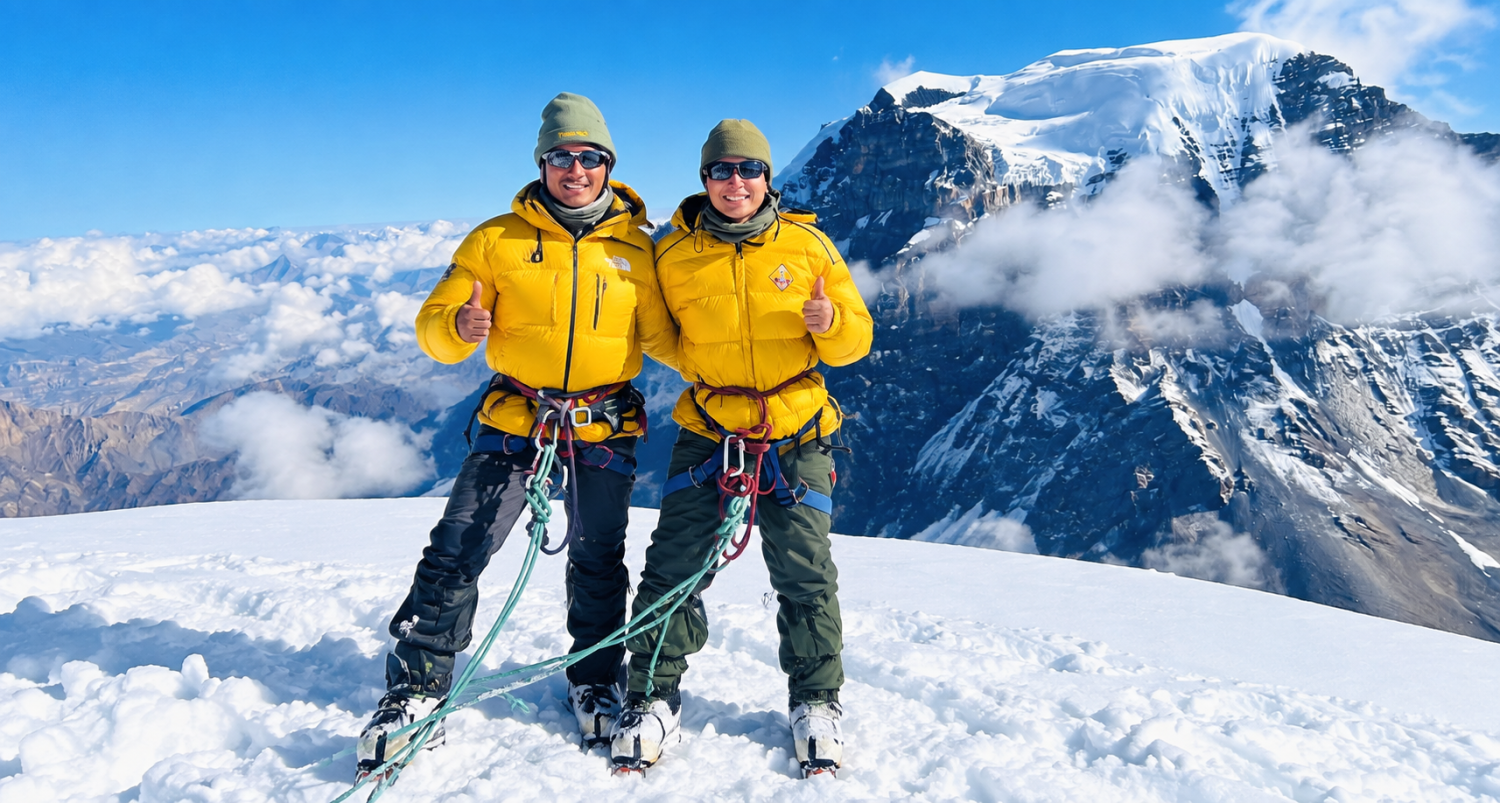
Thorong Peak Climbing is a challenging high-altitude mountaineering adventure in Nepal’s spectacular Annapurna region. Rising to approximately 6,144 meters (20,157 feet), Thorong Peak combines the classic landscapes and cultural experiences of the Annapurna Circuit with the excitement of climbing a Himalayan summit above 6,000 meters.
Organized by Himalayan Adventure Intl Treks, the expedition is designed for adventurous travelers who want to experience both a world-famous Himalayan trekking route and a genuine peak-climbing adventure. The journey passes through lush valleys, alpine forests, high mountain settlements, Tibetan-influenced villages, glacial landscapes, the famous Thorong La Pass (5,416 m), and the sacred pilgrimage destination of Muktinath.
Thorong Peak should not be regarded as simply an extension of the Annapurna Circuit. Although it is sometimes described as a comparatively accessible 6,000-meter peak, the summit involves steep and potentially technical terrain, exposure to extreme altitude, cold, wind, snow and rapidly changing mountain weather. Climbers need appropriate physical preparation, suitable equipment and competent high-altitude support.
With a carefully planned itinerary, adequate acclimatization and an experienced climbing team, Thorong Peak can become one of the most memorable Himalayan experiences in Nepal.
Thorong Peak offers something different from a conventional Himalayan trek. Instead of simply crossing Thorong La and descending toward Mustang, the itinerary adds an opportunity to attempt a summit above 6,000 meters.
The journey is particularly attractive because the approach follows much of the renowned Annapurna Circuit, allowing climbers to experience a remarkable variety of environments before reaching the mountain.
At lower elevations, the trail passes through green hills, terraced fields, waterfalls and forests. Higher up, the landscape gradually becomes drier and more alpine. Around Manang, the scenery changes dramatically, with barren hills, rocky slopes and snow-covered Himalayan peaks dominating the horizon.
The expedition also combines natural and cultural attractions. Traditional villages, Buddhist monasteries, prayer flags, chortens and Tibetan-influenced architecture appear throughout the upper Manang region.
After the climbing section, the route continues toward Muktinath and the Kali Gandaki Valley, providing a satisfying conclusion to the expedition.
One of the major attractions of Thorong Peak Climbing is that the approach follows the famous Annapurna Circuit Trek.
The Annapurna Circuit is renowned for its extraordinary geographical diversity. A single journey can take travelers from subtropical valleys to high alpine terrain and eventually across one of Nepal's best-known Himalayan passes.
The route around the Annapurna massif also provides opportunities to experience local communities and traditions. As the trail moves toward Manang, the cultural influence of the Tibetan plateau becomes increasingly visible.
The gradual change in landscape is especially important for a climbing expedition. Rather than arriving immediately at 6,000 meters, climbers spend several days trekking at progressively higher elevations. This provides valuable time for acclimatization while also allowing the climbing team to evaluate fitness, hydration, sleep and adaptation to altitude.
The exact route and overnight locations can vary depending on road conditions, weather, available accommodation and the climbing team's assessment. A typical expedition follows the general Annapurna Circuit approach.
Your Thorong Peak adventure begins with your arrival in Kathmandu.
A representative from Himalayan Adventure Intl Treks can meet you at the airport and transfer you to your hotel. After check-in, you have time to rest and recover from your journey.
Depending on your arrival time, you may explore part of Kathmandu or simply prepare for the expedition.
A trip briefing is normally arranged before departure. During the briefing, your guide reviews the itinerary, equipment, permits, weather considerations and altitude-safety procedures.
This day provides an opportunity to explore Kathmandu and complete final preparations.
Kathmandu Valley is rich in cultural heritage, with ancient temples, monasteries, historic courtyards and traditional neighborhoods. If time permits, selected cultural sites can be visited.
The remaining time is useful for checking climbing equipment.
Your guide can inspect important equipment such as:
Any missing equipment can be arranged or rented in Kathmandu, depending on availability.
The trekking section generally begins after traveling toward the Manang district.
Depending on the current road conditions and itinerary, transportation may reach Dharapani or another suitable trailhead.
From here, the character of the journey changes. The road gradually gives way to walking trails, suspension bridges, forests and mountain villages.
The Marsyangdi Valley provides spectacular scenery, with enormous Himalayan walls surrounding the route.
The trek from Dharapani toward Chame takes you through beautiful forests and mountain settlements.
The trail passes through pine and other Himalayan vegetation, while the surrounding peaks become increasingly impressive.
Chame is the administrative center of Manang District and an important stopping point on the Annapurna Circuit.
From here onward, the valley becomes progressively more alpine.
The route continues through increasingly dramatic mountain scenery.
As the altitude increases, the vegetation becomes more sparse. The trail passes through forests and rocky terrain, with views toward the Annapurna mountain range.
Pisang is divided into lower and upper settlements, and the upper village provides an especially interesting introduction to the dry, Tibetan-influenced environment of the Manang region.
The contrast between the green lower valleys and the dry upper landscapes becomes increasingly noticeable.
The journey continues toward Manang, one of the most important settlements on the Annapurna Circuit.
The landscape around Manang is characterized by dry hills, rugged cliffs, glacial valleys and spectacular Himalayan peaks.
Manang is an important acclimatization location because the elevation is already above 3,500 meters.
A rest and acclimatization day here is extremely valuable before moving toward the Thorong La and climbing section.
Acclimatization is one of the most important parts of Thorong Peak Climbing.
At high altitude, the amount of available oxygen is significantly lower than at sea level. The body needs time to adapt.
During the acclimatization day, the group can take a gradual hike to a higher elevation and return to Manang for overnight accommodation.
The day can also be used to