Have Questions? Talk to Expert (Binod)

The Lhasa to Everest Base Camp to Kathmandu Tour is an extraordinary trans-Himalayan journey combining Tibetan culture, ancient Buddhist heritage, dramatic high-altitude landscapes, and the unforgettable experience of standing before Mount Everest from its northern side. Organized by Himalayan Adventure Intl Treks, this journey takes you from the sacred city of Lhasa across the vast Tibetan Plateau, through historic Gyantse and Shigatse, to Rongbuk Monastery and Everest Base Camp before descending toward Nepal and concluding in Kathmandu.
Rather than being simply a sightseeing holiday, this is a journey through some of the most culturally and geographically remarkable landscapes in Asia. You will explore magnificent monasteries, ancient palaces, traditional markets, Tibetan settlements, turquoise alpine lakes, high mountain passes, and enormous Himalayan valleys.
The journey begins in Lhasa, where the imposing Potala Palace dominates the skyline and the sacred Jokhang Temple remains the spiritual center of Tibetan Buddhism. You will walk around Barkhor, where pilgrims, merchants, monks, and local residents create an atmosphere unlike anywhere else.
As you travel westward along the famous Friendship Highway, the scenery changes constantly. The route passes through high mountain valleys, traditional villages, and spectacular viewpoints. You will stop at Yamdrok Lake, explore Gyantse and its famous Kumbum Stupa, and visit Tashilhunpo Monastery in Shigatse.
The ultimate highlight comes when the road reaches the Everest region. From the Tibetan side, Mount Everest rises dramatically above the surrounding landscape, revealing its magnificent north face. The journey to Everest Base Camp also provides an opportunity to visit Rongbuk Monastery, one of the highest monasteries in the world.
After exploring Everest Base Camp, the journey continues toward the Nepal border and finally Kathmandu. The contrast between the dry, immense Tibetan Plateau and the greener valleys of Nepal makes the entire trip particularly memorable.
This journey is ideal for travelers who want more than a conventional Everest trip. A standard Everest Base Camp itinerary from Nepal takes you into the southern approach of Everest, whereas this adventure allows you to experience the mountain from the Tibetan side before crossing into Nepal.
The northern approach is particularly fascinating because the landscape is much more open and expansive. The Tibetan Plateau stretches toward distant mountain ranges, and the road seems to disappear into an endless horizon.
The journey also combines several different types of travel. In Lhasa, the focus is primarily cultural and historical. Between Lhasa and Shigatse, you experience Tibetan towns, monasteries, lakes, agricultural valleys, and high mountain passes. Near Everest, the landscape becomes increasingly rugged and remote. Finally, the journey toward Nepal introduces greener valleys, rivers, forests, and Himalayan foothills.
This diversity makes the trip much more than an Everest excursion.
Lhasa is the starting point of your Himalayan adventure. Situated at a very high elevation, the city requires travelers to take acclimatization seriously. Your first days are designed to allow your body to adjust while you explore some of the city's most important attractions.
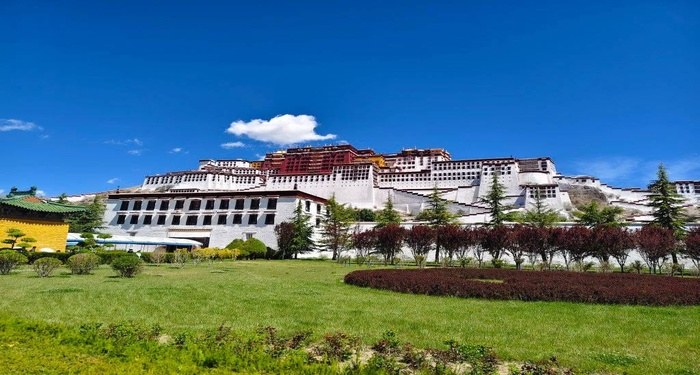
The Potala Palace is one of the world's most recognizable Himalayan landmarks. Rising dramatically above Lhasa, the palace contains numerous halls, chapels, statues, murals, religious objects, and historical treasures. Its enormous white and red structure provides an impressive introduction to Tibet's religious and political history.
Jokhang Temple is another essential visit. Located in the heart of the old city, it is regarded as one of the holiest temples in Tibetan Buddhism. Pilgrims travel from different parts of Tibet to pray and perform traditional devotional practices around the temple.
Nearby, Barkhor offers an opportunity to experience everyday life. Shops sell traditional handicrafts, religious objects, textiles, jewelry, incense, and souvenirs. Walking through the area provides a closer look at Tibetan culture beyond the major monuments.
Lhasa is also the perfect place to begin learning about Tibetan customs, architecture, food, religion, and history before heading into the more remote areas.
Altitude is one of the most important considerations on this tour. Lhasa itself is located at a high elevation, and the journey later reaches even greater heights around Everest.
For this reason, the itinerary should not be rushed. Resting properly, drinking enough fluids, eating regularly, avoiding excessive alcohol, and walking slowly can help your body adjust.
Our team provides practical guidance throughout the journey, but altitude affects every person differently. Travelers should take symptoms such as severe headache, unusual breathlessness, confusion, persistent vomiting, or extreme weakness seriously and immediately inform the guide.
Good preparation and gradual acclimatization are essential parts of a safe Everest journey.
Leaving Lhasa, the landscape begins to change dramatically. One of the most memorable stops is Yamdrok Lake, a sacred alpine lake surrounded by mountains.
Its brilliant blue and turquoise colors contrast beautifully with the surrounding brown and snow-covered mountains. Depending on weather and sunlight, the lake appears to change color throughout the day.
For many travelers, the viewpoint over Yamdrok Lake becomes one of the most photographed moments of the journey.
The lake is also culturally significant to Tibetans, adding a spiritual dimension to the spectacular scenery.
The road continues toward Gyantse, a historic town that once played an important role in trade and communication across Tibet.
One of the main attractions is Pelkor Chode Monastery and its famous Kumbum Stupa. The Kumbum is renowned for its architectural design and numerous chapels decorated with Buddhist artwork.
Exploring Gyantse provides a chance to see a more traditional side of Tibet. The town's architecture, narrow streets, monasteries, and surrounding agricultural landscapes offer a contrast to modern Lhasa.
The journey continues to Shigatse, one of Tibet's most important cities and traditionally associated with the Panchen Lamas.
The principal attraction here is Tashilhunpo Monastery. Founded in the 15th century, it remains an important center of Tibetan Buddhism.
The monastery complex contains temples, courtyards, prayer halls, statues, murals, and religious treasures. Walking through its grounds allows visitors to appreciate the scale and artistic richness of Tibetan Buddhist architecture.
Your visit here also provides useful historical context before continuing toward the Everest region.
The road from Lhasa toward Everest is part of one of the world's great high-altitude road journeys.
The so-called Friendship Highway connects Tibet with Nepal and crosses a vast landscape of high plateaus, mountain passes, valleys, lakes, and settlements.
Long sections of the journey may appear almost empty, with enormous mountains rising in the distance. Other areas reveal Tibetan villages, grazing animals, prayer flags, mani stones, monasteries, and cultivated fields.
The road itself becomes part of the adventure. Frequent photo stops allow travelers to appreciate the landscape rather than simply watching it through the vehicle window.
As you approach the Everest region, the elevation increases and the environment becomes increasingly rugged.
Gyatso La is among the notable high passes encountered along the route. From elevated viewpoints, the surrounding mountains appear to stretch endlessly toward the horizon.
The high passes can be cold and windy, even when the weather at lower elevations is relatively comfortable. Travelers should therefore keep warm layers easily accessible.
The journey across these passes also demonstrates the extraordinary scale of the Tibetan Plateau. There are few places where travelers can experience such enormous open spaces at such high elevations.
One of the most memorable stops before reaching Everest Base Camp is Rongbuk Monastery.
Positioned in the Everest region at an extraordinary elevation, Rongbuk is closely associated with Mount Everest expeditions and Tibetan Buddhist traditions.
The monastery's location is spectacular. Behind it rises the enormous Himalayan landscape, with Mount Everest dominating the surrounding peaks when visibility is favorable.
A visit to Rongbuk is more than another sightseeing stop. It combines spirituality, history, architecture, and mountain scenery in one remarkable location.
The area also has basic accommodation facilities, although travelers should expect simple conditions rather than conventional luxury.
The defining moment of the tour is reaching the Everest Base Camp area on the Tibetan side.
Here, Mount Everest rises above the surrounding Himalayan range with extraordinary scale. The Tibetan approach offers a spectacular perspective of Everest's north face.
Standing before the world's highest mountain is an emotional experience. The enormous rock and snow-covered summit appears almost unreal against the vast Tibetan sky.
Weather conditions determine visibility, and mountain views can never be guaranteed. However, when the clouds clear, the panorama can be breathtaking.
Travelers have time to take photographs, appreciate the surroundings, and absorb the atmosphere of one of the world's most iconic mountain locations.
This is not a technical mountaineering expedition. The Everest Base Camp experience involves walking and sightseeing rather than climbing Everest. Nevertheless, the altitude makes even short hikes physically demanding.
After experiencing Everest Base Camp, the journey begins its transition toward Nepal.
The contrast is remarkable. Tibet's high plateau is characterized by dry valleys, enormous open spaces, and sparse vegetation. As you descend toward Nepal, the environment gradually becomes greener.
Mountain rivers, forests, terraced fields, villages, and steep valleys begin to replace the wide-open Tibetan landscape.
The border crossing is an important logistical stage of the journey, and current border, immigration, permit, and transportation procedures must be followed according to the regulations in force at the time of travel.
Our team assists travelers with the required arrangements so that the transition is as smooth as possible.
Your journey concludes in Kathmandu, a city filled with temples, historic squares, courtyards, markets, and colorful streets.
After days on the Tibetan Plateau, Kathmandu feels dramatically different. The warmer climate, dense urban environment, green hills, and traditional Newari architecture create an exciting contrast.
Depending on your schedule, you may have time to explore Kathmandu's cultural attractions, shop for souvenirs, enjoy traditional Nepali cuisine, or simply rest after the long trans-Himalayan journey.
Kathmandu provides an excellent place to reflect on everything experienced during the trip—from Tibetan monasteries and sacred lakes to Everest and the landscapes of Nepal.
The journey is adventurous and physically demanding primarily because of altitude rather than technical climbing.
You will spend considerable time above 3,500 meters and travel to areas around 5,000 meters. Even when you are traveling by vehicle, walking at such elevations can be tiring.
The short walks around Everest Base Camp and Rongbuk may feel more strenuous than similar walks at sea level.
You should have a reasonable level of fitness and be comfortable with long road journeys, cold temperatures, basic accommodation in remote areas, and changing weather.
You do not need mountaineering experience.
However, you should prepare mentally and physically for high-altitude travel. A positive attitude, patience, flexibility, and willingness to follow your guide's advice are extremely valuable.
The most favorable periods for this journey are generally spring and autumn, although the exact conditions vary from year to year.
Spring brings improving weather, relatively clear mountain views, and comfortable daytime conditions in many lower sections of the route.
The higher areas remain cold, particularly in the mornings and evenings, but the landscape can be exceptionally beautiful.
Spring is an excellent period for travelers who want a combination of good mountain visibility and relatively pleasant conditions.
Autumn is widely considered one of the best periods for Himalayan travel.
The monsoon influence has generally diminished, skies can be clear, and mountain visibility is often excellent. The crisp atmosphere creates wonderful photographic conditions.
Temperatures become colder as winter approaches, particularly around Everest Base Camp, so warm clothing is essential.
The Tibetan Plateau does not experience monsoon conditions in exactly the same way as Nepal, but weather patterns can still influence road conditions, cloud cover, and visibility.
Some sections of the Nepal side can receive significant rainfall during the monsoon months.
Travelers considering summer departures should discuss current road and weather conditions with our team before confirming their itinerary.
Winter brings very cold conditions and can affect road access, accommodation, and border logistics in high-altitude areas.
Although winter can offer clear skies and fewer tourists, it requires careful planning and appropriate cold-weather equipment.
Accommodation varies according to location.
In Lhasa, Gyantse, and Shigatse, travelers can generally stay in comfortable hotels with private rooms and modern facilities.
As you move toward Everest Base Camp, accommodation becomes increasingly basic.
Near Everest, guesthouses and simple lodges may offer shared rooms and limited facilities. Rongbuk and the Everest Base Camp area are remote, so travelers should not expect the same standards available in Lhasa.
The basic accommodation is part of the adventure. Staying close to Everest allows you to experience the remote mountain environment without the distractions of modern city life.
Meals are generally a mixture of Tibetan, Chinese, and international-style dishes depending on the location.
Common Tibetan foods include:
Lhasa and larger towns provide greater food variety. In remote areas near Everest, meals are simpler because of transportation and supply limitations.
We recommend carrying nutritious snacks such as energy bars, nuts, dried fruit, chocolate, and biscuits.
Staying hydrated is particularly important at high altitude.
The tour uses reliable vehicles appropriate for Tibetan mountain roads. Depending on group size and road conditions, transportation may include a private car, SUV, jeep, van, Hiace, or larger tourist vehicle.
The long drives are an important part of the experience because the landscapes outside the vehicle are among the main attractions.
Our experienced drivers understand the mountain roads and the challenges associated with high-altitude travel.
Road conditions can change because of weather, construction, local restrictions, or other unforeseen circumstances. Therefore, travelers should maintain some flexibility in their schedules.
Traveling to Tibet involves special regulations for international visitors. Required documents can vary depending on nationality, entry route, itinerary, and government regulations.
Depending on your itinerary, arrangements may involve a Tibet Travel Permit and additional travel documents for restricted areas such as Shigatse and the Everest region.
Travelers entering Tibet through mainland China may also need the appropriate Chinese entry documentation unless they qualify under a current visa-exemption or transit policy.
Because regulations can change, Himalayan Adventure Intl Treks will verify the latest requirements before your departure and coordinate the necessary Tibet travel arrangements through the appropriate authorities and local partners.
If the journey crosses into Nepal, Nepal's immigration and visa requirements also apply.
Travelers should provide accurate passport information and submit documents within the required timeframe.
Comprehensive travel insurance is strongly recommended for this journey.
Your policy should cover high-altitude travel, emergency medical treatment, evacuation, trip interruption, delays, baggage problems, and other relevant risks.
Because the itinerary reaches very high elevations, carefully check the altitude limit stated in your insurance policy.
A policy that covers only ordinary sightseeing may not provide adequate protection for a high-altitude Himalayan journey.
Cold temperatures can reduce battery performance, so keep spare batteries and power banks protected from extreme cold.
Useful snacks include:
High altitude is the most important health consideration on this tour.
Before traveling, consult your doctor if you have any medical concerns about high-altitude travel.
Once in Tibet, avoid rushing. Walk slowly, sleep adequately, drink fluids, and allow your body time to acclimatize.
Avoid excessive alcohol during the acclimatization period.
If you experience unusual or worsening symptoms, inform your guide immediately. Do not attempt to push through serious altitude-related symptoms.
Our guides monitor travelers throughout the journey and can help coordinate appropriate action if health problems arise.
This tour is a dream for photographers.
From the golden light over Lhasa's historic buildings to the turquoise waters of Yamdrok Lake, the ancient architecture of Gyantse, the monasteries of Shigatse, high Himalayan passes, and the immense north face of Everest, there are countless opportunities for memorable photographs.
Keep your camera ready during road journeys because unexpected scenery can appear around every bend.
At high elevations, sunlight can be extremely strong. Use UV protection for your eyes and skin, and carry extra camera batteries.
Tibet is home to deeply rooted cultural and religious traditions. Travelers should approach monasteries and local communities with respect.
Dress modestly when visiting religious sites. Follow local photography rules, especially around religious ceremonies, monks, and sacred objects.
Ask permission before photographing individuals.
Do not touch religious objects without permission, and follow instructions regarding walking direction around temples, stupas, and other sacred sites.
We encourage travelers to support local communities by purchasing locally made handicrafts and using locally operated services where possible.
Responsible tourism helps preserve the cultural and environmental character of the region.
At Himalayan Adventure Intl Treks, we understand that a Tibet-to-Nepal journey requires careful organization.
Our role is not simply to arrange transportation. We coordinate the different elements of the journey so that travelers can concentrate on experiencing the Himalayas.
Our services focus on:
The Himalayas are unpredictable, and no itinerary can guarantee exact weather or road conditions. Our experience allows us to respond sensibly when circumstances change.
The total cost depends on several factors, including travel dates, group size, accommodation category, transportation type, permit requirements, guide services, and the exact route selected.
Private journeys generally cost more because vehicles, guides, and other services are dedicated to your group.
Group departures can be more economical because transportation and guiding costs are shared among participants.
The package quotation from Himalayan Adventure Intl Treks can be customized according to your requirements.
Before booking, travelers should request a detailed cost sheet showing exactly what is included and excluded.
Typical inclusions may include:
Personal expenses, international flights, insurance, beverages, tips, additional accommodation, and expenses caused by unforeseen delays may be excluded unless specifically stated in your quotation.
The Lhasa to Everest Base Camp to Kathmandu Tour is suitable for travelers who enjoy cultural discovery, long scenic journeys, high mountains, remote landscapes, and adventure.
It is especially appropriate for people who want to combine Tibet and Nepal in one extraordinary Himalayan experience.
You should be prepared for:
No technical climbing experience is necessary.
A reasonable level of physical fitness and a flexible attitude are more important than advanced trekking skills.
The Lhasa to Everest Base Camp to Kathmandu Tour is one of the most remarkable ways to experience the Himalayas.
It begins amid the temples, palaces, markets, and monasteries of Lhasa and gradually leads into the immense wilderness of the Tibetan Plateau. Along the way, sacred Yamdrok Lake, historic Gyantse, cultural Shigatse, Tashilhunpo Monastery, high Himalayan passes, and traditional Tibetan communities create a journey filled with discovery.
Then comes Everest.
At Everest Base Camp, the scale of the world's highest mountain becomes real. The north face rises above the surrounding landscape, reminding travelers of the extraordinary power of nature. Nearby Rongbuk Monastery adds a spiritual dimension to the experience, creating an atmosphere of solitude and contemplation.
Finally, the landscape changes again as you approach Nepal. Dry high-altitude valleys gradually give way to greener mountains, rivers, villages, and the vibrant atmosphere of Kathmandu.
This journey is therefore not simply a trip to Everest Base Camp. It is a complete Himalayan adventure connecting two extraordinary countries, two distinctive cultures, and some of the world's most spectacular landscapes.
For travelers seeking an unforgettable combination of Tibetan culture, Buddhist heritage, Himalayan scenery, Everest Base Camp, and Nepalese hospitality, the Lhasa to Everest Base Camp to Kathmandu Tour offers an experience that is difficult to match.
Book your Lhasa to Everest Base Camp to Kathmandu adventure with Himalayan Adventure Intl Treks and prepare to discover the Himalayas from a truly extraordinary perspective.
Highlights: Trans-Himalayan flight, Himalayan views, first experience of the Tibetan Plateau, Lhasa arrival and acclimatization
Elevation: Kathmandu 1,350m → Lhasa 3,650m
Distance: Approximately 600 km by air
Flight Time: About 1–1.5 hours
Accommodation: Hotel in Lhasa
Your Tibet adventure begins with an exciting trans-Himalayan flight from Kathmandu to Lhasa, the historic capital of Tibet. After completing the required airport formalities in Kathmandu, board your flight toward the Tibetan Plateau. On a clear day, the flight offers spectacular aerial views of the Himalayan range, including some of the world's highest peaks. The dramatic transition from Nepal's green valleys to Tibet's vast, dry plateau makes this journey especially memorable.
After landing at Lhasa Gonggar Airport, situated at an elevation of approximately 3,570m, you will meet your local guide and transfer toward Lhasa city. The drive from the airport to central Lhasa takes around 1–1.5 hours and follows the beautiful Brahmaputra River valley. As you approach the city, you will begin seeing traditional Tibetan architecture, colorful prayer flags, monasteries, and mountains surrounding the valley.
Lhasa stands at approximately 3,650m, so altitude acclimatization is the main priority today. Even if you feel perfectly healthy, avoid strenuous walking, running, or unnecessary physical activity. Drink plenty of water and allow your body to gradually adapt to the thin mountain air.
Once you reach your hotel, check in and relax. You may take a very gentle walk around the hotel area if your guide considers it appropriate, but there is no scheduled sightseeing today. Your guide will also provide information about the coming days, local customs, and safety procedures.
The evening is free for rest. Enjoy a quiet dinner and prepare yourself for the cultural exploration of Lhasa beginning the following morning.
Highlights: Potala Palace, Jokhang Temple, Barkhor Square, Tibetan culture and architecture
Elevation: Approximately 3,650m
Distance: Approximately 10–20 km sightseeing
Driving Time: About 1–2 hours total, depending on sightseeing locations
Accommodation: Hotel in Lhasa
Today is dedicated to discovering the cultural and historical treasures of Lhasa. After breakfast, begin your sightseeing with the magnificent Potala Palace, one of Tibet's most recognizable landmarks. Rising dramatically above Lhasa, the palace was historically the winter residence of the Dalai Lamas and remains an extraordinary symbol of Tibetan Buddhist culture.
The Potala Palace contains numerous chapels, prayer halls, statues, murals, religious artifacts, and historic tombs. Exploring its interior requires considerable walking and climbing stairs, so take your time because you are still acclimatizing to Lhasa's high altitude. Your guide will explain the historical and religious significance of the palace as you explore its different sections.
After visiting Potala Palace, continue toward the old city and the sacred Jokhang Temple. Considered one of the most important pilgrimage sites in Tibet, Jokhang attracts Buddhist pilgrims from across the Tibetan Plateau. The temple's traditional architecture, golden rooftop, prayer wheels, incense, and devotional atmosphere provide an excellent introduction to Tibetan religious traditions.
Later, walk through Barkhor Bazaar, the lively traditional area surrounding Jokhang Temple. Barkhor is both a pilgrimage circuit and a commercial neighborhood. You can observe pilgrims performing devotional walks, visit traditional handicraft shops, and browse Tibetan-style clothing, handicrafts, prayer items, jewelry, and souvenirs.
Your guide will help you understand local etiquette, particularly when visiting religious sites. Visitors should dress respectfully and follow instructions concerning photography.
After sightseeing, return to your hotel for rest. The remainder of the evening is free. Since altitude adjustment remains important, avoid excessive activity and allow your body to recover before the next day's cultural tour.
Highlights: Drepung Monastery, Sera Monastery, Tibetan Buddhist philosophy, traditional monk debates
Elevation: Approximately 3,650m
Distance: Approximately 20–30 km
Driving Time: About 1–2 hours total
Accommodation: Hotel in Lhasa
After breakfast, continue your exploration of Lhasa with visits to two of Tibet's most famous monasteries: Drepung Monastery and Sera Monastery. The day combines spectacular architecture with an opportunity to learn about Tibetan Buddhist traditions, monastic education, and daily religious life.
Begin with Drepung Monastery, located on the outskirts of Lhasa beneath the surrounding mountains. Historically one of Tibet's largest and most influential monasteries, Drepung was an important center of Buddhist learning. The monastery complex includes whitewashed buildings, prayer halls, courtyards, religious murals, statues, and traditional Tibetan architectural features.
Spend time walking through the monastery complex with your guide. You will learn about the monastery's history and its role in Tibetan Buddhist education. The peaceful surroundings and panoramic views toward the Lhasa Valley also make this an excellent place for photography.
After lunch, continue to Sera Monastery, another major center of Tibetan Buddhist scholarship. Sera is particularly famous for its traditional philosophical debates. During the debate sessions, monks question one another through a lively combination of spoken arguments and expressive hand gestures. When available, observing these debates provides a fascinating glimpse into the traditional method of Buddhist philosophical education.
Because Lhasa is at a high altitude, maintain a comfortable walking pace throughout the day. Take regular breaks, drink sufficient water, and inform your guide immediately if you experience significant altitude-related discomfort.
After completing the monastery visits, return to your hotel in Lhasa. The evening is free for relaxation or a gentle walk around the city. You may also use this opportunity to prepare your belongings for the journey toward Gyantse and Shigatse the next morning.
Highlights: Yamdrok-Tso Lake, Kamba La Pass, Karo La Pass, Gyantse, Kumbum Stupa
Elevation: Lhasa 3,650m → Kamba La 4,794m → Karo La about 5,010m → Gyantse 3,950m → Shigatse 3,900m
Distance: Approximately 360–380 km
Driving Time: About 7–9 hours excluding sightseeing
Accommodation: Hotel in Shigatse
Today marks the beginning of your overland journey across the spectacular Tibetan Plateau. After breakfast, leave Lhasa and travel west toward Gyantse and Shigatse. The road gradually climbs through dramatic mountain landscapes and high-altitude valleys.
One of the day's major attractions is Yamdrok-Tso, a magnificent turquoise-blue lake surrounded by snow-covered mountains. The lake is regarded as one of Tibet's sacred lakes, and its changing colors and reflections create excellent photographic opportunities. Stop at a suitable viewpoint to appreciate the vast landscape.
Continue toward Kamba La Pass, which rises to approximately 4,794m. From the pass, you can enjoy impressive views over Yamdrok-Tso and the surrounding Himalayan landscape. Prayer flags fluttering in the mountain wind add a distinctly Tibetan character to the scenery.
The route then continues toward Karo La Pass, reaching around 5,010m. Snow and glaciers can often be seen on the surrounding mountains. Because you will temporarily travel above 5,000m, keep warm and avoid unnecessary exertion.
Continue to Gyantse, a historic Tibetan town. Here, visit the renowned Kumbum Stupa, located within Pelkor Chode Monastery. The distinctive multi-level structure contains numerous chapels and traditional Buddhist artwork.
After sightseeing, continue driving toward Shigatse, Tibet's second-largest city. Shigatse sits at approximately 3,900m and is an important religious and cultural center.
Upon arrival, check into your hotel and relax. The following day takes you deeper into the high Himalayan landscape toward Mount Everest.
Highlights: Tashilhunpo Monastery, Tibetan Plateau, Everest region, Rongbuk Monastery
Elevation: Shigatse 3,900m → Rongbuk approximately 4,980m / Everest Base Camp area approximately 5,150m
Distance: Approximately 330–350 km
Driving Time: About 7–9 hours, excluding sightseeing
Accommodation: Guesthouse near Rongbuk / Everest area
Today is one of the most exciting days of the journey as you travel toward the northern side of Mount Everest. Begin the morning with a visit to Tashilhunpo Monastery, one of Tibet's most important monasteries and a major religious center in Shigatse.
Explore its impressive courtyards, chapels, prayer halls, religious artwork, and traditional Tibetan architecture. Your guide will explain the monastery's history and importance before you begin the long drive west toward the Everest region.
As you leave Shigatse, the landscape gradually becomes increasingly remote and dramatic. The road crosses the immense Tibetan Plateau, passing through barren valleys, high mountain passes, grazing areas, and traditional settlements. On clear days, distant snow-covered peaks rise above the horizon.
As you approach the Everest region, the altitude increases significantly. The landscape becomes more rugged, with enormous mountains surrounding the road. Continue toward Rongbuk Monastery, one of the world's highest monasteries and an important viewpoint for Mount Everest's northern face.
From the Rongbuk area, you can enjoy magnificent views toward Everest when weather conditions are favorable. The mountain rises dramatically beyond the valley, creating one of the most memorable scenes of the entire Tibet journey.
The Everest Base Camp area is located at roughly 5,150m, although exact elevation varies depending on the designated tourist viewpoint and current access arrangements. At this altitude, temperatures can drop sharply, particularly after sunset.
After arriving, settle into your simple high-altitude accommodation. Keep warm, drink plenty of fluids, and rest. The thin air can make even simple movements tiring, so avoid unnecessary exertion. Spend the evening enjoying the spectacular mountain environment and preparing for an early start the following morning.
Highlights: Mount Everest North Face, Everest Base Camp area, Rongbuk Valley, Tibetan Himalayan scenery
Elevation: Everest region approximately 5,150m → Shigatse 3,900m
Distance: Approximately 330–350 km
Driving Time: About 7–9 hours
Accommodation: Hotel in Shigatse
Wake early this morning to experience the spectacular Himalayan surroundings near Mount Everest. If the weather is clear, the early morning light can create exceptional views of Everest's northern face. The changing colors of the mountain as sunlight reaches its summit are among the highlights of the journey.
After breakfast, spend time exploring the designated Everest Base Camp tourist area. Depending on current local regulations and access arrangements, you may travel toward the permitted viewpoint near the base camp. Your guide will advise you about the areas open to visitors.
The northern face of Mount Everest offers a completely different perspective from the Nepal side. The enormous mountain dominates the surrounding landscape, while the barren Tibetan Plateau stretches across the horizon. This is an excellent opportunity for photographs and quiet appreciation of the Himalayan environment.
Because the altitude is above 5,000m, keep your activities gentle. Do not attempt unnecessary hiking or strenuous climbing. Even short walks can feel difficult at this elevation.
After completing your Everest experience, begin the drive back toward Shigatse. The return journey follows the same broad route through Tibet's high-altitude wilderness. During the drive, you will have opportunities to appreciate the enormous scale of the Tibetan Plateau from a different perspective.
Stop along the way for refreshments and photographs as conditions permit. The gradual loss of elevation should make breathing more comfortable as you travel toward Shigatse.
Arrive in Shigatse later in the afternoon or evening and check into your hotel. Enjoy a warm meal and a comfortable night's rest. After spending time at Everest's extreme altitude, returning to approximately 3,900m provides your body with a welcome reduction in elevation.
Highlights: Tibetan Plateau, remote mountain valleys, Himalayan landscapes, Gyirong border region
Elevation: Shigatse 3,900m → Gyirong approximately 2,600–2,800m
Distance: Approximately 330–380 km
Driving Time: About 7–9 hours
Accommodation: Hotel/guesthouse near Gyirong
Today you leave Shigatse and travel southwest toward Gyirong, the gateway between Tibet and Nepal. The journey provides another opportunity to experience the changing landscapes of the Tibetan Plateau.
After breakfast, begin the long drive through remote valleys and high mountain terrain. The road gradually descends as you approach the southern edge of Tibet. Along the route, you may see traditional Tibetan villages, grazing animals, prayer flags, monasteries, and wide-open landscapes.
Compared with the areas around Lhasa and Shigatse, the region becomes increasingly remote as you approach the Nepal border. The scenery also changes noticeably. Dry high-altitude landscapes gradually give way to deeper valleys and more rugged Himalayan terrain.
Gyirong is particularly interesting because of its geographical position between the Tibetan Plateau and the Himalayan foothills. As the road descends, the climate becomes warmer and vegetation becomes more abundant.
The journey may take most of the day, so carry drinking water and snacks and keep essential belongings easily accessible. Road conditions and travel times can vary depending on weather, traffic, checkpoints, and local regulations.
Upon reaching the Gyirong area, complete the necessary preparations for the following day's border crossing. Your guide will explain the immigration and customs procedures and inform you about the meeting arrangements for the Nepal side.
Spend the evening relaxing at your accommodation. The lower altitude around Gyirong should feel noticeably more comfortable after the nights spent around Everest.
Enjoy your final evening on the Tibetan side of the journey, surrounded by Himalayan mountains. Prepare your passport and required documents according to your guide's instructions, and keep your luggage organized for the border formalities the next morning.
Lungchang to Nam La pass (5100m/ 16732ft) 5/6 hours
Highlights: Nepal–China border crossing, Himalayan foothills, lush valleys, return to Kathmandu
Elevation: Gyirong approximately 2,600–2,800m → Kathmandu approximately 1,400m
Distance: Approximately 160–180 km by road, depending on the border route and current access
Driving Time: Approximately 6–9 hours, excluding border formalities
Accommodation: Kathmandu
Your final day begins with the border crossing from Tibet into Nepal. After breakfast, travel to the Gyirong/Rasuwagadhi border area and complete the required Chinese-side exit procedures. Immigration and customs formalities can take some time, so patience is important.
After completing the Tibet-side formalities, proceed across the international border and meet the Nepal-side transportation team as arranged. The scenery changes dramatically after entering Nepal. The dry, open Tibetan Plateau gives way to steep Himalayan valleys, forests, waterfalls, rivers, and increasingly lush vegetation.
The road follows the mountainous landscape toward Kathmandu. Depending on current road conditions, weather, traffic, and construction, the journey can take several hours. Some sections may be rough or winding, particularly in the Himalayan foothills.
Along the way, you will experience a remarkable transition in altitude and environment—from the high Tibetan Plateau and Everest region to the warmer, greener landscapes of central Nepal.
As you approach Kathmandu Valley, traffic and urban development gradually increase. Eventually, you arrive in Kathmandu at approximately 1,350m, completing your journey from Lhasa across the Tibetan Plateau and Everest region.
After arriving at your hotel, check in and enjoy some well-deserved rest. If time and energy permit, you may take a gentle walk around Kathmandu or enjoy a farewell dinner.
This marks the end of your Lhasa – Everest Base Camp – Gyirong – Kathmandu adventure, combining Tibetan Buddhist culture, spectacular Himalayan landscapes, Mount Everest's northern face, and an unforgettable overland journey from the Tibetan Plateau back into Nepal.
The 8-day Lhasa to Everest Base Camp Tour is an extraordinary journey through the heart of the Tibetan Plateau, combining ancient Buddhist heritage, sacred lakes, high mountain passes, traditional Tibetan villages, and unforgettable views of Mount Everest. Designed by Himalayan Adventure Intl Treks, this overland adventure takes you from the historic streets of Lhasa to the northern face of the world's highest mountain.
The journey begins in Lhasa, the spiritual and cultural center of Tibet, where you explore the magnificent Potala Palace, Jokhang Temple, Barkhor Street, Drepung Monastery, and Sera Monastery. You then travel west through spectacular Himalayan landscapes, crossing high passes and visiting the turquoise waters of Yamdrok Lake, the dramatic Karola Glacier, ancient Gyantse, and Shigatse.
The highlight arrives when you reach Everest Base Camp in Tibet, situated at approximately 5,000 meters above sea level. From several carefully selected viewpoints, you can admire Mount Everest from different angles. If weather conditions are favorable, you may see the mountain illuminated by sunset, glowing beneath the first morning light, and standing beneath an extraordinary high-altitude night sky.
What makes this journey particularly memorable is that it is much more than a sightseeing trip. Along the route, you encounter Tibetan culture in monasteries, villages, farms, prayer flags, traditional tea houses, and local communities. At Yamdrok Lake, you may have the opportunity to meet a Tibetan family, enjoy a local-style lunch, walk beside the lakeshore, and experience a slower side of life on the Tibetan Plateau.
With Himalayan Adventure Intl Treks, our goal is to make your Tibet journey comfortable, well organized, culturally meaningful, and safe. Our experienced local guide assists with transportation, sightseeing, permits, accommodation, and altitude awareness throughout the trip.
Traveling from Lhasa to Everest Base Camp by road gives you the opportunity to experience the changing landscapes of Tibet rather than simply arriving at Everest by vehicle. The route gradually unfolds from historic cities and monasteries to enormous mountain valleys and high Himalayan passes.
This 8-day itinerary is especially suitable for travelers who want to experience both Tibetan culture and Mount Everest within a relatively short period.
The journey includes:
One of the greatest attractions of this tour is the opportunity to see Mount Everest from different locations. The mountain changes dramatically depending on the viewing angle, weather, time of day, and distance.
You may first catch a distant glimpse of Everest while crossing the high passes. Later, from the Gawula viewpoint, the enormous Himalayan panorama opens before you. As you approach Everest Base Camp, the mountain appears increasingly dominant.
At Everest Base Camp itself, the north face of Everest rises dramatically above the surrounding landscape. If the sky is clear, the evening light can create beautiful colors across the summit.
Spending a night close to Everest is a special experience. Instead of visiting the mountain for only a few hours and immediately returning to lower elevations, this itinerary allows you to remain in the Everest region overnight.
Depending on operating conditions and availability, accommodation may be arranged in a tent hotel or guesthouse near Everest Base Camp/Rongbuk area.
The facilities are basic compared with hotels in Lhasa and Shigatse, but the location is the attraction. At night, the surroundings become remarkably quiet, and on a clear evening the stars can appear exceptionally bright.
The Tibetan Plateau is famous for its high elevation, dry atmosphere, and expansive skies. When clouds are limited and visibility is good, the night sky near Everest can be spectacular.
You may see thousands of stars spread across the darkness, with the Milky Way appearing like a luminous band above the Himalayan peaks.
Please remember that astronomical visibility depends entirely on weather, moonlight, cloud cover, and atmospheric conditions. It cannot be guaranteed, but a clear night at Everest can become one of the most memorable moments of the entire journey.
The journey from Lhasa toward Gyantse offers an opportunity to experience rural Tibetan life.
Near the beautiful Yamdrok Lake, you may visit a local family and learn about traditional life on the plateau. Depending on local arrangements and seasonal conditions, travelers can enjoy a simple meal with the family and take a relaxed walk beside the lake.
Seeing sheep, grazing animals, traditional homes, cultivated fields, mountains, and turquoise water together creates a very different experience from visiting major tourist attractions.
Religion and culture are central to Tibetan identity, and monasteries are an important part of this journey.
You will visit Drepung Monastery, Sera Monastery, Jokhang Temple, Tashilhunpo Monastery, and Rongbuk Monastery. Each has its own history, architecture, religious traditions, and atmosphere.
Your local guide can explain the meaning of prayer wheels, murals, statues, monasteries, religious debates, pilgrimage practices, and other aspects of Tibetan Buddhism.
Duration: 8 Days / 7 Nights
Starting Point: Lhasa
Ending Point: Lhasa
Maximum Elevation: Around 5,000 meters at Everest Base Camp
Main Destination: Everest Base Camp, Tibet
Transportation: Private or shared tourist vehicle according to group arrangement
Accommodation: Selected hotels in cities and basic accommodation near Everest
Meals: As specified in the itinerary
Guide: Experienced English-speaking Tibetan local guide
Permit: Tibet Travel Permit and required local travel documents arranged according to applicable regulations
Difficulty: Moderate due mainly to high altitude
Best For: Cultural travelers, photographers, mountain lovers, families, couples, and travelers seeking a short Tibet-Everest adventure
Welcome to Lhasa, the gateway to your Tibetan adventure.
Upon arrival by train or flight, our representative from Himalayan Adventure Intl Treks will meet you and transfer you to your hotel in Lhasa.
Depending on your arrival route, you may travel beside the Lhasa River and observe the broad landscapes surrounding the Tibetan capital. The journey from the airport or railway station into the city provides your first introduction to the high-altitude environment.
After checking into your hotel, the most important activity of the day is rest.
Lhasa sits at approximately 3,650 meters above sea level, so your body needs time to adapt. Avoid strenuous exercise, drink sufficient water, eat light meals, and allow yourself to rest.
There is no need to fill your first afternoon with sightseeing. Relaxing is an important part of preparing for the days ahead.
Overnight: Lhasa
Meals: According to arrival arrangement
After breakfast, begin your exploration of Lhasa with a visit to Drepung Monastery, historically one of the largest and most influential monasteries in Tibet.
Located on the outskirts of Lhasa, Drepung was once home to thousands of monks and played an important role in Tibetan Buddhist scholarship and political history.
Walk through the monastery complex with your guide and learn about Tibetan Buddhist philosophy, religious art, monastic education, and the lives of monks.
You will then explore areas associated with monastic study and daily life. The whitewashed buildings climbing the hillside provide excellent views over the Lhasa valley.
In the afternoon, continue to Sera Monastery, another important center of Tibetan Buddhist learning.
One of Sera's most famous traditions is the monks' philosophical debate. When the debate courtyard is open and the schedule permits, you can watch monks challenge one another through questions, answers, gestures, and energetic discussion.
The debates are not simply performances. They form part of a traditional educational system in which students develop reasoning and philosophical understanding.
After sightseeing, return to your hotel and enjoy a welcome dinner or group meal according to the operating schedule.
Overnight: Lhasa
Meals: Breakfast and welcome dinner
Today introduces you to some of Tibet's most famous landmarks.
Begin with the magnificent Potala Palace, the iconic symbol of Lhasa.
Built on Marpo Ri Hill, the palace dominates the city skyline. Its enormous white and red structures contain chapels, halls, religious objects, murals, statues, historical artifacts, and the tomb stupas of former Dalai Lamas.
Your guide will help you understand the palace's religious and historical significance while you explore its interior.
After visiting the palace, continue to a viewpoint or park area around its base for photographs. The perspective from below provides an impressive view of the palace rising above Lhasa.
In the afternoon, visit Jokhang Temple, one of the most sacred religious sites in Tibet.
The temple attracts pilgrims throughout the day. Around the temple, you can observe people walking clockwise in the traditional pilgrimage route known as kora.
Continue to Barkhor Street, the historic market area surrounding Jokhang Temple. This is an excellent place to observe everyday life, browse traditional handicrafts, and experience the atmosphere of old Lhasa.
A visit to a local Tibetan tea house adds another cultural dimension. Tibetan sweet tea is a popular social drink, and tea houses provide a window into ordinary urban life.
Return to your hotel after a full day of cultural exploration.
Overnight: Lhasa
Meals: Breakfast
Today marks the beginning of your major overland adventure.
Leave Lhasa and travel toward Shigatse. The road climbs through spectacular mountain scenery before reaching Gampala Pass, at approximately 4,790 meters.
From the pass, you can enjoy a dramatic view of Yamdrok Lake, one of Tibet's most celebrated sacred lakes.
The lake's turquoise and deep-blue waters contrast beautifully with the surrounding mountains. Depending on weather and light, its appearance can change throughout the day.
Take time for photographs and enjoy the landscape.
You may then visit a Tibetan village near the lake, where you can meet a local family and experience rural Tibetan hospitality. A simple local lunch and a lakeside walk can make this stop particularly memorable.
Continue westward toward Karola Glacier. The glacier descends dramatically from the surrounding mountains and can be viewed from the road.
The route then continues toward Gyantse. Along the way, you may cross another high mountain pass and see prayer flags fluttering in the wind.
Gyantse is an old Tibetan town with a rich historical atmosphere. After a short exploration or photo stop, continue toward Shigatse.
The landscape gradually changes into broad agricultural valleys where barley fields and farms can be seen during the growing season.
Arrive in Shigatse, Tibet's second-largest city, and check into your hotel.
Overnight: Shigatse
Meals: Breakfast and lunch
Today is the most anticipated day of the journey.
After breakfast, leave Shigatse and travel toward Mount Everest.
The road gradually climbs through the high Himalayan landscape. At Gyatsola Pass, you may have an early distant glimpse of Everest if weather conditions are favorable.
The journey continues into the Everest region, where huge mountain ranges surround the road.
One of the major highlights is Gawula Pass, where the landscape opens into an extraordinary Himalayan panorama. From the viewpoint, you may see several of the world's highest mountains in favorable weather.
This is an ideal location for photography.
Continue toward Everest Base Camp along the mountain road. As the road winds through the high plateau, Mount Everest becomes increasingly prominent.
Eventually, you reach the Everest Base Camp area on the Tibetan side.
At approximately 5,000 meters, the environment is very different from Lhasa. The air is thin, temperatures can drop quickly, and facilities are basic.
Take your time and avoid unnecessary exertion.
In the evening, if the weather is clear, watch the changing colors of Mount Everest as sunlight fades across the summit and northern face.
After sunset, enjoy the extraordinary high-altitude landscape and night sky.
Overnight: Everest Base Camp area, tent hotel or guesthouse
Meals: Breakfast
Wake early if weather and local conditions permit to look toward Everest for sunrise.
Morning light can create a completely different appearance from the previous evening. The summit may gradually brighten as the sun rises over the Himalayan horizon.
After breakfast, visit Rongbuk Monastery, located near the Everest Base Camp area.
Rongbuk is famous for its extreme altitude and its dramatic setting beneath Mount Everest. The monastery has long been associated with meditation, pilgrimage, and the spiritual landscape surrounding the world's highest mountain.
After the visit, begin the return journey toward Shigatse.
Depending on road and weather conditions, the route may pass through the Dinggye area and provide additional views of Everest and surrounding Himalayan peaks.
At a suitable viewpoint, you may see Everest again together with other major peaks such as Lhotse.
Continue toward Sakya, an important historic town associated with the Sakya tradition of Tibetan Buddhism. A short visit provides an opportunity to appreciate its distinctive architecture and cultural heritage.
Finally, continue to Shigatse.
In the evening, depending on the operating schedule, enjoy a Tibetan cultural performance and dinner. Traditional music, dancing, and costumes offer a pleasant way to conclude your Everest adventure.
Important: Mountain weather can change rapidly. Heavy snowfall, rain, road restrictions, or other local conditions may require the return route to be adjusted. Your guide will make the necessary arrangements for safety and road accessibility.
Overnight: Shigatse
Meals: Breakfast and dinner
After breakfast, visit Tashilhunpo Monastery, one of the most important monasteries in Shigatse.
The monastery is traditionally associated with the Panchen Lamas and occupies a prominent position on the hillside above the city.
Inside the complex, you can see impressive chapels, statues, murals, religious objects, courtyards, and monastic buildings.
One of the major attractions is the enormous Maitreya Buddha statue, renowned for its scale and craftsmanship.
After exploring Tashilhunpo, begin your return journey to Lhasa.
The road follows sections of the Yarlung Tsangpo River, one of the great rivers of the Tibetan Plateau. The landscape changes continuously between broad valleys, mountains, villages, and open highland terrain.
Arrive in Lhasa later in the day.
If time permits, enjoy some free time around Barkhor Street. This is a good opportunity to purchase souvenirs, traditional handicrafts, prayer flags, Tibetan-style items, or gifts for family and friends.
Spend your final night in Lhasa.
Overnight: Lhasa
Meals: Breakfast
Your Tibet adventure comes to an end today.
After breakfast, check your departure schedule with your guide and prepare for your transfer.
Our representative will assist with transportation to Lhasa Gonggar Airport or Lhasa Railway Station, depending on your onward journey.
If your departure is later in the day, additional sightseeing may be possible depending on your transportation schedule and local arrangements.
We hope the landscapes, monasteries, people, and mountains of Tibet remain among your most memorable travel experiences.
Thank you for choosing Himalayan Adventure Intl Treks.
Meals: Breakfast
The best season depends on what you want to experience.
Spring, from March to May, generally offers improving weather and increasingly clear mountain views. The landscape begins to awaken after winter.
Summer, from June to August, can bring cloud and rainfall in some areas, but the plateau can still be beautiful. Road and weather conditions should always be considered.
Autumn, from September to October, is widely regarded as one of the strongest periods for Himalayan visibility. Skies can be clearer, making it an attractive season for Everest photography.
Late autumn and winter, from November through February, can be very cold. However, winter may offer exceptionally clear skies on suitable days. Travelers must be prepared for freezing temperatures and possible weather-related changes.
Altitude is one of the most important considerations on this tour.
Lhasa itself is approximately 3,650 meters above sea level, while Everest Base Camp is around 5,000 meters. The journey therefore takes place at elevations significantly higher than most travelers are accustomed to.
Our itinerary allows several days in Lhasa before reaching Everest, helping travelers begin acclimatizing before moving higher.
During the tour:
Altitude affects people differently. Age and fitness alone do not guarantee protection from altitude sickness.
If you have medical concerns about traveling at high altitude, consult a qualified medical professional before booking the tour.
Accommodation is arranged according to the itinerary and local availability.
In Lhasa and Shigatse, travelers stay in selected comfortable hotels, generally equivalent to three-star standard unless an upgrade is requested.
Near Everest Base Camp, accommodation is much simpler. Tent hotels or guesthouses provide basic facilities because of the extreme environment and remote location.
Travelers should not expect luxury accommodation at Everest Base Camp. The attraction is the extraordinary location and proximity to Mount Everest.
Single rooms are available at an additional charge when local accommodation permits.
Meals included in the itinerary are arranged according to the stated schedule.
In cities, travelers can generally enjoy a wider range of Tibetan, Chinese, Asian, and international dishes.
During the overland journey, meals may be simpler, particularly near Everest.
At high altitude, it is helpful to choose warm, easily digestible meals and drink plenty of water.
If you have dietary restrictions, vegetarian requirements, allergies, or other food preferences, inform Himalayan Adventure Intl Treks before departure so appropriate arrangements can be discussed.
Because temperatures can vary considerably between Lhasa and Everest, layered clothing is essential.
Recommended items include:
Even during warmer months, Everest Base Camp can be cold, particularly after sunset and before sunrise.
Mount Everest is a natural mountain, not a guaranteed attraction that can be switched on and off.
Clouds, snowfall, wind, haze, and storms can hide the summit.
Our itinerary provides several opportunities to see Everest from different viewpoints, increasing your chances of experiencing the mountain in favorable conditions. However, no tour operator can guarantee a clear view.
If Everest is hidden during one stop, your guide will monitor conditions and make the most of later viewing opportunities where possible.
The tour price varies according to travel season, group size, hotel category, and availability.
For the standard hotel category, indicative seasonal prices are:
| Travel Period | Starting Price Per Person |
|---|---|
| November 1 – February 28 | US$949 |
| March 1 – May 31 | US$1,059 |
| June 1 – July 9 | US$1,109 |
| July 10 – August 20 | US$1,189 |
| August 21 – September 19 | US$1,109 |
| September 20 – October 10 | US$1,189 |
| October 11 – October 31 | US$1,059 |
Prices may change according to availability, group composition, hotel selection, permits, transportation, and operational conditions. Please contact Himalayan Adventure Intl Treks for the current price and your preferred departure date.
Private tours and customized itineraries can also be arranged.
Travelers booking together may qualify for group discounts depending on the current promotion.
A typical promotional structure may include:
These promotions may be subject to availability and terms, and two separate discounts may not necessarily be combined.
For the most accurate current offer, contact our travel team before confirming your booking.
The standard tour package generally includes:
The following expenses are generally not included:
Travelers visiting Tibet require the appropriate permits and documentation.
Himalayan Adventure Intl Treks assists with the necessary Tibet travel documentation as part of the tour arrangement.
Requirements can vary according to nationality, entry route, current Chinese regulations, and whether travelers enter Tibet from mainland China or Nepal.
Because immigration and permit rules can change, travelers should contact us early during the booking process so we can explain the documentation required for their particular route.
If you are traveling from Nepal to Tibet, ask our team about current visa and group-travel arrangements before making your final travel plans.
Safety is a priority throughout the journey.
Our local guide monitors road conditions, weather, altitude, and the general condition of travelers.
The route crosses several very high mountain passes, so flexibility is important. If conditions make a particular road or viewpoint unsafe, the itinerary may need to be adjusted.
This is not a trekking expedition, but the altitude makes the tour physically demanding for some travelers.
Travelers should be prepared for:
A positive attitude and sensible pace make the experience much more enjoyable.
We recommend booking as early as possible, particularly during spring and autumn when demand is generally higher. Early booking allows more time for permits, transportation, accommodation, and other arrangements.
A valid passport and the appropriate visa and Tibet travel documents are required. Requirements depend on nationality and entry route. Our team will provide guidance during the booking process.
Himalayan Adventure Intl Treks handles the necessary Tibet Travel Permit arrangements for travelers joining our organized Tibet tour, subject to current regulations and timely submission of required documents.
The Everest Base Camp area on the Tibetan side is approximately 5,000 meters above sea level. The exact elevation can vary slightly depending on the specific location being referenced.
Yes. The entire trip takes place at high altitude. Lhasa itself is already above 3,600 meters. Proper acclimatization, hydration, rest, and following your guide's advice are important.
Tell your guide immediately. Do not try to hide symptoms or continue strenuous activity. Depending on the severity, the guide and local team can arrange rest, descent, medical assistance, or changes to the itinerary.
Spring and autumn are particularly popular because of generally favorable mountain-viewing conditions. Nevertheless, weather changes quickly, and clear Everest views cannot be guaranteed in any season.
Yes. Clouds, snow, storms, haze, or other weather conditions can hide Everest. The itinerary includes several viewing opportunities, but nature ultimately determines visibility.
The road distance depends on the exact route and road conditions, but the journey takes a substantial portion of the day because of high mountain terrain, viewpoints, stops, and road regulations.
The major highways and tourist routes are generally developed, but this is a high-altitude mountain environment. Roads can be affected by weather, construction, snow, rainfall, and local controls.
Accommodation near Everest is basic and may be arranged in a tent hotel or guesthouse depending on availability and operating conditions.
Facilities are basic. Heating and hot-water availability can be limited compared with hotels in Lhasa. Travelers should bring sufficient warm clothing.
Food in Lhasa and Shigatse offers many choices. Meals near Everest are simpler. Vegetarian and other dietary requests should be communicated in advance.
Mobile connectivity can be limited and varies by location and network. Do not rely on continuous mobile or internet service near Everest.
Internet service is generally more reliable in major cities than in remote Everest areas. Connectivity near Base Camp may be slow, intermittent, or unavailable.
Facilities are basic. Travelers should not expect modern hotel-style bathrooms in the Everest region.
You do not need mountaineering experience because this is an overland tour rather than a climbing expedition. However, high altitude can make ordinary walking tiring, so reasonable physical preparation is recommended.
Age alone does not determine suitability. What matters is overall health, ability to tolerate high altitude, and medical advice where appropriate. Travelers with concerns should consult a doctor before traveling.
Children may be able to join depending on their age, health, and ability to handle high altitude. Families should discuss the itinerary with our travel experts before booking.
Yes. Himalayan Adventure Intl Treks can arrange private departures, customized transportation, hotel upgrades, and itinerary adjustments according to your requirements and local regulations.
A journey to Tibet requires more than simply booking a vehicle and hotel. High-altitude travel involves permits, road conditions, accommodation availability, local regulations, and careful itinerary management.
Himalayan Adventure Intl Treks brings extensive Himalayan travel experience and professional trip management to your Tibet journey.
Our team focuses on:
We believe that the best Tibet journey is one that allows travelers to see famous landmarks while also understanding the people, traditions, landscapes, and everyday life behind them.
The Lhasa to Everest Base Camp journey is not only about reaching Mount Everest.
It is about watching pilgrims walk around Jokhang Temple, hearing the rhythmic sound of prayer wheels, seeing monks debate philosophical questions at Sera, drinking sweet tea in a local tea house, looking across the turquoise waters of Yamdrok Lake, watching sheep graze beside a Tibetan village, crossing enormous mountain passes, and following roads through landscapes that seem to continue forever.
Then, at the end of the road, Mount Everest appears.
Standing before Everest at approximately 5,000 meters is a powerful experience. The mountain seems both enormous and distant, peaceful and imposing.
A sunset may turn the summit golden. A clear morning may reveal a sharp white peak against a blue sky. At night, stars can spread across the darkness above the world's highest mountain.
These moments are impossible to guarantee, but they are precisely what makes a journey to Everest so special.
If you are searching for a memorable Lhasa to Everest Base Camp Tour, Himalayan Adventure Intl Treks can help you organize the complete journey from arrival in Lhasa through the Tibetan Plateau to Everest and back.
This 8-day itinerary is ideal for travelers who want to combine Tibetan culture, Buddhist monasteries, sacred lakes, Himalayan scenery, traditional villages, and Mount Everest in one carefully organized adventure.
Contact Himalayan Adventure Intl Treks for the latest departure dates, current tour price, permit requirements, hotel options, private-tour arrangements, and customized travel plans.
Your journey across Tibet begins in Lhasa and reaches its unforgettable climax beneath Mount Everest.