
Have Questions? Talk to Expert (Binod)
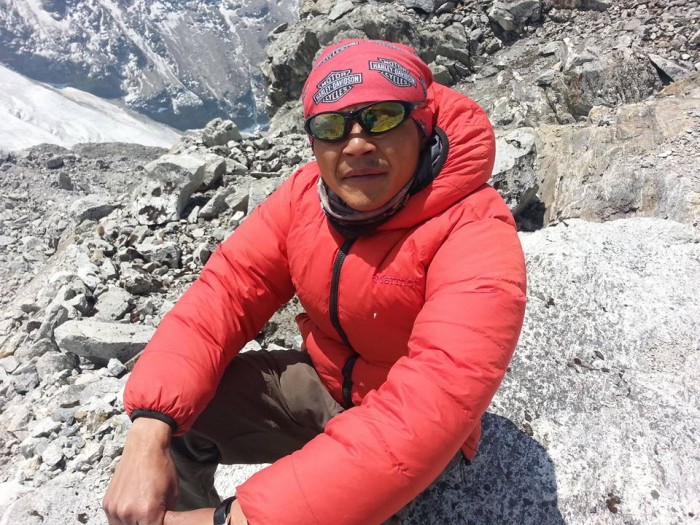
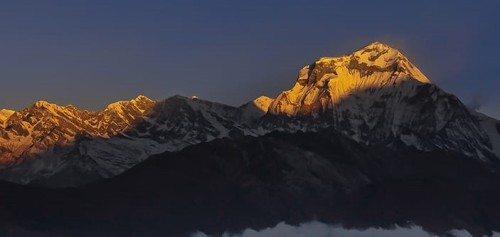
Standing proudly at 7,126 meters (23,379 ft) in the remote Nar Phu Valley of Nepal, Himlung Himal is regarded as one of the finest introductory 7,000-meter peaks in the Himalayas. Combining breathtaking alpine scenery, a culturally rich trekking approach, and a relatively straightforward climbing route, Himlung has become the preferred choice for mountaineers preparing for future ascents of the world's highest mountains.
At Himalayan Adventure Intl Treks, we have built our reputation on delivering professionally managed expeditions that prioritize safety, personalized service, and successful summits. Our recent expeditions demonstrate this commitment, with successful Himlung Himal summits during the 2022, 2023, 2025 Autumn, and 2026 Spring seasons while maintaining a 100% safety record.
Whether your goal is to climb your first Himalayan giant or prepare for challenging 8,000-meter expeditions such as Manaslu, Cho Oyu, or Everest, Himlung Himal provides the perfect combination of altitude, technical progression, and expedition experience.
Our experienced Sherpa team, IFMGA and Nepal Mountaineering Association-certified guides, modern expedition logistics, and carefully designed acclimatization strategy ensure that every climber receives the highest level of support throughout the journey.
Among Nepal's many Himalayan peaks, Himlung Himal has earned a special reputation for offering an outstanding balance between challenge and accessibility. Although climbing above 7,000 meters is never easy, Himlung presents fewer objective hazards than many mountains of similar height.
Unlike several Himalayan giants that involve complex technical climbing, dangerous icefalls, or frequent avalanche exposure, Himlung follows a comparatively safer route with moderate snow and glacier travel. This allows climbers to focus on altitude management, endurance, and efficient movement rather than difficult technical terrain.
The mountain has one of the highest documented summit success rates among Nepal's 7,000-meter peaks. Since the establishment of the improved climbing route pioneered by Swiss mountaineer Kari Kobler in 2013, Himlung has become even more accessible while maintaining high safety standards.
This makes it an excellent stepping stone toward larger Himalayan objectives.
Many successful Everest, Manaslu, and Cho Oyu climbers have chosen Himlung Himal as their first expedition above 7,000 meters because it introduces the realities of high-altitude mountaineering without exposing climbers to unnecessary technical risk.
For serious mountaineers, climbing Himlung Himal represents much more than reaching another summit.
It provides valuable experience in:
The experience gained on Himlung becomes invaluable for climbers planning future expeditions on mountains such as Manaslu, Cho Oyu, Shishapangma, Ama Dablam, or Mount Everest.
Choosing the right expedition operator is one of the most important decisions any climber will make. Success on a 7,000-meter mountain depends not only on physical fitness but also on the experience, planning, and support provided by the expedition company.
At Himalayan Adventure Intl Treks, every aspect of the expedition has been carefully designed to maximize safety, comfort, and summit success.
Our recent Himlung Himal expeditions have achieved excellent results during the 2022, 2023, 2025 Autumn, and 2026 Spring climbing seasons. These successful expeditions reflect years of Himalayan guiding experience, careful logistics, and professional decision-making in the mountains.
Rather than chasing summit numbers at any cost, our philosophy emphasizes safe climbing, proper acclimatization, and responsible leadership. Every decision made by our guides prioritizes the wellbeing of our clients.
Large commercial expeditions often create unnecessary delays on the mountain.
We intentionally limit our Himlung Himal expeditions to only 3–8 climbers.
Smaller teams provide numerous advantages:
Every climber receives personalized support from guides who understand their strengths, pace, and acclimatization needs.
One of our greatest strengths is maintaining a strict one climber to one Sherpa guide ratio throughout the expedition.
This personalized approach allows each climber to receive continuous assistance during:
Having your own dedicated climbing Sherpa significantly increases both safety and confidence while climbing above 6,000 meters.
Success on Himlung Himal begins months before arriving in Nepal.
Every climber joining our expedition receives access to a professionally designed 16-week TrainingPeaks conditioning program specifically created for 7,000-meter expeditions.
The program focuses on:
By following this structured program, climbers arrive physically prepared for the demands of high-altitude mountaineering.
Life at Base Camp plays a major role in expedition success.
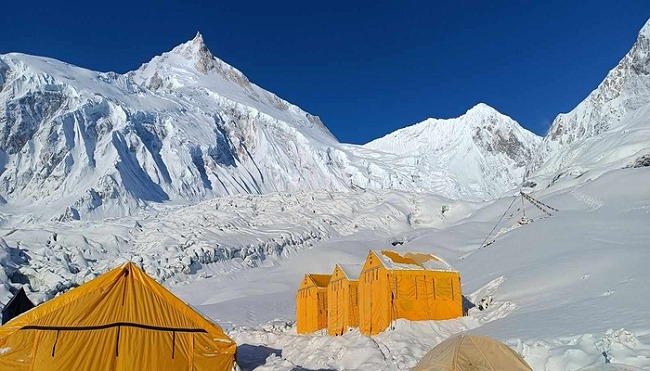
Our Base Camp at approximately 4,900 meters is designed to provide comfort while allowing proper recovery between acclimatization rotations.
Features include:
A well-managed Base Camp allows climbers to rest effectively before tackling higher camps and summit day.
Unlike many expeditions that begin directly on the glacier, Himlung Himal offers one of Nepal's most rewarding trekking approaches.
The journey starts from Kathmandu before driving through the beautiful Marsyangdi Valley to Koto. From there, the trail enters the restricted Nar Phu region—one of the least-visited trekking destinations in Nepal.
Ancient monasteries, medieval stone villages, colorful prayer flags, yak pastures, and dramatic Himalayan landscapes create an unforgettable cultural experience before the climbing even begins.
Trekking through Nar and Phu not only enhances acclimatization but also allows climbers to experience authentic Tibetan-influenced mountain culture that has remained largely unchanged for centuries.
This unique combination of trekking, cultural immersion, and world-class mountaineering makes Himlung Himal one of Nepal's most complete Himalayan adventures.
The journey to Himlung Himal (7,126m) is much more than a mountain expedition—it is an immersive Himalayan adventure through one of Nepal's most remote and culturally preserved regions. Before reaching the snow-covered slopes of the mountain, climbers travel through the spectacular Nar and Phu Valleys, where ancient Tibetan Buddhist culture, dramatic landscapes, and centuries-old villages create an unforgettable introduction to the expedition.
Unlike the busier Everest or Annapurna trekking routes, the Nar Phu region remains peaceful and unspoiled. Restricted access has helped preserve its traditional lifestyle, making the approach to Himlung Himal one of the most rewarding expedition treks in Nepal.
At Himalayan Adventure Intl Treks, we have carefully designed our itinerary to promote gradual acclimatization, reduce altitude-related risks, and maximize summit success. Every stage of the journey allows climbers to adapt naturally to increasing elevation while enjoying the incredible beauty of the Himalayas.
Upon your arrival at Tribhuvan International Airport, our expedition team will welcome you and transfer you to your hotel. After checking in, you will have time to relax following your international journey.
In the evening, our expedition staff will introduce you to the program and answer any questions regarding the climb.
Accommodation: Hotel in Kathmandu
This day is dedicated to final expedition preparations.
Our guides conduct a detailed briefing covering:
Any missing equipment can be rented or purchased in Kathmandu before departure.
Accommodation: Hotel in Kathmandu
Leaving Kathmandu, the expedition travels west through Nepal's scenic countryside.
The drive follows winding mountain roads alongside rivers, terraced farms, and traditional villages before reaching Besisahar, the gateway to the Annapurna region.
Driving Time: Approximately 7–8 hours
Accommodation: Lodge
Today's adventurous drive continues along rugged mountain roads into the upper Marsyangdi Valley.
As the landscape becomes increasingly alpine, spectacular views of Annapurna II, Lamjung Himal, and surrounding peaks accompany the journey.
Koto marks the entrance to the restricted Nar Phu Valley and serves as the official checkpoint for climbing permits.
Driving Time: 5–6 hours
Accommodation: Tea House
From Koto onwards, the expedition leaves the popular Annapurna Circuit behind and enters one of Nepal's least-visited Himalayan valleys.
Few trekkers venture into this region, making the trail peaceful, authentic, and remarkably untouched.
The trail follows the Nar Khola through beautiful pine forests, narrow canyons, and cascading waterfalls.
Crossing several suspension bridges and climbing gradually, climbers begin gaining altitude while enjoying magnificent mountain scenery.
Meta sits on an open hillside with impressive panoramic views of the surrounding Himalayan ranges.
Walking Time:
Approximately 6 hours
Accommodation:
Tea House
Today's trail becomes increasingly dramatic.
Ancient mani walls, prayer flags, deep gorges, and impressive rock formations characterize the landscape.
The route passes traditional yak grazing areas before reaching Phu Khola.
As elevation increases, the Himalayan environment becomes noticeably drier and more Tibetan in appearance.
Walking Time:
6–8 hours
Accommodation:
Tea House
One of the most important days of the expedition.
Rather than continuing immediately to higher elevation, the team spends the day allowing the body to adjust naturally.
Our acclimatization strategy follows the internationally accepted principle:
"Climb high, sleep low."
During the day, climbers hike to elevations around 4,200 meters before returning to their lodge.
The day also includes:
Proper acclimatization dramatically improves both safety and summit success later in the expedition.
Nearby lies Phu Gaon, one of Nepal's oldest Himalayan settlements.
Stone houses, ancient monasteries, Buddhist chortens, prayer wheels, and traditional yak caravans provide a fascinating glimpse into a way of life that has remained largely unchanged for centuries.
Because of its proximity to Tibet, the culture, language, architecture, and religion all reflect strong Tibetan influence.
Many climbers consider this cultural experience one of the highlights of the entire expedition.
Leaving Phu behind, the trail gradually ascends through alpine meadows toward the impressive glaciers surrounding Himlung Himal.
The mountain finally reveals itself in full, standing high above the valley with its snow-covered slopes dominating the skyline.
After approximately five to six hours of trekking, the expedition reaches Base Camp.
Walking Time:
5–6 hours
Accommodation:
Expedition Camp
For the next two weeks, Base Camp becomes home.
At Himalayan Adventure Intl Treks, we believe that a comfortable and efficiently managed Base Camp plays a crucial role in expedition success. Proper rest, nutritious food, and a supportive environment help climbers recover between acclimatization rotations and prepare for summit day.
Our Base Camp facilities include:
Our experienced kitchen team prepares a varied menu featuring soups, rice, pasta, potatoes, vegetables, eggs, meats, fresh bread, fruits, and desserts whenever possible. Maintaining good nutrition at altitude is essential for recovery and performance.
Before climbing begins, the entire expedition participates in a traditional Puja ceremony.
Led by a local Buddhist Lama, the ceremony is an important cultural and spiritual tradition in the Himalayas. Climbers gather to receive blessings for a safe expedition while offering prayers for favorable weather and successful summits.
During the ceremony, climbing equipment—including ice axes, crampons, helmets, ropes, and harnesses—is blessed before anyone sets foot on the mountain.
This meaningful tradition reflects the deep respect Sherpa communities have for the mountains and remains an integral part of Himalayan mountaineering.
Rather than attempting the summit immediately, climbers spend the following days completing a series of carefully planned acclimatization rotations.
These rotations allow the body to gradually adapt to lower oxygen levels while helping guides monitor each climber's physical condition.
The schedule is adjusted according to weather conditions and individual progress, but generally includes:
This gradual approach significantly reduces the risk of Acute Mountain Sickness (AMS) and increases the likelihood of a successful summit.
High-altitude weather in the Himalayas is unpredictable. Strong winds, heavy snowfall, and sudden temperature changes can affect climbing plans.
Our expedition leaders monitor daily weather forecasts and work closely with experienced Sherpa guides to determine the safest time for summit attempts.
Flexibility is essential. If conditions become unfavorable, the team may remain at Base Camp or a higher camp until a suitable weather window arrives.
This conservative decision-making process has contributed to our strong safety record and successful summit history.
At elevations above 5,000 meters, the human body receives significantly less oxygen than at sea level. Rushing the ascent can lead to serious altitude-related illnesses and compromise both safety and performance.
Our itinerary is designed to allow the body to adapt gradually through scheduled rest days, controlled elevation gain, and repeated climbs to higher camps before returning to lower elevations to recover.
This proven acclimatization strategy has helped many of our climbers reach the summit safely while enjoying the expedition experience to its fullest.
By combining a well-paced itinerary, experienced guides, modern logistics, and continuous health monitoring, Himalayan Adventure Intl Treks provides climbers with the best possible foundation for a successful ascent of Himlung Himal.
After completing the approach trek through the spectacular Nar Phu Valley and several days of acclimatization at Base Camp, the expedition enters its most exciting phase—the ascent of Himlung Himal (7,126m). Although Himlung is widely regarded as one of Nepal's most accessible 7,000-meter peaks, it remains a serious high-altitude mountaineering challenge that demands excellent physical fitness, mental resilience, and disciplined teamwork.
At Himalayan Adventure Intl Treks, every summit attempt follows a carefully planned strategy based on years of Himalayan guiding experience. Our focus is never simply reaching the summit; it is helping every climber ascend and descend safely while enjoying a professionally managed expedition.
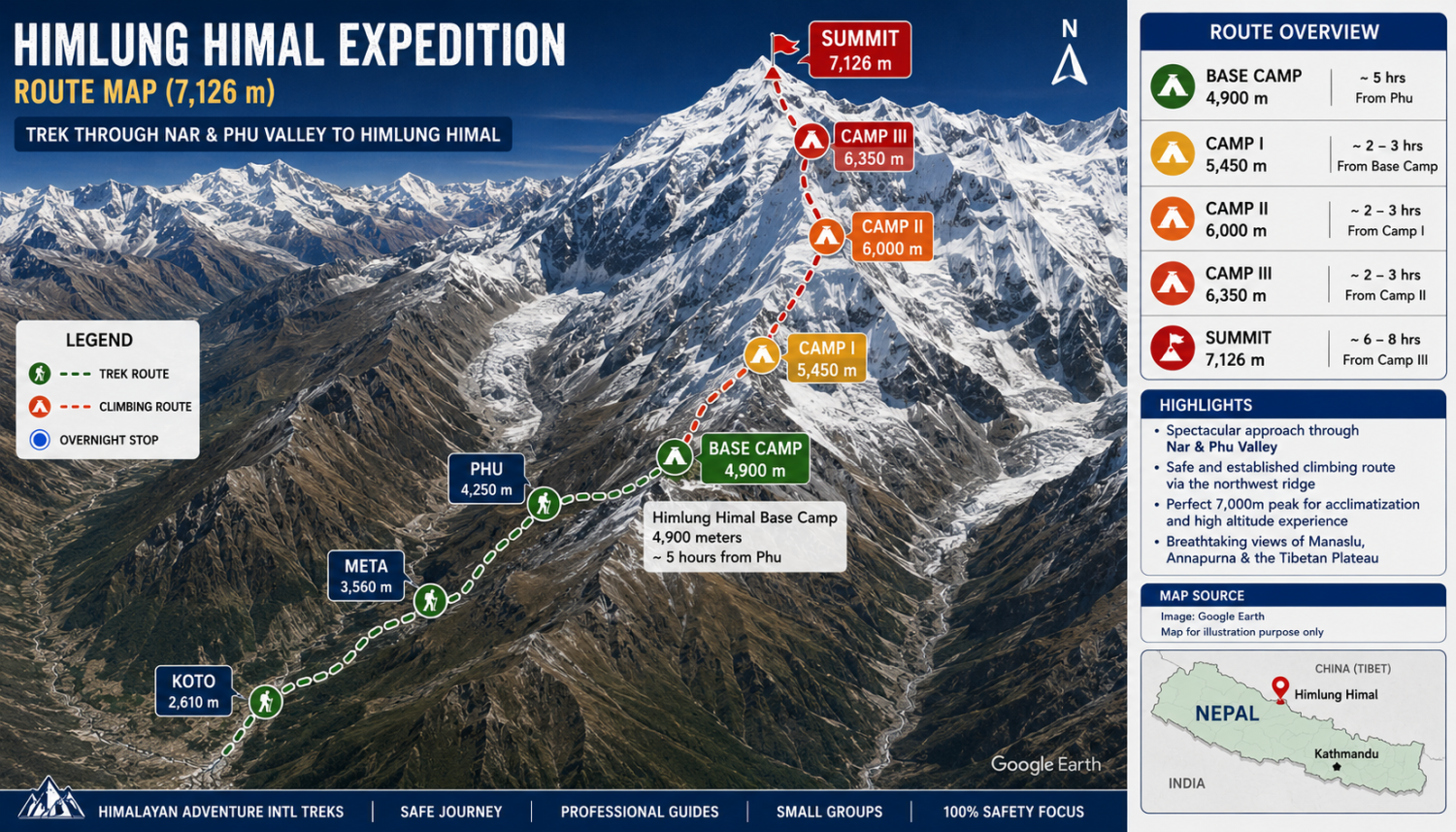
The standard route on Himlung Himal follows the mountain's northwest ridge via the safer line established in 2013. Compared with the original route, this approach minimizes objective hazards such as rockfall and avalanche exposure while providing a more efficient ascent.
Although the route is considered less technical than many Himalayan peaks above 7,000 meters, climbers should still expect:
Success depends on moving steadily, conserving energy, and maintaining proper hydration throughout the climb.
The first acclimatization rotation takes climbers from Base Camp to Camp I.
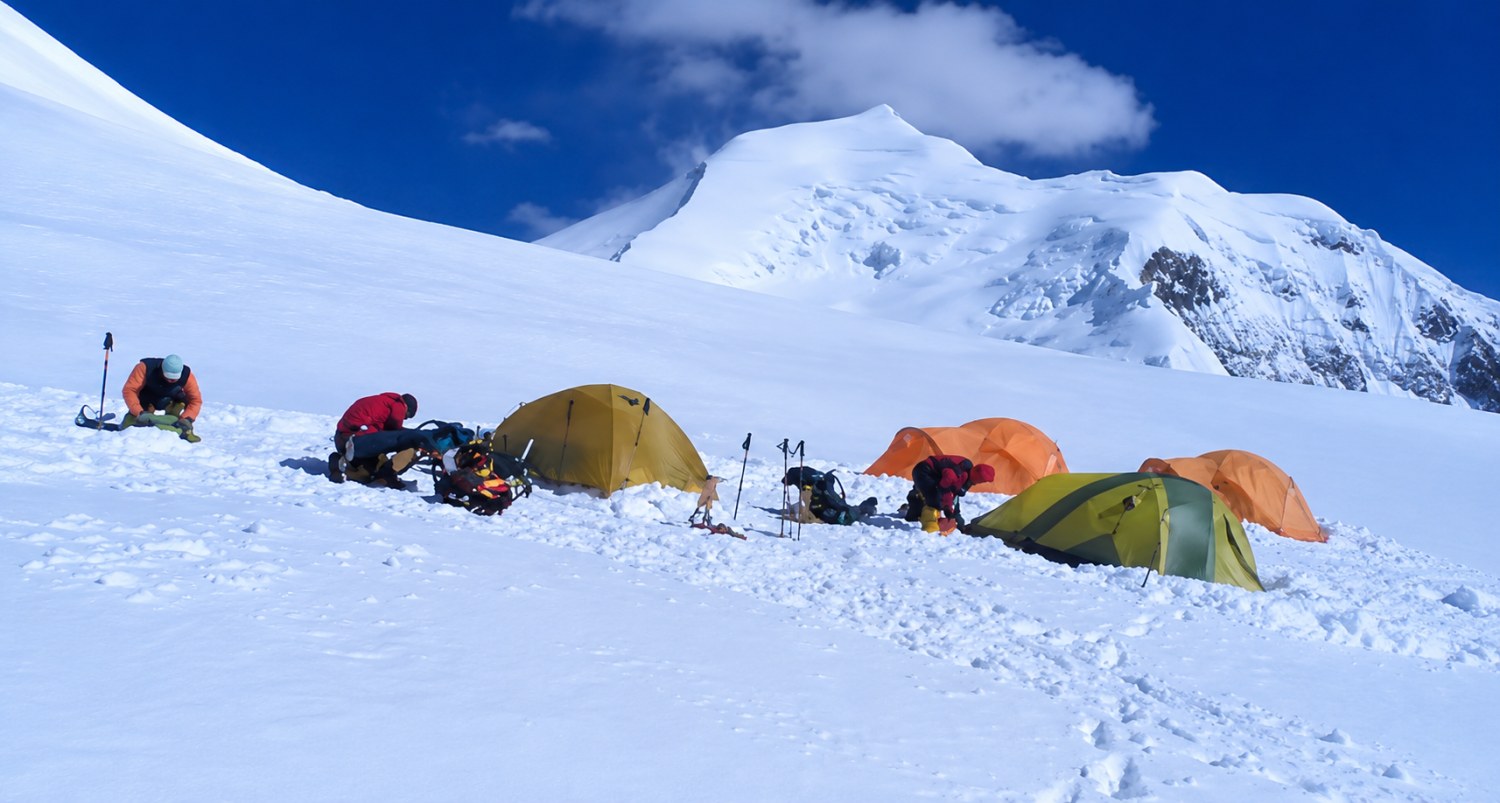
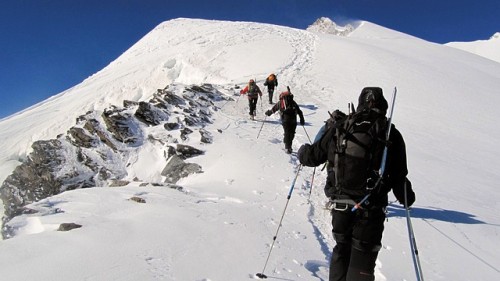
The route initially crosses glacial moraine before reaching snow-covered slopes where crampons become essential. Depending on seasonal conditions, sections of fixed rope may already be installed by our Sherpa team.
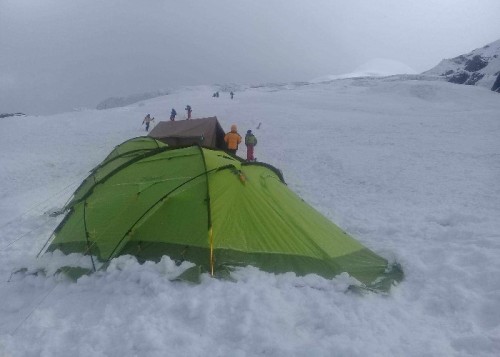
Camp I serves as the first overnight stop above Base Camp. Here climbers begin experiencing the realities of high-altitude camping, including colder temperatures, thinner air, and simpler living conditions.
During the stay, guides monitor:
After spending one night at Camp I, the team generally returns to Base Camp for recovery before continuing higher.
Camp II is established on a broad snowfield surrounded by impressive Himalayan scenery.
Reaching this camp requires crossing moderate glacier terrain with sections protected by fixed ropes. Climbers travel in rope teams where necessary, maintaining safe distances while navigating crevassed areas.
At 6,000 meters, every movement requires greater effort. Even simple tasks such as preparing water or organizing climbing equipment become physically demanding due to reduced oxygen levels.
Despite these challenges, Camp II offers spectacular panoramic views of surrounding peaks, including Manaslu, Annapurna, Gyaji Kang, Ratna Chuli, and the Tibetan Plateau on clear days.
Camp III marks the final staging point before the summit push.
This high camp is established on a protected snow platform selected according to seasonal conditions. The Sherpa team arrives early to prepare tents, secure anchors, and ensure that all essential equipment is ready for summit day.
The atmosphere at Camp III is both exciting and focused. Climbers spend the afternoon:
Because temperatures often fall below –20°C, staying warm, hydrated, and well-rested is essential.
Most climbers attempt to sleep for a few hours before beginning the summit climb shortly after midnight.
Summit day is the most demanding and rewarding stage of the expedition.
The ascent usually begins between midnight and 2:00 a.m., allowing climbers to reach the summit during the calmer morning hours before afternoon winds develop.
Under the glow of headlamps, the climbing team moves steadily upward, following fixed ropes across snow-covered slopes and icy ridges. Every step requires patience and concentration as the thin Himalayan air makes even a slow pace physically demanding.
Our experienced Sherpa guides set a comfortable rhythm, encouraging climbers to conserve energy while maintaining steady progress. Frequent but brief rest stops provide opportunities to hydrate, eat energy snacks, and assess each climber's condition.
As dawn breaks over the Himalayas, the surrounding landscape transforms into an unforgettable panorama of snow-covered peaks stretching toward the horizon.
After several hours of climbing, the team reaches the summit of Himlung Himal (7,126m).
Standing on the summit is an extraordinary achievement. From this remarkable vantage point, climbers enjoy breathtaking views of:
For many climbers, Himlung represents their first summit above 7,000 meters—a milestone that builds confidence for future expeditions to even higher mountains.
After celebrating, taking photographs, and enjoying the views, the team begins the equally important descent back to Camp III or Camp II, depending on weather and individual conditions.
Our guiding philosophy is simple:
The summit is only halfway. A successful expedition ends when everyone returns safely to Base Camp.
Although Himlung Himal is considered one of the more approachable 7,000-meter peaks, climbers should arrive in excellent physical condition.
The expedition involves:
We recommend that participants train consistently for several months before the expedition.
Ideal preparation includes:
A strong aerobic base is one of the greatest predictors of success at high altitude.
This expedition is best suited for climbers who have already gained experience on peaks between 5,000 and 6,500 meters.
Suitable preparation climbs include:
Experience using crampons, ice axes, harnesses, ascenders, and fixed ropes is highly beneficial. However, our guides also provide refresher training at Base Camp before climbing begins.
Every climber joining Himalayan Adventure Intl Treks receives access to a professionally structured 16-week Training Peaks program designed specifically for high-altitude expeditions.
The program progressively develops:
This structured approach helps climbers arrive in Nepal physically and mentally prepared for the demands of a 7,000-meter expedition.
A successful expedition depends on reliable equipment and efficient logistics.
We provide high-quality expedition infrastructure, including:
Our logistics team works continuously behind the scenes to transport equipment, establish camps, prepare meals, and maintain smooth operations throughout the expedition.
Safety is at the heart of every expedition we organize.
Our experienced guides continually assess weather conditions, route safety, snow stability, and each climber's physical condition before making important decisions.
Key elements of our safety philosophy include:
We never compromise safety for the sake of reaching the summit. If conditions become unsafe, our guides will adjust the itinerary or postpone the summit attempt until a suitable weather window appears.
This careful and responsible approach has contributed to our 100% safety record and successful Himlung Himal expeditions in 2022, 2023, 2025 Autumn, and 2026 Spring.
At Himalayan Adventure Intl Treks, we believe that the true measure of a successful expedition is not only standing on the summit, but ensuring that every climber returns home with unforgettable memories, greater mountaineering experience, and the confidence to pursue even bigger Himalayan dreams.
Reaching the summit of Himlung Himal (7,126m) is a remarkable achievement that requires careful planning, experienced leadership, and reliable logistics. At Himalayan Adventure Intl Treks, we strive to provide a professionally managed expedition where climbers can focus on their goal while our experienced team takes care of every operational detail.
From your arrival in Nepal until your departure, we ensure that transportation, accommodation, permits, meals, base camp management, climbing logistics, and safety are handled with the highest standards of professionalism.
We organize Himlung Himal expeditions during Nepal's two primary climbing seasons when weather conditions are generally most stable.
April – May
Spring offers moderate temperatures, longer daylight hours, and generally stable weather, making it an excellent season for climbers aiming for their first Himalayan 7,000-meter summit.
Late September – October
Autumn is considered the most popular climbing season for Himlung Himal. Following the summer monsoon, the skies are often exceptionally clear, providing outstanding mountain views and favorable summit conditions.
Our fixed departures are carefully scheduled to maximize acclimatization while taking advantage of the best possible weather windows.
Our comprehensive package is designed to provide everything necessary for a safe and comfortable expedition.
Our expedition chef prepares nutritious meals throughout the trek and climbing period.
The menu typically includes:
Maintaining proper nutrition is essential for acclimatization and recovery at altitude.
We provide shared expedition equipment including:
The expedition fee does not include:
We strongly recommend purchasing comprehensive travel insurance that includes high-altitude helicopter evacuation.
For experienced ski mountaineers seeking an even greater adventure, Himalayan Adventure Intl Treks also offers a Climb & Ski Himlung Himal Expedition.
After reaching the summit, qualified ski alpinists have the opportunity to descend sections of the mountain on skis under suitable snow and weather conditions.
This specialized expedition includes:
The Climb & Ski option combines technical mountaineering with high-altitude skiing to create one of Nepal's most exciting alpine adventures.
Choosing an expedition operator is one of the most important decisions a mountaineer can make. Our reputation has been built through years of successful Himalayan expeditions, personalized service, and an unwavering commitment to safety.
Our teams successfully reached the summit during the:
Throughout these expeditions, we proudly maintained a 100% safety record, reflecting our careful planning, experienced leadership, and commitment to responsible mountaineering.
We intentionally limit each expedition to 3–8 climbers. Smaller groups allow our guides to provide personalized attention, monitor every participant closely, and adapt plans quickly when conditions change.
Every climber benefits from our 1:1 Sherpa-to-client ratio, ensuring continuous guidance, encouragement, and assistance from Base Camp to the summit and back.
Our leadership team combines decades of Himalayan experience with internationally recognized mountaineering qualifications. Decisions are always based on safety, weather conditions, and the wellbeing of every climber.
We believe that a well-managed Base Camp contributes significantly to expedition success. Comfortable tents, nutritious meals, reliable communications, and professional staff create an environment where climbers can recover effectively between rotations.
Climbers from around the world consistently praise Himalayan Adventure Intl Treks for our organization, professionalism, and personal approach.
Participants frequently highlight:
Many of our returning climbers continue with us on future expeditions to Manaslu, Ama Dablam, Baruntse, and Mount Everest, reflecting the trust they place in our team.
Yes. Himlung Himal is widely regarded as one of the best introductory 7,000-meter expeditions due to its moderate technical difficulty, carefully established route, and high summit success rate. However, previous experience on peaks above 5,000 or 6,000 meters is strongly recommended.
The expedition is physically demanding rather than technically extreme. Climbers should be comfortable using crampons, an ice axe, harness, and fixed ropes while maintaining good endurance over long days at high altitude.
Yes. Participants should have experience on alpine or high-altitude mountains. Climbs such as Island Peak, Lobuche East, Chulu West, Mera Peak, Kilimanjaro, Elbrus, or Aconcagua provide valuable preparation.
The standard itinerary lasts approximately 30 days, including arrival, trekking, acclimatization, climbing, contingency days, and return travel.
Himlung Himal has one of the highest recorded summit success rates among Nepal's 7,000-meter peaks. Our carefully planned itineraries, experienced Sherpa team, and emphasis on proper acclimatization help maximize each climber's chances of success while maintaining the highest safety standards.
Proper acclimatization allows the body to adapt to lower oxygen levels at high altitude. Our itinerary includes gradual elevation gain, scheduled rest days, and acclimatization rotations to reduce the risk of altitude illness and improve overall performance.
Standing on the summit of Himlung Himal is more than reaching an elevation of 7,126 meters—it is the culmination of months of preparation, determination, teamwork, and adventure.
From the hidden villages of Nar and Phu to the breathtaking panorama from the summit, every stage of the expedition offers unforgettable experiences that extend far beyond mountaineering.
Whether your ambition is to climb your first Himalayan giant or to prepare for future 8,000-meter expeditions, Himalayan Adventure Intl Treks provides the expertise, safety, and personalized support to help you achieve your goals.
With our proven summit record, experienced Sherpa guides, small expedition teams, comprehensive pre-expedition training, premium Base Camp services, and unwavering commitment to responsible mountaineering, we invite you to experience one of Nepal's finest high-altitude adventures.
Join Himalayan Adventure Intl Treks and take the next step toward your Himalayan summit dream. Your journey to Himlung Himal begins here.
Upon your arrival at Tribhuvan International Airport in Kathmandu, you'll receive a warm Nepalese greeting from our team. We'll ensure your smooth transfer to your accommodation, where you can relax and rejuvenate after your journey.
Today is dedicated to acclimatizing to Nepal's altitude, an essential step for a successful trek. You'll have the opportunity to explore Kathmandu at your leisure, immerse yourself in its rich culture, and attend a comprehensive briefing session to prepare for your upcoming adventure.
Embark on a mesmerizing 7-hour drive to Besi Sahar, where the majestic landscapes of Nepal begin to unfold before your eyes. Take in the beauty of the countryside as you journey towards the starting point of your trek.
Enjoy a picturesque 5-hour drive to Koto, where the Himalayan vistas become even more enchanting. As you approach Koto, you'll feel the anticipation building for the adventure that lies ahead.
Begin your trek towards Mehta, a journey filled with tranquil mountain trails and pristine natural beauty. Marvel at the surrounding landscapes as you make your way through this serene terrain.
Traverse through breathtaking landscapes as you trek to Phu-Khola, a stunning high-altitude destination. Each step brings you closer to the heart of the Himalayas, surrounded by awe-inspiring views.
Take a well-deserved day to acclimatize to the altitude, ensuring your body is ready for the challenges ahead. Use this time to rest, relax, and soak in the majestic beauty of your surroundings.
Reach the base camp of Himlung Himal at an elevation of 4850m, marking the beginning of your journey towards the summit. Here, amidst the towering peaks, your adventure truly begins.
Over the next 15 days, embark on an exhilarating climb towards the summit of Himlung Himal (7,126m). This period includes acclimatization, traditional Puja rituals, contingency days, and rigorous training, culminating in your summit bid. Establishing Camp 1, Camp 2, and ultimately conquering the summit are the highlights of this challenging yet rewarding journey.
Descend from the base camp to Mehta, reflecting on the incredible achievement of reaching the summit. Take a moment to appreciate the magnitude of your accomplishment amidst the serene mountain backdrop.
Continue your descent towards Koto, cherishing the final moments amidst the awe-inspiring Himalayan landscapes. Each step brings you closer to the end of your unforgettable expedition.
Embark on the journey back to Besi Sahar, reminiscing about the remarkable experiences and unforgettable memories created during your Himalayan adventure. Take one last look at the stunning scenery before bidding farewell to the mountains.
Travel to Kathmandu, a serene city nestled beside the Kathmandu Durbar Square, offering the perfect blend of adventure and relaxation. Take some time to unwind and reflect on your journey amidst Kathmandu's wonderful surroundings.
Bid farewell to Nepal with cherished memories of your Himalayan adventure. Depart with a sense of accomplishment and awe-inspiring experiences, knowing that you've conquered the mighty Himalayas and forged lifelong memories along the way. Until we meet again amidst the peaks of Nepal, farewell and safe travels.
Porters or Donkey Porter: From Koto to Base Camp and back, our team will handle the logistics so you can focus on the adventure ahead.
Equipment Allowance: We provide daily allowances for liaison officers, climbing guides, and our dedicated expedition crew, ensuring everyone is well-equipped for the journey.
Insurance: Nepalese staff members including Climbing Sherpa guides, cooks, assistant cooks, and porters are all covered under our insurance policy for your peace of mind.
Local Transportation: We take care of your transportation needs in Kathmandu, from airport transfers to getting around the city.
Transportation to Koto: Travel hassle-free from Kathmandu to Koto and back via jeep or bus.
Emergency Supplies: Oxygen, masks, and regulators are on hand for emergencies, along with a satellite phone for immediate communication.
Climbing Essentials: Above Base Camp, we provide climbing food, gas, and stoves, along with group climbing equipment such as tents, ropes, and ice screws.
Garbage Deposit: We are committed to responsible tourism and include a garbage deposit to ensure the preservation of the natural environment.
Meals: Enjoy breakfast, lunch, and dinner throughout your 21-day journey from Kathmandu to Kathmandu.
Experienced Sherpa Guides: Our Sherpa guides are trained by the Nepal Mountaineering Association (NMA) and some have even summited Everest, ensuring your safety and success on the expedition.
Power Supply: At Base Camp, we provide solar panels/generators and accessories for power supply and recharging purposes.
Permits and Fees: We take care of all necessary permits, including expedition permits and national park fees.
Personal Equipment: Bring along your own climbing and trekking gear for a personalized experience.
Insurance: We recommend obtaining personal and medical insurance for the duration of your trip.
Meals in Kathmandu: Lunch and dinner in Kathmandu are not included, allowing you to explore the local culinary scene at your leisure.
Emergency Rescue Evacuation: In the rare event of an emergency requiring helicopter rescue, this cost is not covered in the package.
Additional Lodge Charges: Any extra expenses incurred at lodges or tea houses, such as showers or internet access, are not included.
Personal Expenses: Plan for personal expenses such as souvenirs or additional activities not included in the itinerary.
Visa Fees: Entry visa and visa extension fees are the responsibility of the traveler.
Summit Bonuses: While we coordinate summit bonuses for Sherpa guides and local staff, these are not included in the package cost.
The Himlung Climbing Expedition is a high-altitude trek and climbing adventure in the Himalayas, focusing on reaching the summit of Himlung Himal (7,126 meters). It involves technical climbing, acclimatization, and navigating challenging terrains.
Himlung Himal is located in the Manaslu region of Nepal, near the Tibetan border. It is part of the Annapurna mountain range.
The best time for the Himlung Climbing Expedition is during the pre-monsoon season (April to May) and post-monsoon season (September to October). These months offer stable weather conditions and optimal climbing conditions.
Climbers should have previous high-altitude climbing experience and be proficient in technical climbing skills. Experience with climbing in snowy and icy conditions is also recommended.
The expedition typically lasts about 28 to 30 days, including trekking, acclimatization, and climbing time.
The cost varies depending on the services included, such as permits, guide fees, and logistics. On average, it ranges from $6,000 to $9,000 per person.
Climbers need several permits, including the Himlung Himal climbing permit, TIMS (Trekkers’ Information Management System) card, and Annapurna Conservation Area Permit (ACAP).
Yes, hiring an experienced guide and porter is recommended for safety and logistical support. Guides assist with navigation and technical climbing, while porters help carry gear.
Acclimatization involves gradual ascents to higher altitudes, allowing the body to adjust to lower oxygen levels. It typically includes several days of climbing and descending to prevent altitude sickness.
Essential equipment includes climbing boots, ice axes, crampons, harnesses, ropes, helmets, and proper clothing for cold conditions. Specialized gear for high-altitude climbing is also necessary.
Climbers should be in excellent physical condition, with strong cardiovascular fitness and endurance. Regular training and physical preparation are essential.
Weather conditions can be harsh, with cold temperatures, strong winds, and snowfall. Climbers should be prepared for extreme cold and variable weather conditions.
Preparation involves physical training, acquiring necessary climbing skills, and familiarizing yourself with high-altitude trekking. Additionally, ensure all required permits and gear are in order.
The highest altitude reached is the summit of Himlung Himal at 7,126 meters (23,379 feet).
Yes, altitude sickness is a risk due to the high elevation. Proper acclimatization and monitoring of symptoms are crucial to prevent severe altitude sickness.
Challenges include extreme cold, high altitude, technical climbing sections, and unpredictable weather. Proper training and preparation are essential to overcome these challenges.
Food is typically provided by the trekking company, with a mix of local and international cuisine. Water needs to be purified, and climbers should ensure adequate hydration throughout the expedition.
Accommodation varies from tea houses in lower altitudes to high-altitude camps. Climbers will stay in tents at higher altitudes during the climbing phase.
The Himlung region is home to various Tibetan Buddhist communities. Respect for local customs and traditions is essential. Dress modestly and seek permission before taking photographs.
The Himlung Climbing Expedition offers a less-traveled route compared to more popular peaks like Everest. It provides a unique climbing experience with fewer crowds and breathtaking views.
Pack essential climbing gear, warm clothing, trekking shoes, personal items, and a first aid kit. Ensure you have all required permits and documentation.
Safety is ensured through proper acclimatization, following the guide’s instructions, using appropriate climbing gear, and monitoring weather conditions. Emergency protocols should also be in place.
Consult a physician for a medical check-up and vaccinations. Ensure you are physically fit and discuss any pre-existing health conditions with your guide.
The daily itinerary includes trekking to higher camps, acclimatization days, technical climbing practice, and summit attempts. It also involves rest days and planning based on weather conditions.
If weather conditions are too harsh, the expedition may be delayed or postponed. Safety is prioritized, and climbers will wait for more favorable conditions before attempting the summit.
The expedition follows Leave No Trace principles, minimizing environmental impact. This includes proper waste disposal, respecting local wildlife, and adhering to eco-friendly practices.
Limited communication options are available, including satellite phones and radios. You can also use messaging services at base camp if available.
Comprehensive travel insurance is required, covering high-altitude climbing, medical evacuation, and trip cancellation. Ensure the policy includes climbing-related coverage.
Training programs should focus on high-altitude climbing, technical skills, cardiovascular fitness, and strength training. Consider enrolling in specialized climbing courses or programs.
The expedition team typically includes experienced climbing guides, base camp staff, porters, and sometimes a medical professional for support and safety.
The expedition is tailored to accommodate varying skill levels through personalized training, support from experienced guides, and adaptable climbing schedules based on individual progress.
Risks include altitude sickness, frostbite, avalanches, crevasses, and extreme weather. Comprehensive preparation and adherence to safety protocols help mitigate these risks.
Emergency protocols include having a detailed evacuation plan, emergency contact information, and first aid supplies. Guides and support staff are trained to handle emergencies effectively.
Special dietary requirements can be accommodated with prior notice. The trekking company will provide a balanced diet, but it’s important to communicate any specific needs in advance.
The expedition follows strict environmental guidelines, including waste management, minimizing human impact on natural habitats, and promoting sustainable practices among climbers.
Medical support includes a first aid kit, access to a medical professional if available, and emergency evacuation procedures. Guides are trained in basic medical care.
Preparation involves acclimatization, physical conditioning, and training in high-altitude environments. Practice with climbing gear and techniques is also essential.
Regulations include obtaining necessary permits, following local guidelines, and respecting environmental and cultural practices. Ensure compliance with all legal requirements for climbing.
Report any symptoms to your guide immediately. Follow their instructions, which may include descending to a lower altitude or receiving medical attention if necessary.
Yes, you can extend your stay in Nepal. It’s advisable to arrange this with your trekking company or travel agency beforehand and ensure your visa allows for an extended stay.
The climbing guide provides technical assistance, navigation, safety management, and support throughout the expedition. They ensure climbers follow the planned route and handle any challenges.
Follow the acclimatization schedule, which includes gradual ascents, rest days, and monitoring for altitude sickness symptoms. Proper hydration and nutrition also aid in acclimatization.
Yes, the expedition includes opportunities for sightseeing and cultural experiences, particularly in lower altitudes and during the trek to base camp. Explore local villages and cultural sites.
Dress in layers with high-quality, insulated clothing to manage cold temperatures. Use thermal base layers, insulated jackets, and proper climbing gear to stay warm.
The route involves trekking through remote regions, navigating technical climbing sections, and ascending to high-altitude camps. Familiarize yourself with the route and elevation profile before the expedition.
Common challenges include high altitude, technical climbing sections, extreme cold, and weather unpredictability. Adequate preparation and experience are crucial to overcoming these challenges.
Training for technical climbing includes practicing with climbing gear, mastering techniques on similar terrains, and gaining experience in ice and snow climbing. Consider a climbing course for additional skills.
Recommended training includes cardiovascular exercises, strength training, and endurance building. Focus on leg strength, core stability, and aerobic fitness to prepare for high-altitude climbing.
Key safety measures include proper acclimatization, using appropriate climbing gear, monitoring weather conditions, and following the guide’s instructions. Emergency plans should be in place.
Maintain hydration by drinking purified water regularly and consuming high-energy foods. The trekking company typically provides meals, but bring snacks and supplements if needed.
Accommodation ranges from teahouses and lodges in lower altitudes to tents at high-altitude camps. The expedition provides tented camps for the climbing phase.
Prevent frostbite by wearing adequate layers, protecting extremities with insulated gloves and boots, and avoiding prolonged exposure to cold conditions. Stay active and monitor for signs of frostbite.
Climbers with medical conditions should consult their physician before the expedition. It’s important to discuss any conditions with the guide and ensure all necessary medications are brought along.
Porters assist by carrying climbing gear, personal items, and supplies. They help with logistics and ensure that climbers have everything needed at each camp.
Manage energy levels by consuming balanced meals, staying hydrated, and pacing yourself. Take regular breaks and listen to your body’s signals to avoid exhaustion.
Ensure proper fit and maintenance of climbing gear. Familiarize yourself with the use of each item, including harnesses, crampons, and ice axes. Regularly check and adjust gear for safety.
Stay motivated by setting small goals, focusing on progress, and maintaining a positive attitude. Support from the team and celebrating achievements can also boost morale.
The summit attempt typically takes 1 to 2 days, depending on weather conditions and climbers’ acclimatization. This includes climbing from the high camp to the summit and returning.
Be prepared for unexpected weather by packing versatile clothing, monitoring weather forecasts, and having contingency plans. Flexibility in the itinerary helps manage weather-related delays.
Support includes acclimatization strategies, oxygen supplementation, and medication if needed. Guides and support staff monitor climbers for symptoms and provide assistance as necessary.
Benefits include achieving a challenging summit, experiencing remote high-altitude environments, developing climbing skills, and gaining a sense of accomplishment and adventure.
Choose a reputable climbing company by researching their experience, client reviews, safety records, and the quality of their guides and support staff. Ensure they provide adequate support and resources.
Handle symptoms by descending to a lower altitude, staying hydrated, resting, and using medications if prescribed. Report any severe symptoms to the guide immediately.
Pack essential climbing gear, personal clothing, high-energy food, and medical supplies. Follow the packing list provided by the climbing company and ensure everything is durable and suitable for high-altitude conditions.
Training includes physical conditioning, climbing technique practice, and high-altitude acclimatization. Specific training programs may be offered by the climbing company or other specialized providers.
Yes, permits are required for climbing Himlung Himal. Ensure you obtain the necessary permits from local authorities and comply with all regulations before the expedition.
Ensure safety by using proper techniques, and equipment, and following the guide’s instructions. Regularly check climbing gear and assess the climbing route for potential hazards.
Required fitness includes cardiovascular endurance, leg strength, and overall physical conditioning. A strong fitness base enhances climbing performance and the ability to handle high-altitude challenges.
Communication is managed through satellite phones or radios. The climbing company provides the necessary equipment and ensures that communication lines are established with the base camp and support teams.
High camps are usually set at elevations between 5,500 meters (18,000 feet) and 6,500 meters (21,300 feet). The exact altitude varies based on the expedition plan and route.
Inform the guide and support staff immediately. Follow the withdrawal procedure, which may include descending to a lower altitude and arranging for transportation back to base camp.
Prepare by ensuring proper acclimatization, optimizing physical conditioning, and reviewing climbing techniques. Pack necessary gear and supplies for the summit attempt and follow the guide’s strategy.
Cultural interactions may include visiting local villages, engaging with local communities, and learning about regional customs and traditions. Respect for local culture and practices is essential.
Travel logistics are managed by the climbing company, including transportation to and from the base camp. Coordinate with them for details on travel arrangements and schedules.
Acclimatization helps prevent altitude sickness, improves oxygen utilization, and enhances overall performance at high altitudes. It allows climbers to adjust gradually to thinner air.
Weather conditions at the summit can be extreme, with cold temperatures, strong winds, and potential storms. Check weather forecasts and be prepared for sudden changes.
The Himlung Climbing Expedition is considered less technical than some other peaks but still presents significant challenges, including high altitude and remote location. It offers a unique adventure with fewer climbers.
Recommended insurance includes coverage for high-altitude climbing, medical emergencies, evacuation, and trip cancellation. Ensure the policy meets the specific requirements of the expedition.
Stay connected using satellite phones or radios provided by the climbing company. Regular communication schedules can be arranged to update family and friends on your progress.
Key skills include technical climbing techniques, navigation, and self-rescue. Physical fitness, mental endurance, and familiarity with high-altitude conditions are also essential.
Mental preparation involves setting realistic goals, visualizing success, and maintaining a positive attitude. Stress management techniques and mental conditioning exercises can be beneficial.
Include essentials such as bandages, antiseptics, medications for altitude sickness, blister treatment, and personal prescriptions. Consult with your guide for specific recommendations.
Yes, there are ample opportunities for photography, especially of the stunning landscapes and high-altitude scenery. Bring a camera with protective gear and be mindful of the weather.
The best time to climb Himlung Himal is during the pre-monsoon (April to May) and post-monsoon (September to October) periods. These months typically offer stable weather conditions.
Key factors include weather conditions, acclimatization, physical fitness, and adherence to the guide’s strategy. Proper preparation and adaptability are crucial for a successful summit attempt.
Regularly inspect and maintain your climbing gear. Check for wear and tear, clean equipment, and make necessary repairs before the expedition. Ensure all gear meets safety standards.
Manage waste by following the expedition’s waste disposal guidelines. Use designated containers for trash and ensure proper disposal methods to minimize environmental impact.
Common health issues include altitude sickness, dehydration, frostbite, and gastrointestinal problems. Proper acclimatization, hydration, and preventive measures help mitigate these issues.
Preparation includes acclimatization, physical conditioning, and learning about high-altitude effects. Practice in similar conditions and follow a structured training plan to enhance readiness.
Key highlights include the challenging ascent, stunning high-altitude scenery, remote and less-traveled route, and the sense of accomplishment upon reaching the summit.
Maintain a healthy diet by consuming high-energy, nutritious foods. Follow dietary guidelines provided by the climbing company and ensure adequate hydration.
Risks include altitude sickness, extreme weather, crevasses, and avalanches. Understanding these risks and taking preventive measures are crucial for a safe expedition.
Enhance skills by practicing technical climbing techniques, participating in climbing courses, and gaining experience in similar environments. Regular training and skill assessments are beneficial.
Essentials include proper sleeping gear, warm clothing, a good tent, and sufficient food and hydration. Comfort at base camp is crucial for recovery and preparation for higher camps.
Manage exhaustion by pacing yourself, taking regular breaks, staying hydrated, and eating nutritious meals. Listen to your body and communicate with your guide about any concerns.
Key factors include gradual ascent, proper rest, staying hydrated, and avoiding overexertion. Acclimatization allows your body to adapt to lower oxygen levels and reduces the risk of altitude sickness.
Prepare by bringing versatile clothing, high-quality gear, and understanding weather patterns. Stay updated with weather forecasts and be ready to adapt plans based on conditions.
In an emergency, stay calm, follow the guide’s instructions, and use available communication tools to report the situation. Ensure quick action and prioritize safety and health.
Local Sherpas provide valuable support, including guiding, carrying loads, and assisting with acclimatization. Their experience and knowledge of the region are crucial for a successful climb.
Balance by communicating openly, respecting others' abilities, and contributing to team goals. Support team members, collaborate on strategies, and prioritize safety and mutual success.
Peak ID: HMLH
Status: Opened
Elevation: 7,126 M / 23,379 FT
Latitude: 28º 46' 18"
Longitude: 84º 25' 29"
First Ascent:
Himlung Himal is situated near the Tibetan border in the Manaslu region, northeast of the Annapurna range. This region, opened by the Nepal government in 1992, is a gem for adventurers seeking remote and untouched beauty. The expedition route follows the Annapurna Circuit to Koto and then veers towards Nar – Phu Gaon, passing through stunning landscapes including high peaks, narrow gullies, remote villages, dense forests, rocky terrains, and culturally rich Gompas.
Province: Gandaki Pradesh
Mountain Range: Peri
District: Manang
Municipality/Rural Municipality: Nashong/Nar Phu
Border: Tibet
Nepalese (NRs):
Foreigners (USD):
Himlung Himal offers an unforgettable experience, blending challenging climbs with the serenity of untouched natural beauty. Join Himalayan Adventure Intl Treks for an exceptional journey to one of Nepal's most pristine peaks.
Nestled in the remote corners of the Annapurna region in Nepal, Himlung Himal stands tall as an enticing challenge for seasoned mountaineers. The Himlung Expedition offers a thrilling experience for those seeking to conquer a 7,126-meter peak, blending breathtaking landscapes with the adrenaline rush of high-altitude climbing. As you gear up for this extraordinary adventure, several crucial aspects demand attention, including climbing equipment, weather conditions, the best time for the expedition, permit costs, the role of climbing Sherpas, and the climbing route.
Conquering Himlung requires meticulous planning and the right gear. Here's a checklist of essential climbing equipment:
Climbing Boots: Opt for high-quality, insulated boots suitable for extreme cold conditions and crampon-compatible.
Climbing Harness and Helmet: Ensure a secure and comfortable harness, along with a durable helmet to protect against falling debris.
Ice Axe and Crampons: Vital for navigating icy terrains, a reliable ice axe, and crampons are non-negotiable.
Ropes: Dynamic and static ropes for different sections of the climb, including the ascent and descent.
Clothing: Layering is key. Pack thermal base layers, insulated jackets, waterproof shells, and moisture-wicking fabrics to adapt to changing weather conditions.
Sleeping Bag and Tent: Choose a high-altitude sleeping bag suitable for sub-zero temperatures and a sturdy, lightweight tent for base camp and higher altitudes.
Backpack: A durable, spacious backpack for carrying essentials during the climb.
Oxygen System: As the altitude increases, supplemental oxygen becomes crucial. Carry a reliable oxygen system and ensure you are well-versed in its usage.
Himlung Expedition demands an understanding of the ever-changing weather conditions in the region. The climbing season typically spans from April to May and late September to October. During these periods, the weather is relatively stable, offering clear skies and milder temperatures. Monsoon season, from June to August, brings heavy rainfall and is not suitable for climbing due to increased avalanche and landslide risks.
To maximize your chances of a successful ascent, plan your Himlung Expedition during the pre-monsoon (spring) and post-monsoon (autumn) seasons. These periods provide a favorable climate, allowing for better visibility and safer climbing conditions.
Securing the necessary permits is a crucial step in planning your Himlung Expedition. As of my last knowledge update in January 2022, the cost of permits can vary but typically include fees for climbing permits, trekking permits, and conservation permits. It's advisable to check with the relevant authorities or a reputable trekking agency for the most up-to-date information on permit costs.
The role of a climbing Sherpa is pivotal in high-altitude expeditions like Himlung. These experienced guides possess invaluable knowledge of the terrain, weather patterns, and emergency procedures. When selecting a climbing Sherpa, prioritize experience, communication skills, and familiarity with the route. Collaborating with a reputable expedition agency can help in connecting with experienced climbing Sherpas.
The standard route for the Himlung Expedition typically involves establishing base camp, advanced base camp, and higher camps as you ascend. The route may vary based on weather conditions and the specific plan devised by your expedition team. Ensure you are well-acquainted with the chosen route and have contingency plans in place for unexpected challenges.
In conclusion, the Himlung Expedition in Nepal is a formidable undertaking that requires thorough preparation and respect for the unpredictable mountain environment. By investing in quality equipment, choosing the right time for the expedition, understanding permit requirements, selecting a competent climbing Sherpa, and familiarizing yourself with the climbing route, you can increase your chances of a successful ascent to the majestic summit of Himlung Himal. May your journey be filled with awe-inspiring vistas and the triumph of reaching new heights!