
Have Questions? Talk to Expert (Binod)
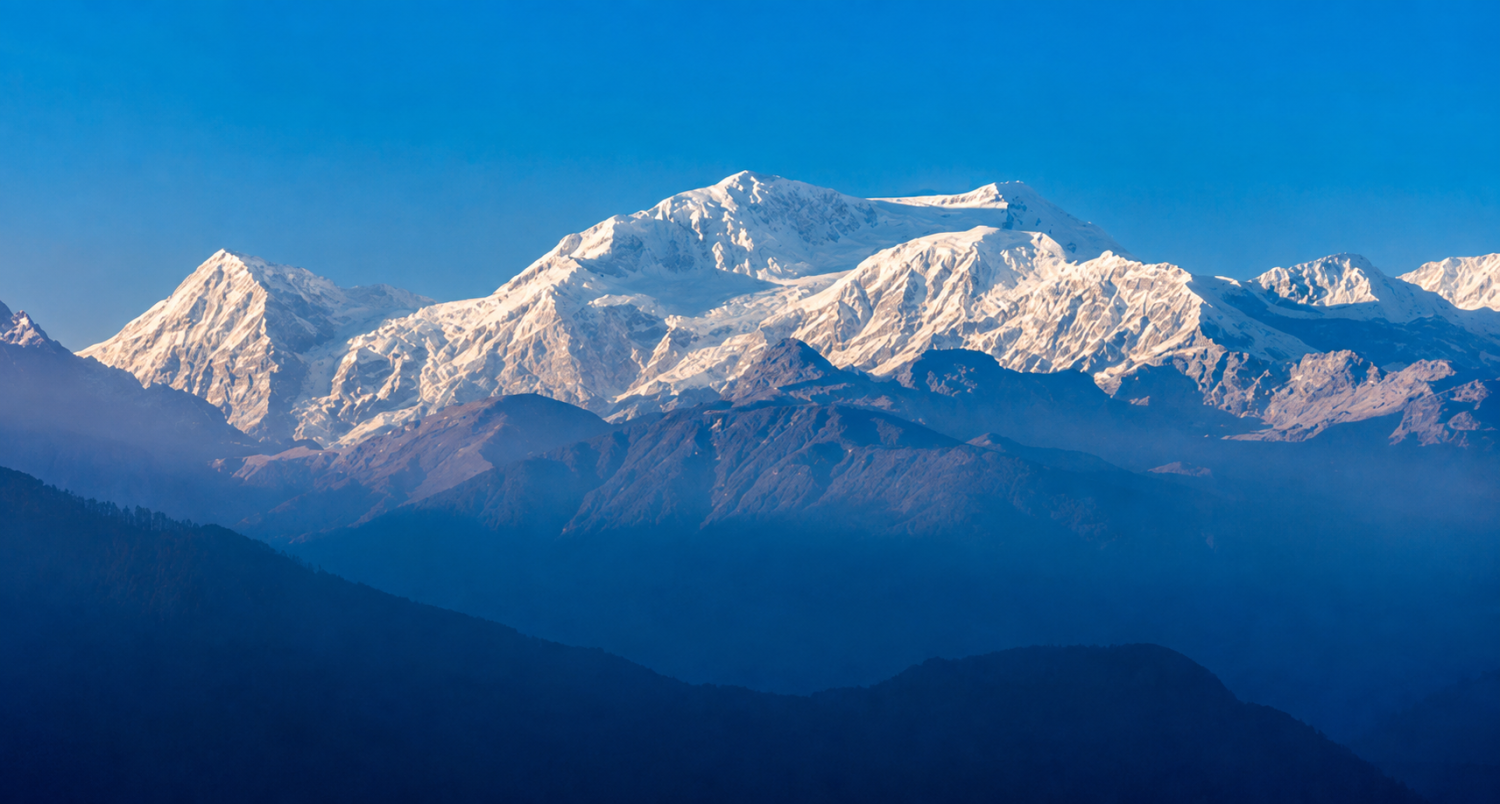
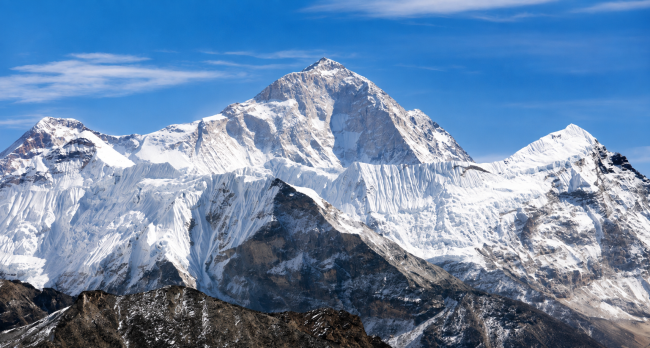
Kanchenjunga Region Trekking is one of Nepal’s most remote, spectacular, and rewarding Himalayan adventures. Organized by Himalayan Adventure Intl Treks, this wilderness journey takes you deep into eastern Nepal to explore the magnificent Kanchenjunga Conservation Area, traditional mountain villages, high-altitude valleys, glaciers, alpine landscapes, and the base camps of Mount Kanchenjunga, the world’s third-highest mountain at 8,586 meters.
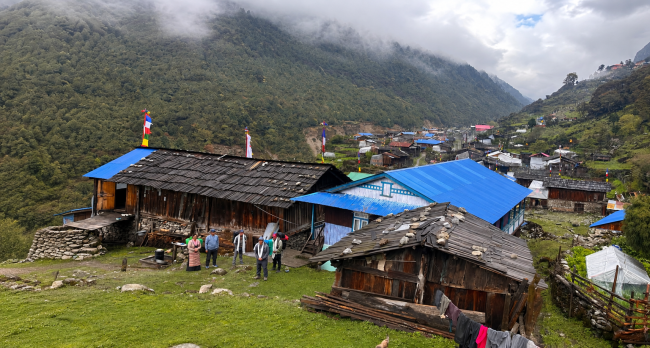
Unlike the more frequently visited Everest, Annapurna, and Langtang trekking routes, the Kanchenjunga region offers a genuine off-the-beaten-path experience. The trails are quieter, the landscapes are exceptionally diverse, and the journey provides opportunities to experience the culture and hospitality of Rai, Limbu, and Sherpa communities living in remote Himalayan settlements.
The classic Kanchenjunga Circuit Trek combines the northern and southern approaches to Mount Kanchenjunga. The route can include the spectacular Pangpema/North Base Camp, the dramatic Oktang/South Base Camp, and challenging high mountain passes such as Sele La, Mirgin La, and Sinion La. With gradual acclimatization, experienced guides, appropriate preparation, and a carefully designed itinerary, this challenging trek becomes an unforgettable Himalayan adventure.
Kanchenjunga trekking is special because it combines dramatic mountain scenery with wilderness, cultural diversity, and demanding high-altitude trekking. The journey takes you progressively away from Nepal’s major tourist centers and into an area where settlements are scattered across deep valleys and mountain slopes.
The Kanchenjunga region is particularly attractive to travelers who want more than a conventional Himalayan trekking experience. Instead of walking along heavily traveled trails, trekkers encounter quiet paths, remote villages, forests, mountain rivers, suspension bridges, glaciers, and enormous Himalayan landscapes.
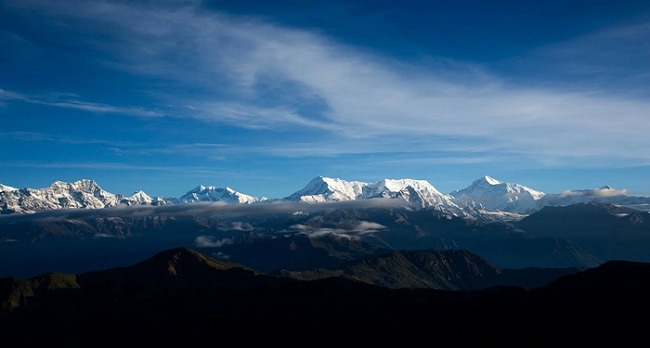
The mountain itself is known for the “Five Treasures of Snow,” referring to the five major peaks associated with the Kanchenjunga massif. From different points along the route, trekkers can appreciate the changing appearance of these mountains as the trail moves from lower valleys toward the high alpine environment.
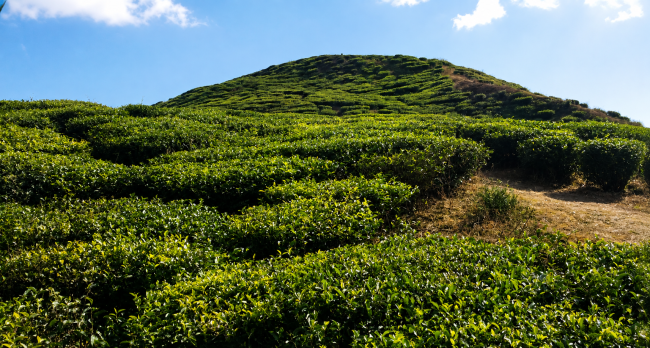
The trek also provides an opportunity to experience the natural and cultural diversity of eastern Nepal. The lower sections of the route pass through green forests and villages, while higher elevations gradually transform into alpine terrain dominated by rock, snow, glaciers, and enormous mountain walls.
Much of the trekking route passes through the Kanchenjunga Conservation Area, a protected Himalayan region covering approximately 2,035 square kilometers. The conservation area is important for its biodiversity, landscapes, forests, wildlife, and local communities.
Trekkers can experience a remarkable change in vegetation and scenery as they gain elevation. Lower sections feature lush forests and cultivated landscapes, while higher areas contain alpine vegetation and increasingly rugged mountain terrain.
The conservation area is also home to a variety of Himalayan wildlife and birds. Although wildlife sightings cannot be guaranteed, the possibility of encountering animals and observing the region’s natural environment adds another dimension to the trek.
For nature lovers, photographers, and wilderness travelers, the Kanchenjunga Conservation Area is one of the major attractions of this adventure.
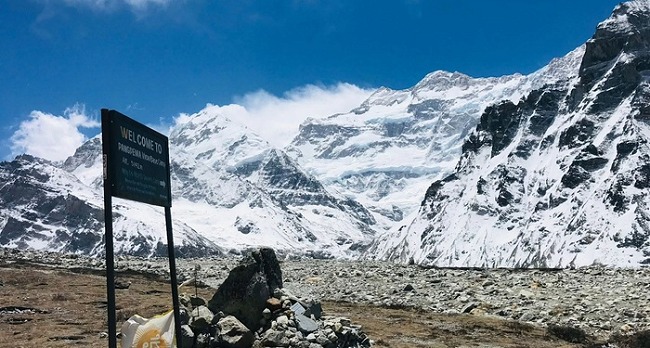
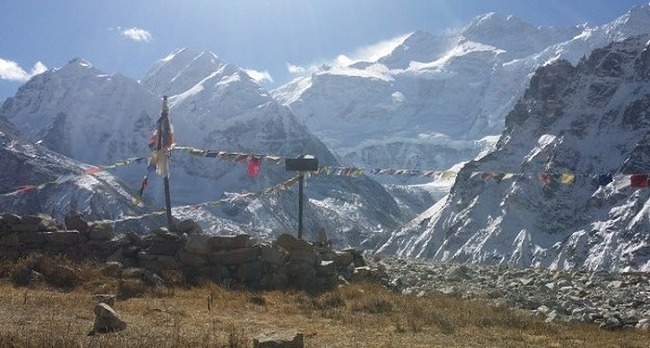
One of the principal objectives of the Kanchenjunga trek is Pangpema, the northern base camp of Mount Kanchenjunga. The route gradually enters the high Himalayan landscape before reaching the spectacular viewpoint around Pangpema at approximately 5,143–5,150 meters.
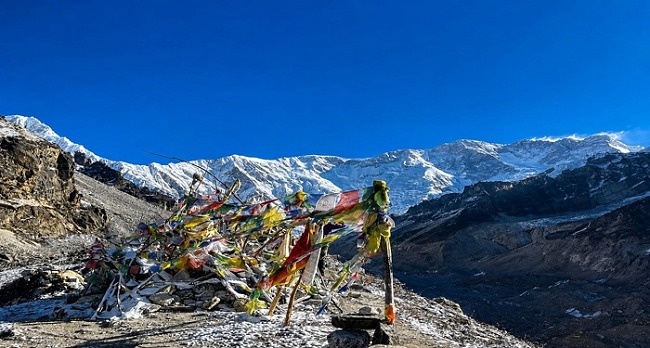
The landscape here is dramatically different from the lower valleys. Green vegetation gives way to rugged rock, glaciers, snow, and enormous mountain faces. The Kanchenjunga massif dominates the horizon, creating one of the most memorable settings in the eastern Himalayas.
Reaching Pangpema requires good acclimatization and physical preparation. The altitude is considerable, and the trail can be demanding, particularly when weather conditions change. A gradual itinerary allows trekkers to adapt to the increasing elevation while enjoying the scenery along the way.
The southern side of the Kanchenjunga region provides another spectacular Himalayan experience. The trail toward Oktang Base Camp, generally described at around 4,730 meters, leads into the glacial and moraine environment beneath the enormous southern face of Mount Kanchenjunga.
The southern base camp route offers impressive views of the surrounding mountains, glaciers, and rugged high-altitude landscapes. Reaching this area provides a strong sense of wilderness because there are fewer settlements and considerably less tourist infrastructure than on Nepal’s major trekking routes.
Combining the northern and southern base camps creates a comprehensive Kanchenjunga experience and allows trekkers to appreciate different perspectives of the mountain.
The classic circuit route can connect the northern and southern sections through several challenging high-altitude passes. Among the most important are Sele La, Mirgin La, and Sinion La/Sinelapche La.
The exact altitude of these passes can vary according to the route and mapping references, but the crossings take place at high elevations and may involve snow, steep terrain, and difficult trail conditions.
The Sele La section is particularly demanding. Depending on the route, trekkers may encounter elevations of roughly 4,290 to 4,890 meters. The Mirgin La and Sinion La sections also involve significant elevation gain and loss.
Because weather and snow conditions can change quickly, crossing these passes requires careful planning. An experienced mountain guide is extremely valuable for route selection, pacing, weather assessment, and safe navigation.
Kanchenjunga trekking is a challenging to strenuous high-altitude adventure. It is more demanding than many of Nepal’s standard trekking routes because of its remoteness, long walking days, high elevations, rugged terrain, and limited infrastructure.
The trek begins at relatively low elevations and gradually climbs toward more than 5,000 meters. Proper acclimatization is therefore one of the most important elements of the itinerary.
Trekkers should have good cardiovascular fitness, endurance, and mental preparation. Previous trekking experience is helpful, particularly for travelers planning to complete the full circuit and cross the high passes.
Beginners who are physically prepared can undertake the trek with appropriate support, but they should understand that this is not a casual walking holiday. Training several weeks or months before departure can help prepare for long uphill and downhill walking.
At Himalayan Adventure Intl Treks, we recommend a gradual itinerary that allows sufficient time for acclimatization and recovery.
Altitude is one of the most important considerations on the Kanchenjunga trek. The route reaches elevations above 5,000 meters, especially around Pangpema.
Trekkers should ascend gradually and listen carefully to their bodies. Proper hydration, adequate rest, sensible pacing, and acclimatization days are essential.
Possible symptoms of altitude-related illness can include headache, dizziness, unusual tiredness, nausea, loss of appetite, or difficulty sleeping. Any concerning symptoms should be communicated to the guide immediately. Continuing to ascend when symptoms are worsening can be dangerous.
Our trekking itineraries are designed to provide gradual elevation gain, allowing the body time to adjust to the changing altitude.
Kanchenjunga trekking generally begins in the Taplejung area and continues through remote mountain villages toward the northern and southern base camps.
There are several possible ways to reach the trekking region, depending on the itinerary and current transportation arrangements. Travelers may use combinations of domestic flights and road transportation through eastern Nepal, or choose an overland journey.
Possible approaches described for the region include traveling via Bhadrapur, Biratnagar, Suketar/Taplejung, or an overland route through eastern Nepal.
Because road and flight schedules can change, Himalayan Adventure Intl Treks can arrange the most suitable transportation according to the selected itinerary, season, and traveler preferences.
A classic Kanchenjunga Circuit itinerary generally requires around 17–21 trekking days, depending on acclimatization, route conditions, transportation, and the specific objectives of the trek. The source itinerary also describes a 19-day package, while customized itineraries can be arranged according to the available holiday period.
The preferred seasons for Kanchenjunga trekking are autumn and spring.
Autumn generally provides favorable trekking conditions, fresh mountain scenery, and good opportunities for Himalayan views. September can still experience some effects from the monsoon, while October and November are traditionally popular months for trekking.
Spring is another excellent season. The weather is generally suitable for trekking, and lower elevations can offer beautiful blooming vegetation and forest scenery. Mountain views can be particularly impressive during stable weather periods.
The monsoon season brings considerable rainfall to eastern Nepal. Trails can become wet and slippery, visibility may be reduced, and transportation can be affected by weather and road conditions.
Experienced trekkers may still travel during this period, but the itinerary needs greater flexibility.
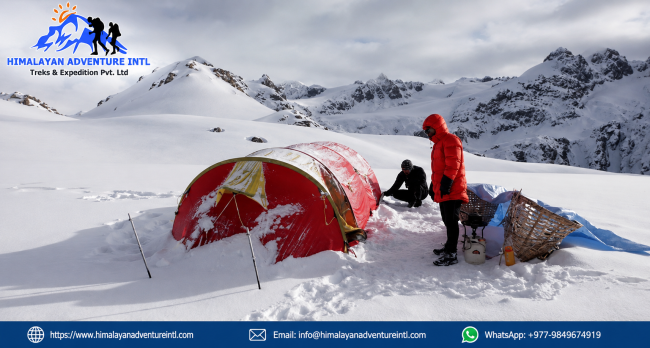
Winter brings very cold temperatures at higher elevations. Snow can make high passes difficult or temporarily inaccessible. The Sele La and other high sections may become particularly challenging.
Winter trekking can be arranged when conditions permit, but travelers should be prepared for cold temperatures, snow, and possible itinerary changes.
Accommodation in the Kanchenjunga region is generally more basic than in popular trekking destinations such as Everest and Annapurna.
Local teahouses and lodges provide accommodation along many sections of the route. Rooms are usually simple, and bathrooms may be shared in some locations. Facilities become increasingly basic as the trail moves into remote and high-altitude areas.
The limited infrastructure is part of the character of Kanchenjunga trekking. Travelers should expect a genuine wilderness experience rather than luxury accommodation throughout the journey.
Himalayan Adventure Intl Treks selects available local accommodation according to the route, season, group requirements, and prevailing conditions.
Local teahouses and lodges provide a variety of meals along the trekking route. Depending on the location and available ingredients, trekkers can enjoy Nepali, Tibetan, Indian, Chinese, and selected continental-style dishes.
Common trekking meals are designed to provide carbohydrates, protein, and energy for long walking days. Dal bhat, noodles, rice, soup, pasta, potatoes, eggs, vegetables, and other simple meals are commonly available in trekking areas.
In remote sections, food choices may be more limited because supplies have to be transported over long distances. Trekkers should therefore remain flexible about menu choices.
Kanchenjunga is a controlled/restricted trekking destination, so trekkers need the appropriate permits and must follow the regulations governing the region.
The source material identifies the principal requirements as:
The special Kanchenjunga permit described in the source costs USD 100 for the first seven days, with an additional USD 15 per person per day for extended days.
Permit regulations and fees can change, so Himalayan Adventure Intl Treks confirms the applicable requirements before departure and arranges the necessary documentation through the appropriate authorities.
A professional guide is essential for a Kanchenjunga trek. The region is remote, the routes can be complicated, and high passes may be affected by weather and snow.
The source material also emphasizes that the special permit must be arranged through a government-registered Nepal trekking agency and that a minimum group requirement applies for the restricted-area permit.
An experienced guide helps with navigation, accommodation arrangements, communication with local communities, altitude management, weather-related decisions, and emergency coordination.
For a challenging route such as Kanchenjunga Circuit, the knowledge of an experienced local guide can make a major difference to the overall trekking experience.
The cost of Kanchenjunga trekking depends on several factors, including:
The source material gives indicative budget prices beginning around USD 1,950 per person, while higher-end or luxury arrangements can reach approximately USD 4,350 per person. Guide services are described at approximately USD 30–35 per day, and porter services around USD 25–28 per day, with insurance and company service costs considered separately.
Because Kanchenjunga is a remote and restricted trekking destination, its overall cost can be higher than trekking routes with more developed infrastructure.
Himalayan Adventure Intl Treks provides private and customized packages according to the traveler’s requirements and budget.
Because the trek reaches high elevations and can encounter rapidly changing weather, appropriate equipment is essential.
Recommended equipment includes:
The exact packing list should be adjusted according to the season and itinerary.
Connectivity is limited in the Kanchenjunga region. Some lower villages may have mobile coverage, but signal strength varies significantly.
Wi-Fi and internet facilities may be available in selected settlements, while communication becomes increasingly limited in remote areas and at higher elevations.
Travelers should be prepared to spend several days with limited or no internet access. This is an important part of the wilderness character of the Kanchenjunga trek.
Himalayan Adventure Intl Treks provides locally organized trekking services throughout Nepal, including remote and challenging Himalayan destinations.
For Kanchenjunga trekking, our focus is on careful itinerary planning, experienced local support, responsible travel, and personalized service.
We provide:
Our team understands that every traveler has different expectations. Some guests want to focus on the North Base Camp, while others prefer the South Base Camp or a complete circuit. We can therefore tailor the itinerary to match your available time, trekking experience, preferred route, and budget.
Kanchenjunga is a sensitive mountain environment. Travelers should respect local communities, wildlife, forests, and cultural traditions throughout the journey.
We encourage trekkers to minimize plastic waste, use designated trails, respect local customs, avoid unnecessary disturbance to wildlife, and dispose of waste responsibly.
Supporting locally operated teahouses, guides, porters, and communities also helps ensure that tourism contributes positively to the people living in this remote region.
Kanchenjunga trekking is located in the far eastern part of Nepal, primarily within the Kanchenjunga Conservation Area in Taplejung District.
It is a challenging high-altitude trek. Good physical fitness, mental preparation, gradual acclimatization, and appropriate trekking equipment are important.
The highest point on the northern route is Pangpema/North Base Camp, approximately 5,143–5,150 meters, depending on the route and reference used.
Yes. The trek reaches elevations above 5,000 meters, so altitude-related illness is a genuine concern. Gradual ascent, acclimatization, hydration, rest, and immediate communication with the guide about symptoms are important.
Yes. Kanchenjunga is a restricted trekking region, and trekkers need to follow the applicable permit and guide requirements. The trek is also remote and challenging, making professional local support highly advisable.
A classic Kanchenjunga Circuit generally takes around 20–22 days, although shorter North or South Base Camp itineraries and longer customized programs are possible.
Accommodation is primarily in local teahouses and lodges. Facilities are simple, particularly in remote sections, and shared bathrooms may be necessary in some locations.
Beginners can consider the trek if they have good physical fitness, adequate preparation, and an appropriate itinerary with sufficient acclimatization. Previous high-altitude trekking experience is strongly beneficial for the complete circuit and high-pass sections.
The Kanchenjunga region is a controlled/restricted trekking area with specific permit and guide requirements. Travelers should arrange the trek through a registered Nepal trekking agency and follow the regulations applicable at the time of travel.
Autumn, particularly October and November, and spring, generally March through May, are the preferred seasons. Winter and monsoon trekking may be possible but require greater flexibility because of snow, cold, rainfall, trail conditions, and visibility.
The Kanchenjunga Region Trek is an extraordinary journey for travelers seeking wilderness, solitude, culture, and high Himalayan adventure. From the green valleys and traditional villages of eastern Nepal to the glaciers and towering mountain walls surrounding Pangpema and Oktang, every section of the route offers a different experience.
The journey is demanding, but that challenge is part of what makes Kanchenjunga so rewarding. Walking through one of Nepal’s least-developed trekking regions, crossing remote mountain passes, meeting local communities, and standing beneath the world’s third-highest mountain creates memories that last long after the trek is finished.
Whether you want to explore the North Kanchenjunga Base Camp, visit the South Base Camp, complete the Kanchenjunga Circuit, or design a shorter customized itinerary, Himalayan Adventure Intl Treks can organize your journey according to your holiday schedule, trekking experience, and preferred level of service.
Contact Himalayan Adventure Intl Treks to plan your Kanchenjunga Region Trekking adventure in Nepal.