
Have Questions? Talk to Expert (Binod)
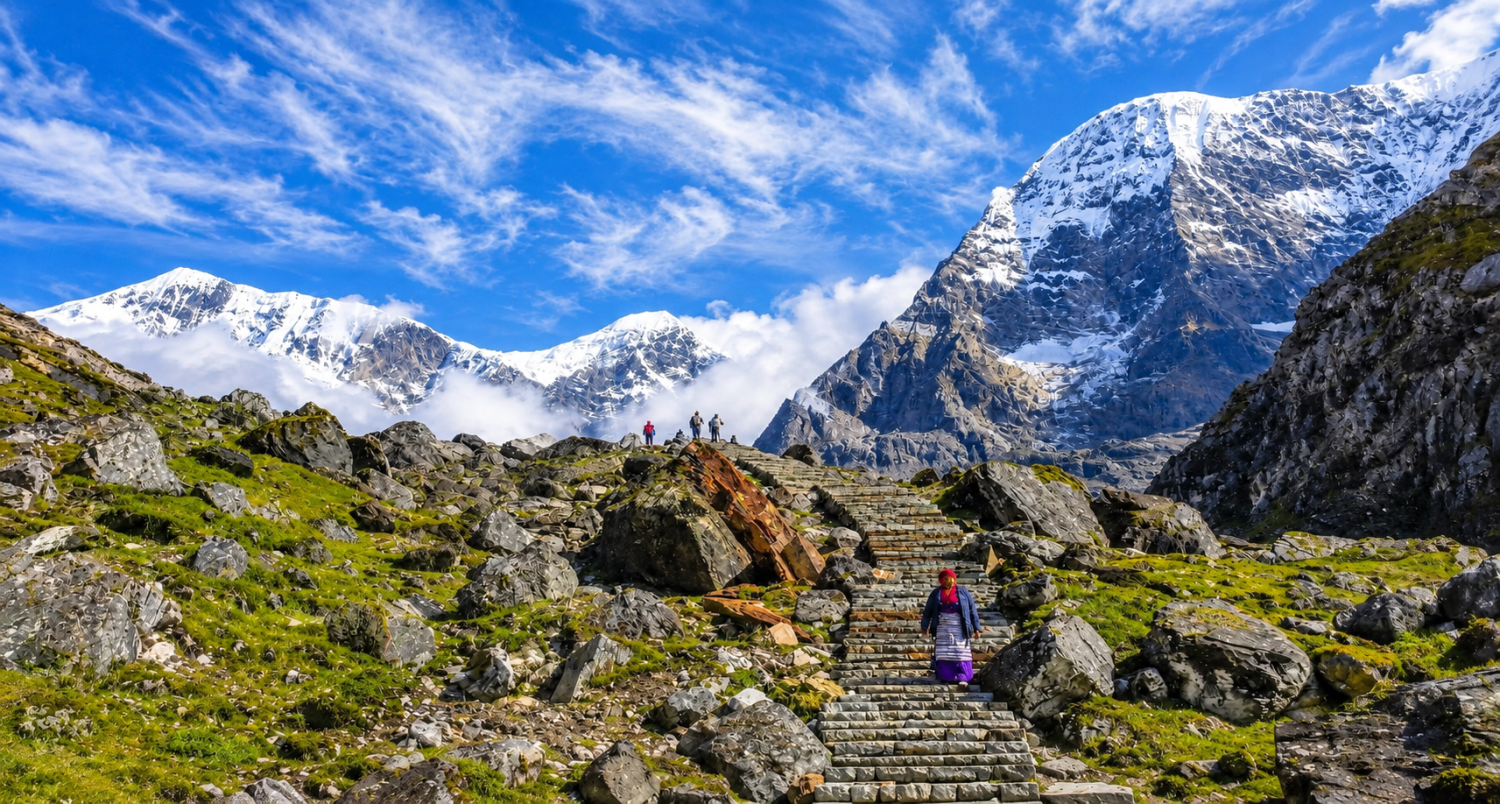
The Dudh Kunda Trek is a remarkable Himalayan adventure that takes you into the quieter and culturally rich landscapes of Nepal’s Solukhumbu region. Unlike the heavily traveled Everest Base Camp route, this trek combines peaceful mountain trails, traditional Sherpa villages, ancient monasteries, rhododendron forests, alpine landscapes, and the sacred Dudh Kunda Lake, situated at around 4,560 meters above sea level.
Dudh Kunda, meaning “Milk Lake,” is regarded as a sacred pilgrimage site by both Hindus and Buddhists. Surrounded by dramatic Himalayan peaks and peaceful highland scenery, the lake provides a deeply rewarding destination for trekkers seeking something beyond Nepal’s mainstream trekking routes.
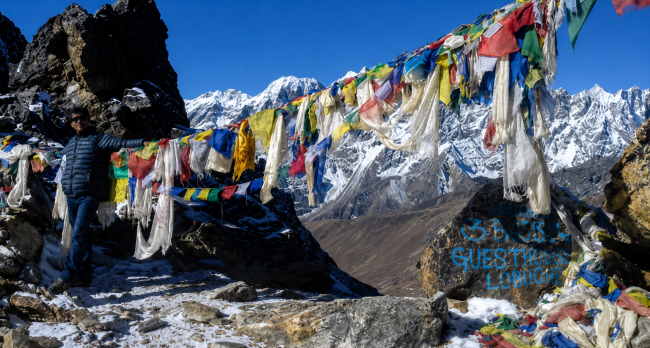
The journey also offers an authentic introduction to Sherpa culture, Buddhist traditions, mountain lifestyles, and rural Nepalese hospitality. Throughout the trail, you encounter prayer flags fluttering in the mountain wind, mani walls, chortens, prayer wheels, monasteries, traditional stone houses, and welcoming local communities.
With professional trekking arrangements from Himalayan Adventure Intl Treks, the Dudh Kunda Trek can be organized as a camping adventure or a more comfortable lodge-supported journey according to your preferences. It is an excellent choice for travelers who want spectacular Himalayan scenery while experiencing a less crowded side of the Everest region.
Highlights of Dudh Kunda Trek
Your Dudh Kunda adventure begins in Kathmandu, where you can complete sightseeing, trekking preparation, permit arrangements, equipment checks, and a pre-trek briefing with our team. Depending on the selected itinerary and current transportation conditions, the journey toward the Solukhumbu region can be arranged by road or through a flight connection to the lower Everest area.
The trail gradually moves away from busy settlements and into peaceful mountain landscapes. Instead of following the classic Everest Base Camp route, you travel through less-frequented paths connecting traditional villages, forests, ridges, valleys, and highland pastures.
One of the attractions of this route is its variety. Some days involve walking through lush forests, while other sections open into broad mountain landscapes with impressive Himalayan views. As you gain elevation, the vegetation changes and the environment becomes increasingly alpine.
The approach toward Dudh Kunda is particularly memorable. The landscape becomes more rugged, the air cooler, and the surrounding mountains increasingly impressive. Finally, you reach the sacred lake, where the peaceful surroundings provide an opportunity to rest, explore, photograph the landscape, and appreciate the spiritual atmosphere of this remote Himalayan destination.
After visiting Dudh Kunda, the route continues through places such as Saharsbeni, Taksindu, and Phaplu, depending on the itinerary chosen. From Phaplu, you can return toward Kathmandu by road or flight according to the transportation arrangement.
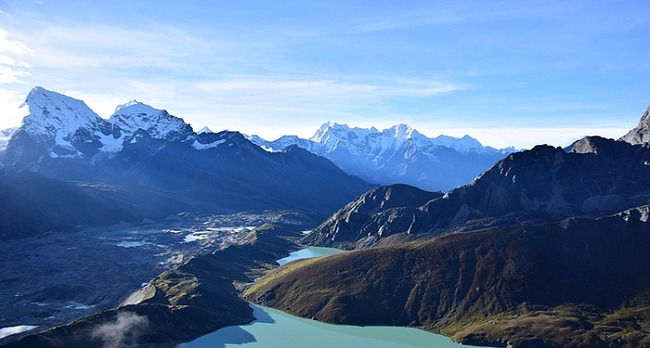
Dudh Kunda Lake is the spiritual and scenic centerpiece of this trek. Located high in the mountains, the lake is surrounded by rugged Himalayan terrain and open alpine landscapes.
The name “Dudh Kunda” translates approximately as Milk Lake, referring to the lake's distinctive appearance and its religious associations. For generations, local communities and pilgrims have considered the lake sacred.
The experience is not simply about reaching a high-altitude lake. Standing beside Dudh Kunda offers a sense of remoteness and tranquility that is difficult to find on Nepal's more commercial trekking routes.
Dudh Kunda is an important pilgrimage destination for Hindu devotees. During religious occasions, pilgrims travel to the lake to perform prayers and rituals. Many devotees believe that bathing in its holy water has spiritual significance and helps cleanse sins.
The lake becomes especially significant during Janai Purnima, the full-moon festival traditionally observed in July or August. Pilgrims may travel from different parts of Nepal and neighboring regions to participate in religious activities around the lake.
The region is also deeply connected with Himalayan Buddhist traditions. Sherpa communities living throughout Solukhumbu practice Tibetan-influenced Buddhism, and monasteries, stupas, mani walls, and prayer flags form an important part of everyday life.
Visitors can observe local religious customs respectfully while learning about the spiritual traditions that have shaped communities in this part of the Himalayas for generations.
One of the strongest reasons to choose the Dudh Kunda Trek is the opportunity to experience authentic Sherpa culture away from the busier tourist centers.
Sherpa communities are internationally recognized for their deep knowledge of the Himalayan environment, mountaineering traditions, resilience, and hospitality. Along the trail, you can observe traditional lifestyles that remain closely connected with agriculture, livestock, Buddhism, and mountain tourism.
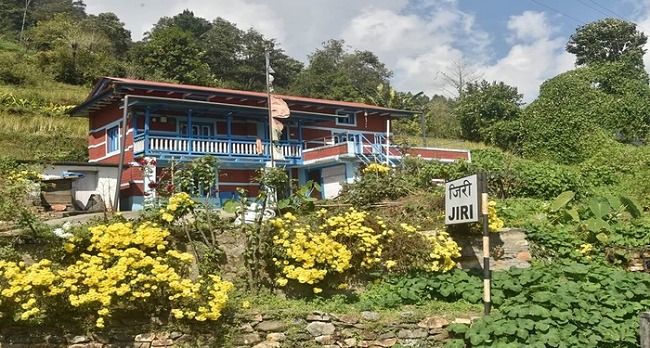
The route passes through villages where traditional stone houses stand against spectacular mountain scenery. Prayer wheels, colorful prayer flags, chortens, and mani stones provide constant reminders of the region's Buddhist heritage.
Monasteries are another important attraction. A visit to Taksindu Monastery and other religious sites along the route provides an opportunity to learn about Buddhist practices and local spiritual life.
Travelers can also enjoy traditional Nepalese and Sherpa-influenced foods, including dal bhat, vegetables, noodles, soups, Tibetan-style bread, potatoes, and momos.
The Dudh Kunda region passes through varied ecological zones. Lower sections of the trail may feature dense forests containing rhododendron, pine, fir, birch, and other Himalayan vegetation.
During spring, rhododendron forests can become particularly attractive as flowers add color to the landscape. Higher sections gradually transition into alpine meadows and rocky mountain terrain.
The region is also home to Himalayan wildlife. Depending on season, location, and luck, trekkers may encounter or observe signs of animals such as Himalayan thar, musk deer, pheasants, and other mountain species. Sightings of elusive animals are never guaranteed, but the diversity of the surrounding ecosystem adds another dimension to the trek.
The panoramic Himalayan scenery is one of the major rewards of this journey. Depending on weather and viewing conditions, the trek provides impressive perspectives toward several major peaks of the eastern Nepal Himalayas.
The surrounding mountain panorama can include views toward Mount Everest, Lhotse, Nuptse, Makalu, and numerous other peaks in the region.
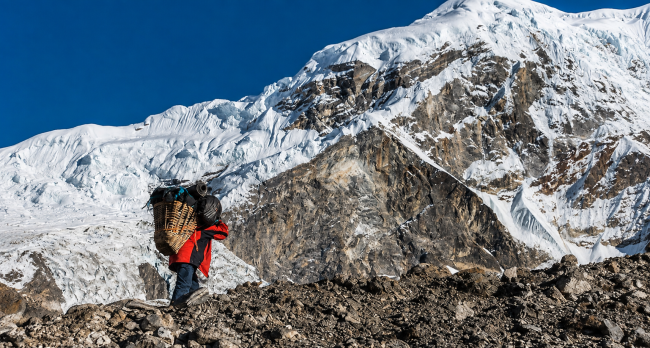
However, the mountain scenery is not limited to individual summits. The changing landscape itself is part of the experience—from forested hills and deep valleys to open ridges, alpine pastures, glacial terrain, and snow-covered peaks.
For photographers, sunrise and sunset can create particularly memorable scenes when the mountains are illuminated by changing Himalayan light.
Choosing the right season can significantly improve your trekking experience.
Spring is one of the best seasons for Dudh Kunda trekking. Temperatures gradually become warmer, skies are often favorable, and forests come alive with rhododendron blossoms and other vegetation.
This season is particularly attractive for travelers who enjoy combining Himalayan scenery with colorful mountain landscapes.
Autumn is generally regarded as another excellent trekking season. After the monsoon, the atmosphere is often clearer, providing excellent mountain visibility.
September, October, and November are popular because of pleasant trekking temperatures, relatively stable weather, and spectacular Himalayan views.
Winter brings colder conditions and possible snow around higher sections of the route. Experienced trekkers who enjoy peaceful trails and winter scenery may find this season rewarding, but proper clothing and equipment are essential.
The monsoon season brings rain, clouds, and potentially muddy or slippery trails. Visibility may also be limited. Nevertheless, travelers interested in the spiritual side of Dudh Kunda may consider visiting during Janai Purnima, when religious activities around the lake become particularly significant.
The Dudh Kunda Trek is considered a moderate to challenging Himalayan trek, primarily because the trail reaches approximately 4,560 meters and includes several long walking days.
You do not need to be an elite athlete, but good physical preparation makes the experience considerably easier. Regular walking, hiking, cardiovascular exercise, stair climbing, and leg-strengthening exercises are useful before departure.
A good training routine can include:
Try to build endurance rather than focusing on speed. At altitude, walking slowly and maintaining a comfortable rhythm is much more effective than trying to cover the trail quickly.
The highest point of the trek is around 4,560 meters, so altitude should be taken seriously. Physical fitness does not completely prevent altitude sickness.
Our trekking team emphasizes gradual ascent, appropriate pacing, hydration, rest, and careful monitoring of symptoms. Trekkers should communicate immediately with their guide if they experience unusual headaches, dizziness, nausea, unusual fatigue, or breathing difficulties.
Adequate acclimatization, slow walking, sufficient hydration, and avoiding unnecessary exertion are important parts of a safe Himalayan journey.
The total cost depends on the itinerary, group size, accommodation style, transportation, guide and porter requirements, and services included in your package.
A typical package may include:
Additional personal expenses can include drinks, snacks, charging, Wi-Fi, hot showers where available, travel insurance, personal equipment, and tips.
For an accurate and current quotation, Himalayan Adventure Intl Treks can design the package according to your preferred duration, transportation, group size, and level of comfort.
Because the trek reaches high elevation, packing appropriately is important. Your basic equipment should include:
If you do not have all the necessary trekking equipment, ask our team about equipment rental options before departure.
At Himalayan Adventure Intl Treks, we understand that a successful Himalayan journey requires more than simply following a trail. We focus on thoughtful itinerary planning, experienced local guides, reliable logistics, appropriate safety practices, and personalized service.
Whether you are traveling independently, as a couple, with friends, as a family, or as part of a larger group, we can tailor the Dudh Kunda experience to your requirements.
Our team can arrange transportation, permits, accommodation, guides, porters, camping equipment, meals, and other essential trekking services so you can concentrate on enjoying the mountains.
The Dudh Kunda Trek is an ideal choice for travelers searching for a quieter and more meaningful Himalayan adventure. The journey combines the sacred beauty of Dudh Kunda Lake with spectacular mountain scenery, Sherpa hospitality, Buddhist heritage, traditional villages, forests, alpine landscapes, and an authentic off-the-beaten-path trekking experience.
Rather than simply visiting another famous Himalayan destination, this trek allows you to slow down and experience the landscapes and communities of Solukhumbu more intimately. From walking through rhododendron forests to visiting monasteries and finally standing beside the sacred waters of Dudh Kunda, every stage offers something memorable.
If you are looking for a trek that combines nature, culture, spirituality, and Himalayan adventure, Dudh Kunda is a destination worth discovering with Himalayan Adventure Intl Treks.
Welcome to Nepal! Upon your arrival at Tribhuvan International Airport in Kathmandu, a representative from Himalayan Adventure Intl Treks will meet you and provide a warm welcome. You will then be transferred to your hotel in Kathmandu.
After checking in, you can relax and recover from your journey. Depending on your arrival time, you may have an opportunity to explore the surrounding area or enjoy a traditional Nepali meal. Your trekking team will also brief you about the Dudhkunda Cultural Trek, including the route, accommodation, transportation, safety considerations, and necessary preparations.
Overnight: Hotel in Kathmandu
Meals: Welcome dinner
Today, you begin your journey toward the Solukhumbu region. You can travel from Kathmandu to Phaplu either by a scenic flight or by road, depending on the available transportation and your preference.
The journey gradually takes you away from the busy Kathmandu Valley and toward the hills of eastern Nepal. Along the way, you can enjoy views of green hills, terraced farmland, rivers, traditional villages, and mountain landscapes.
After reaching Phaplu, you will check into your accommodation and have time to rest. Your guide will make final preparations for the trek beginning the following day.
Overnight: Lodge in Phaplu
Meals: Breakfast, lunch and dinner
Your trekking adventure officially begins today. After breakfast, you set out from Phaplu toward Takshindu, following peaceful mountain trails through forests, hillside settlements, and rural landscapes.
The trail provides your first real taste of the natural and cultural beauty of the Solukhumbu region. You will encounter local people going about their daily activities, traditional houses, cultivated fields, and forested hills.
The approximately 5–6-hour trek includes a mixture of gradual ascents and descents. As you gain elevation, the surroundings become increasingly mountainous and peaceful. Upon reaching Takshindu, you can relax at the lodge and enjoy the atmosphere of this beautiful Himalayan settlement.
Overnight: Lodge in Takshindu
Trekking: 5–6 hours
Altitude: 3,060m
Meals: Breakfast, lunch and dinner
Today, the trail takes you farther into the high Himalayan environment as you trek toward Sahsra Beni, situated at approximately 3,972 meters.
The landscape changes noticeably as the altitude increases. The trail passes through forests and open mountain terrain, with increasingly impressive views of the surrounding Himalayan peaks. You will experience a quieter atmosphere as settlements become more scattered and the environment becomes more alpine.
The trek takes around 5–6 hours, with gradual sections of climbing. Your guide will maintain a comfortable pace and encourage regular breaks so that you can adjust naturally to the increasing elevation.
After reaching Sahsra Beni, you will settle into your accommodation and enjoy the peaceful mountain surroundings.
Overnight: Lodge/camp at Sahsra Beni
Trekking: 5–6 hours
Altitude: 3,972m
Meals: Breakfast, lunch and dinner
Today is the most important and rewarding day of the Dudhkunda Cultural Trek, as you make an excursion from Sahsra Beni to the sacred Dudh Kunda Lake, situated at an elevation of approximately 4,560 meters. After breakfast, you begin the hike along a high-altitude trail surrounded by rugged mountain landscapes, open alpine terrain, and magnificent Himalayan scenery.
The trail gradually climbs toward Dudh Kunda, and the changing landscape makes the journey particularly fascinating. As you gain elevation, vegetation becomes sparse and the surroundings feel increasingly remote and peaceful. On a clear day, you can enjoy impressive views of the snow-covered peaks and surrounding Himalayan wilderness.
After around 3 hours of hiking, you reach Dudh Kunda, a beautiful alpine lake regarded as a sacred pilgrimage site by local communities. The tranquil lake, dramatic mountain backdrop, and spiritual atmosphere create an unforgettable experience. You will have time to explore the area, take photographs, enjoy the scenery, and appreciate the peaceful surroundings.
After spending some time at Dudh Kunda, you begin your return hike to Sahsra Beni at 3,972 meters. The descent follows the same mountain trail, allowing you to enjoy a different perspective of the landscape. Although the return journey is physically demanding because of the altitude and total walking distance, the gradual descent makes it easier to manage with a steady pace and regular rest breaks.
By late afternoon, you arrive back at Sahsra Beni and settle into your accommodation. You can relax, enjoy a warm meal, and rest after this memorable high-altitude excursion.
Hiking Duration: Approximately 5–6 hours round trip
Highest Elevation: 4,560m at Dudh Kunda
Overnight: Sahsra Beni – 3,972m
Meals: Breakfast, Lunch and Dinner
After experiencing the beauty of Dudh Kunda, you begin your descent toward Ringmo, located at around 2,700 meters.
Today involves a longer walking day of approximately 5-6 hours, but the substantial loss of elevation makes the journey more comfortable than the previous day's ascent. You retrace sections of the mountain trail while enjoying changing landscapes as the high alpine terrain gradually gives way to forests and greener surroundings.
The descent provides another opportunity to observe local villages, mountain vegetation, grazing areas, and traditional Himalayan life. As you approach Ringmo, the atmosphere becomes warmer and more welcoming.
Upon arrival, you can relax, enjoy a hot meal, and recover after the long trekking day.
Overnight: Lodge in Ringmo
Trekking: Approximately 7 hours
Altitude: 2,700m
Meals: Breakfast, lunch and dinner
Today, you continue your descent from Ringmo toward Phaplu. The approximately 6-hour trek takes you through peaceful trails, forests, villages, and beautiful hillside scenery.
As you walk, you can reflect on the cultural and natural experiences of the past several days. The lower altitude and greener surroundings provide a pleasant change from the rugged high-altitude landscapes around Dudh Kunda.
After reaching Phaplu, you will check into your accommodation and have time to rest. In the evening, you may celebrate the successful completion of your trek with your guide and trekking team.
Overnight: Lodge in Phaplu
Trekking: Approximately 3-4 hours
Altitude: 2,470m
Meals: Breakfast, lunch and dinner
Following breakfast, you will travel back to Kathmandu by flight or road, depending on the transportation arrangement and current conditions.
The journey offers another chance to enjoy Nepal's changing landscapes, from the hills and mountain valleys of Solukhumbu to the Kathmandu Valley.
After arriving in Kathmandu, you will be transferred to your hotel. The remainder of the day is free for relaxation, shopping, sightseeing, or enjoying your final evening in Nepal.
Overnight: Hotel in Kathmandu
Altitude: 1,350m
Meals: Breakfast and Lunch
Your Dudhkunda Cultural Trek officially comes to an end today. Depending on your flight schedule, you can enjoy breakfast at the hotel and spend some free time before your airport transfer.
A representative from Himalayan Adventure Intl Treks will arrange your transfer to Tribhuvan International Airport in time for your international flight.
We hope the mountains, culture, landscapes, and warm hospitality of Nepal have created unforgettable memories. We look forward to welcoming you again for another Himalayan adventure.
Meals: Breakfast
Trip Ends
The Dudh Kunda Cultural Trek is one of Nepal's most rewarding off-the-beaten-path Himalayan journeys, combining sacred landscapes, Sherpa culture, peaceful mountain villages, rhododendron forests, alpine wilderness, and spectacular views of the Numbur Himal range. The name Dudh Kunda translates as "Milky Lake," referring to the beautiful high-altitude lake whose pale, reflective waters are surrounded by dramatic Himalayan scenery.
Located in the Solukhumbu region of eastern Nepal, Dudh Kunda lies at approximately 4,560 meters (14,960 feet) above sea level at the foot of the Numbur Himal. Unlike the busy trails of the Everest Base Camp region, the Dudh Kunda route remains relatively quiet, making it an excellent choice for travelers who want to experience the Himalayas away from large trekking crowds.
Himalayan Adventure Intl Treks welcomes you to discover this remarkable destination through our carefully designed Dudh Kunda Cultural Trek packages. We organize group departures, private trips, solo adventures, and customized itineraries for couples, families, and small groups.
This trek is more than a walk through the mountains. It is a journey into the spiritual heart of the Solu region, where traditional Sherpa communities continue their ancient way of life surrounded by forests, monasteries, prayer flags, sacred sites, and magnificent Himalayan peaks.
Dudh Kunda is ideal for travelers searching for a combination of nature, culture, spirituality, and adventure.
The trek provides an opportunity to:
For visitors who prefer authentic experiences rather than crowded trekking routes, the Dudh Kunda Cultural Trek is an excellent choice.
Dudh Kunda is located in Solukhumbu District of eastern Nepal, within the Solu region and beneath the impressive Numbur Himal range. The area is culturally connected with the Sherpa communities of the lower Everest region.
The trekking gateway is generally Phaplu, a small mountain town that can be reached from Kathmandu by road or, subject to flight operations, by air.
Dudh Kunda itself is positioned at around 4,560 meters, making the final section of the journey a true high-altitude Himalayan experience.
The combination of remote villages, forested hills, high mountain pastures, and sacred landscapes gives this trek a character that is very different from the more developed Everest Base Camp trail.
Dudh Kunda is regarded as a sacred lake by local communities and Hindu and Buddhist pilgrims. The lake is surrounded by a peaceful high-mountain environment, prayer flags, rocky slopes, and views of the Numbur Himal.
Many pilgrims visit the lake during religious occasions and believe that the sacred waters have spiritual significance. During pilgrimage periods, visitors may see devotees performing prayers and traditional rituals around the lake.
The spiritual atmosphere is one of the most memorable aspects of the trek. Instead of simply reaching a high-altitude destination, trekkers have the opportunity to understand why the landscape is important to local people.
The surrounding monasteries, mani walls, chortens, prayer flags, and traditional villages further contribute to the cultural character of the route.
The Dudh Kunda trail passes through communities where Sherpa traditions remain an important part of everyday life.
The Sherpa people are well known throughout Nepal and internationally for their strong connection with the Himalayan mountains, mountaineering skills, Buddhist traditions, and welcoming nature. On the Dudh Kunda route, travelers can experience a more traditional and less commercialized side of Sherpa culture.
Depending on the route and season, visitors may encounter:
A cultural trek is most enjoyable when travelers take time to interact respectfully with local communities. A simple conversation with a local family, sharing a meal, or visiting a monastery can become one of the most memorable parts of the journey.
Dudh Kunda Trek Route
The Dudh Kunda Cultural Trek generally begins at Phaplu, the principal gateway to the Solu region.
From Phaplu, the trail passes through forested hills, traditional settlements, mountain viewpoints, and high-altitude landscapes before reaching the sacred lake.
Our standard itinerary includes Taksindu and Saharsbeni before reaching Dudh Kunda. The route is designed to provide a gradual transition from the lower hills to the higher alpine environment.
The main trekking sequence is:
Kathmandu → Phaplu → Taksindu → Saharsbeni → Dudh Kunda → Saharsbeni → Taksindu → Phaplu → Kathmandu
The exact route can be adjusted according to road conditions, weather, group fitness, available accommodation, and the traveler's preferred pace.
Your Dudh Kunda adventure begins in Kathmandu. Depending on the transportation arrangement, you travel toward Phaplu by road or flight.
After reaching Phaplu, the trekking section begins toward Taksindu. The route introduces you to the peaceful landscape of the Solu region, with green hills, forests, small settlements, and mountain scenery.
Taksindu is an important settlement along the route and offers a chance to experience local Sherpa culture and mountain hospitality.
Overnight: Taksindu
After breakfast, we continue toward Saharsbeni.
The trail passes through beautiful forests and mountain landscapes. Depending on the season, rhododendrons may decorate the route with colorful flowers, while pine and fir trees provide shade along sections of the trail.
As you gain elevation, the environment gradually becomes more alpine. The settlements become smaller and the surrounding landscape increasingly dominated by mountains and open valleys.
Saharsbeni provides an excellent overnight stop before the ascent toward Dudh Kunda.
Overnight: Saharsbeni
This is the major highlight of the trek.
We start early for the journey toward Dudh Kunda at approximately 4,560 meters. The trail becomes more rugged as it enters the high-altitude landscape.
After reaching the sacred lake, you have time to explore the surrounding area, enjoy the Himalayan views, take photographs, observe prayer flags, and experience the peaceful spiritual atmosphere.
The sight of Dudh Kunda beneath the Numbur Himal is particularly impressive when the weather is clear.
After spending time at the lake, we retrace our route and descend toward Saharsbeni.
Overnight: Saharsbeni
After breakfast, we descend through the beautiful Himalayan landscape toward Taksindu.
The descent is generally easier on the lungs because of the decreasing altitude, although trekkers should still take care with uneven and sometimes steep sections of trail.
This day provides additional opportunities to appreciate the forests, villages, mountain scenery, and local lifestyle that may have been difficult to notice while ascending.
Overnight: Taksindu
The final trekking section takes you back toward Phaplu.
After reaching Phaplu, we begin our journey back to Kathmandu by road or flight according to the selected transportation arrangement.
Your Dudh Kunda Cultural Trek concludes after returning to Kathmandu, carrying memories of the sacred lake, Himalayan landscapes, Sherpa hospitality, and the peaceful Solu region.
The Dudh Kunda Trek is generally considered a moderate to challenging high-altitude trek.
Although the itinerary is relatively short, the maximum altitude of approximately 4,560 meters means trekkers should be physically prepared.
The challenge comes from several factors:
You do not need to be an experienced mountaineer to complete the trek, but a reasonable level of fitness and preparation is strongly recommended.
Walking, hiking, cycling, swimming, or other cardiovascular activities before your trip can help prepare your body for the trek.
The highest point of the trek is approximately 4,560 meters (14,960 feet). At this elevation, altitude sickness can affect even healthy and experienced travelers.
Symptoms of acute mountain sickness (AMS) may include:
The most important approach is to ascend gradually and listen to your body.
Stay hydrated throughout the trek and avoid rushing uphill. Maintain a comfortable walking rhythm and take regular breaks.
Other useful precautions include:
Some trekkers may carry or use Diamox (acetazolamide) for altitude prevention, but medication should be discussed with a qualified medical professional before the trek.
Never continue ascending if serious altitude symptoms are developing.
The ideal seasons for the Dudh Kunda Cultural Trek are spring and autumn.
Spring is one of the most beautiful times to explore the Dudh Kunda region.
The lower and middle sections of the trail become colorful with blooming rhododendrons and other Himalayan vegetation. Temperatures are generally comfortable during trekking hours, and mountain views are often excellent.
Spring is especially attractive for photographers and nature lovers.
Autumn is traditionally considered one of the best trekking seasons in Nepal.
After the monsoon, the atmosphere becomes clearer and the mountain views can be spectacular. Days are generally pleasant for trekking, while mornings and evenings at higher elevations remain cold.
The combination of clear skies, crisp mountain air, and beautiful landscapes makes autumn an excellent period for Dudh Kunda.
Winter trekking is possible for experienced and well-prepared travelers.
However, temperatures can become very cold at higher elevations, and snowfall may affect the trail. Accommodation and transportation conditions should be checked carefully before departure.
The monsoon season brings heavy rainfall to many parts of Nepal. Trails can become wet, muddy, slippery, and less comfortable.
Clouds may also obscure mountain views. Therefore, spring and autumn are generally preferable for a classic Dudh Kunda trekking experience.
The cost of the Dudh Kunda Trek depends on group size, transportation, accommodation, guide and porter requirements, itinerary length, and services included.
Himalayan Adventure Intl Treks offers different options for different types of travelers.
Starting from approximately USD 700 per person
Group departures are suitable for travelers who want to meet other trekkers and share some expenses.
A private solo Dudh Kunda trek with guide and porter support may cost approximately USD 1,250 per person, depending on transportation and the selected services.
A private couple trek can be arranged at approximately USD 2,300 per couple, depending on the final itinerary, transportation, accommodation, and inclusions.
Important: Trekking prices can change according to transportation schedules, seasonal demand, group size, permits, accommodation availability, and other operating costs. The final price should therefore be confirmed with Himalayan Adventure Intl Treks when booking.
The permits and local fees applicable to the Dudh Kunda route can include:
Permit requirements can change according to government regulations and local authorities. Our trekking team will assist you with the required documentation before departure.
Phaplu is the main starting point for many Dudh Kunda trekking itineraries.
Travelers can reach Phaplu by road or, when flights are operating, by air.
The indicative one-way flight cost is approximately USD 170, although airfare can vary according to season, airline, availability, and booking date.
A shared or arranged jeep journey can cost approximately USD 25–30 per person depending on the transportation arrangement and road conditions.
Road travel takes longer than flying but offers a fascinating opportunity to see Nepal's changing landscapes from the Kathmandu Valley toward the Himalayan foothills.
A professional guide can make the Dudh Kunda trek safer, easier, and more enjoyable.
Indicative daily rates are:
A guide can assist with navigation, accommodation, communication, cultural interpretation, food arrangements, altitude awareness, and emergency coordination.
Hiring a local guide also allows travelers to gain a deeper understanding of the communities and landscapes they pass through.
Accommodation on the lower sections of the route is generally provided in local teahouses and lodges.
Rooms are usually simple, clean, and comfortable, with basic beds and blankets. At higher elevations, facilities become more basic.
Indicative accommodation costs may range from USD 10–25 per night, depending on location and room type.
Meals commonly include traditional Nepali dishes such as dal bhat, vegetables, noodles, soup, potatoes, eggs, bread, rice, and other simple trekking foods.
A typical meal may cost approximately USD 5–10, depending on the food and location.
Because food and supplies become more expensive at higher elevations, prices can increase as you move closer to Dudh Kunda.
Safe drinking water is essential throughout the trek.
Bottled water may cost approximately USD 1–3, depending on elevation and location.
Trekkers can also use boiled water or filtered water, which may be more economical and environmentally friendly.
We recommend carrying a reusable water bottle and using a reliable purification method when appropriate.
Packing correctly is particularly important because the route reaches a high elevation and weather conditions can change quickly.
Your boots should be broken in before the trek to reduce the risk of blisters.
Energy bars, chocolate, dried fruit, nuts, and other lightweight snacks can be useful during long walking days.
Choosing a reliable trekking company is important when exploring a remote Himalayan destination.
At Himalayan Adventure Intl Treks, we focus on providing safe, organized, and memorable trekking experiences.
Our services can include:
We understand that every traveler has different expectations. For this reason, our Dudh Kunda Trek can be customized according to your preferred duration, budget, walking pace, transportation, and group size.
Our Group Join Dudh Kunda Trek is ideal for individual travelers who enjoy trekking with others.
Joining a group can reduce certain travel costs while creating opportunities to meet people from different countries.
Our fixed departures are planned around suitable trekking seasons and are led by experienced guides familiar with the Solu region.
Group trekking is particularly suitable for solo travelers who want the security and social experience of traveling with a small group.
If you prefer flexibility and independence, our private solo trekking option allows you to travel at your own pace.
You can request adjustments to:
A private guide can provide one-to-one support throughout the journey.
The Dudh Kunda region is also an excellent destination for couples seeking a peaceful Himalayan adventure.
A private couple trek provides greater flexibility and allows you to enjoy the mountains without following a large group schedule.
Couples can request a customized itinerary based on their preferred walking pace and travel dates.
The quiet trails, mountain scenery, sacred lake, and traditional villages create a memorable setting for a shared Himalayan experience.
A detailed Dudh Kunda Trek map can help you understand the route, major settlements, elevation changes, trekking distances, and important landmarks.
Himalayan Adventure Intl Treks can provide route information and trekking maps as part of the pre-trip preparation.
The primary route follows the Phaplu–Taksindu–Saharsbeni–Dudh Kunda corridor before returning through the same general area.
Dudh Kunda is a culturally and environmentally sensitive Himalayan destination. Every traveler has a responsibility to protect the region.
During the trek:
Responsible tourism helps preserve Dudh Kunda for future generations.
This trek is particularly suitable for:
If your main goal is to experience the Everest region's busiest trekking trails and iconic destinations, another Everest itinerary may be more suitable. But if you want a quieter Himalayan journey combining sacred landscapes and Sherpa culture, Dudh Kunda is an outstanding choice.
The trek is rewarding but should not be underestimated.
The main challenges include high altitude, steep terrain, cold temperatures, limited facilities, and unpredictable mountain weather.
The most important preparation is to maintain a comfortable pace and avoid trying to walk too quickly.
Your guide will monitor the group's condition and can recommend adjustments when necessary.
Travelers should also understand that Himalayan transportation can be affected by weather and road conditions. Flexibility is an important part of trekking in Nepal.
Dudh Kunda is situated at approximately 4,560 meters (14,960 feet) above sea level.
The trek generally begins from Phaplu in the Solukhumbu region.
It is generally a moderate to challenging trek because of the high altitude and steep terrain.
Fit beginners can undertake the trek with proper preparation and professional guide support, but high-altitude trekking experience is helpful.
March to May and September to November are generally the most favorable periods.
Yes, but winter brings very cold temperatures and possible snowfall. Proper equipment and experienced support are important.
A guide is strongly recommended, particularly because sections of the route are remote and the trek reaches high altitude.
Yes. Himalayan Adventure Intl Treks can arrange a private solo trek with guide and porter support.
Yes. Private couple itineraries can be customized according to your travel dates and preferred pace.
The applicable requirements may include a TIMS card and local municipal or area fees. Regulations can change, so we confirm the latest requirements before departure.
Yes. Since the route reaches approximately 4,560 meters, AMS is a genuine consideration.
Tell your guide immediately. Do not continue ascending if symptoms are worsening.
Coverage varies along the route and can be limited in remote areas. Trekkers should not rely entirely on mobile connectivity.
Local teahouses and lodges provide simple accommodation, with more basic facilities at higher elevations.
Hot showers may be available in some lower settlements for an additional charge, but facilities become limited at higher elevations.
Electricity availability varies by settlement. Carrying a power bank is recommended.
Charging may be available in lodges, usually for an additional fee, but trekkers should carry a power bank.
Dal bhat, noodles, soup, vegetables, potatoes, eggs, bread, rice, and other simple trekking meals are commonly available.
Yes. Himalayan Adventure Intl Treks can customize the route and duration according to your requirements.
The Dudh Kunda Cultural Trek is a journey for travelers who want more than spectacular mountain photographs. It is an opportunity to walk through traditional Sherpa communities, explore peaceful Himalayan forests, discover sacred landscapes, and stand beside a beautiful alpine lake beneath the Numbur Himal.
From the lower hills around Phaplu to the high-altitude environment of Dudh Kunda, every section of the trek offers something different. The route combines natural beauty, cultural discovery, spirituality, adventure, and the warm hospitality of local mountain communities.
Whether you are planning a Group Join Dudh Kunda Trek, private solo trek, couple trek, or customized cultural adventure, Himalayan Adventure Intl Treks can help organize your journey from arrival in Kathmandu to your return home.
Our experienced team can assist with transportation, guides, porters, permits, accommodation, meals, route planning, and pre-trek preparation.
Contact Himalayan Adventure Intl Treks today to plan your Dudh Kunda Cultural Trek in Nepal.
Come and discover the sacred "Milky Lake" of the Himalayas, experience the authentic culture of the Solu region, and create unforgettable memories on one of Nepal's most peaceful off-the-beaten-path trekking routes.