
Have Questions? Talk to Expert (Binod)
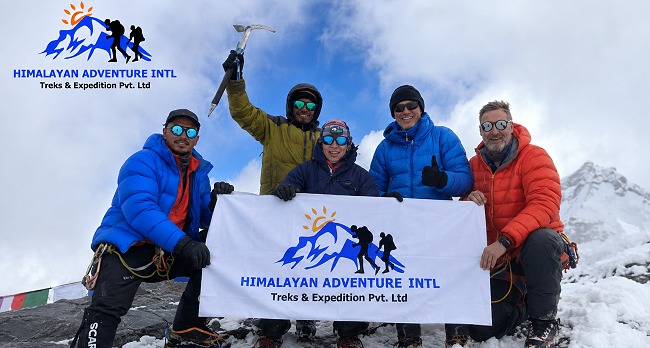
Nirekha Peak Climbing is an exciting and technical Himalayan adventure in Nepal’s Everest region. Rising to 6,159 meters (20,207 feet), Nirekha Peak offers experienced climbers an opportunity to venture away from the busier trekking routes and experience glaciers, high-altitude wilderness, dramatic mountain passes, and spectacular views of some of the world’s highest peaks.
Organized by Himalayan Adventure Intl Treks, the Nirekha Peak Climbing itinerary combines trekking in the Gokyo Valley with a demanding ascent of Nirekha Peak. Depending on the selected itinerary, the adventure can include Renjo La and Cho La, Gokyo Lakes and Gokyo Ri, making the journey as memorable as the summit itself.
Unlike popular trekking peaks such as Island Peak or Mera Peak, Nirekha requires a higher level of technical climbing ability. Climbers should have previous experience with crampons, ropes, ice and snow climbing, and high-altitude mountaineering.
Nirekha Peak is an excellent choice for climbers who want more than a conventional Himalayan trekking experience. The approach passes through the spectacular Gokyo Valley before reaching the high mountain environment around Cho La.
The mountain remains comparatively less frequently climbed than several better-known trekking peaks. This can provide a more remote and adventurous experience, although conditions on the mountain can be demanding and climbing opportunities depend heavily on weather and snow conditions.
From higher elevations, climbers can enjoy views across the Everest region, including Mount Everest, Lhotse, Nuptse, Cho Oyu, Makalu, Baruntse and numerous other peaks of the Himalayan range.
The combination of a high-altitude trek and technical climbing makes Nirekha particularly attractive to experienced mountaineers.
Nirekha Peak should not be considered a beginner's trekking peak. The mountain involves technical terrain, and the exact difficulty can vary according to route, snow conditions, weather and current mountain conditions.
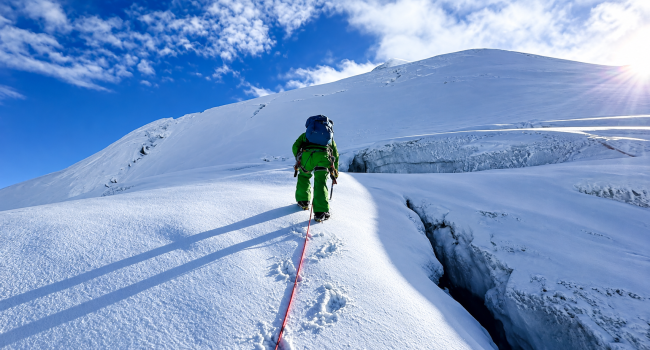
Climbers may encounter:
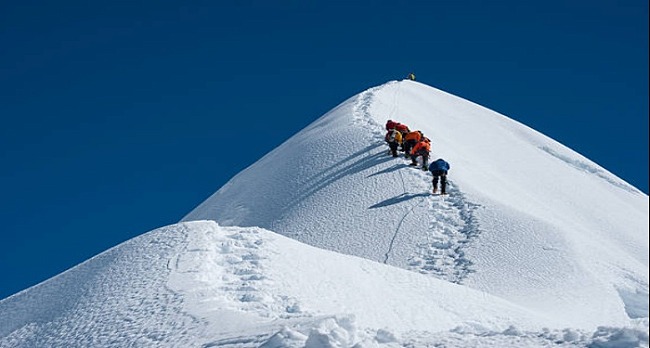
A strong level of physical fitness is essential, but fitness alone is not enough. Climbers should understand how to use crampons, ice axe, harness, ascender, carabiners and climbing ropes and should be comfortable moving on steep snow and ice.
If you have limited technical climbing experience, we recommend obtaining appropriate training before attempting Nirekha Peak. Our experienced climbing guides can also provide practical instruction and assess your preparedness during the expedition.
The adventure generally begins with a flight from Kathmandu to Lukla, followed by trekking through the Khumbu region.
The route can be designed to include the spectacular Gokyo Valley, with acclimatization around Namche and higher settlements before reaching the climbing area.
One possible approach follows:
Lukla → Phakding → Namche Bazaar → Thame → Renjo La → Gokyo → Thagnak → Cho La area → Nirekha Base Camp
The exact itinerary can be adjusted according to acclimatization requirements, weather, group experience and climbing conditions.
After arriving in Lukla, the trek begins through traditional mountain villages, forests, suspension bridges and river valleys. The trail gradually gains altitude toward Namche Bazaar.
Namche is an important acclimatization location and an excellent place to experience Sherpa culture and Himalayan mountain life.
From the lower Khumbu, the route heads toward the Gokyo region. The scenery changes dramatically as the trail enters a high-altitude landscape surrounded by glaciers and enormous Himalayan peaks.
The turquoise Gokyo Lakes are among the most impressive natural attractions in the region. A hike toward Gokyo Ri can provide an exceptional panoramic view and is also useful for acclimatization.
For a longer and more adventurous itinerary, the route can include Renjo La, followed by the Gokyo Valley and the approach toward Cho La.
Cho La is one of the famous high passes of the Everest region. Crossing the pass requires appropriate preparation, particularly when snow and ice make the trail more demanding.
The Nirekha climbing route branches toward the mountain from the high terrain near the Cho La area.
Reaching Nirekha Base Camp marks the transition from trekking to mountaineering.
Our Sherpa climbing team establishes the necessary camp arrangements and prepares the equipment required for the summit attempt. Depending on the conditions and itinerary, climbers spend time at base camp for acclimatization and preparation.
The climbing team checks:
Because mountain conditions can change quickly, the climbing guide evaluates the route before deciding the appropriate summit strategy.
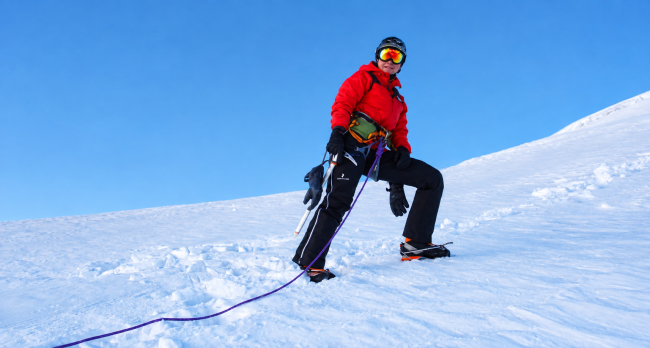
The ascent from Base Camp toward High Camp is physically demanding. The team moves through glacial and snow-covered terrain, with the guide selecting the safest available route according to current conditions.
At High Camp, climbers rest and prepare for the summit attempt.
The summit day normally begins very early. Starting before dawn provides the team with sufficient time to negotiate technical terrain and descend safely while conditions are favorable.
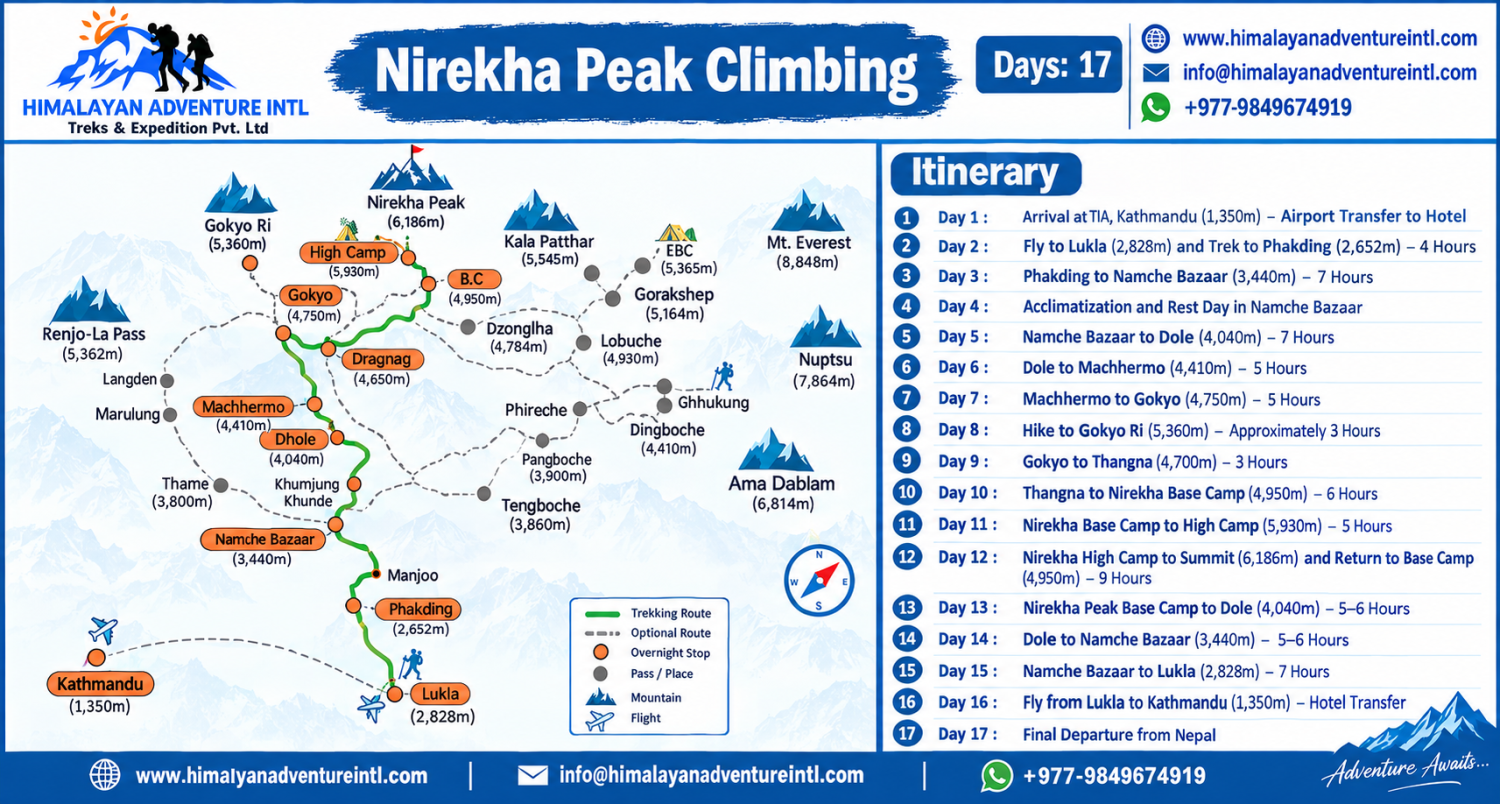
The summit push can involve steep snow and ice climbing, fixed ropes and other technical climbing techniques. The guide manages the rope system and climbing progression according to the terrain and ability of the team.
Reaching the summit provides an extraordinary reward: a vast panorama of the Khumbu and surrounding Himalayan peaks.
After taking photographs and enjoying the summit views, the team begins the descent toward High Camp or Base Camp, depending on conditions and the expedition plan.
Acclimatization is one of the most important parts of the Nirekha Peak expedition.
The itinerary should not be designed simply to reach Base Camp as quickly as possible. Spending adequate time at progressively higher elevations allows the body to adjust to reduced oxygen availability.
Our itinerary normally incorporates acclimatization around major settlements such as Namche Bazaar and Gokyo, followed by gradual progression toward the climbing area.
A well-planned acclimatization schedule can help reduce the risk of altitude-related problems and improve the chances of completing the summit attempt.
The main climbing seasons in Nepal are spring and autumn.
Spring generally offers favorable mountain conditions and longer daylight hours. The lower valleys begin to become greener, while the higher mountains remain covered in snow.
March, April and May are popular months for Himalayan climbing, although conditions can vary from year to year.
Autumn is another major trekking and climbing season. After the monsoon, visibility often improves, producing beautiful mountain views.
September can still experience some changing weather after the monsoon, while October and November are traditionally popular months for trekking and mountaineering.
Winter climbing is possible for experienced teams with appropriate equipment and preparation, but temperatures can be extremely low and heavy snowfall may affect high passes and climbing routes.
For most climbers, spring and autumn provide a more practical window for planning the expedition.
The Nirekha Peak Climbing price depends on group size, itinerary length, climbing permits, guide requirements, transportation, accommodation, equipment and the level of logistical support required.
At Himalayan Adventure Intl Treks, we provide customized quotations rather than applying one fixed price to every climber.
Your package can include:
Personal climbing equipment, international flights, travel insurance and some personal expenses may be excluded depending on the package.
For an exact quotation, we recommend contacting our team with your preferred travel dates, group size, previous climbing experience and required services.
A Nirekha Peak expedition requires more equipment than a standard Everest-region trek.
Essential equipment can include:
Our team can advise climbers about equipment before departure and explain which technical equipment is provided as part of the climbing package.
Safety is our priority throughout the expedition. Himalayan Adventure Intl Treks works with experienced local trekking and climbing guides familiar with the Khumbu environment.
The climbing team monitors weather, altitude, route conditions and the physical condition of participants throughout the journey.
We also recommend that every climber carry comprehensive travel insurance covering high-altitude trekking and mountaineering, including emergency evacuation where applicable.
No mountain summit can be guaranteed because weather and mountain conditions are beyond human control. The final decision to continue, postpone or abandon a summit attempt should always be based on safety and the professional judgment of the climbing team.
Himalayan Adventure Intl Treks is a local Nepal-based trekking and mountaineering company specializing in Himalayan adventures.
We can arrange Nirekha Peak Climbing as a private expedition or customized group trip, depending on your requirements.
Our local team provides support from the moment you arrive in Kathmandu through trekking, acclimatization, Base Camp preparation, summit climbing and your return to Kathmandu.
We focus on responsible planning, experienced local mountain staff, practical logistics and personalized service.
Nirekha Peak Climbing is much more than a trek. It is a demanding Himalayan mountaineering experience combining high-altitude trekking, glacier travel, technical climbing and extraordinary mountain scenery.
With its 6,159m summit, Gokyo Valley, high mountain passes, glaciers and spectacular Himalayan panorama, Nirekha offers an unforgettable challenge for properly prepared climbers.
If you are planning to climb Nirekha Peak with Himalayan Adventure Intl Treks, contact us with your preferred dates and group size. We can prepare a customized itinerary and quotation based on your climbing experience, acclimatization needs and desired level of expedition support.
Welcome to Nepal and the beginning of your Nirekha Peak Climbing adventure with Himalayan Adventure Intl Treks. Upon your arrival at Tribhuvan International Airport (TIA) in Kathmandu, our representative will meet you outside the arrival terminal and welcome you to Nepal. You will then be transferred by private vehicle to your hotel in Kathmandu.
After checking into the hotel, you can relax and recover from your international journey. Depending on your arrival time, you may have an opportunity to explore the nearby streets of Thamel, one of Kathmandu's most popular tourist areas, known for trekking shops, restaurants, cafés, traditional handicrafts, and outdoor equipment stores.
Your climbing guide will meet you and provide important information about the Nirekha Peak climbing itinerary, equipment, permits, safety procedures, trekking conditions, and the upcoming flight to Lukla. Your climbing equipment can also be checked during this time to ensure that you have everything required for the high-altitude expedition.
If you have forgotten or need additional mountaineering equipment, Kathmandu has numerous trekking and climbing shops where essential gear can be rented or purchased.
This first day is intentionally kept easy so you can rest after your international flight and prepare physically and mentally for the journey ahead. Kathmandu is located at approximately 1,350 meters, providing a comfortable starting altitude before you gradually ascend toward the high Himalayas.
Overnight in Kathmandu.
Accommodation: Hotel
Meals: Welcome dinner
Maximum altitude: 1,350m
Activity: Airport transfer, briefing and preparation
Your Nirekha Peak Climbing adventure officially begins today with an early morning flight from Kathmandu to Lukla. The short mountain flight provides spectacular views of the Himalayan landscape as the aircraft approaches Lukla's famous mountain airstrip.
Lukla, situated at approximately 2,828 meters, is the main gateway for trekking and mountaineering adventures in the Everest region. After landing, you will meet the supporting trekking staff, organize your baggage, and begin walking toward Phakding.
The trail from Lukla to Phakding is relatively short and provides a gentle introduction to trekking in the Khumbu region. The path passes through traditional Sherpa settlements, stone walls, prayer wheels, small monasteries, suspension bridges, and forested landscapes.
Although the elevation of Phakding is slightly lower than Lukla, today's walk is important because it allows your body to begin adapting to the Himalayan environment. The trail generally follows the Dudh Koshi River and passes through villages surrounded by green hills and mountain scenery.
As you walk, you will experience the distinctive culture of the Khumbu region. Mani stones engraved with Buddhist prayers and colorful prayer flags can be seen along the route. Your guide will explain the local traditions and mountain environment.
After approximately four hours of trekking, you reach Phakding, where you will stay overnight at a comfortable local teahouse or lodge.
The relatively short walking distance makes Day 2 an ideal introduction to the Nirekha Peak expedition before the longer ascent toward Namche Bazaar.
Accommodation: Teahouse/Lodge
Meals: Breakfast, lunch and dinner
Trekking time: Approximately 4 hours
Maximum altitude: 2,828m
Destination: Phakding, 2,652m
Today is one of the most important trekking days on the approach to Nirekha Peak as you ascend toward Namche Bazaar, the commercial and cultural center of the Khumbu region.
After breakfast in Phakding, you follow the Dudh Koshi River through beautiful pine and rhododendron forests. The trail passes several small Sherpa villages and crosses suspension bridges decorated with prayer flags. The surrounding landscape becomes increasingly mountainous as you approach Sagarmatha National Park.
At the park entrance, your permits are checked before continuing along the trail. The route gradually climbs toward the famous Hillary Suspension Bridge and then continues uphill through forest.
The final section toward Namche Bazaar is a demanding uphill climb. However, you will be rewarded with your first impressive views of the surrounding Himalayan peaks, depending on weather conditions.
Namche Bazaar sits at approximately 3,440 meters in a natural amphitheater surrounded by spectacular mountain terrain. The town is filled with lodges, restaurants, cafés, bakeries, trekking shops, and local markets.
Reaching Namche is a major milestone in the Nirekha Peak Climbing itinerary because you are now entering the high-altitude environment of the Everest region.
Your guide will encourage you to maintain a steady pace and drink plenty of water. Avoid rushing, as gradual acclimatization is essential for a successful Nirekha Peak expedition.
After arriving in Namche, you can relax at the lodge and enjoy the mountain atmosphere.
Accommodation: Teahouse/Lodge
Meals: Breakfast, lunch and dinner
Trekking time: Approximately 7 hours
Maximum altitude: 3,440m
Destination: Namche Bazaar
Today is an important acclimatization day in Namche Bazaar. Although the word “rest” is used, the day does not necessarily mean remaining inside the lodge all day. A short acclimatization hike is highly recommended because gradual activity at altitude can help your body adjust to the thinner air.
After breakfast, your guide may take you on a short hike around Namche and nearby viewpoints. One popular option is to hike toward the Everest View Hotel area, where weather permitting, you can enjoy magnificent views of Everest, Ama Dablam, Lhotse, Nuptse, Thamserku, Kongde, and other Himalayan peaks.
You may also visit the Sherpa Culture Museum or explore the traditional streets and local market of Namche Bazaar. This provides an opportunity to learn more about the Sherpa people, their Buddhist culture, mountaineering traditions, and history in the Everest region.
Acclimatization is particularly important because the Nirekha Peak expedition will take you above 6,000 meters. Your body needs time to adapt to progressively lower oxygen levels as you ascend.
During the day, maintain good hydration and eat nutritious meals. Avoid excessive alcohol and unnecessary physical exertion. Inform your guide immediately if you experience symptoms such as persistent headache, unusual weakness, dizziness, nausea, or difficulty breathing.
Your climbing guide will also inspect your equipment and discuss the upcoming trekking and climbing stages. This is a good time to make sure your boots, clothing, climbing harness, crampons, ice axe, gloves, sleeping bag, headlamp, and other equipment are properly prepared.
Overnight in Namche Bazaar.
Accommodation: Teahouse/Lodge
Meals: Breakfast, lunch and dinner
Activity: Acclimatization hike and rest
Maximum altitude: Approximately 3,440m
After a valuable acclimatization day in Namche Bazaar, your Nirekha Peak Climbing journey continues toward Dole at approximately 4,040 meters.
The trail initially climbs above Namche before traversing along the hillside. As you leave the main route toward Everest Base Camp, the landscape becomes quieter and more peaceful. You will walk through rhododendron, juniper, and alpine vegetation while enjoying views of some of the region's most impressive mountains.
The trail provides beautiful views toward Ama Dablam, Thamserku, Kangtega, and other peaks. Depending on the weather, you may also see distant views of Everest and neighboring mountains.
As you gain altitude, the vegetation gradually becomes thinner. The surrounding landscape changes from forested hills to alpine terrain. This gradual transformation is one of the highlights of trekking toward Gokyo and Nirekha Peak.
The trail passes through smaller settlements and yak grazing areas. Dole is a small mountain settlement where trekkers and climbers commonly stop overnight on their way toward Gokyo.
Because you are now above 4,000 meters, your guide will encourage a slow and steady walking pace. Take regular breaks and maintain good hydration.
Today's seven-hour trek can feel demanding because of the increasing elevation, but the gradual ascent is an important part of acclimatization before reaching Gokyo Valley and eventually Nirekha Peak.
After arriving in Dole, enjoy a warm meal and rest at your lodge. Your guide will monitor your condition and prepare you for the next stage toward Machhermo.
Accommodation: Teahouse/Lodge
Meals: Breakfast, lunch and dinner
Trekking time: Approximately 7 hours
Maximum altitude: 4,040m
Destination: Dole
Today's trek takes you deeper into the high-altitude landscape of the Gokyo Valley. After breakfast in Dole, you begin walking toward Machhermo, located at approximately 4,410 meters.
The trail gradually climbs through alpine terrain with increasingly dramatic mountain scenery. The dense forests seen at lower elevations have now largely disappeared, replaced by low shrubs, rocky slopes, and open Himalayan landscapes.
As you walk, you can enjoy magnificent views of peaks including Cho Oyu, one of the world's highest mountains, as well as Kangtega and other surrounding peaks. The valley becomes wider and more rugged as you approach Machhermo.
Machhermo is a well-known settlement on the Gokyo trekking route. It is also an important acclimatization location for trekkers heading toward Gokyo and high mountain passes.
Because you are now above 4,400 meters, altitude awareness becomes increasingly important. Walk slowly, drink enough water, and avoid unnecessary exertion. Your body is continuing to adapt to reduced oxygen levels.
The five-hour trek gives you plenty of time to enjoy the surrounding scenery and take photographs. The trail can include rocky and uneven sections, so proper trekking boots are essential.
After reaching Machhermo, check into your lodge and enjoy lunch or an afternoon rest. If conditions are suitable, you can take a short walk around the settlement to keep your body active.
Your guide will discuss the next day's route to Gokyo and explain the increasing altitude and terrain.
Overnight at Machhermo.
Accommodation: Teahouse/Lodge
Meals: Breakfast, lunch and dinner
Trekking time: Approximately 5 hours
Maximum altitude: 4,410m
Destination: Machhermo
Today you trek from Machhermo to the spectacular Gokyo Valley, one of the most beautiful destinations in the Everest region. The trail gradually climbs alongside the Dudh Koshi system toward the turquoise glacial lakes of Gokyo.
As you leave Machhermo, the landscape becomes increasingly rugged and dramatic. The surrounding peaks rise sharply above the valley, creating an unforgettable Himalayan panorama.
During the walk, you gradually approach the first of the famous Gokyo Lakes. The turquoise and blue colors of the glacial water contrast beautifully with the surrounding rocky mountains and snow-covered peaks.
The final approach to Gokyo is particularly scenic. The settlement sits beside the third Gokyo Lake at approximately 4,750 meters and is surrounded by spectacular Himalayan peaks.
Gokyo is an important destination for trekkers, photographers, and mountaineers. It provides access to Gokyo Ri, Cho La, and several high-altitude climbing routes, including the approach toward Nirekha Peak.
After approximately five hours of trekking, you arrive at Gokyo. Check into your lodge and take time to rest. Depending on your energy and weather conditions, you can walk around the lake or explore the surrounding area.
Your guide will brief you about the next day's hike to Gokyo Ri. Since Gokyo Ri reaches more than 5,000 meters, proper pacing and hydration are essential.
Enjoy the peaceful atmosphere of Gokyo Valley and the magnificent Himalayan surroundings.
Accommodation: Teahouse/Lodge
Meals: Breakfast, lunch and dinner
Trekking time: Approximately 5 hours
Maximum altitude: 4,750m
Destination: Gokyo
Today is dedicated to climbing Gokyo Ri, one of the most famous viewpoints in the Everest region and an important acclimatization hike before continuing toward Nirekha Peak.
You will usually begin early in the morning to take advantage of clearer mountain conditions. The trail climbs steadily from Gokyo toward the summit of Gokyo Ri. The ascent is challenging because of the altitude, but the relatively short duration allows you to complete the hike at a controlled pace.
Upon reaching approximately 5,360 meters, you are rewarded with a spectacular panoramic view of the Himalayan range. Weather permitting, you can see Everest, Lhotse, Makalu, Cho Oyu, Cholatse, Taboche, and numerous other peaks.
The view over the Gokyo Valley and its turquoise glacial lakes is particularly impressive from the summit area. This is also an excellent opportunity to take photographs and appreciate the extraordinary mountain environment.
Gokyo Ri is not simply a sightseeing hike; it is also useful preparation for the higher elevations ahead. Your body gains valuable experience walking at more than 5,000 meters before you continue toward Nirekha Base Camp and High Camp.
After spending some time at the viewpoint, you descend back to Gokyo. Descending carefully is important because loose rocks and uneven sections can make the trail challenging.
Back at the lodge, enjoy breakfast or a warm meal and spend the remainder of the day resting and preparing for the next stages of the expedition.
Your guide will also review your climbing equipment and discuss the route toward Thangna and Nirekha Base Camp.
Accommodation: Teahouse/Lodge
Meals: Breakfast, lunch and dinner
Hiking time: Approximately 3 hours
Maximum altitude: 5,360m
Activity: Gokyo Ri acclimatization hike
After exploring Gokyo Ri, today you leave the Gokyo settlement and continue toward Thangna. The trekking distance is relatively short, allowing you to conserve energy for the technical climbing stages ahead.
The route crosses rugged Himalayan terrain and gradually leads toward the area used by climbers preparing to cross the high mountain passes and climb peaks in the region. The landscape becomes increasingly rocky and glacial.
Thangna, also known as Dragnag in some maps and trekking references, is situated at approximately 4,700 meters. It is a small high-altitude settlement surrounded by dramatic mountain scenery.
Although today's trek takes only about three hours, the high elevation means you should maintain a slow pace. The purpose is not to cover a large distance but to continue acclimatizing while preparing your body for the Nirekha Peak climbing section.
Upon arrival at Thangna, you can rest at the lodge and organize your mountaineering equipment. Your climbing guide will check essential gear such as crampons, harness, ice axe, climbing boots, helmet, ropes, gloves, and warm clothing.
This is also an excellent opportunity to review the climbing plan, weather considerations, safety procedures, and communication arrangements with your guide.
A good night's sleep and adequate hydration are especially important because the following days involve progressively higher elevations and more demanding terrain.
The landscape around Thangna is quiet and remote, providing a true Himalayan expedition atmosphere.
Accommodation: Teahouse/Lodge
Meals: Breakfast, lunch and dinner
Trekking time: Approximately 3 hours
Maximum altitude: 4,700m
Destination: Thangna
Today marks the transition from high-altitude trekking to the climbing phase of your Nirekha Peak expedition. After breakfast at Thangna, you begin the journey toward Nirekha Base Camp, situated at approximately 4,950 meters.
The trail becomes more remote and rugged as you move away from the established trekking settlements. You will encounter rocky terrain, glacial landscapes, and increasingly dramatic mountain surroundings.
The six-hour journey requires patience because of the altitude. Your climbing guide will establish a steady pace and encourage regular breaks. The objective is to reach Base Camp safely rather than walk quickly.
As you approach Nirekha Base Camp, the surrounding peaks and glaciers create an impressive expedition environment. You will begin to feel the scale and seriousness of the climb ahead.
Once at Base Camp, the climbing crew will organize the camp and equipment. Depending on the expedition arrangements, your team may prepare tents, sleeping equipment, cooking facilities, climbing gear, and other essential supplies.
Your guide will provide a detailed briefing about the upcoming climb to High Camp and the summit attempt. You will also review technical climbing techniques and safety procedures, particularly for walking on snow and ice and using crampons and an ice axe.
Rest and hydration are essential at Base Camp. Avoid unnecessary physical activity so you can conserve energy for the higher stages.
The evening at Nirekha Base Camp provides an authentic Himalayan mountaineering experience, surrounded by remote mountain landscapes and clear high-altitude skies when weather permits.
Accommodation: Camping
Meals: Breakfast, lunch and dinner
Trekking time: Approximately 6 hours
Maximum altitude: 4,950m
Destination: Nirekha Base Camp
Today you climb from Nirekha Base Camp toward High Camp at approximately 5,930 meters. This is a significant elevation gain and represents one of the most demanding stages before the summit.
After an early breakfast, your climbing guide will check your equipment before starting. Depending on the route and current mountain conditions, the terrain may include rocky slopes, snow, ice, and glacial sections.
The higher you climb, the thinner the air becomes. Therefore, maintaining a slow and controlled pace is extremely important. Your guide and climbing team will assist with technical sections and rope work where necessary.
At High Camp, you will have a spectacular view of the surrounding Himalayan peaks and the route toward Nirekha Peak. The atmosphere is distinctly different from the lower trekking areas: quiet, remote, cold, and dominated by snow-covered mountains.
After establishing camp, your guide will inspect all climbing equipment and prepare the team for the summit attempt. Crampons, harnesses, ice axe, helmet, climbing boots, warm clothing, headlamp, and other technical equipment should be ready for the early morning departure.
The summit day will be long, so getting adequate rest at High Camp is essential. Eat a nutritious meal, stay hydrated, and follow your guide's instructions.
Weather conditions are an important factor at this elevation. Your climbing leader will assess the weather, snow, wind, and route conditions before confirming the summit attempt.
Spend the night at High Camp while preparing mentally and physically for the most challenging day of the Nirekha Peak expedition.
Accommodation: Camping
Meals: Breakfast, lunch and dinner
Climbing time: Approximately 5 hours
Maximum altitude: 5,930m
Destination: Nirekha High Camp
Today is the highlight of your Nirekha Peak Climbing expedition: the summit attempt. You will wake very early, usually before dawn, and prepare for the climb while temperatures are extremely cold.
After a light breakfast and final equipment check, you begin ascending toward the summit of Nirekha Peak. The exact route and climbing conditions can vary depending on snow, ice, weather, and current mountain conditions.
The climb requires concentration, endurance, and proper technical skills. Depending on the route, you may use crampons, an ice axe, climbing harness, ropes, and other mountaineering equipment. Your experienced climbing guide will lead the team and manage technical sections according to the prevailing conditions.
As you gain altitude, every step becomes more demanding because of the reduced oxygen level. The final ascent requires patience and careful movement. Climbers should follow the guide's instructions closely and maintain safe spacing on technical terrain.
After reaching the summit at approximately 6,186 meters, you can celebrate this major Himalayan achievement and enjoy panoramic mountain views when weather conditions are favorable. The summit provides an unforgettable perspective over the surrounding Himalayan landscape.
After spending an appropriate amount of time at the summit, you begin the descent toward Nirekha Base Camp. Descending is also physically demanding and requires careful attention, especially on snow and ice.
The complete summit day can take approximately nine hours or more depending on conditions, pace, route, and weather.
Once back at Base Camp, enjoy a warm meal and rest. The successful summit marks the main achievement of the expedition, but adequate recovery is still essential because you will continue trekking for several days.
Accommodation: Camping
Meals: Breakfast, lunch and dinner
Climbing duration: Approximately 9 hours
Maximum altitude: 6,186m
Activity: Nirekha Peak summit and descent
After the demanding Nirekha Peak summit day, today's descent provides an opportunity to return gradually to a lower altitude and recover from the climb.
After breakfast at Base Camp, you begin descending through the high Himalayan landscape toward Dole. As you lose elevation, the air becomes progressively denser and the trekking environment becomes more comfortable.
The route retraces sections of the approach trail, passing through rugged mountain terrain before gradually reaching areas with more vegetation.
Descending from nearly 5,000 meters to approximately 4,040 meters is beneficial for recovery, but the trail may still feel demanding after the summit attempt. Your legs may be tired, so walk carefully and maintain a comfortable pace.
Along the route, you can appreciate the dramatic contrast between the high-altitude climbing environment and the greener valleys below. The scenery remains spectacular, with views of peaks such as Ama Dablam, Thamserku, and Kangtega.
After approximately five to six hours, you arrive at Dole. Check into the lodge, enjoy a nutritious meal, and relax.
This is a good evening to reflect on your Nirekha Peak summit experience and enjoy the hospitality of the local mountain communities.
Your guide will also discuss the remaining itinerary toward Namche Bazaar and Lukla.
Although the most technical portion of the expedition is complete, maintaining hydration, eating well, and getting sufficient rest remain important.
Accommodation: Teahouse/Lodge
Meals: Breakfast, lunch and dinner
Trekking time: 5–6 hours
Maximum altitude: 4,040m
Destination: Dole
Today you continue your descent from Dole to Namche Bazaar. The trail follows the familiar route through alpine vegetation and gradually becomes greener as you lose altitude.
The journey provides another opportunity to enjoy the spectacular scenery of the Khumbu region. Mountain views remain visible along several sections of the trail, while rhododendron and juniper vegetation become more prominent.
As you descend, you may notice a significant difference in the air compared with the high-altitude environment around Nirekha Base Camp and High Camp.
The five- to six-hour trek is generally easier than the previous high-altitude stages, although tired legs from the expedition can make the descent challenging.
When you reach Namche Bazaar, you return to the lively Sherpa town that you visited earlier in the journey. The contrast can be remarkable after spending time in remote high-altitude terrain.
Namche offers a variety of restaurants, bakeries, cafés, shops, and lodges. Depending on your arrival time and energy level, you can explore the town, purchase souvenirs, or simply relax.
Your guide will also confirm the next day's trekking plan to Lukla and check arrangements for your flight back to Kathmandu.
Enjoy a comfortable evening and celebrate the completion of the major climbing portion of your Nirekha Peak expedition.
Accommodation: Teahouse/Lodge
Meals: Breakfast, lunch and dinner
Trekking time: Approximately 5–6 hours
Maximum altitude: 3,440m
Destination: Namche Bazaar
Today is the final long trekking day of your Nirekha Peak Climbing itinerary. After breakfast in Namche Bazaar, you begin descending toward Lukla.
The trail initially descends through the forest and continues toward the Dudh Koshi River. You will cross suspension bridges and pass through familiar Sherpa villages along the route.
The landscape becomes greener as you descend. The trail that once marked the beginning of your Himalayan adventure now takes you back toward Lukla.
Although the route is mostly downhill, the seven-hour walk can still be tiring after a long mountaineering expedition. Take regular breaks, stay hydrated, and maintain a comfortable walking rhythm.
Along the way, you can reflect on the journey from Lukla to Namche, Gokyo, Nirekha Base Camp, High Camp, the summit, and back through the Khumbu Valley.
Upon reaching Lukla, you will check into your lodge and have time to relax. Your guide will confirm the next morning's flight schedule to Kathmandu.
Mountain flights can sometimes be affected by weather conditions, particularly in the Himalayas. Therefore, it is useful to maintain some flexibility in your schedule.
In the evening, you can enjoy a farewell meal with your guide and trekking staff and celebrate the successful completion of your Nirekha Peak climbing adventure.
Accommodation: Teahouse/Lodge
Meals: Breakfast, lunch and dinner
Trekking time: Approximately 7 hours
Maximum altitude: 2,828m
Destination: Lukla
Today you take a scenic flight from Lukla back to Kathmandu. After breakfast, you head to the Lukla airport and prepare for the mountain flight.
The flight provides another opportunity to enjoy aerial views of the Himalayan landscape that you have experienced on foot during the previous weeks. Depending on visibility, you may see mountains, valleys, forests, and rugged Himalayan terrain from the aircraft.
Upon arrival in Kathmandu, our Himalayan Adventure Intl Treks representative will meet you at the airport and transfer you to your hotel.
The rest of the day is free for relaxation. After completing a challenging high-altitude expedition, many climbers choose to rest at the hotel or explore Kathmandu at an easy pace.
You can also visit Thamel for shopping and souvenirs or enjoy a comfortable meal at one of Kathmandu's restaurants.
If you have trekking or climbing equipment that was rented in Kathmandu, your guide can assist with returning it.
In the evening, Himalayan Adventure Intl Treks can organize a farewell dinner to celebrate your Nirekha Peak climbing achievement. It is also an opportunity to share experiences with your guide and climbing team.
Your final evening in Nepal provides time to relax and appreciate the journey you have completed through the Everest and Gokyo regions.
Accommodation: Hotel in Kathmandu
Meals: Breakfast and farewell dinner
Flight: Lukla to Kathmandu
Altitude: Kathmandu – 1,350m
Activity: Flight and hotel transfer
Today marks the conclusion of your Nirekha Peak Climbing adventure with Himalayan Adventure Intl Treks. Depending on your international flight schedule, you can enjoy breakfast at the hotel and spend some free time in Kathmandu before your airport transfer.
Our representative will transfer you to Tribhuvan International Airport according to your flight departure time. We recommend arriving at the airport sufficiently early for international check-in and security procedures.
As you leave Nepal, you take home memories of the Himalayan landscapes, Sherpa villages, Buddhist culture, Gokyo Valley, Gokyo Ri, Nirekha Peak Base Camp, High Camp, and your summit experience at approximately 6,186 meters.
Nirekha Peak Climbing is more than simply reaching a summit. The journey combines trekking through the Everest region with high-altitude mountaineering, acclimatization, technical climbing, and cultural experiences in the Khumbu.
Himalayan Adventure Intl Treks is committed to providing carefully organized trekking and mountaineering experiences with experienced local guides, appropriate logistics, accommodation, transportation, permits, and expedition support.
We hope your Nirekha Peak expedition becomes one of the most memorable adventures of your life. We look forward to welcoming you again for another Himalayan trekking or peak-climbing adventure in Nepal.
Accommodation: —
Meals: Breakfast
Activity: Airport transfer and international departure
Trip completion: Tribhuvan International Airport, Kathmandu
Nepal, a country adorned with majestic peaks, is a haven for adventure seekers and climbing enthusiasts. Among its myriad peaks, Nirekha stands tall, beckoning climbers to undertake the thrilling journey to its summit. In this article, we'll explore the allure of Nirekha Peak and the broader landscape of climbing in the Nepalese Himalayas.
Nirekha Peak: A Himalayan Jewel:
Nirekha Peak, nestled in the heart of the Nepalese Himalayas, offers a challenging yet rewarding climbing experience. Standing proudly at [insert height], it is part of the formidable array of peaks that make Nepal a climber's paradise. The journey to its summit promises stunning vistas, an adrenaline-pumping ascent, and a sense of accomplishment that only Himalayan peaks can provide.
Nepal Peaks to Climb: A Diverse Array of Challenges:
Nirekha Peak is just one gem in Nepal's crown of peaks, each with its unique character and challenges. From the iconic Everest to lesser-known treasures like Nirekha, the country boasts a rich tapestry of climbing opportunities. Before embarking on any climbing expedition, climbers must obtain a Nepal climbing permit, ensuring responsible and regulated access to these natural wonders.
Nepali Climber Nims: Setting Records and Inspiring Ascents:
The world of Nepalese climbing has been significantly influenced by legendary climbers like Nims Purja. Known for his ambitious project of summiting all 14 of the world's 8,000-meter peaks in just 7 months, Nims has become an icon in the global climbing community. His feats have inspired a new generation of climbers, both in Nepal and around the world.
Climbing in Nepal Himalayas: A Spiritual and Physical Odyssey:
The allure of climbing in the Nepal Himalayas extends beyond the physical challenges. The region is steeped in rich cultural and spiritual traditions, adding a layer of depth to the climbing experience. Trekkers and climbers often encounter local Sherpas, who play a crucial role in supporting and guiding expeditions, sharing their wisdom, and enhancing the overall journey.
Mera Peak Climbing: A Stepping Stone to Nirekha:
For those looking to hone their skills before attempting Nirekha, Mera Peak presents an excellent opportunity. Situated in the same region, climbing Mera Peak provides a taste of the challenges and rewards that await on Nirekha. Considered a less technical climb, Mera Peak also offers stunning panoramic views of the Himalayas.
Navigating Nepal Peaks: Maps and Trails:
Navigating the vast expanse of Nepal's peaks requires a keen understanding of the terrain. A Nepal peaks map is an invaluable tool for climbers, providing essential information on routes, base camps, and potential challenges. Aspiring Nirekha climbers can benefit from studying these maps to ensure a safe and successful ascent.
Challenges and Costs of Mera Peak Climbing:
While the allure of climbing in Nepal is undeniable, it's essential to be aware of the costs involved. Mera Peak climbing costs, including permits, gear, and guide fees, should be factored into the expedition budget. Proper planning and preparation contribute significantly to the success and safety of the climb.
Nirekha Peak climbing represents a thrilling adventure in the heart of the Nepalese Himalayas. As climbers embark on this journey, they not only conquer physical heights but also immerse themselves in the rich cultural tapestry of Nepal. With the right permits, preparation, and respect for the mountains, Nirekha Peak stands ready to welcome those who dare to dream of reaching its summit. In the realm of Nepal's peaks, every climb is a unique odyssey, promising challenges, triumphs, and memories to last a lifetime.