
Have Questions? Talk to Expert (Binod)
The Teri La Pass Trek is one of Nepal’s most extraordinary off-the-beaten-path Himalayan adventures, designed for trekkers who want to travel far beyond the country’s popular tea-house trails. Connecting the remote landscapes of Upper Mustang and Nar Phu Valley, this demanding expedition crosses the spectacular Teri La Pass at approximately 5,595 meters (18,356 feet) and journeys through some of the most isolated mountain country in the Annapurna region.
Unlike conventional Himalayan treks, the Teri La Pass Trek combines remote camping, restricted-area trekking, high mountain passes, ancient settlements, dramatic valleys, Tibetan-influenced culture, and enormous wilderness landscapes. For much of the journey, there are few facilities, limited communication and no dependable modern infrastructure. This makes the trek particularly appealing to experienced adventurers searching for solitude and a genuine wilderness experience.
The route travels through the ancient landscapes of Nar Phu Valley, crosses the high Teri La Pass, and continues toward the mysterious valleys of Upper Mustang and the historic walled settlement of Lo Manthang. Along the way, trekkers encounter medieval-looking villages, Buddhist monasteries, colorful cliffs, high-altitude pasturelands, deep river valleys and panoramic views of some of Nepal’s great Himalayan ranges.
At Himalayan Adventure Intl Treks, we organize the Teri La Pass Trek as a fully supported expedition. Our team takes care of the necessary restricted-area permits, transportation, camping logistics, experienced trekking staff, meals and route planning so that you can concentrate on the adventure itself.
Trek Region: Annapurna, Nar Phu and Upper Mustang
Maximum Elevation: Approximately 5,595 m / 18,356 ft
Trek Duration: Around 19–20 days, depending on itinerary
Trekking Distance: Approximately 180 km / 111 miles, depending on the final route
Trek Grade: Difficult to challenging
Accommodation: Teahouses, basic lodges, homestays and camping
Trek Style: Camping and tea-house combination
Best Seasons: Spring and autumn; suitable windows may extend into the drier summer/monsoon period
Highest Pass: Teri La Pass
Restricted Areas: Nar Phu Valley and Upper Mustang
Starting Point: Depending on itinerary, Koto or the Mustang side of the route
Ending Point: Jomsom/Kali Gandaki corridor or Besisahar side, according to the selected itinerary
Transportation: Private/public road transport and domestic flight where applicable
Because this is a remote expedition, the exact itinerary can be adjusted according to trail conditions, weather, transportation availability and the group’s experience.
The Teri La Pass Trek is not simply another high-altitude walking route. It is a journey into landscapes where traditional Himalayan life, ancient trade routes and dramatic mountain geography remain remarkably intact.
The route connects two fascinating restricted regions of Nepal. Nar Phu Valley lies north of the Annapurna massif and retains strong Tibetan cultural influences, while Upper Mustang is famous for its arid landscapes, ancient monasteries, caves and historic settlements.
The trek becomes particularly special because the two regions are linked by an extremely remote high-altitude crossing.
Crossing Teri La Pass is the defining achievement of the journey. Reaching the pass requires determination, physical preparation and careful acclimatization, but standing on the high ridge between Mustang and Nar Phu provides an unforgettable feeling of accomplishment.
From the pass, the landscape changes dramatically. The green and rocky valleys of the Nar Phu side gradually give way to the dry, windswept terrain associated with Mustang’s trans-Himalayan environment.
The adventure can begin on the Nar Phu side of the route, depending on the itinerary selected. After reaching the trailhead around Koto, the journey enters the narrow valley of the Naar Khola.
The landscape quickly becomes different from the more developed sections of the Annapurna Circuit. The trail follows rivers through forests, dramatic cliffs, waterfalls and increasingly rugged mountain terrain.
As you move deeper into the valley, settlements become fewer and the feeling of isolation becomes stronger. The villages of Meta, Kyang, Chyakhu and Phu provide fascinating insight into traditional mountain life.
Phu is one of the most remarkable settlements in the region. Its stone and mud-built houses appear to cling to the mountainside above the valley, surrounded by enormous cliffs and high Himalayan peaks.
A stay around Phu provides an opportunity to slow down and appreciate the landscape. You can explore the village, visit local monasteries and interact with residents while allowing your body to acclimatize to the increasing altitude.
The valley’s remoteness has helped preserve many aspects of its traditional culture. Tibetan Buddhist practices, agricultural traditions, architecture and seasonal lifestyles remain important parts of everyday life.
From Phu, the route continues through the rugged mountain environment toward Nar Village.
Nar is larger and more agricultural than Phu, with fields and traditional homes creating an impressive contrast against the surrounding barren mountains. The village provides another opportunity to observe local traditions and understand how communities have adapted to life at high altitude.
The journey around Nar is also important from an acclimatization perspective. The body needs time to adjust before undertaking the demanding crossing of Teri La.
Depending on the itinerary and group condition, Himalayan Adventure Intl Treks can include appropriate acclimatization and contingency time. In a remote environment, flexibility is an important part of responsible expedition planning.
The crossing of Teri La Pass, at approximately 5,595 meters, is the central challenge of this trek.
This is a demanding high-altitude day involving a substantial ascent and descent over rugged terrain. Conditions can change quickly at this elevation, and snow, strong winds, freezing temperatures and reduced oxygen can make the crossing considerably more difficult.
A successful pass crossing requires:
The precise trail conditions vary from season to season. Therefore, our guide and expedition team assess the situation before committing to the crossing.
When the weather is favorable, the views from the high ridge are exceptional. Vast mountain landscapes extend toward Mustang and the surrounding Himalayan ranges.
Reaching the summit of Teri La is more than reaching a geographical point. It represents the culmination of days of walking through remote valleys and is one of the most rewarding moments of the entire expedition.
After crossing Teri La, the trail descends toward the Mustang side of the Himalayas.
The scenery changes noticeably. The humid forests and narrow valleys of the lower Nar Phu region disappear, replaced by dry slopes, colorful sedimentary cliffs, barren ridges and expansive mountain valleys.
This is the landscape that makes Mustang so distinctive.
The area lies in the rain shadow of the Annapurna and Dhaulagiri ranges, creating a climate and landscape that can resemble the Tibetan plateau. Strong winds, brilliant sunlight and unusual rock formations give the region an almost otherworldly character.
The transition from Nar Phu to Mustang is one of the strongest visual features of the Teri La Pass Trek.
Upper Mustang is one of Nepal’s most culturally fascinating destinations.
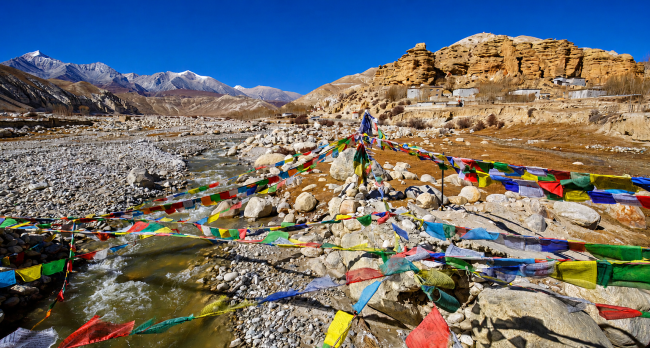
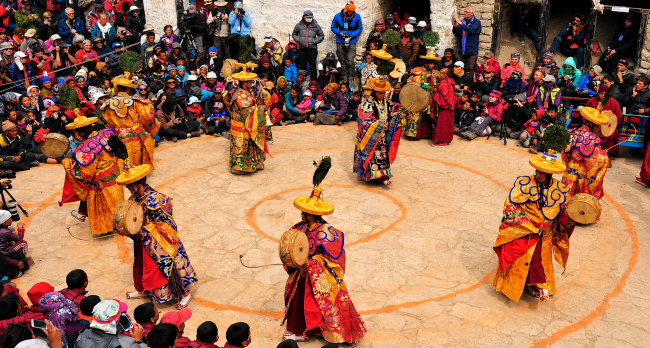
For centuries, the region developed strong connections with Tibet, and its villages retain a distinctive Tibetan Buddhist identity. Traditional houses, monasteries, prayer flags, chortens and mani walls appear throughout the landscape.
The dry environment has also helped preserve ancient cultural structures and archaeological features.
Trekking through Upper Mustang provides opportunities to experience:
The journey eventually leads toward Lo Manthang, the historic heart of Mustang.
One of the highlights of the expedition is reaching Lo Manthang.
Once the center of the former Kingdom of Mustang, Lo Manthang is surrounded by an atmosphere of history and tradition. Its narrow streets, whitewashed and mud-colored buildings, monasteries, prayer flags and traditional architecture create a fascinating sense of place.
Exploring Lo Manthang offers a welcome change after the demanding high-pass section of the trek.
Depending on the itinerary, travelers can spend time walking through the old settlement, visiting important monasteries, observing traditional architecture and learning about Mustang’s unique history.
The contrast is remarkable: only days earlier, you were crossing a remote high mountain pass, and now you are walking through an ancient Himalayan settlement that reflects centuries of Tibetan Buddhist culture.
The Teri La Pass Trek is a difficult and challenging expedition. It should not be treated as an introductory trekking route.
The greatest challenges come from altitude, remoteness, long trekking days, rugged terrain and the lack of regular facilities.
Some days involve approximately 5–7 hours of walking, while particularly demanding stages can take longer depending on trail conditions and the pace of the group.
The pass-crossing day is especially demanding because of the combination of altitude, ascent, descent and potentially harsh weather.
Previous experience with high-altitude trekking is strongly recommended.
Trekkers should be capable of walking for several consecutive days while carrying a daypack and should be comfortable camping in cold and remote environments.
Altitude is one of the most important considerations on this trek.
The route gradually moves from lower elevations into terrain above 4,000 meters and eventually reaches nearly 5,600 meters at Teri La Pass.
Symptoms of altitude sickness can include headache, nausea, dizziness, fatigue, loss of appetite and difficulty sleeping.
Our trekking guides monitor trekkers throughout the journey and encourage appropriate hydration, nutrition, rest and gradual acclimatization.
If a trekker develops serious altitude-related symptoms, the safest response is to descend rather than continue upward.
The itinerary therefore includes acclimatization and contingency considerations before the highest sections of the trek.
The Teri La Pass Trek uses a combination of basic lodges, teahouses, homestays and camping.
Accommodation in Nar Phu is simple. Facilities become increasingly limited as the route moves toward the Teri La wilderness.
During the most remote stages, camping is essential because there are no regular lodges or settlements.
Our camping team prepares tents, sleeping arrangements, kitchen equipment and meals so that the group can remain self-sufficient in areas without tourist infrastructure.
A quality four-season sleeping bag is strongly recommended, particularly because nighttime temperatures at high elevations can fall well below freezing.
Trekkers should understand that this expedition prioritizes wilderness and exploration rather than hotel-style comfort.
Food is an important part of maintaining energy during a long high-altitude trek.
Where teahouses are available, meals can include traditional Nepali dishes, Tibetan-style food and familiar trekking meals. During camping sections, our kitchen team prepares nutritious meals suitable for the demanding conditions.
Typical meals may include:
We can discuss dietary requirements before departure and make appropriate arrangements whenever possible.
The most favorable periods for the Teri La Pass Trek are generally associated with the spring and autumn trekking seasons, while the Mustang side can also offer opportunities during parts of the summer/monsoon period because of its rain-shadow location.
Spring brings improving weather, longer daylight and colorful mountain landscapes. Lower elevations can display blooming rhododendrons and other wildflowers.
Late spring can be particularly attractive for travelers who want a balance between good weather and relatively comfortable trekking conditions.
Much of Nepal experiences heavy monsoon rainfall during summer. However, Upper Mustang lies in a rain-shadow region and can remain comparatively dry.
Conditions around high passes can still be unpredictable, so this season requires careful planning and updated trail and weather information.
Autumn is one of the most popular trekking seasons in Nepal. Clear mountain views, stable weather and comfortable daytime conditions make September through November an excellent period for the Teri La expedition.
Winter brings extreme cold and substantial challenges at high elevations. Heavy snowfall can affect the Teri La crossing and other high sections.
For this reason, winter departures require exceptional preparation and favorable conditions.
The Teri La Pass Trek travels through restricted areas, meaning trekkers cannot simply enter these regions independently.
Depending on the selected itinerary and route, permits can include the necessary Nar Phu restricted-area permit, Upper Mustang restricted-area permit and Annapurna Conservation Area Permit (ACAP).
Permit requirements, fees and regulations can change, so Himalayan Adventure Intl Treks handles the application process according to the latest official requirements.
Trekkers should provide the necessary passport and travel information within the required timeframe so that permits can be prepared before departure.
Comprehensive travel insurance is essential for this expedition.
Your policy should specifically cover:
The Teri La region is remote, and emergency evacuation can be expensive. Having appropriate insurance provides important financial protection in addition to supporting emergency response planning.
Insurance documentation should be available before departure.
Safety is our highest priority at Himalayan Adventure Intl Treks.
Our experienced local guides understand the terrain, weather patterns and logistical challenges of remote Himalayan trekking.
Our safety approach includes:
Our guides are trained to manage high-altitude trekking conditions, basic first aid and emergency situations.
The itinerary is planned to allow gradual altitude gain and appropriate rest before the highest sections.
Conditions around high passes can change rapidly. The team monitors local conditions and determines whether crossing the pass is appropriate.
In the event of serious illness, injury or dangerous weather, we coordinate appropriate evacuation and rescue procedures.
Guides regularly check the condition of trekkers, especially during high-altitude sections.
Safety decisions always take priority over maintaining a fixed timetable.
One of the realities of the Teri La Pass Trek is limited infrastructure.
Mobile network coverage is unreliable or unavailable across significant sections of the route. Electricity can also be limited in remote settlements and camping areas.
We therefore recommend carrying:
Trekkers should also inform family or friends before entering the remote sections that regular communication may not be possible.
Because this is a high-altitude camping expedition, packing correctly is extremely important.
Himalayan Adventure Intl Treks can also advise you about equipment rental and necessary trekking gear before departure.
Preparing several weeks or months in advance can make a major difference.
Useful preparation includes:
The objective is not simply speed. The ability to maintain a comfortable, consistent pace for several hours is much more important.
The Teri La Pass Trek requires more than simply following a trail. It requires careful preparation, local knowledge and dependable logistical support.
At Himalayan Adventure Intl Treks, we provide a complete trekking service designed around the demands of remote Himalayan expeditions.
Our team understands Nepal’s mountain routes, local cultures and trekking logistics.
We arrange the necessary permits and coordinate the documentation required for restricted regions.
Our guides accompany the group throughout the trek and assist with route navigation, acclimatization and safety.
For remote sections, our team organizes tents, kitchen equipment, food and camping logistics.
We understand that weather, trail conditions and group fitness can affect a remote expedition. We can adapt the itinerary when necessary.
We organize private departures for solo travelers, couples, families, friends and groups, subject to the requirements of the restricted regions.
The Teri La Pass Trek can be arranged as a private expedition according to your preferred travel dates.
Private trekking is ideal for:
A private itinerary allows greater flexibility in pace and daily planning, although safety, permit regulations and suitable acclimatization schedules remain essential.
The total cost depends on the group size, itinerary, transportation, permit requirements, number of camping days, guide and porter arrangements and accommodation standards.
Our packages can be customized according to your requirements.
A typical package can include:
We provide a detailed cost breakdown before booking so that travelers understand exactly what is included and excluded.
The complete expedition generally takes around 19–20 days, although the exact number of days depends on the chosen route and transportation arrangements.
The overall trekking distance can be approximately 180 kilometers, but this should be regarded as an indicative figure because variations in the route, road access and itinerary can change the total distance.
Most trekking days involve several hours of walking. The Teri La crossing is usually one of the longest and most demanding stages.
Rather than focusing only on daily distance, our itinerary considers altitude gain, acclimatization, terrain and recovery.
This trek is ideal if you want to experience Nepal away from the crowds and are prepared for genuine wilderness conditions.
You should consider this trek if you:
If you are looking for a short, easy or beginner-friendly trek, Teri La Pass is probably not the right choice.
However, for experienced trekkers seeking something truly adventurous, it is an exceptional expedition.
Teri La Pass is approximately 5,595 meters (18,356 feet) above sea level. Exact elevation figures can vary slightly between maps and measurements.
Yes. It is considered a difficult and challenging high-altitude trek because of the remote terrain, long trekking days, limited facilities and high pass crossing.
Previous high-altitude trekking experience is strongly recommended. Trekkers should be physically fit and prepared for remote camping.
Yes. The route passes through restricted regions. The necessary permits depend on the exact itinerary, and Himalayan Adventure Intl Treks arranges the required documentation.
Yes. The trek combines basic teahouses/lodges with camping, with camping becoming essential in the most remote sections.
Spring and autumn generally provide the most favorable conditions. The Mustang side can also be explored during parts of the summer monsoon because of its rain-shadow location, but high-pass conditions must always be checked.
Yes. We can arrange private departures for individuals, couples, families, friends and groups according to permit regulations and logistical requirements.
Temperatures can be extremely cold at 5,595 meters, especially early in the morning and when strong winds occur. Warm, layered clothing and a suitable sleeping bag are essential.
Network coverage is limited and unreliable across remote sections. Trekkers should be prepared to travel without regular mobile connectivity.
The Teri La Pass Trek is for those who want to experience Nepal at its wildest.
From the narrow valleys of Nar Phu to the high ridges of Teri La and the dry, dramatic landscapes of Upper Mustang, every stage introduces a new side of the Himalayas.
You will walk through villages where ancient traditions continue, camp beneath enormous mountain skies, cross one of Nepal’s most remote high passes and eventually reach the historic world of Lo Manthang.
This is a journey where the destination is only part of the story. The real experience lies in the transformation of the landscape, the encounters with remote communities, the physical challenge and the sense of entering places that few travelers ever reach.
With careful preparation, an experienced trekking team and appropriate acclimatization, the Teri La Pass Trek becomes an unforgettable Himalayan expedition.
Himalayan Adventure Intl Treks is ready to organize your journey from start to finish, including permits, transportation, guides, camping logistics, accommodation, meals and essential trekking arrangements.
If you are searching for a remote Nepal trekking adventure connecting Nar Phu Valley and Upper Mustang, the Teri La Pass Trek offers an extraordinary combination of high-altitude adventure, Tibetan-influenced culture, ancient settlements and untouched Himalayan wilderness.
Your adventure across Teri La begins long before you reach the mountains. Proper preparation, permits, equipment and route planning are essential for a successful expedition.
Our team will help you select the appropriate itinerary, prepare the required documentation, organize trekking staff and advise you about equipment, insurance and physical preparation.
Contact Himalayan Adventure Intl Treks to plan your private Teri La Pass Trek and explore one of Nepal’s most remote Himalayan routes connecting Nar Phu Valley and Upper Mustang.
Published departure dates can be arranged according to seasonal conditions and permit availability. If the available dates do not match your travel plans, we can organize a private departure on your preferred dates, subject to the necessary permits, weather and logistical requirements.
Whether you are traveling solo, as a couple, with friends or as part of a larger group, our team can tailor the expedition to your schedule and trekking experience.
Teri La Pass awaits—step beyond the ordinary trekking routes and discover the remote heart of the Nepal Himalayas with Himalayan Adventure Intl Treks.
Welcome to Nepal and the beginning of your extraordinary Teri La Pass Trek with Himalayan Adventure Intl Treks. Upon your arrival at Tribhuvan International Airport in Kathmandu, one of our friendly representatives will be waiting to receive you. You will be welcomed in traditional Nepalese style and transferred comfortably to your hotel in the heart of Kathmandu.
Kathmandu, situated at approximately 1,350 meters above sea level, is a fascinating introduction to Nepal. The capital city combines ancient traditions, colorful markets, historic courtyards, temples, monasteries, and modern facilities. Depending on your arrival time, you can relax at the hotel or take a short walk around the surrounding streets.
During the day, our trekking team will meet you and provide an important briefing about the Teri La Pass Trek. We will discuss the trekking route, weather conditions, altitude considerations, required equipment, accommodation, meals, permits, and general safety procedures. This is also an opportunity to meet your guide and fellow trekkers and make sure that all necessary arrangements are ready before leaving Kathmandu.
The Teri La Pass Trek is one of Nepal's more remote and adventurous journeys, taking you away from the busy Annapurna trekking trails into the isolated valleys of Nar and Phu before crossing the spectacular Teri La Pass and eventually reaching the remarkable landscapes of Mustang.
If you have free time, Kathmandu offers many attractions to explore, including traditional markets, historic squares, temples, and local restaurants. However, getting enough rest before the long journey ahead is recommended.
In the evening, enjoy a welcome dinner featuring authentic Nepalese cuisine. Your guide will provide final information about the following day's drive.
Overnight: Hotel in Kathmandu
Altitude: 1,350 m
Meals: Breakfast, Lunch and Dinner
Driving Hours: 9–10 hours
Highest Altitude: Approximately 2,620 m
Distance: Approximately 175 km by road
Today marks the beginning of our journey toward the remote mountains. After an early breakfast, our Himalayan Adventure Intl Treks team will pick you up from your hotel and begin the scenic drive from Kathmandu toward Koto.
The road initially follows the famous Prithvi Highway, passing through bustling towns, farming communities, green hills, rivers, bridges, and roadside settlements. As we leave the Kathmandu Valley behind, the scenery gradually becomes more rural and mountainous. One of the major highlights of this journey is the magnificent Marsyangdi River, which accompanies the road for much of the drive toward the Manang region.
We first reach Besisahar, the gateway to the Annapurna and Manang areas. After a short break and necessary arrangements, we continue by private four-wheel-drive jeep toward Koto. The jeep journey becomes increasingly dramatic as the road follows the Marsyangdi Valley through mountain villages and rugged landscapes.
Along the way, we pass settlements including Syange, Jagat, Chamje, Dharapani, Timang, and Danakyu. Dharapani is an important stopping point where we can enjoy lunch before continuing toward Koto.
The road from Besisahar to Koto is adventurous, with steep hillsides, river valleys, waterfalls, forests, and mountain views. Timang and the surrounding areas provide particularly impressive scenery of the Annapurna and Manaslu mountain ranges.
By late afternoon or evening, we reach Koto, a peaceful mountain settlement and the starting point for the restricted Nar Phu Valley section of our trek. Once here, we settle into our lodge and prepare for tomorrow's first full day of trekking.
Your guide will also ensure that the necessary restricted-area permit procedures are completed before entering the remote valley.
Overnight: Lodge in Koto
Altitude: 2,620 m
Meals: Breakfast, Lunch and Dinner
Trekking Duration: 6–7 hours
Trekking Distance: Approximately 14.5 km
Highest Altitude: 3,560 m
After breakfast in Koto, we officially begin our walking adventure into one of the most remote sections of the Himalayas. The trail toward Meta leaves the more developed Annapurna Circuit route and enters the secluded Nar Phu Valley.
Before leaving Koto, our permits are checked at the appropriate checkpoint. From here, the trail follows a narrow route beside the river before crossing a suspension bridge over the Marsyangdi River. Almost immediately, the surroundings become quieter and more isolated.
The trail winds through dense pine and oak forests, creating a refreshing contrast to the rugged landscapes that will appear at higher elevations. We walk alongside the Nar River and cross several smaller streams and suspension bridges. Deep river gorges, towering cliffs, waterfalls, and forested hills make this section particularly scenic.
As we gain elevation, the landscape begins changing gradually. The dense vegetation becomes thinner, and the mountains become increasingly dominant. The remoteness of the valley is one of the most memorable aspects of this trek, as relatively few trekkers venture into this area.
Along the way, we pass through Dharamshala, an important stopping point before Meta. From here, the trail continues through increasingly dry and rugged terrain.
Eventually, we arrive at Meta, a spectacular settlement positioned on a Tibetan-style plateau. The village provides magnificent views toward Annapurna II, Lamjung Himal, and surrounding peaks. The dramatic combination of barren hills, blue skies, snow-covered mountains, and traditional stone houses gives Meta a distinctly Himalayan character.
After checking into our lodge, you can relax and enjoy the surrounding scenery. Your guide will also discuss the next day's journey toward Phu.
Overnight: Lodge in Meta
Altitude: 3,560 m
Trekking: 6–7 hours
Meals: Breakfast, Lunch and Dinner
Trekking Duration: 5–6 hours
Trekking Distance: Approximately 8 km
Highest Altitude: 4,250 m
Today we continue deeper into the remote Nar Phu Valley toward the remarkable settlement of Phu Gaon. The character of the trail changes significantly as we move away from the forested landscapes around Meta and into a much drier, more dramatic mountain environment.
After breakfast, we follow the trail through rugged terrain, gradually gaining elevation. The route becomes increasingly rocky as we approach the spectacular gorge of the Nar River. Several sections are narrow and require careful attention, particularly where the path passes alongside steep cliffs and exposed slopes.
The trail has been shaped naturally through the enormous rock formations of the valley. Some parts pass close to deep river gorges, while other sections traverse areas affected by erosion and landslides. Your experienced Himalayan Adventure Intl Treks guide will maintain a steady pace and provide assistance wherever the terrain becomes challenging.
As we approach Phu, the landscape takes on a distinctly Tibetan appearance. Vegetation is sparse, the hills are dry and rugged, and traditional stone-built houses appear against the dramatic mountain backdrop.
Phu Gaon is a fascinating Himalayan settlement with ancient architecture, narrow passages, prayer flags, mani walls, and traditional homes. Although the surrounding environment appears almost deserted because of the limited vegetation, the village remains home to local communities who have adapted their lives to this harsh high-altitude environment.
Upon arrival, we settle into our lodge and have time to explore the village surroundings. You may meet local residents and learn about their traditional lifestyle, farming practices, Buddhist beliefs, and centuries-old connection with the mountains.
The evening is ideal for resting because tomorrow will be dedicated to acclimatization.
Overnight: Lodge in Phu Gaon
Altitude: 4,250 m
Trekking: 5–6 hours
Meals: Breakfast, Lunch and Dinner
Highest Altitude: Up to approximately 4,900 m, depending on optional hike
Walking Duration: Approximately 5–6 hours for optional exploration
Purpose: Acclimatization
Today is an important acclimatization day in Phu Gaon. After gaining considerable elevation during the previous trekking days, allowing your body time to adapt is essential before continuing toward the higher and more challenging sections of the Teri La Pass route.
Rather than simply remaining inside the lodge all day, we follow the principle of “hike high and sleep low.” Your guide may organize a gradual excursion around the village and nearby viewpoints depending on weather, physical condition, and group ability.
Phu is surrounded by an extraordinary mixture of barren hills, rocky cliffs, high mountain valleys, and snow-covered Himalayan peaks. From elevated viewpoints, the village appears like a small collection of traditional homes surrounded by an immense wilderness.
We can explore the ancient settlement, visit local Buddhist structures, and observe the traditional architecture of the Nar Phu region. The village's monasteries, prayer flags, chortens, mani walls, and religious symbols offer insight into the strong Tibetan Buddhist influence that has shaped local life.
For trekkers who are feeling strong and properly acclimatized, an optional hike toward the Phu viewpoint or a higher surrounding area may be arranged. A longer excursion toward Himlung Base Camp can also be considered according to conditions and group fitness. Because there are no regular tea houses along such remote sections, packed meals and sufficient water must be prepared in advance.
The main objective today, however, is not to push for distance. It is to allow the body to adjust to the thin mountain air while enjoying the spectacular surroundings.
After the excursion, return to Phu Gaon for a relaxing afternoon. Hydration, warm food, and adequate rest are strongly recommended.
Overnight: Lodge in Phu Gaon
Altitude: 4,250 m
Meals: Breakfast, Lunch and Dinner
Trekking Duration: Approximately 5–6 hours
Destination: Nar Phedi
After an important acclimatization day in Phu Gaon, we continue toward Nar Phedi. Today's route takes us through a remarkable transition between the isolated Phu Valley and the Nar Valley.
We begin after breakfast and gradually descend through the rugged Himalayan terrain. The trail follows dramatic cliffs and river valleys, offering magnificent views of the surrounding mountains and deep gorges. Compared with the previous days, today's walking involves more descending sections, allowing us to recover slightly from the higher altitude.
The landscape remains dry and rocky, with patches of vegetation appearing around water sources. Along the way, we encounter ancient mani walls, prayer flags, small chortens, and traditional pathways used by local villagers for generations.
One of the most fascinating aspects of this section is the sense of isolation. There are very few modern facilities in the valley, and the landscape remains largely untouched. Our camping and lodge arrangements are organized in advance by Himalayan Adventure Intl Treks, allowing you to concentrate on enjoying the journey rather than worrying about logistics.
Nar Phedi is known for its monastery and peaceful surroundings. The settlement provides a welcome place to rest after the day's hike. Depending on arrival time, you can explore the monastery area and observe the simple lifestyle of the local community.
As evening approaches, our trekking crew prepares a warm and nourishing meal. Since we are moving through a remote region, meals are prepared carefully by our support team using available provisions.
Tonight provides another opportunity to rest before the next day's ascent toward Nar Gaon. The changing landscape and increasing altitude make this section one of the most culturally and geographically interesting parts of the journey.
Overnight: Lodge/guesthouse in Nar Phedi
Trekking: Approximately 5–6 hours
Meals: Breakfast, Lunch and Dinner
Trekking Duration: 5–6 hours
Trekking Distance: Approximately 10 km
Highest Altitude: 4,110 m
Today we continue toward Nar Gaon, one of the most beautiful traditional settlements in the Nar Valley. The trail gradually climbs through an increasingly rugged landscape while providing spectacular views of the surrounding Himalayan peaks.
A major highlight of today's walk is crossing the impressive Mahendra Bridge. The bridge spans a deep gorge and provides a thrilling experience as we make our way across. After crossing, the trail continues uphill through rocky terrain.
As we ascend, views of the surrounding mountains become increasingly impressive. Depending on visibility, we can see sections of the Manaslu range, Buddha Himal, Himchuli, Kang Guru, and other peaks surrounding the valley.
The trail is culturally rich as well as scenic. Before reaching Nar Gaon, we encounter an old mani wall decorated with prayer inscriptions, religious symbols, and colorful prayer flags. Such structures are important parts of local Tibetan Buddhist traditions and demonstrate the spiritual character of the region.
Continuing along the trail, we eventually reach Nar Gaon. The village is characterized by traditional stone houses, narrow pathways, agricultural terraces, monasteries, chortens, and prayer flags. Its architecture and lifestyle have remained strongly influenced by Tibetan culture.
Nar Gaon is an excellent place to experience life in a remote Himalayan community. Depending on the season, you may see locals involved in farming, livestock activities, or other traditional work.
After reaching the village, we check into our lodge and enjoy a well-earned meal. Take time to rest and prepare for the more remote camping section that begins tomorrow.
From this point onward, the trail becomes considerably more isolated, and we will rely on our camping crew for accommodation and meals.
Overnight: Lodge in Nar Gaon
Altitude: 4,110 m
Trekking: 5–6 hours
Meals: Breakfast, Lunch and Dinner
Trekking Duration: 6–7 hours
Trekking Distance: Approximately 17 km
Highest Altitude: 4,500 m
Today marks the beginning of the truly remote camping section of the Teri La Pass Trek. After breakfast in Nar Gaon, we leave the comfortable lodge environment behind and enter a wilderness where there are few permanent settlements and virtually no regular tourist facilities.
The trail toward Lapse Khola is rugged and demanding, with numerous ascents and descents across barren mountain terrain. In earlier years, sections of the route followed closely along the river, but landslide risks have caused portions of the trail to be relocated higher on the mountainside.
Consequently, today's journey involves considerable undulation. Although the distance is not extreme by Himalayan standards, the combination of altitude, rough terrain, and repeated climbs makes the day physically demanding.
The landscape gradually becomes more arid as we move farther from the populated valleys. Massive cliffs, rocky slopes, dry hills, and distant snow-covered peaks dominate the scenery. This remote environment provides a genuine wilderness experience rarely found on Nepal's busier trekking routes.
Because there are limited natural water sources, our trekking team carefully plans water supplies before leaving Nar Gaon. Trekkers should also carry their personal water bottles or hydration systems throughout the day.
Our experienced guide will maintain a manageable pace and ensure that the group remains together, especially on exposed or uneven sections.
After several hours of walking, we eventually arrive at Lapse Khola. Our camping crew will already be prepared to establish camp. Once the tents are ready, you can relax, enjoy a hot meal, and admire the surrounding mountains.
The simplicity of the campsite makes this evening particularly memorable. Far away from towns and artificial lights, the clear Himalayan sky can provide spectacular views of stars.
Overnight: Tent Camp at Lapse Khola
Altitude: 4,500 m
Trekking: 6–7 hours
Meals: Breakfast, Lunch and Dinner
Trekking Distance: Approximately 15 km
Trekking Duration: 6–7 hours
Accommodation: Tent Camp
We wake up to the peaceful surroundings of our remote campsite and prepare for another adventurous day toward the Teri La Base Camp area.
Today's route follows a rugged mountain corridor where the trail is positioned between steep slopes and river valleys. The environment becomes increasingly dry and barren as we move farther into the high Himalayan wilderness.
The trail includes several gradual climbs and descents. Because the route is remote and natural hazards such as loose rocks and landslides can occur, trekkers need to remain attentive throughout the day. Our guides will identify safe sections and assist the group through more difficult terrain.
The closer we move toward the high mountains, the colder and drier the air becomes. On sunny days, however, direct sunlight can make the walking surprisingly warm, particularly during uphill sections. Layered clothing, sun protection, and adequate hydration are therefore essential.
The surrounding mountains appear increasingly massive, with rocky ridges rising dramatically above the valley. This is one of the most rewarding features of the Teri La route: instead of following a crowded trekking highway, we move through landscapes where nature dominates almost completely.
Eventually, we reach the Lungri camping area. Although the terrain is rugged, our support team selects the safest practical location for the night's camp.
After the tents are established, enjoy a warm dinner prepared by our camping crew. Your guide will also provide a briefing about the next day's challenging journey toward Teri La Base Camp.
The evening is a good time to check personal equipment, organize warm clothing, and ensure that your backpack contains only the essentials required for the next high-altitude section.
Overnight: Tent Camp at Lungri
Trekking: Approximately 6–7 hours
Distance: Approximately 15 km
Meals: Breakfast, Lunch and Dinner
Trekking Duration: 5–6 hours
Trekking Distance: Approximately 10 km
Highest Altitude: 5,363 m
Today is one of the most important preparation days of the entire Teri La Pass adventure. From Lungri, we make our way toward Teri La Base Camp at approximately 5,363 meters.
After an early breakfast, we begin walking through increasingly barren and high-altitude terrain. Vegetation becomes extremely limited, while the surrounding mountains appear larger and more imposing.
The trail initially follows rugged slopes and narrow mountain paths. Some sections may pass through loose-rock and landslide-prone terrain, requiring careful foot placement. Our guides will assist trekkers wherever necessary and maintain a controlled pace to conserve energy.
As we continue, the trail reaches a steeper ascending section. This climb can be physically demanding because of the high altitude and reduced oxygen levels. Although technical climbing equipment is generally not required in normal conditions, good fitness, proper acclimatization, and careful guidance are essential.
Once the steep section is completed, the route becomes comparatively easier as we approach the base camp.
Teri La Base Camp is surrounded by extraordinary high-mountain scenery. From the camp area, we can admire the rugged Himalayan landscape and several impressive peaks, including Teri Peak, Manang Himal, Chulu-related peaks, and other surrounding summits.
On clear days, the views extend toward the greater Manaslu and Himlung areas, creating a magnificent backdrop for the campsite.
Because tomorrow involves crossing the highest point of the trek, spending the night at base camp is an important part of the itinerary. Our team will prepare a warm meal and ensure that everyone has sufficient water and appropriate clothing.
Try to rest as much as possible this evening. Your guide will conduct a detailed briefing about the Teri La Pass crossing, including weather, pace, safety procedures, and the importance of staying together.
Overnight: Tent Camp at Teri La Base Camp
Altitude: 5,363 m
Trekking: 5–6 hours
Meals: Breakfast, Lunch and Dinner
Trekking Duration: 8–9 hours
Trekking Distance: Approximately 22 km
Highest Altitude: 5,577 m
Today is the highlight and most challenging day of the entire Teri La Pass Trek. We rise early because the weather in high mountain passes is generally more stable during the morning.
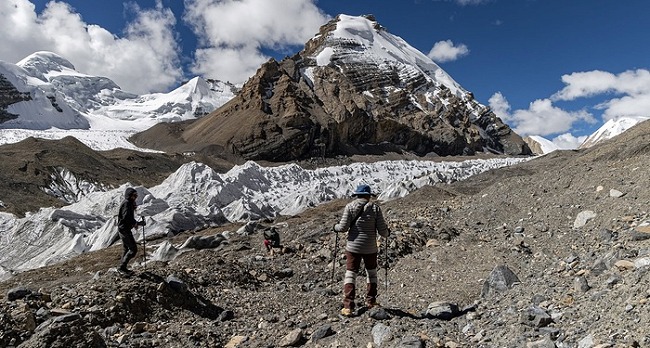
After breakfast, we begin our ascent toward Teri La Pass, reaching an impressive elevation of approximately 5,577 meters. The route is remote, barren, and dramatic, with very little vegetation. The trail crosses gravelly slopes and high mountain terrain where the thin air makes every step more demanding.
Our team carries the necessary camping and food supplies because there are no tea houses or regular restaurants along this section. A packed breakfast or lunch is prepared in advance so that we can maintain our energy during the crossing.
As we climb higher, the surrounding landscape becomes increasingly spectacular. The mountains of the Manaslu region and the northwestern Himalayan ranges appear in the distance, while the barren Mustang landscape begins to reveal itself on the opposite side.
Reaching the summit of Teri La Pass at 5,577 meters is an unforgettable achievement. Take time to appreciate the enormous panorama, photograph the dramatic surroundings, and celebrate this major milestone with your trekking companions. Depending on visibility, the views may include Manaslu, Dhaulagiri-region mountains, Mustang peaks, and numerous unnamed high ridges.
After enjoying the pass, we begin the long descent toward Phapsu Khola. One of the fascinating natural features along the route is Moon Lake, a remote high-altitude lake whose shape and surroundings add another memorable element to the landscape.
The descent remains demanding because of loose gravel and steep sections. Eventually, we reach Phapsu Khola, where our crew establishes camp.
After such a long day, a hot meal and comfortable rest are especially welcome.
Overnight: Tent Camp at Phapsu Khola
Altitude: Approximately 4,745 m
Trekking: 8–9 hours
Meals: Breakfast, Lunch and Dinner
Trekking Duration: 5–6 hours
Trekking Distance: Approximately 11 km
Highest Altitude: 4,315 m
After successfully crossing Teri La Pass, today's journey takes us deeper into the remarkable Mustang landscape. We leave our campsite at Phapsu Khola and continue toward Yakpa.
The route provides a welcome change after the intense altitude of the previous day. Although the trail still crosses rugged alpine terrain, we gradually descend to a lower elevation, making the walking more comfortable.
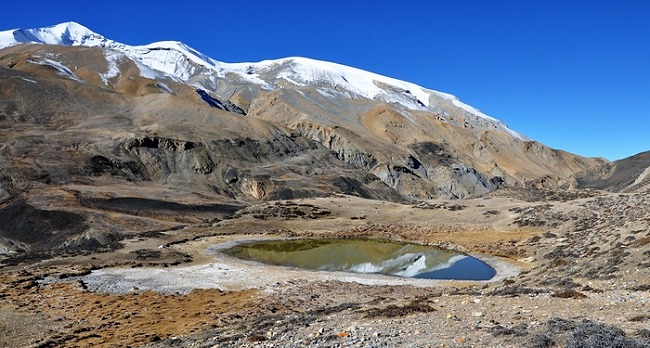
The Mustang landscape is famous for its arid mountain desert appearance. Brown and red cliffs, exposed rock formations, barren slopes, and dramatic valleys create scenery unlike the lush middle hills of Nepal.
Today's trail includes a mixture of ascents and descents. In colder seasons, some sections may become icy or slippery, particularly early in the morning. Our guides will assess trail conditions and choose the safest practical route.
Water management remains important throughout this remote section. Natural water sources can be widely separated, so our trekking crew plans ahead and carries sufficient supplies. Trekkers should also drink regularly even when they do not feel particularly thirsty because the dry mountain air can cause dehydration.
As we progress toward Yakpa, the environment gradually becomes more suitable for occasional vegetation and grazing. The stark scenery provides excellent opportunities for photography, particularly when sunlight highlights the different colors and textures of the Mustang mountains.
After several hours, we reach the Yakpa area and our camping location. The support crew prepares the tents while the kitchen team prepares a warm dinner.
This is a quieter evening compared with the previous day's pass crossing. Enjoy the peaceful surroundings, recover physically, and prepare for tomorrow's journey toward Tange.
Overnight: Tent Camp/Lodge at Yakpa
Altitude: 4,315 m
Trekking: 5–6 hours
Meals: Breakfast, Lunch and Dinner
Trekking Duration: 5–6 hours
Trekking Distance: Approximately 8 km
Highest Altitude: 3,338 m
Today brings another significant change in scenery as we descend from Yakpa toward the traditional Mustang settlement of Tange.
After breakfast, we begin walking across a series of high ridges and rugged slopes. The trail may feel challenging in places because of the uneven terrain, but the gradual loss of elevation makes breathing easier as the day progresses.
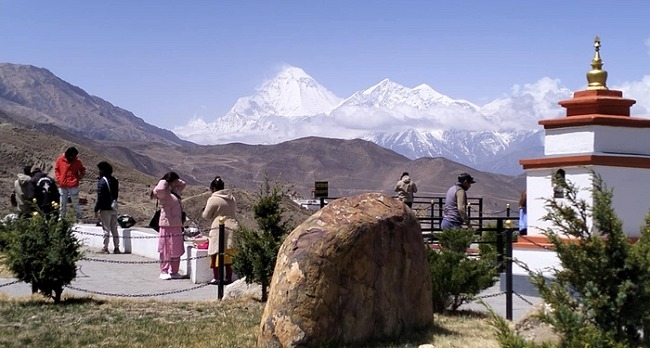
As we descend, the magnificent Himalayan panorama expands. On clear days, views toward Dhaulagiri, Nilgiri, Annapurna I, and other major peaks can be particularly impressive.
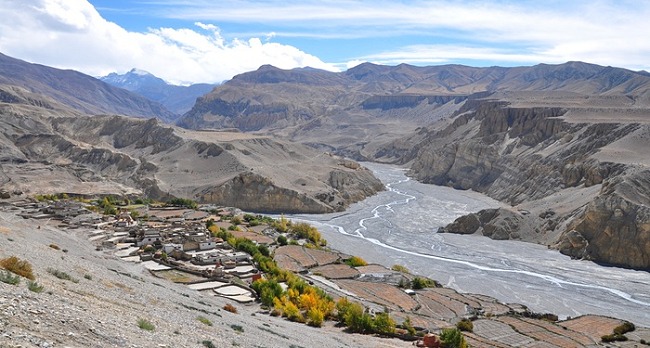
The Mustang region has a fascinating geological character, with dry valleys, colorful rock formations, windswept ridges, and cliffs shaped by centuries of erosion. The landscape often resembles a high-altitude desert rather than the green Himalayan environment many visitors imagine when thinking of Nepal.
Eventually, we arrive at Tange, a traditional village located among the barren hills. The settlement consists of whitewashed houses and terraced structures that reflect the area's Tibetan cultural influence.
Livestock, particularly sheep and goats, plays an important role in the local economy. Depending on the season, you may see animals being moved between grazing areas or villagers working around their homes and fields.
The route may also pass near the historic coal-mining area associated with Tange. The region's dry climate and intense sunlight can make walking surprisingly warm during the daytime, so sun protection and sufficient hydration remain important.
After arriving at Tange, we settle into our accommodation and have time to explore the village. The traditional houses, narrow pathways, surrounding cliffs, and mountain backdrop provide a fascinating introduction to the deeper Mustang region.
Enjoy a warm dinner and a peaceful evening after the day's descent.
Overnight: Lodge/Camp in Tange
Altitude: 3,338 m
Trekking: 5–6 hours
Meals: Breakfast, Lunch and Dinner
Trekking Duration: 6–7 hours
Trekking Distance: Approximately 13 km
Highest Altitude: 3,600 m
Today's journey takes us from Tange toward the beautiful village of Yara, continuing our exploration of the spectacular Upper Mustang landscape.
We leave Tange after breakfast and follow a trail that winds across dry mountain slopes and open valleys. Compared with the high-altitude terrain around Teri La, the lower elevation provides somewhat more comfortable walking conditions, although the Mustang climate remains dry and windy.
The trail offers constant opportunities to observe the unique geology of the region. Eroded cliffs, dramatic rock formations, narrow gullies, and colorful hills create an almost otherworldly environment.
As we continue, the influence of Tibetan Buddhist culture becomes increasingly visible. Chortens, mani walls, prayer flags, monasteries, and traditional stone structures appear along the route.
Yara is a fascinating settlement characterized by traditional architecture and its position within the rugged Mustang landscape. The village provides an excellent opportunity to experience the lifestyle of communities that have adapted to an exceptionally dry mountain environment.
The people of this region have traditionally depended on agriculture, animal husbandry, trade, and seasonal migration. Their houses and settlements are designed to provide protection from the strong mountain winds while making use of limited resources.
After reaching Yara, we check into our lodge and have time to relax. If conditions permit, you can explore the nearby village and surrounding viewpoints.
Although some trekking itineraries may continue from this region toward Jomsom, our extended itinerary allows us to experience more of Mustang, including Lo Manthang and other culturally significant areas.
The evening is an excellent opportunity to interact with local people, learn about Mustang's traditions, and enjoy a nourishing meal.
Overnight: Lodge in Yara Village
Altitude: 3,600 m
Trekking: 6–7 hours
Meals: Breakfast, Lunch and Dinner
Trekking Duration: 7–8 hours
Trekking Distance: Approximately 17 km
Highest Altitude: 3,840 m
Today is another major highlight of our journey as we make our way toward Lo Manthang, the historic walled settlement and cultural heart of Upper Mustang.
After breakfast, we begin walking through the distinctive Mustang terrain. The trail initially involves sections of descent before gradually climbing toward Lo Manthang. Along the way, we pass through narrow canyons, barren valleys, rock formations, and open mountain landscapes.
The route eventually reaches the area around the river junction, where the trail turns toward the ancient walled city. The approach to Lo Manthang is particularly impressive as the settlement gradually appears against the barren Himalayan backdrop.
Lo Manthang has long been an important cultural and historical center of the Mustang region. Its traditional architecture, monasteries, chortens, prayer flags, mani walls, and whitewashed buildings provide a remarkable insight into centuries-old Tibetan Buddhist traditions.
Walking through the settlement feels very different from visiting Nepal's more modern mountain towns. Traditional homes, narrow lanes, courtyards, prayer wheels, and religious structures remain important parts of everyday life.
After reaching Lo Manthang, we check into our lodge and relax after the long trek. Depending on arrival time, there may be an opportunity for a short walk through the surrounding streets.
Our guide will brief you about tomorrow's exploration day, when we will have more time to visit the cultural and historical attractions around Lo Manthang.
Enjoy dinner at the lodge and take time to appreciate the significance of reaching this remarkable destination.
Overnight: Lodge in Lo Manthang
Altitude: 3,840 m
Trekking: 7–8 hours
Meals: Breakfast, Lunch and Dinner
Altitude: 3,840 m
Exploration: Approximately 6–8 hours depending on activities
Today is dedicated to exploring Lo Manthang and recovering after several demanding trekking days.
Lo Manthang is one of the most culturally fascinating destinations in Nepal. Surrounded by barren mountains and located close to the Tibetan border, the settlement preserves a distinctive Himalayan culture influenced strongly by Tibetan Buddhism.
After breakfast, our guide will lead you through the historic settlement. We explore narrow lanes, traditional houses, courtyards, ancient religious structures, and important cultural sites.
The monasteries of Lo Manthang are among the area's greatest attractions. Depending on opening schedules and local conditions, we can visit historic gompas and learn about the religious traditions that have shaped Mustang for centuries.
We can also visit local museums or cultural sites where available, providing an opportunity to learn more about Mustang's history, traditional art, religion, and former role as an important trading region between Nepal and Tibet.
The surrounding hills provide excellent viewpoints over the walled city. From higher locations, the geometric arrangement of the traditional buildings against the enormous barren landscape creates spectacular photographic opportunities.
This rest day also provides time to experience local food and interact with residents. You can observe traditional handicrafts, agricultural practices, and everyday life in one of Nepal's most distinctive mountain settlements.
Although today is called a rest day, light walking is encouraged because gentle activity helps with acclimatization and keeps the body active. However, the pace will remain relaxed.
In the afternoon, return to the lodge and enjoy some personal time. This is also a good opportunity to organize your belongings before beginning the return journey through Mustang.
Overnight: Lodge in Lo Manthang
Altitude: 3,840 m
Meals: Breakfast, Lunch and Dinner
Trekking Duration: Approximately 6–8 hours
Destination: Dhakmar
Today we leave the historic settlement of Lo Manthang and continue our journey through the spectacular landscapes of Upper Mustang toward Dhakmar.
After breakfast, we begin walking through a mixture of barren valleys, rocky slopes, ancient trails, and colorful cliffs. The Mustang landscape continues to change throughout the day, revealing new geological formations and mountain views around almost every corner.
The route provides opportunities to see traditional villages, old Buddhist structures, chortens, mani walls, and ancient cave settlements. These cultural features demonstrate how closely religion and everyday life are connected throughout Mustang.
As we progress, the trail crosses several ridges and valleys. The dry climate creates exceptionally clear mountain views when weather conditions are favorable. The contrast between blue skies, red and orange cliffs, whitewashed settlements, and distant snow-covered peaks is one of the defining visual characteristics of Upper Mustang.
Dhakmar is particularly famous for its striking red cliffs and traditional village architecture. The name and appearance of the area are closely associated with these distinctive red rock formations.
After reaching Dhakmar, we check into our accommodation and enjoy a well-earned meal.
The village provides a peaceful setting for the evening. You can take a short walk around the settlement if energy and weather permit, or simply relax at the lodge.
As the trek approaches its conclusion, this is a good time to reflect on the remarkable journey we have completed—from the lush Marsyangdi Valley and remote Nar Phu region, across the high Teri La Pass, and into the dramatic mountain desert of Mustang.
Overnight: Lodge in Dhakmar
Altitude: Approximately 3,800 m
Trekking: 6–8 hours
Meals: Breakfast, Lunch and Dinner
Highest Altitude: Approximately 2,743 m
Transportation: Private Jeep
Destination: Jomsom
Today our walking adventure comes to an end, and we begin the scenic road journey toward Jomsom.
After breakfast, our private jeep will be ready to take us through the rugged Mustang landscape. The drive itself is an adventure, following rough mountain roads through dry valleys, traditional settlements, dramatic cliffs, and river corridors.
As we gradually descend, the landscape begins changing. The barren high-altitude desert gives way to areas with more vegetation and signs of agriculture. The journey provides a different perspective of the terrain we have explored on foot.
Eventually, we arrive in Jomsom, one of the most important settlements in the Mustang region. Located along the Kali Gandaki Valley, Jomsom is famous for its strong mountain winds, apple orchards, local produce, and traditional Thakali culture.
After checking into the lodge, take some time to relax and explore the town. Walking around Jomsom provides an opportunity to see local shops, traditional houses, bakeries, restaurants, and small markets.
You may also sample local Mustang products, particularly apples and apple-based foods. The nearby village of Marpha is especially famous for its apple orchards and traditional Thakali culture.
After many days in remote mountain terrain, Jomsom offers a welcome change with more facilities and comfortable accommodation.
In the evening, enjoy dinner with your trekking team and share memories of the journey.
Overnight: Lodge in Jomsom
Altitude: 2,743 m
Transportation: Private Jeep
Meals: Breakfast, Lunch and Dinner
Driving Duration: Approximately 6–7 hours
Destination: Pokhara
Altitude: 827 m
Today we leave the Mustang region and drive toward the beautiful lakeside city of Pokhara.
After breakfast, our vehicle departs Jomsom and follows the Kali Gandaki corridor through one of the most dramatic road journeys in Nepal. The route passes through rugged mountain landscapes, traditional villages, river valleys, waterfalls, forests, and agricultural settlements.
As we descend toward lower elevations, the scenery changes dramatically. The dry and barren landscape of Mustang gradually becomes greener, with more trees, farms, and subtropical vegetation appearing along the route.
The journey provides a fascinating opportunity to appreciate the enormous geographical diversity of Nepal. In a single day, we travel from a high-altitude mountain desert to the much greener environment around Pokhara.
Upon reaching Pokhara, we check into our hotel and have time to relax.
Pokhara is one of Nepal's most popular tourist destinations, famous for Phewa Lake, mountain views, peaceful surroundings, and a relaxed lakeside atmosphere. After the challenging Teri La Pass Trek, the city provides an ideal place to recover.
Depending on arrival time, you can enjoy a leisurely walk around Lakeside, relax beside the lake, visit local shops, or simply rest at the hotel.
Your guide can also help arrange optional activities if you wish to extend your stay in Pokhara.
Tonight marks the final evening with the trekking section of our journey. Enjoy dinner and celebrate the completion of an extraordinary Himalayan adventure.
Overnight: Hotel in Pokhara
Altitude: 827 m
Driving: 6–7 hours
Meals: Breakfast and Lunch
Driving Duration: Approximately 6–8 hours
Destination: Kathmandu
Altitude: 1,350 m
After breakfast, we begin our return journey from Pokhara to Kathmandu.
The drive follows the scenic highway through Nepal's central hills, passing rivers, terraced farmland, forests, villages, roadside markets, and busy towns. After spending several weeks in remote Himalayan environments, the return to the lively Kathmandu Valley provides a noticeable change of atmosphere.
The journey offers one final opportunity to appreciate Nepal's diverse landscapes. Depending on traffic and road conditions, we normally reach Kathmandu later in the afternoon or evening.
Upon arrival, our Himalayan Adventure Intl Treks representative will transfer you to your hotel.
The remainder of the day is free for relaxation. You may want to explore the nearby streets, purchase souvenirs, visit a local restaurant, or simply enjoy a comfortable shower and rest after the long journey.
This evening can also be used to organize photographs and memories from the trek. For trekkers continuing with other Nepal activities, our team can assist with arrangements for additional tours, sightseeing, adventure activities, or onward travel.
If your schedule allows, Kathmandu offers numerous cultural attractions and traditional markets that can be explored before departure.
In the evening, enjoy a farewell dinner with the Himalayan Adventure Intl Treks team. It is a wonderful opportunity to celebrate the successful completion of the Teri La Pass Trek and share experiences from the journey.
Overnight: Hotel in Kathmandu
Altitude: 1,350 m
Driving: Approximately 6–7 hours
Meals: Breakfast and Dinner
Today marks the conclusion of your unforgettable Teri La Pass Trek with Himalayan Adventure Intl Treks.
Depending on your international flight schedule, you can enjoy a relaxed morning at the hotel. Our representative will confirm your airport transfer time and make sure you reach Tribhuvan International Airport comfortably and on schedule.
If you have a late flight, there may be time for some final shopping or a short exploration of Kathmandu. The city's markets offer a wide selection of traditional Nepalese handicrafts, trekking souvenirs, prayer flags, handmade textiles, artwork, and other gifts.
Your Teri La adventure has taken you through some of Nepal's most remote and spectacular landscapes. From the bustling streets of Kathmandu, the Marsyangdi Valley, and the remote Nar Phu settlements to the challenging ascent of Teri La Pass and the extraordinary mountain desert of Upper Mustang, the journey provides an exceptional combination of adventure, nature, culture, and wilderness.
We hope the experience has created memories that remain with you for many years.
Our Himalayan Adventure Intl Treks team will say farewell and assist you with your departure arrangements. We sincerely appreciate your trust in choosing us to organize your Himalayan adventure.
As you leave Nepal, the mountains, traditional villages, ancient monasteries, high passes, and friendships formed during the trek will remain part of your journey long after you return home.
Trip Ends: Kathmandu
Altitude: 1,350 m
Meals: Breakfast
Duration: 21 Days
Maximum Elevation: 5,577 m at Teri La Pass
Starting Point: Kathmandu
Major Trekking Areas: Koto, Nar Phu Valley, Meta, Phu Gaon, Nar Gaon, Teri La Pass, Mustang, Yara, Lo Manthang, Dhakmar and Jomsom
Ending Point: Kathmandu
Accommodation: Hotels, mountain lodges and tented camps
Trek Style: Remote wilderness, high-altitude adventure and cultural trekking
Organized by: Himalayan Adventure Intl Treks
The Teri La Pass Trek is one of Nepal’s most remote, challenging, and culturally fascinating trekking adventures. Connecting the mystical landscapes of Upper Mustang with the hidden Nar Phu Valley, this extraordinary journey takes experienced trekkers far away from Nepal’s busy trekking routes and deep into a wilderness of high mountain passes, ancient villages, Tibetan Buddhist culture, dramatic cliffs, alpine deserts, glacial rivers, and spectacular Himalayan scenery.
At the heart of this expedition is Teri La Pass, standing at 5,595 meters, a high-altitude crossing that demands excellent physical fitness, proper acclimatization, previous trekking experience, and careful preparation. The reward is an unforgettable adventure through some of the least-explored landscapes in the Nepal Himalayas.
Organized by Himalayan Adventure Intl Treks, the Teri La Pass Trek is designed as a professionally managed high-altitude expedition. Our team takes care of essential arrangements including restricted-area permits, experienced guides, porters, camping equipment, meals, transportation, accommodation, safety arrangements, and logistical support.
If you are an experienced trekker looking for solitude, adventure, cultural discovery, and an authentic Himalayan expedition away from crowded trails, the Teri La Pass Trek can be an exceptional choice.
Himalayan Adventure Intl Treks accepts bookings for the Teri La Pass Trek and provides carefully planned trekking arrangements for individuals, couples, private groups, and group departures.
Because this is a remote restricted-area trek involving high-altitude terrain and a major mountain pass, preparation and logistics are especially important. Our experienced trekking team coordinates the necessary permits, guides, porters, accommodation, meals, transportation, camping equipment, and other expedition requirements.
The trek can be organized according to your preferred travel dates, group size, itinerary, and service level. We also provide customized arrangements for trekkers who want a private experience rather than a fixed group departure.
The Teri La Pass Trek is ideal for adventurous trekkers who want to experience a side of Nepal that remains far less explored than the classic Everest and Annapurna routes.
Some of the major reasons to choose this trek include:
The route combines natural beauty with cultural exploration. The transition from Nar Phu to Upper Mustang and across Teri La creates a remarkable geographical and cultural journey through the remote Himalayan interior.
The approximate total trekking distance is 160–180 kilometers, depending on the exact route, side trips, and itinerary variations. The complete journey generally takes around 20–23 days, including travel, acclimatization, trekking, exploration, and contingency time.
Because the route passes through remote areas and reaches an elevation of 5,595 meters, the trek cannot be treated like an ordinary short trekking holiday. Daily walking may involve approximately 6–8 hours, with difficult terrain, steep ascents and descents, rocky trails, high-altitude environments, and changing weather conditions.
The actual walking distance on individual days varies according to the itinerary and terrain.
The cost of the Teri La Pass Trek depends on group size, services, season, accommodation preferences, transportation arrangements, and the type of expedition you choose.
A typical full-board expedition package may be arranged according to the following approximate group-size structure:
| Group Size | Approximate Price Per Person |
|---|---|
| Solo Trekker | USD 5,500–6,000 |
| 2 People / Couple | USD 4,800–5,000 |
| 3–5 People | USD 4,200–4,500 |
| 6+ People | USD 3,800–4,000 |
The package is designed to cover major expedition requirements such as permits, guides, porters, tented accommodation, meals, logistics, transportation, and safety equipment.
For the most accurate quotation, the final price should be confirmed according to your exact travel dates, group size, itinerary, and required services.
For adventurous travelers who would like to meet other trekkers and share expedition logistics, group-joining options can be arranged.
The source itinerary provides a group-joining starting price of approximately USD 3,200 per person for the specified arrangement, including major trekking services such as permits, guide, porter, accommodation, meals, and transportation.
Group departures are generally planned during the preferred trekking periods of spring and autumn. Group size can affect the final cost because transportation, camping logistics, guides, porters, and other expedition resources can be shared among participants.
If you are interested in joining a fixed departure, contact Himalayan Adventure Intl Treks for the current available dates and confirmed pricing.
A private Teri La Pass Trek is an excellent option for couples, friends, families of experienced trekkers, photographers, and small adventure groups who prefer flexibility and personalized service.
For two people, the approximate full-inclusive cost is USD 9,600–10,000 for the pair, equivalent to approximately USD 4,800–5,000 per person under the pricing structure provided.
A private trek offers several advantages:
The remote Himalayan wilderness also creates a memorable experience for couples seeking an adventurous and unusual journey together.
The Teri La Pass Trek crosses restricted and conservation areas, so trekkers require multiple permits.
The main permits listed for the route include:
The Upper Mustang restricted-area permit is approximately USD 500 per person for 10 days, with an additional USD 50 per person per day for extra days.
The Nar Phu restricted-area permit is approximately USD 100 per person for one week, with an additional charge of approximately USD 15 per person per day for additional days.
The Annapurna Conservation Area Permit (ACAP) is listed at approximately USD 30 per person.
The supplied information lists the TIMS Card for organized trekking at approximately USD 20 per person.
The approximate combined permit cost may therefore reach around USD 700–800 per person, depending on the exact duration and additional permit days required.
Himalayan Adventure Intl Treks handles the required permit arrangements so trekkers can focus on preparation and the trekking experience.
A professional guide and porter team is especially important for the Teri La Pass Trek because the route is remote, challenging, and reaches extreme altitude.
The approximate daily rates provided are:
An experienced guide provides route support, helps coordinate the daily schedule, assists with altitude management, and provides important local knowledge. Porters help carry trekking equipment and personal baggage, making it easier for trekkers to concentrate on walking and acclimatization.
Food is an important part of maintaining energy during a demanding high-altitude expedition.
The camping expedition provides three nutritious meals per day, with a combination of Nepali, Tibetan, and Western-style food. Meals are prepared by the expedition cooking team in a properly equipped kitchen tent.
Typical expedition provisions also include:
At high altitude, trekkers need sufficient calories and fluids to maintain energy and support their bodies during long trekking days.
Unlike popular trekking routes where teahouse accommodation is widely available, parts of the Teri La Pass route require an expedition-style camping setup.
The supplied expedition arrangement includes:
The use of dedicated camping logistics allows the expedition to travel through remote sections where standard accommodation facilities may be limited or unavailable.
For trekkers, camping also creates a more authentic wilderness experience, allowing them to spend nights surrounded by the dramatic Himalayan environment.
Hydration is particularly important during high-altitude trekking.
The supplied information estimates bottled water at approximately USD 1–3 per liter, while boiled or purified water can be available at a lower cost.
Trekkers should carry a reusable water bottle or hydration system and water purification tablets or another suitable purification method. Himalayan Adventure Intl Treks can assist with the practical arrangements required for safe drinking water during the expedition.
The Teri La Pass Trek is considered a challenging to strenuous high-altitude trek. It is not recommended as a first trekking experience for beginners.
The highest point of the trek is Teri La Pass at 5,595 meters, and the route can involve long walking days, steep terrain, strong winds, cold temperatures, snow, and remote wilderness conditions.
Trekkers should have:
The major risks include altitude sickness, rapidly changing mountain weather, strong winds, and snow conditions around the pass.
The trek is therefore best suited to experienced and well-prepared trekkers rather than beginners or young children without adequate acclimatization.
Altitude is one of the most important considerations on the Teri La Pass Trek.
As the route reaches 5,595 meters, trekkers can experience symptoms associated with Acute Mountain Sickness (AMS) and other altitude-related problems.
The itinerary should therefore include appropriate acclimatization and gradual altitude gain.
Important altitude-management practices include:
The supplied guidance recommends avoiding an increase of more than approximately 500 meters of sleeping elevation per day above 3,500 meters, where practical.
Medication such as Diamox may be used by some trekkers, but it should only be taken after consultation with a medical professional.
The best seasons for the Teri La Pass Trek are spring and autumn.
Spring provides relatively stable conditions and excellent opportunities for mountain views.
Highlights include:
Spring is especially attractive for trekkers who want to experience the changing colors and natural beauty of the Himalayan environment.
Autumn is another excellent season for the Teri La Pass Trek.
The season generally offers:
October and November are particularly popular months for trekking in many parts of Nepal because of favorable mountain visibility.
The supplied information recommends avoiding the monsoon months of July and August and the winter period from December to February because of difficult weather, snow, landslides, and extreme cold.
Conditions around a high mountain pass can change quickly, so the final decision to cross Teri La should always be based on current weather, snow conditions, route safety, and the professional judgment of the expedition team.
A sample Teri La Pass Trek itinerary follows a long journey through Kathmandu, Besisahar, Koto, Nar Phu, Teri La, Mustang, and Jomsom.
Begin the expedition with a drive from Kathmandu toward Besisahar. The journey introduces you to Nepal's changing landscapes, from developed valleys toward the foothills and mountain regions.
Continue by private jeep toward Koto and begin trekking toward Meta. The landscape gradually becomes more remote as the trail enters the Nar Phu region.
Continue toward the remarkable Phu Valley and its traditional Himalayan settlement. Phu provides an opportunity to experience the distinctive architecture, culture, and lifestyle of the region.
Spend an acclimatization day around Phu. Rest, explore the surroundings, and allow your body to adapt to the increasing elevation.
Continue trekking through the remote high-altitude landscape toward Loang.
The trail continues toward Yak Kharka through increasingly rugged terrain.
Approach the base camp of Teri La Pass. This is an important stage of the expedition before attempting the high pass.
The major highlight arrives as you cross Teri La Pass at 5,595 meters and descend toward Dhye. This is one of the most demanding days of the trek and requires excellent preparation and favorable conditions.
Continue into the legendary Upper Mustang region toward Lo Manthang, an area famous for its Tibetan-influenced culture, traditional settlements, monasteries, and spectacular desert-like Himalayan landscape.
Spend time exploring Lo Manthang and experiencing its unique cultural and architectural heritage.
Continue through the Upper Mustang landscape toward Yara.
The route continues through remote valleys and distinctive Mustang terrain toward Tangye.
Continue trekking toward Chhusang, experiencing the dramatic scenery and traditional settlements of Mustang.
Complete the trekking section by continuing toward Jomsom.
From Jomsom, take a flight toward Pokhara and continue onward to Kathmandu according to the travel arrangement.
This is a sample itinerary. The exact schedule can be adjusted depending on weather, acclimatization requirements, local conditions, permit duration, group ability, and route conditions.
One of the most rewarding aspects of the Teri La Pass Trek is its cultural character.
The region is strongly influenced by Tibetan Buddhist traditions, and trekkers encounter traditional villages, ancient monasteries, chortens, prayer flags, and distinctive Himalayan architecture.
The supplied information describes local communities as including Gurung and Tibetan-origin ethnic groups, many of whom maintain traditional lifestyles adapted to the demanding mountain environment.
The journey provides an opportunity to understand how communities have lived for generations in remote Himalayan valleys. The monasteries, prayer flags, religious structures, and traditional settlements provide a spiritual and cultural dimension to the adventure.
Proper equipment is essential for this high-altitude expedition.
Recommended equipment includes:
Because conditions around Teri La can be extremely cold, windy, and snowy, equipment should be selected carefully. Himalayan Adventure Intl Treks can assist trekkers with necessary equipment and expedition gear arrangements.
Transportation is an important part of the logistics because the trek begins and ends through different sections of Nepal.
The supplied transportation estimates include:
The exact transportation method can vary according to the final itinerary and availability.
Himalayan Adventure Intl Treks coordinates the transportation arrangements so trekkers can concentrate on the expedition rather than managing complicated transfers themselves.
Preparation should begin well before arriving in Nepal.
Because this is a strenuous high-altitude expedition, trekkers should develop cardiovascular endurance, leg strength, and general physical fitness through regular walking, hiking, running, cycling, stair climbing, or other endurance activities.
Previous multi-day trekking experience is strongly beneficial.
Mental preparation is equally important. The trek includes remote camping, basic facilities, long trekking days, unpredictable weather, and challenging terrain. A flexible attitude is essential because high-altitude expeditions sometimes require itinerary adjustments for safety.
Booking the trek involves several important stages.
First, contact Himalayan Adventure Intl Treks with your preferred travel dates, group size, trekking experience, and service requirements.
After confirming the itinerary, the necessary restricted-area permits and logistical arrangements can be prepared. The supplied information recommends allowing approximately three weeks for permit processing.
After arriving in Kathmandu, trekkers can attend a final briefing and complete an equipment check before beginning the journey.
The expedition team then coordinates transportation, guides, porters, camping equipment, meals, permits, and other logistical requirements.
Choosing the right trekking organizer is particularly important for a remote and technically demanding trek such as Teri La Pass.
Himalayan Adventure Intl Treks provides:
Our goal is to combine adventure with professional organization so trekkers can explore remote Nepal with confidence and appropriate support.
If the Teri La Pass Trek is too challenging or you are looking for an alternative Himalayan experience, several other restricted and high-altitude trekking routes are available.
These alternatives offer different combinations of difficulty, culture, scenery, altitude, and trekking duration.
The Teri La Pass Trek is much more than a high-altitude walking route. It is a complete Himalayan expedition through remote valleys, ancient settlements, Tibetan-influenced culture, dramatic mountain landscapes, and one of Nepal's most challenging high passes.
From the hidden valleys of Nar Phu to the mysterious landscapes of Upper Mustang, every stage of the trek offers something different. The crossing of Teri La Pass at 5,595 meters provides the defining adventure, while the traditional villages, monasteries, chortens, prayer flags, and remote landscapes add cultural and spiritual depth to the journey.
This trek is best suited to experienced trekkers who are physically fit, comfortable with camping, prepared for high altitude, and eager to explore regions beyond Nepal's well-established trekking trails.
With careful preparation, professional guides, reliable logistics, proper acclimatization, and suitable equipment, the Teri La Pass Trek can become one of the most memorable adventures of your Himalayan trekking life.
If you are ready to explore one of Nepal's most remote Himalayan trails, Himalayan Adventure Intl Treks can organize your Teri La Pass adventure with professional guides, experienced porters, restricted-area permits, camping equipment, meals, transportation, safety support, and customized logistics.
Whether you are planning a private expedition, a couple's adventure, a small group journey, or a larger organized trekking group, we can help develop an itinerary suited to your experience, schedule, and interests.
Contact Himalayan Adventure Intl Treks today to plan your Teri La Pass Trek in Nepal and begin your journey across one of the Himalayas' most spectacular and remote high-altitude passes.