
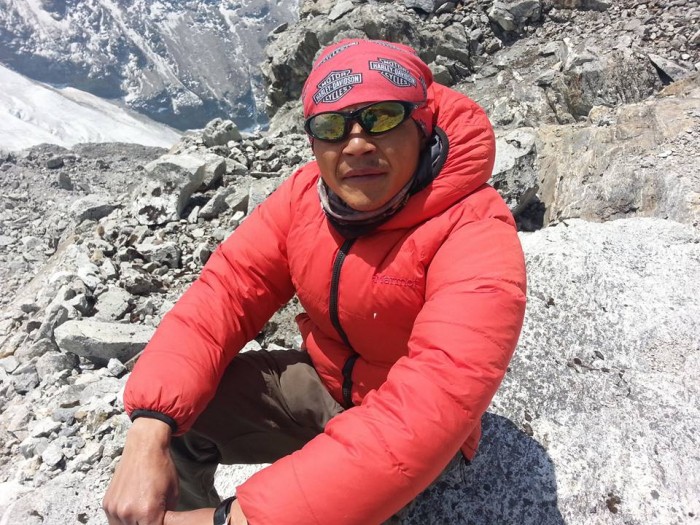
Have Questions? Talk to Expert (Binod)
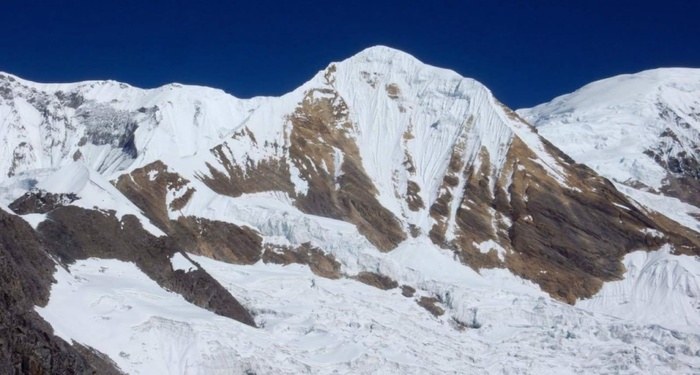
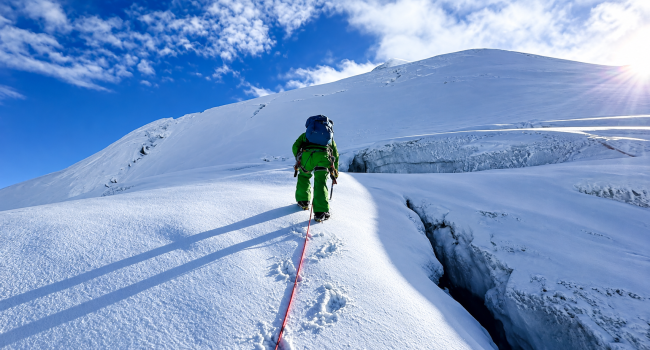
Singu Chuli Peak Climbing is one of Nepal’s most exciting technical peak-climbing adventures in the spectacular Annapurna Sanctuary. Rising to 6,501 meters (21,325 feet), Singu Chuli is also widely known as Fluted Peak because of its distinctive, sharply fluted ridges and faces. The mountain stands close to Tharpu Chuli (Tent Peak) and forms part of the impressive Himalayan landscape surrounding the Annapurna Sanctuary.
Organized by Himalayan Adventure Intl Treks, the Singu Chuli Peak expedition combines classic trekking through the Annapurna region with glacier travel, snow climbing, acclimatization, and a demanding Himalayan summit attempt. It is considerably more technical than many popular trekking peaks, making it particularly suitable for experienced trekkers and climbers looking for their next Himalayan challenge.
The approach route itself is an adventure. The journey passes through traditional Gurung villages, rhododendron forests, dramatic valleys, waterfalls and high-altitude landscapes before entering the spectacular Annapurna Sanctuary. Along the way, trekkers can enjoy views of Annapurna I, Annapurna South, Annapurna III, Hiunchuli, Machhapuchhre (Fishtail), Dhaulagiri and numerous other Himalayan peaks.
Singu Chuli has attracted climbers because of its steep faces, exposed ridges and challenging snow and rock sections. Wilfrid Noyce and David Cox made an early successful ascent in 1957 via the northeast face, establishing an important chapter in the climbing history of the peak.
Today, Singu Chuli remains a serious undertaking despite being categorized among Nepal's trekking peaks. The term "trekking peak" should not be interpreted as meaning that the mountain is easy. The summit section involves genuine alpine climbing, and route conditions can change according to snowfall, temperature, ice conditions and weather.
For this reason, Himalayan Adventure Intl Treks recommends attempting Singu Chuli with a qualified climbing guide and appropriate mountaineering equipment.
Singu Chuli provides a unique opportunity to progress from high-altitude trekking into technical Himalayan climbing. The expedition combines the cultural and natural attractions of the Annapurna region with the excitement of climbing above 6,000 meters.
One of the biggest attractions is the transition from relatively comfortable trekking trails to a high-altitude alpine environment. You begin among villages, cultivated hillsides and forests before gradually entering the rugged landscape surrounding the Annapurna Sanctuary.
The summit attempt provides extraordinary views of the surrounding Himalayan giants. From high elevations, climbers can see dramatic mountain faces, glaciers and ridges extending across the Annapurna range.
Singu Chuli is therefore not simply a summit climb. It is a complete Himalayan experience involving trekking, acclimatization, glacier travel, technical training, camping and mountaineering.
The expedition begins with a drive from Kathmandu to Pokhara, one of Nepal's most attractive tourist cities. From Pokhara, the journey continues toward the trailhead before beginning the trek into the Annapurna region.
The trekking route generally follows the famous Annapurna Sanctuary trail. Depending on the itinerary and current trail conditions, the journey passes through destinations such as Tikhedhunga, Ghorepani, Poon Hill, Tadapani, Chhomrong, Dovan, Deurali, Machhapuchhre Base Camp and Annapurna Base Camp.
The lower section of the trek passes through forests dominated by rhododendron, oak and other Himalayan vegetation. Traditional Gurung settlements provide opportunities to experience local culture and hospitality.
As the trail gains altitude, vegetation becomes increasingly sparse. The landscape eventually changes into rocky valleys, glaciers, moraines and snow-covered mountains.
After sufficient acclimatization in the Annapurna Sanctuary, the expedition moves toward the Singu Chuli climbing area. The climbing team establishes appropriate camps and gradually moves toward higher elevations before attempting the summit.
Singu Chuli is a technically challenging 6,000m-class peak. It should not be compared with a straightforward trekking route.
The major challenges include:
A strong level of physical fitness is important. Previous experience with crampons, ropes, ice axes and basic mountaineering techniques is highly beneficial.
Although prior technical climbing experience is not necessarily required for every climber, participants should understand that Singu Chuli involves genuine mountaineering and should prepare accordingly.
Preparation should begin several months before the expedition.
Useful preparation includes:
It is particularly useful to train on consecutive days because the expedition requires sustained physical effort.
Mental preparation is equally important. Climbers may encounter cold temperatures, fatigue, difficult terrain and changing weather. Patience and disciplined decision-making are essential.
Acclimatization is one of the most important aspects of Singu Chuli Peak Climbing.
As altitude increases, the amount of available oxygen decreases. The body needs time to adapt. A properly designed itinerary therefore includes gradual elevation gain and acclimatization days.
Our climbing team monitors climbers for symptoms associated with altitude illness, including headache, dizziness, unusual fatigue, nausea, loss of appetite and difficulty sleeping.
If serious symptoms develop, descending to a lower elevation is an important safety measure. No summit objective should take priority over a climber's health and safety.
Staying hydrated, walking at a comfortable pace, getting adequate rest and following your guide's instructions are important throughout the expedition.
The principal climbing seasons are spring and autumn.
Spring provides generally favorable conditions for trekking and mountaineering. Rhododendron forests are also particularly beautiful during this period.
The combination of relatively stable weather, good visibility and attractive landscapes makes spring a popular period for Himalayan expeditions.
Autumn follows the monsoon and generally brings clearer mountain views. Stable conditions can make September, October and November attractive months for climbing.
October is traditionally one of the busiest periods in Nepal's trekking regions, while November can bring progressively colder conditions at higher elevations.
Winter climbing is possible only under appropriate conditions and requires careful assessment of snow, temperature and route safety. The summer monsoon is generally less suitable because of rain, clouds and potential landslide problems on lower trails.
The Annapurna region offers much more than mountain scenery. The trekking route passes through areas inhabited by communities including Gurung and Magar people, with diverse traditions, architecture and lifestyles.
The Annapurna Conservation Area also provides habitat for numerous Himalayan species. Depending on location and season, trekkers may encounter birds and wildlife such as Himalayan pheasants, deer and other mountain species.
The cultural experience is an important part of the expedition, particularly while passing through traditional villages such as Ghandruk and Chhomrong.
Because Singu Chuli is technically demanding, appropriate equipment is essential.
Typical equipment includes:
Your climbing guide should inspect technical equipment before entering the high mountain section.
Safety is the priority throughout the expedition. Weather and mountain conditions can change quickly, so the climbing itinerary should remain flexible.
Our experienced guides assess the route, weather, snow conditions and climbers' physical condition before making decisions about higher camps and summit attempts.
The route may occasionally need to be changed because of snowfall, avalanches, landslides, rockfall, glacier conditions or other environmental factors.
Travel insurance covering high-altitude trekking and mountaineering is strongly recommended. Climbers should carefully verify that their policy covers the planned elevation and activities.
Himalayan Adventure Intl Treks is a local Nepal-based trekking and mountaineering company specializing in Himalayan adventures. For a technical peak such as Singu Chuli, having experienced local mountain professionals is particularly valuable.
We focus on careful itinerary planning, appropriate acclimatization, experienced climbing leadership and flexible decision-making according to actual mountain conditions.
Our team can assist with peak permits, transportation, trekking arrangements, accommodation, climbing equipment, camping logistics, climbing guides and porters.
We also understand that every climber has a different level of experience. Therefore, the itinerary and preparation can be discussed according to your previous trekking and climbing background.
Singu Chuli Peak Climbing at 6,501m is an exceptional Himalayan adventure for climbers who want to progress beyond conventional trekking. The journey combines the beauty of the Annapurna Sanctuary with demanding snow, ice and technical climbing.
From the sunrise at Poon Hill and traditional Gurung villages to Machhapuchhre Base Camp, Annapurna Base Camp and the high-altitude climbing section, every stage provides a different Himalayan experience.
The summit requires proper preparation, acclimatization, technical equipment, physical fitness and experienced mountain leadership. With appropriate planning and favorable mountain conditions, Singu Chuli can become a memorable milestone in your mountaineering journey.
Himalayan Adventure Intl Treks welcomes experienced trekkers and aspiring mountaineers to explore this spectacular peak with a professionally organized expedition in the Annapurna region.
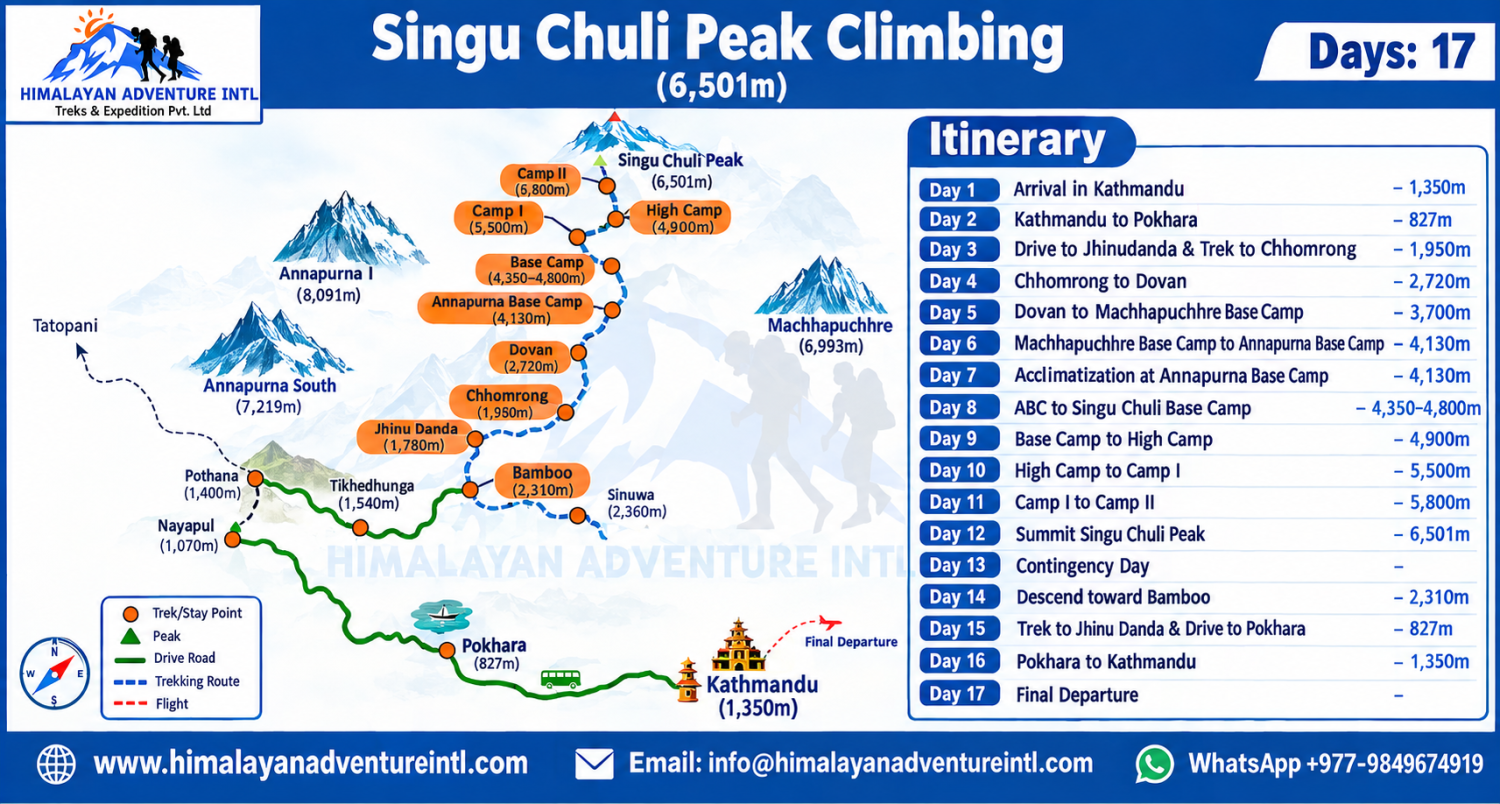
Your Singu Chuli Peak adventure begins with your arrival at Tribhuvan International Airport in Kathmandu. A representative from Himalayan Adventure Intl Treks will welcome you at the airport and transfer you comfortably to your hotel. After checking in and taking some time to rest, you will meet your trekking and climbing team for a detailed expedition briefing.
During the briefing, your guide will explain the trekking route, climbing schedule, expected weather and altitude conditions, safety procedures, and the equipment required for the higher sections of the expedition. Your climbing gear will also be checked to ensure that essential equipment is ready before departure. If any necessary equipment is missing, your guide can assist with arranging it in Kathmandu.
Depending on your arrival time, you can explore the nearby streets of Thamel or simply relax at the hotel. In the evening, the team will organize a traditional Nepalese welcome dinner where you can meet your guides and fellow members and enjoy local cuisine.
Highlight: Airport welcome, trek briefing, equipment check and welcome dinner
Elevation: 1,350m
Food: Dinner
Accommodation: Hotel
After breakfast, you will leave Kathmandu for the beautiful lakeside city of Pokhara. You can travel by scenic tourist vehicle, with the road journey taking approximately 6–8 hours, depending on traffic and road conditions. Alternatively, a short domestic flight can be arranged for a quicker journey.
The drive follows Nepal's scenic countryside, passing through river valleys, traditional settlements, terraced farmland, green hills and winding mountain roads. Along the route, you may see sections of the Trishuli and other river systems as the landscape gradually changes from the Kathmandu Valley to western Nepal.
Pokhara is situated at approximately 827 meters and provides a peaceful contrast to busy Kathmandu. On arrival, check into your hotel and enjoy some free time. Depending on weather and time, you may walk around the lakeside area and enjoy views toward the Annapurna and Machhapuchhre ranges.
Your guide will also make final preparations for the trek.
Distance: Approximately 200km by road
Highlight: Scenic Himalayan countryside and Pokhara
Food: Breakfast
Accommodation: Hotel
After breakfast, you will leave Pokhara and drive toward Jhinudanda, the starting point of today's trekking section. The journey gradually leaves the urban surroundings behind and enters the foothills of the Annapurna region.
From the trailhead, you begin walking through traditional mountain settlements, terraced farmland and lush forest. The trail gradually climbs and descends through the spectacular landscape of the lower Annapurna region. Rhododendron, oak and other Himalayan vegetation provide shade along sections of the trail.
As you approach Chhomrong, the scenery becomes increasingly impressive, with views toward Annapurna South, Hiunchuli and Machhapuchhre (Fishtail). Chhomrong is one of the important settlements on the Annapurna Sanctuary route and is an excellent place to spend the night before entering the higher Modi Khola valley.
The approximately six-hour trek provides your first substantial experience of walking in the Annapurna foothills. Your guide will maintain a comfortable pace and encourage regular hydration and rest.
Elevation: 1,950m
Trek Duration: Approximately 6 hours
Distance: Approximately 10km
Highlight: Villages, terraces, forests and Annapurna mountain views
Food: Breakfast, Lunch and Dinner
Accommodation: Lodge
Today's trek takes you deeper into the Annapurna Sanctuary. After breakfast, you leave Chhomrong and descend toward the Chhomrong Khola. The trail then crosses a suspension bridge before climbing gradually through dense Himalayan vegetation.
The route passes through bamboo, rhododendron and forested sections, creating a peaceful atmosphere as you move farther away from the lower villages. You will pass settlements and trekking lodges along the way, allowing opportunities for refreshments and rest.
As the altitude increases, the surrounding landscape begins to change. The valley becomes narrower and steeper, while dramatic mountain walls rise around the trail. The sound of the Modi Khola and surrounding waterfalls adds to the experience.
After approximately five to six hours of trekking, you reach Dovan at 2,720 meters. This is an important stage of the journey because you are gradually gaining altitude before reaching the higher parts of the Annapurna Sanctuary.
Your guide will monitor your condition and encourage a slow, steady walking pace.
Elevation: 2,720m
Trek Duration: 6–7 hours
Distance: Approximately 10km
Highlight: Suspension bridge, bamboo forest and Modi Khola valley
Food: Breakfast, Lunch and Dinner
Accommodation: Lodge
Today marks a significant increase in altitude as you continue from Dovan toward Machhapuchhre Base Camp (MBC). After breakfast, you follow the trail deeper into the narrow Modi Khola valley.
The surrounding scenery becomes increasingly dramatic. Tall cliffs, waterfalls, rocky slopes and snow-covered mountains dominate the landscape. The vegetation gradually becomes thinner as you gain elevation.
The trail passes through several sections of the Annapurna Sanctuary, eventually reaching the area around Machhapuchhre Base Camp. Although called a base camp, the location is primarily used as a trekking and mountain expedition staging area, providing spectacular views of Machhapuchhre, Annapurna South, Hiunchuli and surrounding peaks.
The approximately seven-hour trek is physically demanding because of the altitude and length of the day. Your guide will maintain a controlled pace and recommend adequate hydration and rest.
Upon reaching MBC at approximately 3,700 meters, you can relax at the lodge and enjoy the incredible mountain panorama. The colder temperatures and thin air are a reminder that you are now entering a true high-altitude environment.
Elevation: 3,700m
Trek Duration: Approximately 7 hours
Distance: Approximately 13km
Highlight: Modi Khola valley and Machhapuchhre views
Food: Breakfast, Lunch and Dinner
Accommodation: Lodge
Today is shorter in distance but extremely important for acclimatization. After breakfast, you begin walking from Machhapuchhre Base Camp toward the famous Annapurna Base Camp (ABC).
The trail enters the heart of the Annapurna Sanctuary, a spectacular natural amphitheater surrounded by some of the world's highest mountains. As you walk higher, the landscape becomes increasingly rocky and barren, while enormous Himalayan peaks appear around you.
The approximately two- to three-hour trek allows you to reach ABC without rushing. At 4,130 meters, Annapurna Base Camp offers an extraordinary panoramic setting, with views toward Annapurna I, Annapurna South, Hiunchuli, Machhapuchhre and other surrounding peaks.
After arriving at ABC, you will check into the lodge and have lunch. The remainder of the day can be spent resting, taking short walks around the area and enjoying the scenery.
Because you will soon begin the Singu Chuli climbing section, conserving energy and allowing your body to adapt to the altitude are particularly important.
Elevation: 4,130m
Trek Duration: 2–3 hours
Distance: Approximately 6km
Highlight: Annapurna Sanctuary and panoramic Himalayan views
Food: Breakfast, Lunch and Dinner
Accommodation: Lodge
Today is dedicated to acclimatization at Annapurna Base Camp. Rather than immediately climbing higher, you spend the day allowing your body to adjust to the reduced oxygen level at 4,130 meters.
After breakfast, your climbing guide may organize a short acclimatization walk around the base camp area. You can explore nearby viewpoints while maintaining a comfortable pace. The objective is not strenuous exercise but gradual exposure to altitude.
ABC provides a spectacular setting for this rest day. Towering peaks surround the sanctuary, and early morning and evening often provide especially impressive mountain scenery.
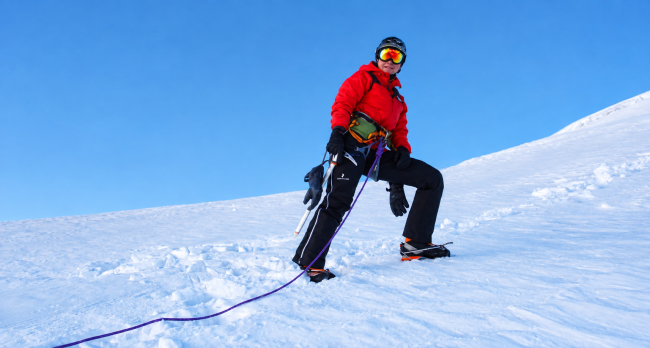
Your climbing team will also review equipment and prepare you for the upcoming technical sections. Harnesses, climbing boots, crampons, ropes, ice axe and other necessary equipment can be checked under the guidance of the climbing leader.
Adequate hydration, nutritious meals and quality rest are essential. Your guide will monitor everyone for possible symptoms of altitude sickness and make decisions based on the team's condition and mountain conditions.
Elevation: 4,130m
Highlight: Acclimatization, mountain exploration and climbing preparation
Food: Breakfast, Lunch and Dinner
Accommodation: Lodge
The expedition now changes from a conventional trekking journey to a more specialized climbing adventure. After breakfast, you begin moving toward the Singu Chuli/Tent Peak Base Camp area.
The terrain becomes increasingly rugged as you leave the established trekking environment. Depending on route and conditions, you may cross rocky slopes, moraine and other challenging mountain terrain. Your climbing guide will determine the safest route according to current conditions.
The gradual ascent provides another opportunity for acclimatization before reaching higher camps. You should maintain a slow and controlled pace, taking regular breaks and drinking sufficient water.
After approximately five to six hours, you establish camp at an appropriate location between approximately 4,350 and 4,800 meters, depending on conditions and expedition logistics.
The camping environment is significantly more basic than the lodges used during the trekking section. Your support team will establish the tents, prepare meals and organize equipment.
In the evening, the climbing guide will discuss the following day's ascent and check everyone's physical condition.
Elevation: Approximately 4,350–4,800m
Climbing/Trekking: 5–6 hours
Highlight: Transition into the high-altitude climbing section
Food: Breakfast, Lunch and Dinner
Accommodation: Tent Camp
Today you make a gradual ascent toward High Camp at approximately 4,900 meters. After an early breakfast, the climbing team begins moving upward through increasingly exposed and rugged terrain.
The pace will be deliberately slow because the altitude is now significant. Your climbing guide will determine whether technical climbing equipment is required on particular sections and will provide instructions on safe movement.
The landscape becomes increasingly dominated by rock, snow and ice. Weather can change quickly at this elevation, so the team must remain flexible and follow the climbing leader's instructions.
After approximately five hours of climbing, you reach High Camp. The camp provides a strategic location from which to prepare for the higher climbing stages.
Once camp is established, the team will have food and hot drinks before resting. Your guide will inspect equipment and discuss the expected climbing schedule. Depending on conditions, you may also receive instructions regarding crampon use, rope techniques and movement on snow or ice.
An early night's rest is important because the next stages require considerable physical effort.
Elevation: Approximately 4,900m
Climbing Duration: Approximately 5 hours
Highlight: High-altitude camp and summit preparation
Food: Breakfast, Lunch and Dinner
Accommodation: Tent Camp
Today you climb above 5,000 meters for the first time on the expedition. From High Camp, the route continues toward Camp I at approximately 5,500 meters.
The terrain can include steep snow, ice, rock and glaciated sections, depending on current route conditions. Your experienced climbing guides will determine the appropriate equipment and rope systems for each section.
This is a demanding day because the oxygen level is significantly lower than at the trekking elevations. Maintaining a slow, consistent pace is essential. Climbers should communicate regularly with their guides and immediately report unusual symptoms.
The approximately five- to six-hour climbing period will include rest breaks and technical sections. The climbing team will work together to move safely through difficult terrain.
Upon reaching Camp I, the support team will organize the tents and prepare meals. You will spend the evening conserving energy and preparing for the next stage.
Weather conditions are particularly important at this elevation. The climbing leader will assess snow, wind, visibility and route conditions before deciding the next day's schedule.
Elevation: Approximately 5,500m
Climbing Duration: 5–6 hours
Highlight: First major high-altitude climbing section
Food: Breakfast, Lunch and Dinner
Accommodation: Tent Camp
Today's climb takes you from Camp I toward Camp II at approximately 5,800 meters. The environment becomes more alpine, with snow and ice dominating the landscape.
After an early breakfast, you begin climbing under the supervision of your professional climbing team. Depending on the route and conditions, fixed ropes, climbing harnesses, crampons and other technical equipment may be required.
The ascent is relatively shorter than some previous days, but altitude makes every step more demanding. The guides will establish an appropriate rhythm and provide assistance on technical sections.
After approximately four to five hours, you reach Camp II. The camp is positioned at a high elevation and serves as an important staging point for the summit attempt.
Once at camp, your team will prepare hot food and drinks while the climbing guides check the equipment and review the summit plan. Because temperatures can fall considerably after sunset, climbers should remain properly protected from cold and wind.
The evening is primarily for rest. The climbing leader will monitor weather forecasts and route conditions and determine whether the summit attempt can proceed.
Elevation: Approximately 5,800m
Climbing Duration: 4–5 hours
Highlight: High-altitude Camp II and final summit preparation
Food: Breakfast, Lunch and Dinner
Accommodation: Tent Camp
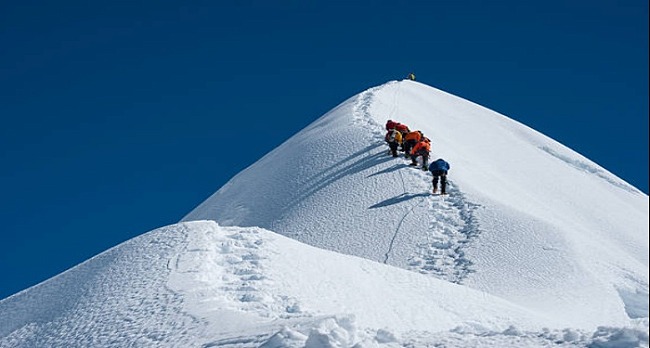
This is the principal objective of your expedition: the summit attempt on Singu Chuli Peak at 6,501 meters.
The day begins very early, often before sunrise, because climbers need sufficient time to reach the summit and return safely before afternoon weather conditions potentially deteriorate.
After breakfast, you begin climbing under the close supervision of your experienced climbing guides. Depending on current conditions, the route may involve snow, ice, steep sections and technical climbing. Proper use of crampons, ropes, harnesses and ice axe is essential where required.
The pace remains slow and controlled. The guides will choose safe climbing lines and provide instructions throughout the ascent. The summit attempt can take many hours, and the exact duration depends on weather, snow and route conditions.
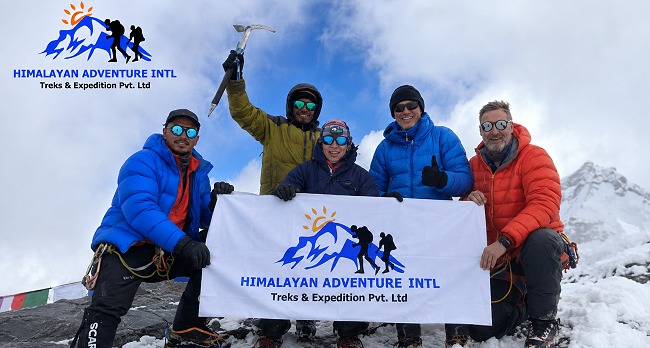
Upon reaching the summit at 6,501 meters, climbers can enjoy magnificent views across the Annapurna Himalaya, including surrounding peaks and deep mountain valleys. Time at the summit is normally kept limited because of cold, wind and altitude.
After photographs and a brief celebration, the team begins the descent toward Camp II or another safe lower camp according to conditions and the climbing leader's decision.
Elevation: Singu Chuli Summit – 6,501m
Climbing Duration: Approximately 8–9 hours
Highlight: Summit of Singu Chuli Peak
Food: Breakfast, Lunch and Dinner
Accommodation: Tent Camp
Mountain climbing requires flexibility, so this day is reserved as a contingency day. It provides additional time in case the summit attempt on Day 12 is affected by unfavorable weather, heavy snow, poor visibility, route conditions or the need for additional acclimatization.
If the summit has already been successfully completed and conditions are suitable, the team may use this day to begin descending toward lower elevations.
The climbing leader will make the decision based on safety, weather and the physical condition of the group. No climber should feel pressured to continue if conditions become unsafe.
A contingency day is particularly useful on a high-altitude expedition because Himalayan weather can change rapidly. It provides the expedition with additional flexibility rather than forcing the team to attempt the summit under unsuitable conditions.
Highlight: Weather flexibility, additional acclimatization or descent
Food: Breakfast, Lunch and Dinner
Accommodation: Tent Camp
After completing the climbing section, you begin your descent through the Annapurna Sanctuary toward lower elevations. Descending is an important part of the expedition because it allows your body to recover from the demanding high-altitude environment.
You retrace sections of the route toward Machhapuchhre Base Camp and continue through the Modi Khola valley. As you lose elevation, the air becomes richer in oxygen and vegetation gradually returns.
The landscape changes from barren high-altitude terrain to rocky trails and eventually forested surroundings. Depending on the exact location of the climbing camp and trail conditions, today's distance and overnight location may vary.
The approximately five- to six-hour trek is considerably easier than the summit day, although tired legs may still make the descent demanding.
Your guide will maintain a comfortable pace and ensure the group remains together.
Highlight: Descent from the high mountains into the forested Annapurna Sanctuary
Trek Duration: 5–6 hours
Food: Breakfast, Lunch and Dinner
Accommodation: Lodge/Tent Camp
Today you continue descending toward Jhinu Danda. The trail passes through beautiful forests and mountain villages as you return to the lower Annapurna region.
The approximately four- to five-hour trek provides a final opportunity to enjoy the spectacular landscape of the Annapurna foothills. After reaching Jhinu Danda, you meet your vehicle and begin the drive toward Pokhara.
As you descend from the mountains, the landscape becomes greener and warmer. Upon reaching Pokhara, you check into your hotel and have time to relax after the demanding trekking and climbing adventure.
You can spend the evening around the lakeside area, enjoy a comfortable meal and reflect on your Singu Chuli expedition.
Trek Duration: 6–7 hours
Highlight: Forest descent, villages and return to Pokhara
Food: Breakfast and Lunch
Accommodation: Hotel
After breakfast, you begin the journey from Pokhara back to Kathmandu. The road journey takes approximately 6–7 hours, depending on traffic, road and weather conditions.
The route follows Nepal's scenic hill roads and river valleys, passing through villages, agricultural terraces and countryside landscapes. It provides a relaxing transition from the mountains back to the capital.
On arrival in Kathmandu, check into your hotel and enjoy some free time. Depending on your flight schedule, you may explore Thamel, purchase souvenirs or simply rest at the hotel.
In the evening, Himalayan Adventure Intl Treks can arrange a farewell dinner to celebrate the successful completion of your Singu Chuli Peak adventure.
Distance: Approximately 200km by road
Highlight: Scenic journey and expedition completion celebration
Food: Breakfast
Accommodation: Hotel
Your Singu Chuli Peak adventure with Himalayan Adventure Intl Treks comes to an end today. After breakfast, our representative will transfer you to Tribhuvan International Airport according to your international flight schedule.
Depending on your departure time, you may have some free time in Kathmandu for last-minute shopping or sightseeing.
We hope your journey through the Annapurna Sanctuary and your Singu Chuli Peak climbing experience have provided unforgettable memories of Nepal's spectacular mountains, culture and hospitality.
Our team will assist you with your airport transfer and departure arrangements before you continue your journey home or onward to your next destination.
Highlight: Final airport transfer and farewell
Food: Breakfast
Accommodation: Not included