
Have Questions? Talk to Expert (Binod)
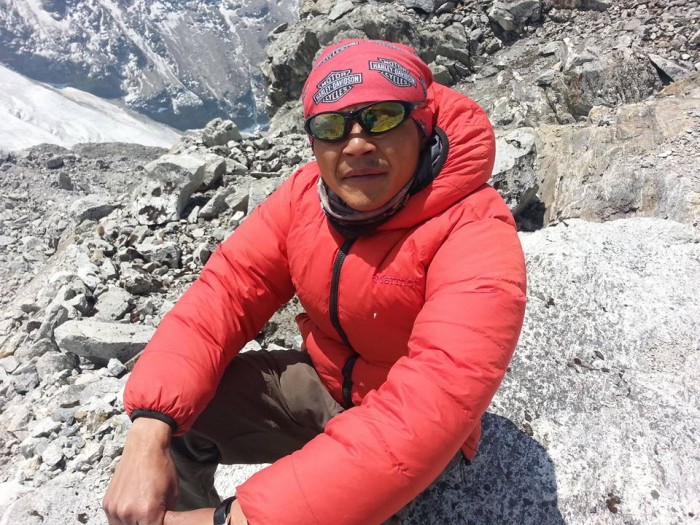
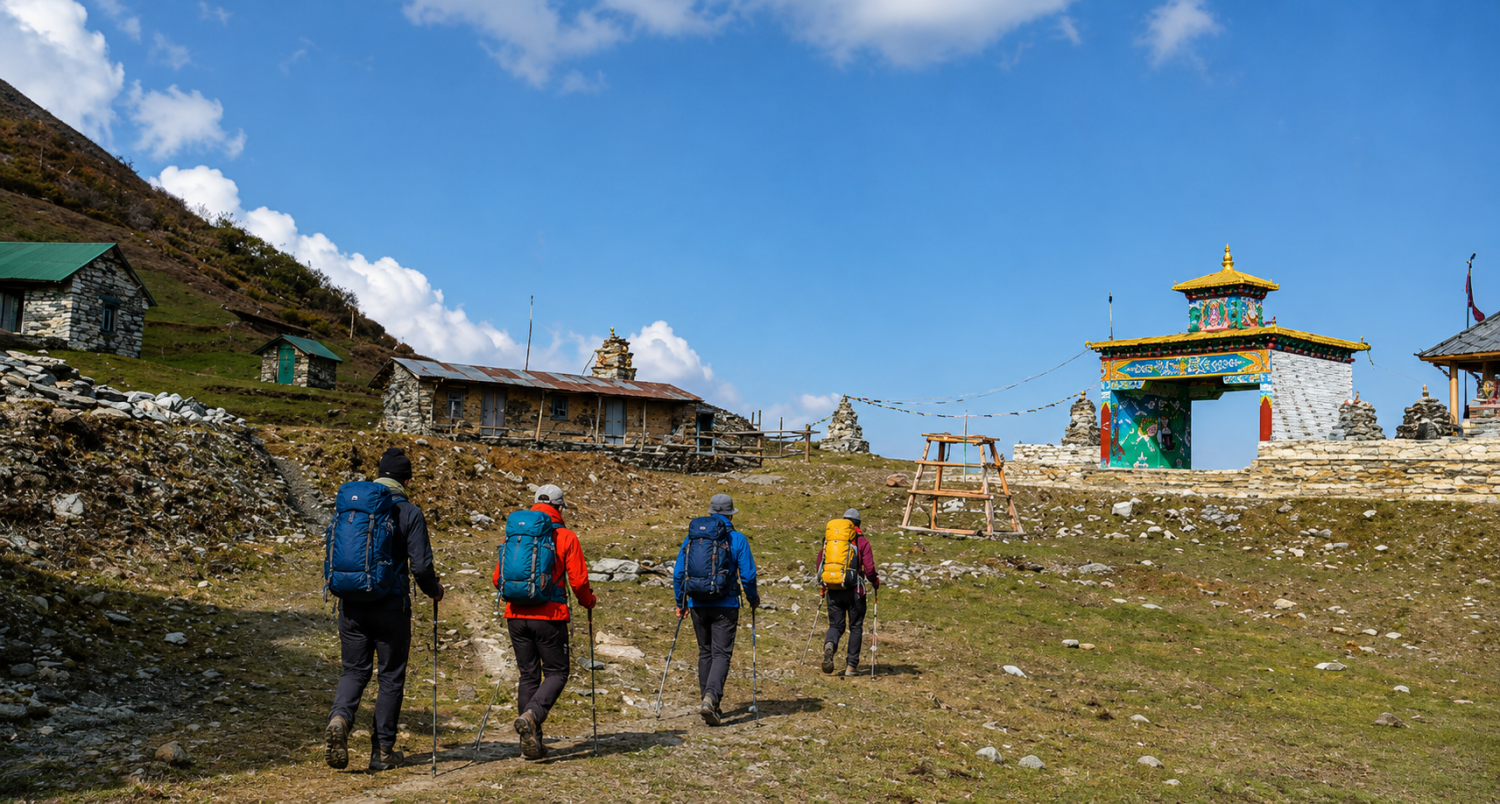
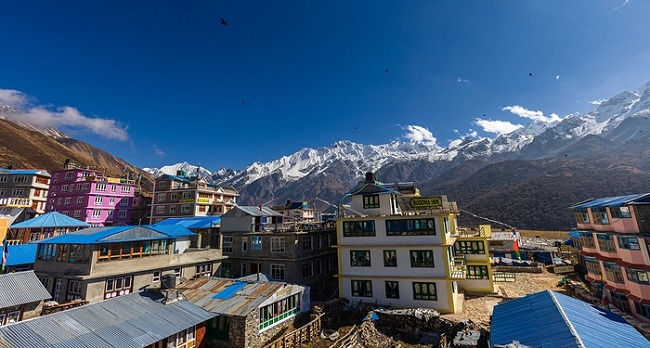
The Ganesh Himal Trek is one of Nepal’s most rewarding off-the-beaten-path trekking experiences, designed for travelers who want to discover the quieter side of the Himalayas away from the busy trails of Everest and Annapurna. Located north of Kathmandu and between the Langtang and Manaslu Himalayan regions, the Ganesh Himal area offers an exceptional combination of snow-covered mountains, peaceful villages, dense forests, alpine meadows, dramatic landscapes, traditional cultures, waterfalls, rivers, glaciers, and remote mountain trails.
For travelers seeking an authentic Himalayan experience, the Ganesh Himal Trek provides an opportunity to walk through landscapes where traditional village life remains closely connected to agriculture, nature, and local customs. The region is particularly associated with Tamang communities, while trekkers may also encounter Gurung, Ghale, and other local communities along different sections of the route.
The trek is especially appealing to those who prefer peaceful trails, natural surroundings, and cultural encounters rather than heavily developed trekking corridors. Compared with Nepal’s more famous trekking destinations, the Ganesh Himal region receives fewer visitors, making the journey feel more intimate and adventurous.
At Himalayan Adventure Intl Treks, we organize the Ganesh Himal Trek with carefully planned logistics, experienced local trekking staff, suitable accommodation, meals, transportation, permits, and support throughout the journey. We can also customize the itinerary according to your available time, fitness level, preferred accommodation, and travel style.
Ganesh Himal lies to the west of the Langtang Himalayan region and east of the Manaslu range, forming part of the magnificent mountain landscape north of Kathmandu. The region extends between important river valleys and contains an extraordinary mixture of subtropical, temperate, sub-alpine, and alpine environments.
The Ganesh Himal Singla Pass route begins in the lower hills and gradually climbs toward higher Himalayan terrain. Along the journey, trekkers pass through agricultural landscapes, forests, remote settlements, mountain ridges, streams, waterfalls, and high-altitude environments before crossing the challenging Singla Pass.
One of the defining features of the trek is its sense of remoteness. The source itinerary describes the trail as comparatively less visited and emphasizes its pristine, off-the-beaten-path character.
The trek combines adventure and cultural discovery in a way that makes every day different. Lower sections of the route introduce you to village life and cultivated hillsides, while higher sections provide more dramatic Himalayan scenery and challenging terrain.
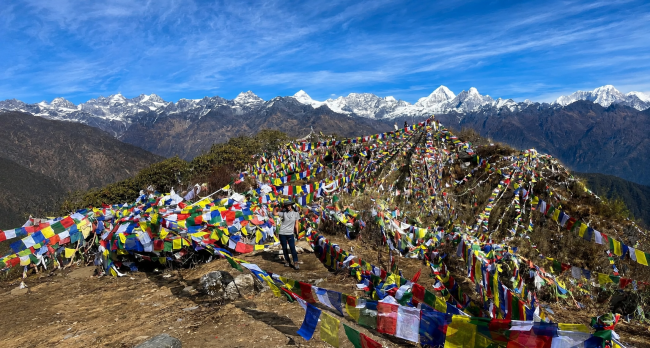
The Ganesh Himal range itself consists of several prominent peaks, traditionally identified as Ganesh I, Ganesh II, Ganesh III, and Ganesh IV. From appropriate viewpoints along the trekking route, the surrounding landscape opens toward impressive Himalayan ranges, including Ganesh Himal, Langtang, Manaslu, Annapurna, Lamjung Himal, and other peaks.
The region is also known for its forests. Oak and pine forests dominate sections of the trail, while rhododendrons add spectacular color during spring. The biodiversity of the region makes the trek particularly attractive to nature lovers and photographers.
There are many reasons to choose Ganesh Himal for your next Nepal trekking adventure.
If you want to experience the Himalayas without following one of Nepal’s busiest trekking corridors, Ganesh Himal is an excellent choice.
The region provides a quieter trekking environment where you can walk through rural settlements, forests, mountain landscapes, and open ridges without the same level of tourist traffic found on some famous routes.
The less-visited nature of the trail creates opportunities to appreciate the landscape at a slower pace. You can hear streams flowing through valleys, observe traditional agricultural practices, interact with villagers, and enjoy mountain scenery without constantly encountering large trekking groups.
The source material specifically describes the route as a less-trodden path suitable for travelers looking for serenity, rural landscapes, and a more natural and cultural experience.
The Ganesh Himal Trek provides impressive views of the central Himalayan ranges.
Depending on weather and visibility, trekkers can enjoy views toward the Ganesh Himal massif as well as surrounding mountain systems including Langtang and Manaslu. The changing perspective of the mountains throughout the trek is one of the journey’s greatest attractions.
The landscape is not limited to snow-covered peaks. The trail also passes through green valleys, terraced fields, forests, ridges, rivers, waterfalls, and alpine meadows.
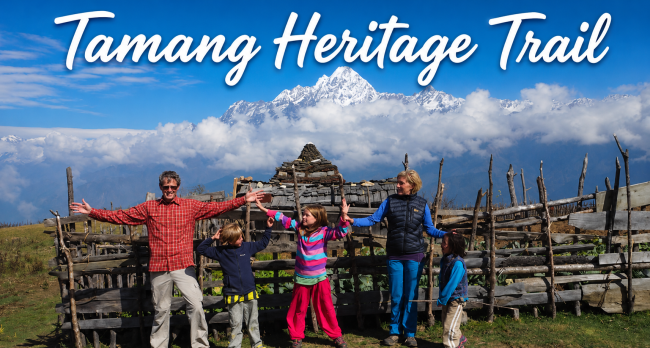
Ganesh Himal is strongly connected with Tamang culture. Many settlements retain traditional architecture, customs, lifestyles, and agricultural practices.
Trekking through these villages provides a chance to observe everyday Himalayan life rather than simply passing through a tourist center.
The communities encountered along the route offer a welcoming environment, and staying in local homestays or simple teahouses can make the cultural experience even more meaningful.
The Ganesh Himal region is rich in plant life and biodiversity.
The forests contain oak, pine, rhododendron, ferns, orchids, and other Himalayan vegetation. During spring, rhododendrons bloom across sections of the hillsides, creating colorful forest scenery.
Birdwatchers and nature enthusiasts may also enjoy observing different bird species and other wildlife along the quieter sections of the trail.
The trek is also characterized by mountain streams, rivers, waterfalls, and natural springs.
These water sources contribute to the refreshing atmosphere of the route. The sound of flowing water combined with dense forests and mountain scenery makes many sections of the trek particularly peaceful.
Crossing Singla Pass is one of the principal challenges and highlights of the trek. The source material identifies the pass at approximately 4,050 meters (13,287 feet) and describes the crossing as physically and mentally demanding but highly rewarding.
The ascent toward the pass requires steady effort, particularly where the trail becomes steep and rocky. Reaching the high point provides a strong sense of accomplishment and opens views toward the surrounding Himalayan landscape.
The Ganesh Himal adventure begins in Kathmandu, Nepal’s energetic capital city. After completing the necessary preparations, the journey heads toward the trekking region by road.
The lower sections of the route introduce travelers to Nepal’s changing landscapes. The city gradually gives way to hills, agricultural fields, rivers, forests, and traditional settlements.
As the trek progresses, the landscape becomes increasingly mountainous. Villages provide opportunities to interact with local communities and learn about their lifestyles. The trail eventually reaches higher and more remote terrain where forests, meadows, rocky paths, and mountain views dominate the landscape.
Depending on the selected itinerary, the route may incorporate locations such as Trisuli Bazaar, Deurali Bhanjyang, Bhaisi Kharka, Kharani Odar, Singla Pass, Pongsang Pass, Somdang, Gotlang, and Syabrubesi.
Each settlement provides a different perspective of the region.
The journey is not simply about reaching a destination. It is about experiencing the gradual transition from Nepal’s lower hills to the Himalayan environment.
Accommodation is an important part of the trekking experience, especially in a remote region such as Ganesh Himal.
At Himalayan Adventure Intl Treks, accommodation in Kathmandu is arranged in a 3-star standard hotel or resort, generally on a twin- or double-sharing basis.
During the trekking period, accommodation is arranged according to the availability and conditions of the route. Depending on the itinerary and location, trekkers stay in tents, teahouses, lodges, or local homestays, generally on a double-sharing basis.
The accommodation in Ganesh Himal is considerably more basic than accommodation in Kathmandu or highly developed trekking regions. The remote nature of the trail means that travelers should expect simple facilities rather than luxury hotels.
However, the simplicity is part of the attraction.
Staying in local teahouses or homestays allows travelers to meet local families, enjoy traditional meals, and gain a closer understanding of Himalayan village life. The source material highlights local homestays and teahouses as an important cultural aspect of the trek.
Single occupancy can be arranged in Kathmandu upon request, subject to availability and an applicable single supplement.
During the trekking portion, single rooms may not always be possible because accommodation facilities in remote villages are limited. We recommend discussing your preference with our team when making your booking so that we can make the best possible arrangements.
Food is another important component of a successful trekking experience.
The package with Himalayan Adventure Intl Treks includes breakfast in Kathmandu and breakfast, lunch, dinner, and tea/coffee during the trekking period, according to the selected package and itinerary.
Kathmandu offers a wide variety of dining choices, ranging from traditional Nepali food to international cuisines. Lunch and dinner in Kathmandu are generally not included in the trekking package, allowing you to choose restaurants according to your taste and budget.
Once the trek begins, food choices become simpler because the trail passes through rural and remote communities.
Typical meals may include:
Dal Bhat is particularly popular because it provides a filling combination of rice, lentils, vegetables, and other accompaniments.
As you gain elevation and enter more remote areas, menu choices can become increasingly limited. Food costs can also be higher in isolated settlements because supplies are more difficult to transport. The source material recommends carrying snacks or energy bars to supplement meals during longer walking days.
For trekking comfort, warm beverages such as ginger tea, lemon tea, green tea, hot lemon, and garlic soup can be enjoyable during colder sections of the route.
Depending on your arrival time, Himalayan Adventure Intl Treks may also arrange a welcome or farewell dinner in Kathmandu as part of the overall travel experience.
Staying hydrated is essential while trekking in the Himalayas.
There are several ways to obtain drinking water along the Ganesh Himal route.
In some locations, water can be collected from local sources and treated before drinking.
Travelers can use an appropriate water purification method such as purification tablets, UV treatment, or a reliable water filter.
Local teahouses and lodges may provide boiled drinking water for an additional charge.
This is a convenient option because trekkers can refill their bottles at overnight stops rather than carrying excessive quantities of water throughout the day.
Bottled water may be available in some settlements, but it is generally the least environmentally friendly option.
The farther and higher you travel, the more expensive bottled water can become. More importantly, plastic waste can create environmental problems in remote Himalayan communities.
We strongly encourage trekkers to carry reusable water bottles and use appropriate purification methods or boiled water whenever practical.
Following the Leave No Trace principle is particularly important on less-developed trekking routes such as Ganesh Himal.
The Ganesh Himal Trek is generally considered a moderate to challenging trekking adventure.
The difficulty comes from a combination of factors rather than altitude alone.
Trekkers encounter:
The source itinerary indicates that trekkers may walk approximately 5 to 7 hours per day, although actual walking time can vary depending on the route, weather, trail condition, group pace, and individual fitness.
The Singla Pass section is particularly demanding. A steady pace and appropriate acclimatization are important.
Although the trek does not reach the extreme elevations associated with some of Nepal’s highest trekking routes, altitude should still be taken seriously. Everyone responds differently to elevation, so trekkers should communicate with their guide if they experience unusual symptoms or feel unwell.
Good preparation can make a significant difference to your trekking experience.
We recommend beginning regular physical preparation several weeks before departure.
Walking, hiking, cycling, swimming, or other suitable aerobic activities can help develop endurance.
Exercises that develop general leg and core strength can help prepare you for repeated uphill and downhill walking.
If possible, practice walking on hills or trails before arriving in Nepal. This is especially helpful because Ganesh Himal involves frequent ascents and descents.
Walking with a comfortable backpack before the trek allows you to become familiar with carrying your personal equipment.
Remote trekking can be physically demanding and facilities may be basic. A positive attitude, patience, flexibility, and willingness to adapt are valuable qualities on the Ganesh Himal Trek.
The principal trekking seasons for Ganesh Himal are spring and autumn.
The source material identifies March to May and September to November as particularly favorable periods because of relatively stable weather, comfortable trekking conditions, and excellent scenery.
Spring is one of the most beautiful periods to explore Ganesh Himal.
As winter ends, the hills become increasingly colorful. Rhododendrons bloom throughout suitable elevations, while other plants begin their seasonal growth.
The combination of comfortable daytime temperatures, improving trail conditions, clear mountain views, and flowering forests makes spring especially attractive.
March and April are particularly appealing for travelers who want to experience the colorful side of the Ganesh Himal landscape.
The monsoon season brings substantial rainfall to many parts of Nepal.
Rain can make trails muddy and slippery, while clouds may obscure mountain views. Landslides and transportation disruptions can also affect travel in mountainous areas.
For these reasons, monsoon trekking requires greater flexibility and careful assessment of current trail and weather conditions.
Autumn is widely regarded as one of the best seasons for trekking in Nepal.
Following the monsoon, the atmosphere often becomes clearer, creating excellent conditions for mountain views. Trails are generally drier, and temperatures are comfortable for daytime hiking.
September, October, and November are excellent months for travelers seeking a combination of mountain scenery, pleasant walking conditions, and cultural experiences.
Winter brings colder temperatures, especially at higher elevations.
Snow can affect higher trails and pass crossings, while nights can become very cold. However, clear winter days can provide beautiful mountain scenery.
Winter trekking may be possible depending on current conditions and the selected itinerary, but it requires appropriate clothing, equipment, preparation, and experienced local guidance.
One of the most beautiful characteristics of the Ganesh Himal region is the diversity of its vegetation.
The trek moves through different ecological zones as elevation changes.
Lower areas contain greener vegetation and cultivated landscapes, while higher sections feature temperate and sub-alpine forests.
Important vegetation mentioned in connection with the region includes:
Spring is particularly impressive because rhododendron forests can become covered with red, pink, and white flowers.
For nature lovers, the trek provides a chance to observe how vegetation changes as the landscape rises from lower hills toward alpine environments.
The combination of forests, meadows, mountain ridges, rivers, and snow-covered peaks creates an outstanding natural setting.
The Ganesh Himal Trek is as much a cultural journey as it is a mountain adventure.
The region is home to communities including Tamang, Gurung, and Ghale people. Their traditions, languages, architecture, religious practices, clothing, agricultural systems, and social customs form an important part of the trekking experience.
Tamang culture is particularly prominent along sections of the trail.
Instead of simply viewing villages from a distance, trekkers have opportunities to interact with local residents and observe everyday life.
Staying in a homestay can provide an even deeper cultural experience. You may share meals with local families, learn about village traditions, and experience the warmth of rural Himalayan hospitality.
Travelers should approach local communities respectfully. Photography should be done with permission, particularly when photographing individuals, religious ceremonies, homes, or cultural activities.
Natural water features are among the pleasant surprises of the Ganesh Himal trekking region.
The route includes waterfalls, streams, rivers, and natural springs. Some itineraries also highlight natural hot springs as an attractive stop along the journey.
After several hours of walking, a natural hot spring can provide a memorable opportunity to relax while surrounded by the Himalayan landscape.
The combination of flowing water, forested slopes, mountain air, and traditional settlements contributes to the distinctive character of the trek.
Because accommodation and facilities are relatively basic in remote sections, thoughtful packing is important.
Recommended trekking equipment includes:
The exact equipment list should be adjusted according to the season and itinerary.
The source material also emphasizes checking weather conditions and season-specific requirements before finalizing your packing list.
A representative 14-day itinerary can be organized as follows:
Arrival at Tribhuvan International Airport and transfer to your hotel.
Meet the Himalayan Adventure Intl Treks team, complete your initial preparations, and rest after your journey.
Enjoy a free day for personal exploration, sightseeing, preparation, and final trekking arrangements.
Drive toward Trisuli Bazaar, where the Himalayan trekking adventure begins.
Begin walking through the beautiful hill landscape and continue toward Deurali Bhanjyang at approximately 1,700 meters.
Continue through forests and mountain terrain toward Bhaisi Kharka at approximately 2,300 meters.
Trek through increasingly mountainous landscapes toward Kharani Odar at approximately 2,800 meters.
This is one of the most challenging sections of the journey as the trail climbs toward the high pass.
The pass-crossing day requires careful pacing and appropriate preparation.
Continue through the high mountain landscape toward Pongsang Pass.
A rest day provides an opportunity to recover and appreciate the surrounding environment.
Descend gradually toward Somdang Phedi at approximately 3,300 meters.
Continue descending through changing landscapes toward the village of Gotlang.
Trek toward Syabrubesi, enjoying the transition back toward lower elevations.
Drive back to Kathmandu.
Transfer to the airport for your onward journey.
The itinerary can be adjusted according to weather, trail conditions, transportation, group pace, and individual requirements. The supplied itinerary lists this general 14-day sequence from Kathmandu through Trisuli Bazaar, the high-pass section, Gotlang, Syabrubesi, and back to Kathmandu.
Permit requirements can depend on the precise route and current government regulations.
The supplied itinerary identifies TIMS and a Langtang National Park entry permit among the relevant trekking documentation.
Because regulations and fees can change, travelers should verify current requirements before departure.
When booking with Himalayan Adventure Intl Treks, our team can assist with the necessary trekking documentation and explain the permits applicable to your specific itinerary.
A local guide can make a major difference on a remote trekking route.
The advantages include:
In a remote region, a guide is much more than someone who walks in front of the group. A knowledgeable local guide can help you understand the villages, traditions, landscapes, and natural environment you encounter.
The source material emphasizes regional knowledge, logistical support, cultural understanding, communication, and environmental responsibility as major advantages of trekking with a guide.
For current trekking regulations, travelers should always follow the latest requirements issued by the relevant Nepal authorities.
Travel insurance is strongly recommended for anyone undertaking a Himalayan trekking adventure.
A suitable policy should be reviewed carefully to ensure that it covers the activities and elevations associated with your trip.
Depending on the policy, useful areas of coverage may include:
The supplied source specifically recommends comprehensive insurance covering trekking-related risks, emergency medical evacuation, trip interruption, accidental injury, and other relevant travel emergencies.
Travel insurance is the responsibility of the traveler, so we recommend purchasing appropriate coverage before arriving in Nepal.
Nepal has many famous trekking destinations, but Ganesh Himal has its own identity.
Everest is famous for its legendary mountain environment and Sherpa culture. Annapurna is renowned for its diverse landscapes and established trekking infrastructure. Langtang offers spectacular valleys and proximity to Kathmandu.
Ganesh Himal provides something different: quietness, rural authenticity, cultural interaction, and an off-the-beaten-path experience.
Instead of focusing only on a famous base camp, the journey is about discovering a mountain region in its natural rhythm.
You walk through forests.
You cross streams.
You pass agricultural terraces.
You enter traditional villages.
You meet local people.
You sleep in simple accommodation.
You climb toward high passes.
You watch the mountains change with the light.
And you experience Nepal away from the busiest tourist trails.
The Ganesh Himal Trek can be suitable for trekkers with reasonable fitness and preparation, but it should not be treated as an effortless walking holiday.
The route contains steep climbs, descents, uneven terrain, and a high pass. Therefore, beginners should prepare properly and be comfortable with several hours of walking per day.
Previous trekking experience is helpful but not necessarily essential for a properly prepared traveler.
The most important factors are:
The source characterizes the route as moderately challenging and notes that fitness, experience, terrain, altitude, and route conditions all influence the overall difficulty.
For travelers surrounded by busy cities, constant technology, and crowded tourist attractions, Ganesh Himal can feel like a genuine natural reset.
The landscape encourages a slower rhythm.
There are no busy urban streets on the trail. Instead, the day revolves around walking, mountains, forests, villages, meals, conversations, and nature.
The diversity of flora adds to this experience. Forests of oak and pine, colorful rhododendrons, orchids, ferns, and other vegetation create constantly changing scenery.
Spring can be particularly spectacular as rhododendrons add vivid colors to the mountain forests.
The quietness of the region is perhaps its greatest luxury.
Responsible travel is essential when visiting remote Himalayan communities.
Travelers can help protect the region by following simple principles:
Supporting local teahouses, homestays, guides, porters, and small businesses also helps tourism benefits reach mountain communities.
At Himalayan Adventure Intl Treks, our goal is to provide a well-organized trekking experience while respecting the authentic character of the Ganesh Himal region.
Our trekking services can include:
The supplied package information similarly lists accommodation, meals, transportation, guides, porters, permits, camping equipment, staff insurance, trekking accessories, airport transfers, and other support services among the included services.
Exact inclusions and exclusions depend on the package and itinerary selected.
Travelers should also understand which expenses are normally outside the trekking package.
These may include:
The exact list should always be confirmed at the time of booking because services and costs can vary between itineraries.
The Ganesh Himal Trek is an excellent choice for travelers looking beyond Nepal’s most crowded trekking destinations.
It brings together many of the experiences that make Himalayan travel special: spectacular mountains, traditional villages, forests, high passes, rivers, waterfalls, alpine landscapes, local food, cultural encounters, and genuine mountain hospitality.
From the first drive north of Kathmandu to the remote villages and high mountain passes, the journey continually changes character.
You can experience the peaceful lifestyle of Tamang and other Himalayan communities, walk through forests filled with seasonal flowers, enjoy views of the Ganesh Himal range, challenge yourself on high mountain terrain, and return home with memories of a part of Nepal that many visitors never discover.
The route’s remote character also means that flexibility is important. Weather, trail conditions, local transportation, accommodation availability, and seasonal factors can influence the journey. Traveling with an experienced local trekking company helps you manage these variables while allowing you to concentrate on enjoying the adventure.
At Himalayan Adventure Intl Treks, we can arrange the Ganesh Himal Trek as a private trip, couple's adventure, family journey, small-group trek, or customized itinerary according to your requirements.
If you want an authentic Himalayan experience away from the crowds, Ganesh Himal Trek is an adventure worth discovering.
Contact Himalayan Adventure Intl Treks for the latest departure dates, itinerary options, trekking costs, accommodation arrangements, and customized packages.
Plan your Ganesh Himal adventure with us and discover the quieter, more authentic side of the Nepal Himalayas.
The Ganesh Himal Trek is generally a moderate to challenging trek. The trail includes steep ascents and descents, rocky sections, forests, uneven terrain, and a high pass. Good physical preparation is recommended.
The supplied route information identifies Singla Pass at approximately 4,050 meters (13,287 feet) as the principal high point.
The strongest trekking periods are generally spring and autumn, particularly March-April and September-November. Spring is excellent for rhododendron flowers, while autumn generally provides clear mountain views.
Winter trekking may be possible depending on the route and current weather conditions. Snow and cold temperatures can make high sections more challenging, so proper preparation and experienced guidance are important.
Monsoon trekking is possible in some circumstances, but heavy rain, muddy trails, reduced visibility, and transportation issues can make the experience more difficult. Current local conditions should be checked before departure.
Accommodation is basic compared with city hotels. Depending on the route, you may stay in teahouses, lodges, local homestays, or tents. In Kathmandu, Himalayan Adventure Intl Treks generally arranges 3-star standard accommodation on a twin/double-sharing basis.
Meals are generally simple and nourishing. Dal Bhat, vegetables, potatoes, noodles, bread, soup, snacks, tea, coffee, and local dishes are among the foods that may be available along the route.
A sleeping bag is recommended because temperatures can become cold at higher elevations and accommodation is basic. Depending on the package, trekking equipment such as sleeping bags may be arranged by the trekking company.
Yes. Comprehensive travel insurance is strongly recommended for Himalayan trekking and should be checked carefully for trekking activities, emergency medical treatment, evacuation, cancellation, and other relevant coverage.
A local guide provides navigation, cultural interpretation, logistical assistance, communication support, and help responding to changing trail or weather conditions. This is especially valuable on remote trekking routes.
Yes. One of the principal attractions of the region is its relatively low level of tourism compared with Nepal's most famous trekking routes. It is particularly appealing to travelers looking for nature, culture, and solitude.
Himalayan Adventure Intl Treks focuses on organized, safe, and customizable Himalayan trekking experiences. Our services can include experienced local guides, porters, accommodation, meals, transportation, permits, trekking equipment, and logistical support.
We can customize the Ganesh Himal Trek around your preferred duration, group size, accommodation requirements, travel dates, and trekking objectives.
Ganesh Himal is waiting. Let Himalayan Adventure Intl Treks help you turn this remarkable off-the-beaten-path journey into an unforgettable Himalayan experience.
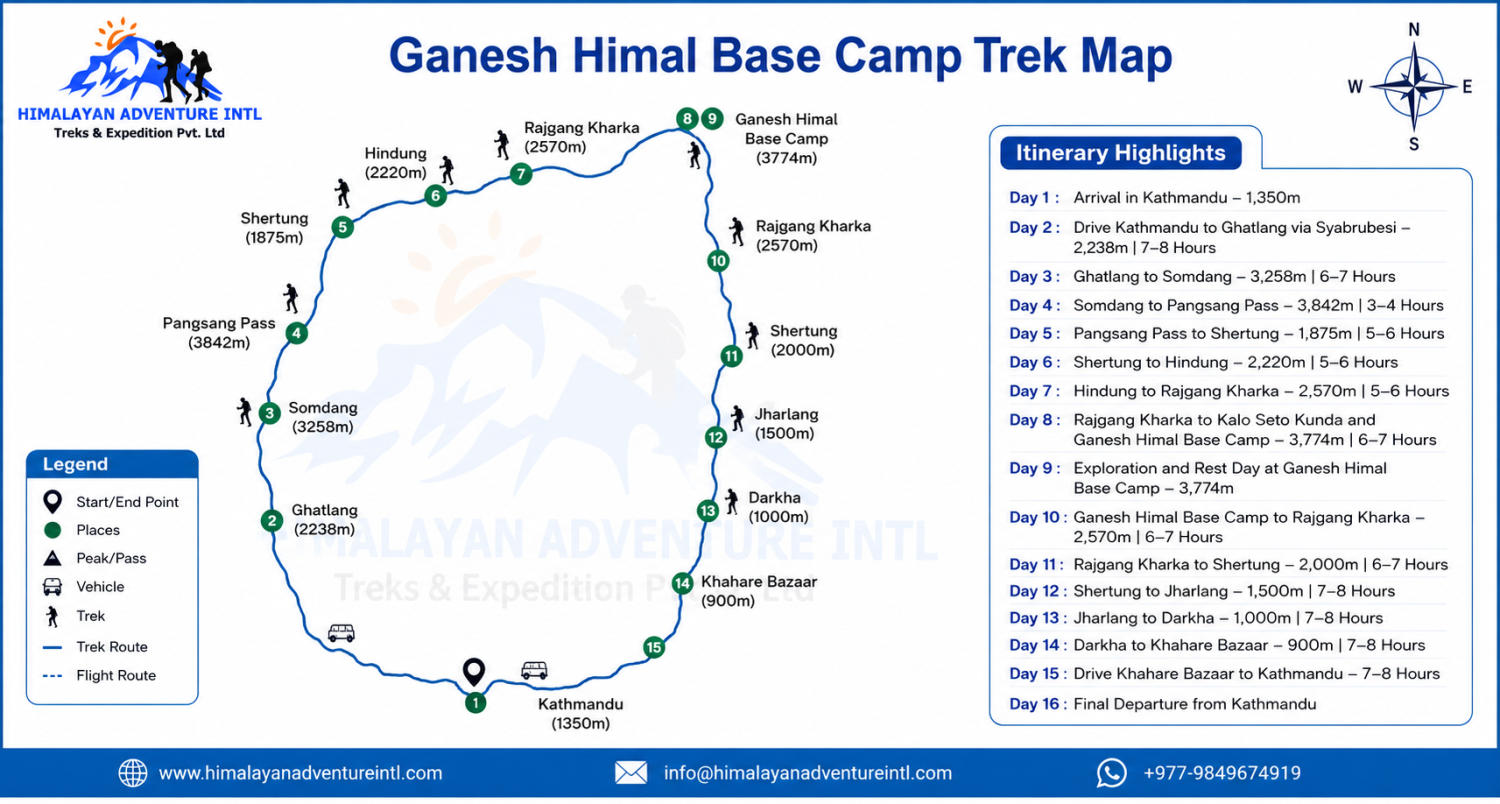
Welcome to Nepal! Upon your arrival at Tribhuvan International Airport in Kathmandu, a representative from Himalayan Adventure Intl Treks will meet you outside the arrival terminal and transfer you comfortably to your hotel. After checking in and taking some time to relax, you will meet your trekking leader for a detailed trip briefing.
During the briefing, your guide will explain the trekking route, daily walking schedule, accommodation arrangements, meals, safety considerations, and other important information required for the journey. You will also have an opportunity to check your trekking equipment and prepare for the adventure ahead.
Kathmandu is Nepal’s cultural and historical heart, and if time permits, you can take a short walk around the surrounding area and experience the vibrant atmosphere of the city.
Day Highlights: Arrival assistance, hotel transfer, trek briefing, equipment preparation, introduction to the Ganesh Himal region.
Altitude: 1,350m
Accommodation: Hotel
Meals: Breakfast
After breakfast, we begin our scenic drive from Kathmandu toward the Ganesh Himal trekking region. The journey initially follows the road toward Pokhara before reaching Galchhi, where we turn north toward the Trishuli River.
The road passes through beautiful countryside, cultivated farmland, traditional settlements, green hills, and terraced fields. As we continue toward Dhunche and Syabrubesi, the scenery becomes increasingly dramatic, with mountain landscapes appearing in the distance.
Following the Trishuli River, we can enjoy glimpses of Ganesh Himal, lush hills, and traditional villages. From Syabrubesi, we continue toward Ghatlang, the starting point of our trekking adventure. The road can be narrow and winding in places, but the changing landscape makes the journey rewarding.
After approximately seven to eight hours on the road, we reach Ghatlang and settle into our camp for the night.
Day Highlights: Scenic Trishuli River drive, terraced farmland, rural villages, mountain views, Dhunche and Syabrubesi, arrival at Ghatlang.
Altitude: 2,238m
Accommodation: Lodge/Camp
Meals: Breakfast, Lunch, Dinner
After breakfast, we prepare our trekking equipment and begin walking toward Somdang. The trail initially follows a gravel and partly motorable road before gradually climbing through beautiful pine and rhododendron forests.
We pass Yuri Kharka and continue toward Khurpu Bhanjyang. From here, the trail eventually descends toward the Somdang River, which forms a natural boundary between Rasuwa and Dhading districts.
Throughout the day, the surrounding mountain scenery becomes increasingly impressive. Depending on visibility, you can enjoy views of the Langtang Himalayan range, Ganesh Himal, Paldor Peak, and numerous surrounding peaks.
The route also provides opportunities to encounter traditional Tamang communities and learn more about their distinctive culture and lifestyle. A major attraction along the way is the impressive Chukarma Waterfall, approximately 200 meters high.
The area also contains the remains of historic mining activity, including an old tunnel associated with mineral extraction. We eventually reach Somdang, where we spend the night at our camp.
Day Highlights: Pine and rhododendron forests, Tamang culture, Chukarma Waterfall, Somdang River, Ganesh Himal and Langtang mountain views, historic mining area.
Altitude: 3,258m
Accommodation: Camp
Meals: Breakfast, Lunch, Dinner
Today is comparatively short and gives us time to enjoy the spectacular Himalayan surroundings. After breakfast, we begin a gradual uphill walk from Somdang toward Pangsang Pass.
The trail passes through forests, open landscapes, villages, and terraced areas. As we gain altitude, the scenery opens up dramatically. The surrounding Himalayan panorama becomes one of the major attractions of the day.
From the Pangsang Pass area, we can enjoy an exceptionally broad mountain panorama. To different directions are the Langtang, Ganesh Himal, and Manaslu ranges, with distant views toward the Annapurna region in clear weather.
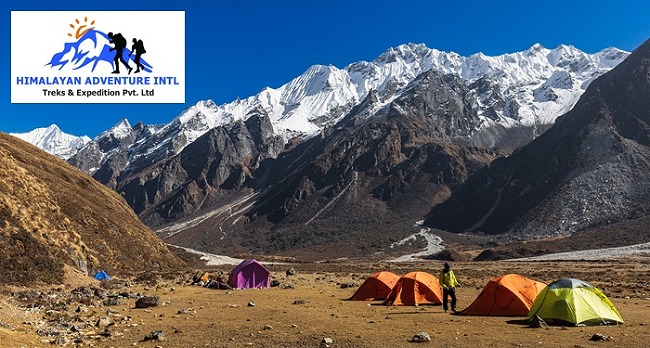
The large open meadow around the pass provides a spectacular setting for our camp. The peaceful environment, mountain backdrop, and expansive views make Pangsang Pass one of the memorable locations on the trek.
We spend the evening enjoying the mountain scenery and relaxing at camp.
Day Highlights: Short and scenic trekking day, Pangsang Pass, panoramic Himalayan views, Langtang range, Ganesh Himal range, Manaslu range, spectacular camping location.
Altitude: 3,842m
Accommodation: Camp
Meals: Breakfast, Lunch, Dinner
After breakfast, we leave the high-altitude surroundings of Pangsang Pass and begin our descent toward the lower villages. The trail first takes us toward Tipling, a large traditional settlement known for its beautiful Buddhist monasteries.
The descent can initially be steep, after which the route climbs and descends through forests containing bamboo, pine, and rhododendron. Waterfalls and streams add to the natural beauty of the trail.
As we continue, we can enjoy mountain views including Lapsang Karpo and different peaks of the Ganesh Himal range. The local communities are known for their welcoming hospitality, offering an excellent opportunity to experience village life.
After descending further, we cross the Adha Khola on a bridge and continue toward the sister villages of Shertung and Chalise. The route then crosses the Gorkhen Khola before climbing toward Shertung.
Shertung is traditionally associated with the meaning “Place of Gold,” and its cultural stories and village setting make it an interesting stop on the journey.
Day Highlights: Tipling village, Buddhist monasteries, bamboo and rhododendron forests, waterfalls, mountain scenery, traditional Tamang settlements, Shertung village.
Altitude: 1,875m
Accommodation: Camp
Meals: Breakfast, Lunch, Dinner
Today we continue deeper into the Ganesh Himal wilderness. From Shertung, the trail descends toward Menchet Khola. After crossing the stream, the route climbs again before becoming more gradual as we make our way toward Hindung.
Along the trail, we can make a short visit to Tin Kanya, a small Hindu temple located near a beautiful local settlement. The route then continues toward Khar Khola and Pasabar Danda.
From Pasabar Danda, we gradually climb toward Kalbarang Kharka and continue along the edge of dense forest. The changing vegetation and peaceful surroundings make this section particularly enjoyable.
Eventually, we reach Hindung, a relatively large village primarily inhabited by the Tamang community. Hindung is an important point on the trek because it is the last permanent village on the route toward Ganesh Himal Base Camp.
We spend the evening experiencing the peaceful atmosphere of this remote Himalayan settlement.
Day Highlights: Menchet Khola, Tin Kanya temple, Pasabar Danda, Kalbarang Kharka, dense forests, Tamang culture, last village before Ganesh Himal Base Camp.
Altitude: 2,220m
Accommodation: Camp
Meals: Breakfast, Lunch, Dinner
After breakfast, we leave Hindung and begin ascending toward Rajgang Kharka. The trail gradually climbs through a peaceful natural environment with relatively few cultivated terraces.
Much of today's route is manageable, combining gentle ascents with more level sections. We trek through forests dominated by rhododendron and other native vegetation.
The forest is home to various species of birds and wildlife, making this section particularly appealing to nature lovers. As we approach Rajgang Kharka, the landscape opens into beautiful grassland surrounded by forest.
Rajgang Kharka is traditionally used as grazing pasture by local people, particularly for sheep and other domestic animals outside the winter season. The quiet surroundings and mountain atmosphere provide an excellent place to rest before heading toward the higher elevations of the Ganesh Himal Base Camp area.
After arriving at camp, we have time to relax, enjoy the natural surroundings, and prepare for the following day's trek toward Kalo Seto Kunda and base camp.
Day Highlights: Gradual ascent, rhododendron forest, birdlife and natural vegetation, alpine grassland, traditional grazing area, peaceful Himalayan surroundings.
Altitude: 2,570m
Accommodation: Camp
Meals: Breakfast, Lunch, Dinner
Today is one of the most important days of our Ganesh Himal Base Camp adventure. After breakfast, we leave Rajgang Kharka and continue toward Kalo Seto Kunda, also known as the Black and White Lake area, and onward to Ganesh Himal Base Camp.
The trail becomes narrower in sections and generally climbs upward, with occasional level stretches. For several hours, we walk through forested terrain. As we gain altitude, the vegetation becomes increasingly sparse and the landscape begins to take on an alpine character.
Eventually, the forest gives way to open high-altitude grassland. During winter, the lakes may be frozen, creating a striking high-Himalayan landscape.
After approximately six to seven hours of trekking, we reach Ganesh Himal Base Camp at an elevation of 3,774 meters. This remote camp provides an unforgettable mountain experience far from the busy trekking routes.
We settle into camp and enjoy the peaceful surroundings of the base camp.
Day Highlights: Kalo Seto Kunda, alpine landscape, high-altitude grassland, changing vegetation, remote wilderness, arrival at Ganesh Himal Base Camp.
Altitude: 3,774m
Accommodation: Camp
Meals: Breakfast, Lunch, Dinner
Today is reserved for rest and exploration around Ganesh Himal Base Camp. After several days of trekking, this slower-paced day allows us to recover while enjoying the remarkable high-altitude environment.
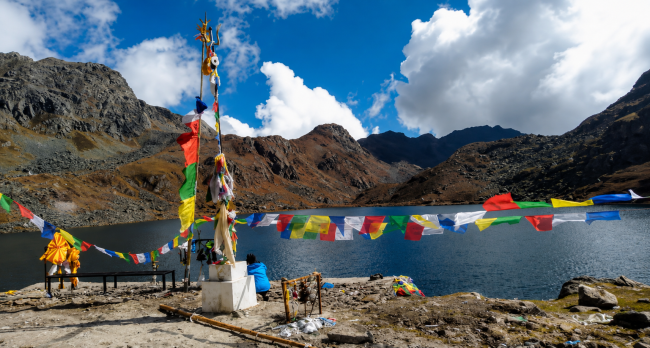
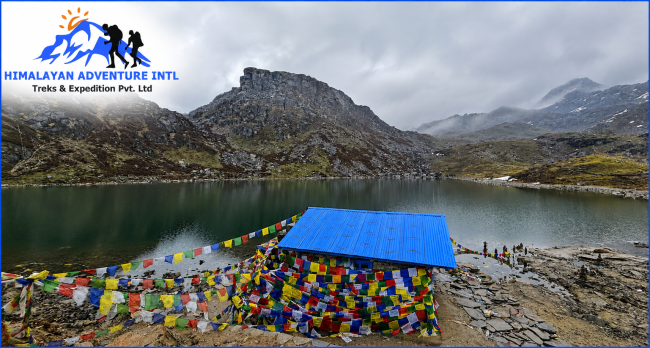
We can explore the area surrounding Kalo Seto Kunda, where two lakes are regarded as having religious significance. Kalo Kunda, or Black Lake, is associated with its dark stone-covered surface, while Seto Kunda, or White Lake, is characterized by its lighter, shining stones.
The surrounding landscape offers impressive views toward Ganesh Himal, Paldor Himal, and other mountain peaks. The remote setting provides an opportunity to appreciate the natural beauty and peacefulness of the region.
This is also a good day to spend time with the trekking team, photograph the surrounding mountains, and enjoy the atmosphere of the base camp.
As this is the furthest point of the itinerary, we do not continue farther along the route. We spend another night at Ganesh Himal Base Camp.
Day Highlights: Rest and acclimatization, Kalo Seto Kunda, Black and White Lakes, Ganesh Himal views, Paldor Himal views, peaceful high-altitude surroundings.
Altitude: 3,774m
Accommodation: Camp
Meals: Breakfast, Lunch, Dinner
After an early breakfast, we begin our descent from Ganesh Himal Base Camp toward Rajgang Kharka, following the same general route used during the ascent.
The trail initially passes through the high-altitude landscape, where alpine grass and open terrain surround the path. As we gradually lose elevation, vegetation becomes denser and the landscape changes once again.
The descent provides a different perspective of the scenery we experienced while climbing toward base camp. We can take our time to appreciate the changing environment and enjoy the quieter sections of the trail.
After approximately six to seven hours of walking, we reach Rajgang Kharka, where our camp will be prepared for the evening.
The lower elevation should provide a pleasant opportunity to rest after our time at base camp.
Day Highlights: Descent from Ganesh Himal Base Camp, alpine landscape, changing vegetation, scenic trail, return to Rajgang Kharka.
Altitude: 2,570m
Accommodation: Camp
Meals: Breakfast, Lunch, Dinner
We leave Rajgang Kharka after breakfast and continue our return journey toward Shertung. The route takes us through forested landscapes and toward the lower settlements.
As we descend, we eventually reach the area around Chalise and continue toward Shertung. The trail provides opportunities to observe the transition from the high-altitude environment to the greener landscapes and traditional villages of the lower region.
We pass through forests and settlements along the way, including the Hindung area. The surrounding communities provide another opportunity to experience the traditional lifestyle and hospitality of the Tamang people.
Shertung is regarded as one of the friendliest and most hospitable villages in the area. On arrival, we settle into camp and enjoy the peaceful village environment.
Day Highlights: Scenic descent, forest trail, Chalise and Hindung areas, Tamang settlements, local hospitality, return to Shertung.
Altitude: 2,000m
Accommodation: Camp
Meals: Breakfast, Lunch, Dinner
Today is another long trekking day as we continue toward Jharlang. The trail begins with a gentle ascent before reaching a small ridge from where we can enjoy beautiful views of Ganesh Himal and the surrounding countryside.
From the ridge, the landscape opens toward farming terraces, waterfalls, and traditional villages scattered across the hillsides. We then descend toward the lower ridge and cross agricultural areas and local settlements.
After walking through the villages, we stop for lunch around Borang. From here, the route alternates between downhill and uphill sections as we continue toward Jharlang.
Jharlang is a traditional Tamang village with a culturally diverse atmosphere. The changing landscape and communities along the route make today's journey particularly rewarding.
After approximately seven to eight hours of trekking, we arrive at Jharlang and settle into camp for the night.
Day Highlights: Ridge viewpoints, Ganesh Himal scenery, farming terraces, waterfalls, traditional villages, Borang, Tamang culture, Jharlang.
Altitude: 1,500m
Accommodation: Camp
Meals: Breakfast, Lunch, Dinner
After breakfast, we leave Jharlang and begin another scenic day of trekking through the lower hills. The route initially follows a gentle ascent while providing views of Ganesh Himal and Manaslu.
The trail passes through beautiful forests, waterfalls, cultivated terraces, and traditional villages. The combination of natural scenery and rural life makes this section a memorable part of the return journey.
As we continue, the landscape gradually changes as we descend toward Darkha. Darkha is notable as the first Brahmin village encountered on this trekking route, offering a cultural contrast to the Tamang settlements visited earlier.
From the village, we can also enjoy views toward the Aankhu Khola stream in the distance.
After approximately seven to eight hours of walking, we reach Darkha, where we spend the night at camp and relax after the day's trek.
Day Highlights: Ganesh Himal and Manaslu views, forests, waterfalls, farming terraces, traditional villages, cultural diversity, Darkha village, Aankhu Khola.
Altitude: 1,000m
Accommodation: Camp
Meals: Breakfast, Lunch, Dinner
Today marks the final walking day of the Ganesh Himal Base Camp Trek. After breakfast, we leave Darkha and descend toward Darkha Phedi.
From there, the trail follows the riverbank as we continue toward Khahare Bazaar. The route provides a final opportunity to enjoy the rural landscapes, river scenery, farming terraces, and traditional settlements of the region.
After approximately seven to eight hours of walking, we reach Khahare Bazaar, a larger local market area with lodges, tea shops, a school, and a hospital. The area is also known for its beautiful views across the surrounding farming terraces.
Reaching Khahare Bazaar marks the completion of our trekking section. We can relax, celebrate the successful journey with the trekking team, and enjoy our final evening in the mountains.
Day Highlights: Final trekking day, Darkha Phedi, riverbank trail, farming terraces, rural villages, Khahare Bazaar, completion of the trek.
Altitude: 900m
Accommodation: Tea House / Lodge
Meals: Breakfast, Lunch, Dinner
After breakfast, we leave Khahare Bazaar and begin our scenic drive back to Kathmandu. The journey first takes us toward Trishuli Bazaar and continues through the Dhading region before joining the more developed highway toward Kathmandu.
Some sections of the road, particularly around the Dhading Besi area, can be unpaved, while later sections are on paved roads.
Throughout the drive, we can enjoy views of rivers, green hills, terraced farmland, forests, and traditional villages. After completing the long journey, we arrive in Kathmandu and transfer to our hotel.
The evening is free for relaxation. Depending on your schedule, you can explore nearby areas, enjoy a comfortable dinner, or simply rest after the trek.
Day Highlights: Scenic return drive, Trishuli Bazaar, Dhading region, rivers and hills, terraced farmland, forests, arrival in Kathmandu.
Altitude: 1,350m
Accommodation: Hotel
Meals: Breakfast and Lunch
Today marks the conclusion of your Ganesh Himal Base Camp Trek with Himalayan Adventure Intl Treks.
After breakfast, our representative will assist with your departure arrangements and check your flight details. You will be transferred to Tribhuvan International Airport in time for your international flight.
As you leave Nepal, take with you the memories of remote Himalayan trails, spectacular mountain panoramas, traditional villages, Tamang culture, high-altitude lakes, and the unforgettable experience of reaching Ganesh Himal Base Camp.
We hope to welcome you again to Nepal for another adventure in the Himalayas.
Day Highlights: Airport transfer, farewell to Nepal, completion of the Ganesh Himal Base Camp adventure.
Altitude: 1,350m
Accommodation: No
Meals: Breakfast