
Find Your Tour

Any Question? Email Us

info@himalayanadventureintl.com

Have Questions? Talk to Expert (Binod)
Binod Karki

Helambu Valley Trek

Helambu Valley Trek

Helambu Valley Trek Overview

Key Information

Duration

11 Days

Grade

Classic / easy

Best Season

Feb, March, April, May and Sept, Oct, Nov and Dec

Maximum altitude

1998 m

Accommodation

Hotel / Lodge

Transportation

Private Vehicle

The Helambu Valley Trek is one of the most rewarding short Himalayan journeys from Kathmandu, offering an excellent combination of mountain scenery, peaceful forests, traditional villages, Buddhist culture, terraced farmland, monasteries, and warm Nepalese hospitality. Located to the northeast of Kathmandu, the Helambu region extends through the beautiful hills of Sindhupalchok and surrounding areas and is particularly famous for its Hyolmo cultural heritage.

For travelers who want to experience the Himalayas without committing to a long and physically demanding high-altitude expedition, the Helambu Valley Trek is an excellent choice. The route generally remains at a moderate elevation compared with famous treks such as Everest Base Camp and Annapurna Circuit. This makes it particularly suitable for families, couples, students, first-time trekkers, solo travelers, senior travelers who are physically fit, research groups, small groups, large groups, and group-joining trekkers.

At Himalayan Adventure Intl Treks, we organize the Helambu Valley Trek throughout the year with flexible itineraries, experienced local guides, porters, transportation arrangements, permits, accommodation, and other necessary trekking services.

The standard Helambu Valley Trek can be arranged as a 9–10 day Nepal trekking package, including arrival in Kathmandu and final departure. The actual walking itinerary can also be customized according to your available time, fitness level, interests, and preferred accommodation.

Why Choose the Helambu Valley Trek?

Helambu is an ideal destination for travelers who want to explore the Himalayan countryside while staying relatively close to Kathmandu. You do not need to spend several days traveling deep into the mountains before reaching the trekking region.

The trail passes through peaceful forests, traditional settlements, cultivated hillsides, Buddhist communities, monasteries, suspension bridges, and scenic ridges. During spring, rhododendron forests add spectacular color to the landscape, while autumn provides excellent visibility of the surrounding mountains.

The region is also culturally fascinating. The indigenous Hyolmo people have maintained distinctive traditions, Buddhist practices, architecture, food, festivals, and village lifestyles for generations.

Some major attractions of the trek include:

  • Beautiful Himalayan landscapes
  • Rhododendron and pine forests
  • Traditional mountain villages
  • Hyolmo Buddhist culture
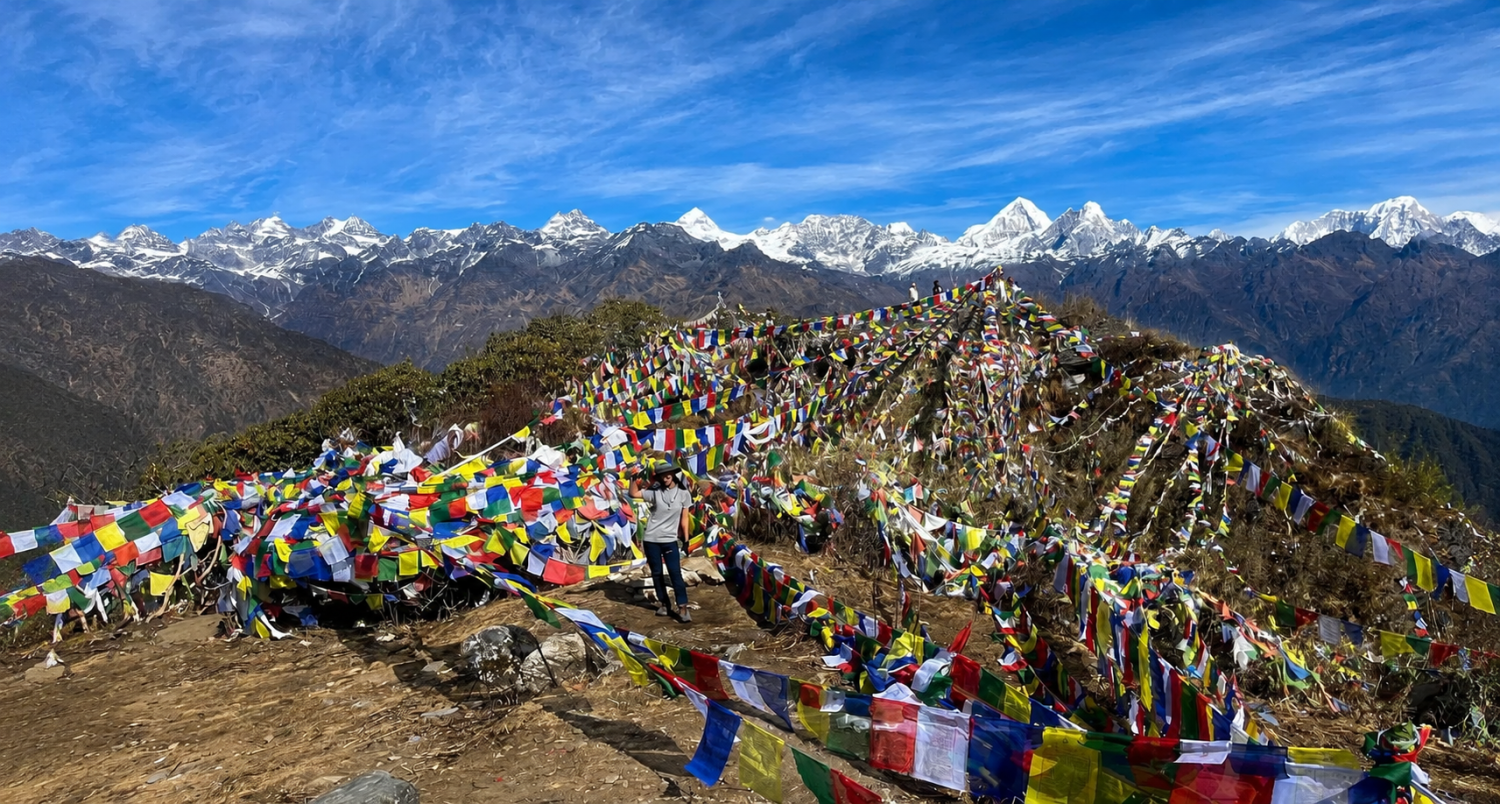
  • Buddhist monasteries and prayer flags
  • Mountain viewpoints
  • Peaceful tea houses
  • Terraced farmland
  • Local cheese and agricultural products
  • Sunrise and sunset views
  • Comfortable walking trails compared with many high-altitude treks
  • Easy access from Kathmandu
  • A quieter alternative to heavily visited trekking routes

The trek is particularly attractive to visitors who want a genuine Himalayan experience but have limited vacation time.

Helambu Valley Trek Highlights

Close to Kathmandu

One of the biggest advantages of the Helambu Valley Trek is its accessibility. The trekking area can be reached by road from Kathmandu, reducing the amount of time spent on domestic flights and long-distance transportation.

Hyolmo Culture

Helambu is strongly associated with the Hyolmo community. Trekkers can experience local traditions, Buddhist culture, village architecture, festivals, monasteries, and everyday mountain life.

Rhododendron Forests

Spring is especially beautiful because rhododendron forests bloom in shades of red, pink, and white. Walking through these forests beneath the Himalayan sky is one of the memorable experiences of the trek.

Mountain Views

Clear weather can provide impressive views of snow-covered Himalayan peaks and surrounding ridges. Autumn and spring generally offer particularly favorable trekking conditions.

Tea House Experience

Helambu is a wonderful tea-house trekking destination. Rather than camping throughout the journey, trekkers can stay in local lodges and tea houses, enjoy traditional meals, meet local families, and experience village hospitality.

Suitable for Different Travelers

The moderate nature of the trek makes it suitable for family holidays, couples, students, solo travelers, research groups, private groups, and organized group departures.

Helambu Valley Trek Duration

Himalayan Adventure Intl Treks generally recommends 9–10 days for the complete Helambu Valley Trek package, including arrival and departure days in Kathmandu.

The itinerary can be shortened or extended depending on transportation, walking pace, sightseeing interests, acclimatization requirements, and the condition of the trails.

A typical 10-day arrangement may look like this:

Day 1: Arrival in Kathmandu – 1,350m

Arrive at Tribhuvan International Airport in Kathmandu. Our representative welcomes you and transfers you to your hotel.

After check-in, you can rest and explore the nearby area if time permits. In the evening, your trekking guide can provide a briefing about the Helambu Valley Trek.

Overnight in Kathmandu.

Day 2: Kathmandu Valley Sightseeing and Trek Preparation

Today can be used for trek preparation, equipment checking, permit arrangements, and sightseeing around Kathmandu.

If you have already completed your preparations, you may visit important cultural attractions in Kathmandu or simply relax before beginning the trek.

Overnight in Kathmandu.

Day 3: Drive from Kathmandu to the Trek Starting Point

After breakfast, we drive toward the Helambu trekking region by public bus, shared jeep, or private four-wheel-drive vehicle.

The journey provides views of Nepal's countryside, hills, rivers, terraced farms, and rural settlements.

After reaching the starting area, we begin walking toward the day's destination.

Overnight at a local tea house.

Day 4: Trek Through Forests and Mountain Villages

The trail continues through forests, farmland, and traditional villages. Depending on the exact route and road conditions, the walking distance and overnight location may vary.

The guide helps you maintain a comfortable pace while explaining local culture, plants, villages, and Buddhist traditions.

Overnight in a tea house.

Day 5: Continue Through the Helambu Valley

Today's trail provides more opportunities to experience village life and mountain scenery.

You will pass prayer flags, chortens, monasteries, cultivated slopes, forests, and traditional houses.

Overnight in a local lodge.

Day 6: Scenic Ridge and Cultural Exploration

The trail continues through peaceful Himalayan landscapes. Depending on the selected route, you can enjoy views from higher ridges and visit culturally significant villages.

This is an excellent day for photography and interacting respectfully with local communities.

Overnight in a tea house.

Day 7: Descend Toward the Roadhead

After enjoying the morning scenery, the route gradually descends toward lower settlements and the road-accessible part of the region.

The lower elevation and changing vegetation make the descent interesting.

Overnight in a local lodge or tea house.

Day 8: Trek and Drive Toward Kathmandu

After breakfast, continue the final section of the trek before connecting with road transportation.

We then drive back toward Kathmandu.

Overnight in Kathmandu.

Day 9: Kathmandu Free Day

This day can be used as a rest day, shopping day, cultural sightseeing day, or contingency day in case of transportation or weather delays.

Overnight in Kathmandu.

Day 10: Final Departure

Our representative transfers you to the airport according to your international flight schedule.

Your Helambu Valley Trek adventure ends with Himalayan Adventure Intl Treks.

Note: The exact walking route and overnight villages may be changed according to road conditions, weather, local accommodation availability, group fitness, and the final trekking plan.

Helambu Valley Trek Cost and Necessary Arrangements

Himalayan Adventure Intl Treks provides flexible trekking arrangements for private and group travelers.

Hire a Trekking Guide

Our professional trekking guide costs:

Guide: US$30 per day

An experienced local guide provides navigation, cultural information, communication assistance, accommodation coordination, and general trekking support.

Hiring a guide is strongly recommended, especially for first-time trekkers and travelers unfamiliar with Nepal's mountain trails.

Porter Cost

Porter: US$20 per day

A porter can carry your main trekking luggage, allowing you to walk more comfortably with only a small daypack.

Female Guide

Female Guide: US$30 per day

Female travelers or families who prefer a female trekking professional can request a female guide.

Availability should be confirmed before departure.

Language-Speaking Guide

For travelers who require a guide who speaks a particular foreign language:

Language-speaking guide: US$50–70 per day

The exact cost depends on the language, guide availability, and group requirements.

Porter-Guide

A porter-guide combines basic guiding and luggage-carrying responsibilities.

Porter-guide: US$25 per day

This can be an economical option for travelers who prefer a lighter support arrangement.


Helambu Valley Trek Permit Cost

The necessary permits and fees depend on the current regulations and the exact trekking route.

Based on the package arrangements provided by Himalayan Adventure Intl Treks, the following costs are used for planning:

  • Trekking permit: Rs. 3,000 for foreign tourists
  • Trekking permit: Rs. 1,500 for SAARC travelers
  • Shivapuri National Park permit: Rs. 1,000 per person

Permit rules and government fees can change, so travelers should confirm the latest applicable charges with Himalayan Adventure Intl Treks before departure.

Our company can assist with the necessary permit arrangements so you do not have to spend valuable holiday time dealing with administrative procedures.

Guide and Porter Insurance

For trekking staff:

Guide and Porter Insurance: US$50

Responsible trekking companies should take the welfare of their guides and porters seriously. Himalayan Adventure Intl Treks emphasizes proper support and insurance arrangements for trekking staff.

Food and Accommodation Cost

The estimated cost for food and accommodation during the trek is:

US$35–40 per person per day

Tea-house accommodation generally provides a simple and comfortable room, often with shared bathroom facilities.

Meals may include:

  • Dal bhat
  • Rice
  • Noodles
  • Pasta
  • Soup
  • Tibetan-style bread
  • Potatoes
  • Vegetables
  • Eggs
  • Momos
  • Tea
  • Coffee
  • Pancakes
  • Other locally available meals

Dal bhat is particularly popular because it provides a filling combination of rice, lentils, vegetables, and other side dishes.

Food availability becomes more limited as you reach smaller villages, so travelers should be prepared for a simpler menu than they might find in Kathmandu.

Transportation Cost

Transportation is an important part of the Helambu Valley Trek because the trekking region is accessible by road.

Public Bus or Jeep

US$10–12 per person, one way

This is an economical option for budget-conscious travelers and group-joining trekkers.

Private 4WD Jeep

US$150 for up to 7 people, one way

A private jeep provides greater flexibility and comfort, particularly for families, private groups, students, and travelers carrying additional equipment.

The transportation price can vary depending on road conditions, vehicle type, fuel costs, and route.

Best Season for Helambu Valley Trek

The Helambu Valley Trek can be organized throughout the year, but different seasons provide different experiences.

Spring – March to May

Spring is one of the best seasons for Helambu.

The forests become colorful as rhododendrons bloom, temperatures are generally comfortable, and mountain views can be excellent during clear periods.

March and April are especially attractive for trekkers interested in flowers, forests, photography, and pleasant daytime walking conditions.

Autumn – September to November

Autumn is traditionally considered one of the best trekking seasons in Nepal.

After the monsoon, the atmosphere often becomes clearer, allowing better views of the mountains and surrounding hills.

October and November are excellent choices for:

  • Group joining
  • Family trekking
  • Photography
  • Mountain views
  • Cultural exploration
  • First-time trekkers

Winter – December to February

Winter can also be an excellent time for Helambu because the lower elevations make the region more accessible than many high-altitude trekking destinations.

Cold conditions should nevertheless be expected, particularly in the mornings and at higher elevations.

Trekkers should carry warm clothing, gloves, a hat, a good sleeping bag, and suitable footwear.

Monsoon – June to August

Monsoon brings rain to Nepal, but Helambu can still be visited.

Travelers interested in pilgrimage, local culture, green landscapes, and festivals may find this season rewarding.

The Janaipurnima pilgrimage period can bring cultural significance to the region.

Rain can make trails slippery and roads more difficult, so flexible scheduling is important.

Our Recommendation

Himalayan Adventure Intl Treks organizes the Helambu Valley Trek in all seasons.

For the clearest mountain scenery, we generally recommend spring and autumn.

For travelers interested in winter landscapes, winter trekking is also possible with appropriate preparation.

For pilgrimage and cultural experiences, the monsoon season around Janaipurnima can be particularly interesting.

Helambu Valley Trek Packing List

Packing properly is essential for a comfortable trek.

Clothing

  • Moisture-wicking T-shirts
  • Long-sleeve shirts
  • Trekking trousers
  • Warm fleece jacket
  • Down or insulated jacket
  • Waterproof jacket
  • Waterproof trousers
  • Thermal underwear
  • Warm socks
  • Lightweight gloves
  • Warm hat
  • Sun hat or cap
  • Comfortable sleepwear

Footwear

  • Good trekking boots
  • Lightweight camp shoes or sandals
  • Extra trekking socks
  • Gaiters if trekking during wet or snowy conditions

Backpack

  • Comfortable daypack
  • Duffel bag for porter-supported luggage
  • Waterproof backpack cover
  • Dry bags or waterproof packing bags

Sleeping Equipment

Tea houses provide beds and blankets, but a warm sleeping bag is recommended, especially during winter.

  • Sleeping bag
  • Sleeping bag liner
  • Small travel pillow if required

Sun Protection

Mountain sunlight can be strong.

Carry:

  • Sunglasses
  • Sunscreen
  • Lip balm with sun protection
  • Sun hat
  • Lightweight scarf or buff

Personal Items

  • Water bottle
  • Reusable water bottle
  • Water purification tablets or filter
  • Personal toiletries
  • Hand sanitizer
  • Small towel
  • Headlamp
  • Spare batteries
  • Power bank
  • Universal charging adapter
  • Trekking poles

First-Aid and Personal Medication

Carry basic personal medical supplies and any medication prescribed for you by a healthcare professional.

A small first-aid kit can include basic items for common trekking problems.

High Altitude Sickness and Prevention

Although the Helambu Valley Trek is considered a moderate and relatively low-altitude trek compared with many Himalayan routes, altitude-related symptoms can still occur, particularly when the itinerary reaches higher elevations.

Altitude sickness can affect people regardless of age or previous trekking experience.

Common symptoms can include:

  • Headache
  • Dizziness
  • Tiredness
  • Loss of appetite
  • Nausea
  • Difficulty sleeping
  • Shortness of breath during exertion

How to Reduce the Risk

Walk Slowly

Do not try to race through the trail. Maintain a comfortable pace.

Stay Hydrated

Drink sufficient fluids throughout the day, particularly while walking.

Eat Properly

Regular meals provide energy for trekking.

Avoid Alcohol

Alcohol can contribute to dehydration and may make altitude adjustment more difficult.

Listen to Your Body

Tell your guide immediately if you feel unwell.

Do Not Ignore Serious Symptoms

If symptoms become severe or worsen, the trekking group should stop ascending and seek medical assistance. Depending on the situation, descent may be necessary.

Himalayan Adventure Intl Treks guides monitor the condition of trekkers and can help coordinate appropriate action when required.

Is Helambu Valley Trek Good for Families?

Yes. Helambu is an excellent choice for many families, particularly those who want a relatively accessible Himalayan experience.

The trek can be customized with shorter walking days, comfortable tea houses, private transportation, and additional rest days.

Families traveling with children should choose an itinerary appropriate to the children's age, fitness, and trekking experience.

Helambu Valley Trek for Couples

Couples looking for a peaceful Himalayan holiday can enjoy Helambu's quiet villages, mountain landscapes, forests, monasteries, and scenic viewpoints.

A private trekking arrangement allows couples to choose their walking pace and preferred accommodation whenever available.

Helambu Valley Trek for Students

Helambu is also suitable for educational and student groups.

The trek provides opportunities to learn about:

  • Mountain geography
  • Rural development
  • Biodiversity
  • Agriculture
  • Buddhist culture
  • Indigenous communities
  • Tourism
  • Traditional architecture
  • Himalayan ecosystems

Himalayan Adventure Intl Treks can arrange group transportation, guides, porters, accommodation, and customized itineraries for student groups.


Research Groups

Researchers interested in Himalayan communities, ecology, culture, tourism, agriculture, or environmental studies can use Helambu as a field destination.

We can assist research groups with transportation, local guides, porters, accommodation, and logistical support.

Special arrangements should be discussed before arrival because research projects may require additional equipment, longer stays, or specific village access.


Solo Helambu Valley Trek

Solo travelers can also explore Helambu with a private guide or other suitable support arrangement.

Traveling with a knowledgeable local guide is particularly useful because the guide can assist with navigation, communication, accommodation, transportation, and local cultural interpretation.

For travelers seeking more independence, our porter-guide service can also be considered.


Small and Large Groups

Himalayan Adventure Intl Treks organizes both private and group departures.

We can arrange:

  • Small private groups
  • Family groups
  • Corporate or organizational groups
  • Student groups
  • Research groups
  • Large groups
  • Group-joining departures
  • Customized trekking programs

Larger groups require advance planning for transportation and tea-house accommodation.


Group Joining Helambu Valley Trek

Group joining is a cost-effective way to explore Helambu while meeting other travelers.

The best periods for group joining are generally March–April and October–November, when trekking conditions are favorable and demand for trekking services is higher.

A group-joining trek normally uses shared guides, transportation, and other services according to the package structure.


Tea House Trekking in Helambu

One of the most enjoyable aspects of the Helambu Valley Trek is its tea-house experience.

Instead of carrying camping equipment and preparing every meal independently, trekkers stay in locally operated lodges.

This provides an opportunity to:

  • Meet local families
  • Taste local food
  • Learn about village life
  • Relax after walking
  • Experience traditional hospitality
  • Support the local economy

Accommodation is generally simple rather than luxurious. Trekkers should maintain realistic expectations regarding facilities in remote mountain villages.


Safety During the Helambu Valley Trek

Safety is one of our priorities at Himalayan Adventure Intl Treks.

Before starting the trek, our guide discusses the route, weather, walking conditions, accommodation, food, water, and emergency procedures.

Weather in the mountains can change quickly. During monsoon, rain may affect trails and roads. During winter, cold temperatures can make higher sections more demanding.

Trekkers should always follow the guide's advice and avoid taking unnecessary risks.

Responsible and Sustainable Trekking

Helambu is not simply a trekking destination; it is the home of local communities and a sensitive Himalayan environment.

Visitors should:

  • Avoid littering
  • Carry reusable water bottles
  • Reduce plastic waste
  • Respect monasteries and religious sites
  • Ask before photographing local people
  • Respect local customs
  • Stay on established trails
  • Avoid damaging plants
  • Dispose of waste responsibly
  • Support locally operated tea houses and shops

Responsible tourism helps protect the region for future generations.

Why Book Helambu Valley Trek with Himalayan Adventure Intl Treks?

Himalayan Adventure Intl Treks is a Nepal-based trekking company offering customized trekking, cultural tours, mountain adventures, and other Himalayan travel services.

For the Helambu Valley Trek, we can arrange the major components of your journey, including:

  • Trekking permits
  • National park permits
  • Experienced trekking guides
  • Female guides
  • Language-speaking guides
  • Porters
  • Porter-guides
  • Guide and porter insurance arrangements
  • Tea-house accommodation
  • Food arrangements
  • Public transportation
  • Private 4WD transportation
  • Airport transfers
  • Kathmandu hotel arrangements
  • Customized itineraries
  • Family trekking
  • Couple trekking
  • Student groups
  • Research groups
  • Small groups
  • Large groups
  • Group joining
  • Solo trekking support

Our goal is to make your Helambu experience comfortable, culturally meaningful, safe, and well organized.

Helambu Valley Trek Cost Summary

For easy reference, the major planning costs provided by Himalayan Adventure Intl Treks are:

ServiceCost
GuideUS$30 per day
PorterUS$20 per day
Female GuideUS$30 per day
Language-Speaking GuideUS$50–70 per day
Porter-GuideUS$25 per day
Guide & Porter InsuranceUS$50
Food & AccommodationUS$35–40 per person/day
Public Bus/JeepUS$10–12 per person, one way
Private 4WD JeepUS$150 for up to 7 people, one way
Permit – Foreign TouristRs. 3,000
Permit – SAARC TouristRs. 1,500
Shivapuri National Park PermitRs. 1,000 per person

Important: These are planning figures supplied for this package and should be reconfirmed at the time of booking because government fees, transportation charges, accommodation prices, and local operating costs can change.

Who Should Choose the Helambu Valley Trek?

The Helambu Valley Trek is particularly suitable for:

First-time trekkers: A manageable introduction to Himalayan trekking.

Families: Flexible walking days and tea-house accommodation make it practical for many families.

Couples: A peaceful route with beautiful mountain and cultural scenery.

Students: Excellent for educational and cultural exploration.

Researchers: Useful for field studies involving culture, environment, tourism, and rural communities.

Solo travelers: Can trek with a private guide or porter-guide.

Small groups: Flexible and easy to customize.

Large groups: Organized transportation, guides, porters, and accommodation can be arranged in advance.

Group-joining travelers: An economical way to experience the trek with fellow travelers.

The Helambu Valley Trek

The Helambu Valley Trek is an excellent choice for travelers who want to experience Nepal's Himalayan landscapes, traditional villages, Buddhist culture, rhododendron forests, and warm mountain hospitality without undertaking one of the country's longest high-altitude treks.

Its relatively accessible location near Kathmandu, tea-house accommodation, cultural diversity, scenic trails, and flexible duration make it suitable for a wide range of travelers.

Spring brings colorful rhododendrons, autumn offers excellent trekking conditions and clear mountain views, winter provides a quieter Himalayan experience, and the monsoon period offers lush landscapes and opportunities to experience pilgrimage and local festivals such as Janaipurnima.

Whether you are planning a family holiday, couple's adventure, solo trek, student expedition, research trip, private group, large group, or group-joining trek, Himalayan Adventure Intl Treks can organize the necessary arrangements.

With professional guides, porters, transportation, permits, tea-house accommodation, food arrangements, and customized itineraries, we aim to make your journey through the Helambu Valley comfortable and memorable.

Plan your Helambu Valley Trek with Himalayan Adventure Intl Treks and discover the peaceful Himalayan landscapes and unique Hyolmo culture of Nepal.

For customized itineraries, current permit information, transportation arrangements, guide and porter services, and group departures, contact Himalayan Adventure Intl Treks before your trip so that the itinerary can be prepared according to your requirements.

Helambu Valley Trek Itinerary

Expand All
Food

Breakfast

Accomodation

Hotel

Elevation

1350 m.

Walking Duration

25 minute

Starts From

TIA

Ends At

Thamel Kathmandu

Welcome to Nepal!

Upon your arrival at Tribhuvan International Airport in Kathmandu, a representative from Himalayan Adventure Intl Treks will meet you and transfer you to your hotel. Kathmandu, situated at approximately 1,310 meters above sea level, is Nepal’s cultural and historical heart and serves as the starting point for your Helambu adventure.

After checking into the hotel, you can relax after your journey and enjoy some free time. Depending on your arrival schedule, you may explore the surrounding streets of Kathmandu or simply rest at the hotel.

Your trekking guide will meet you and provide a briefing about the upcoming Helambu Trek. This is an opportunity to discuss the trekking route, daily walking distances, accommodation, meals, weather conditions, packing requirements, and general safety procedures.

The evening can be spent enjoying traditional Nepalese cuisine and experiencing the lively atmosphere of Kathmandu.

Overnight: Hotel in Kathmandu
Elevation: 1,350m
Activities: Airport arrival, hotel transfer and trek briefing

Food

BLD

Accomodation

Lodge

Elevation

2165 m.

Walking Duration

4–5 hours

Starts From

Kathmandu

Ends At

Chisapani

After breakfast, your Helambu adventure officially begins. You will leave Kathmandu by private vehicle and drive toward Sundarijal, a popular gateway to the northern hills of Kathmandu Valley.

Sundarijal is located approximately 15–20 kilometers from central Kathmandu, depending on the exact starting point and road conditions. The drive takes you away from the busy urban environment and toward green hills, forested landscapes, and traditional settlements.

From Sundarijal, the trek begins.

The trail initially follows paths through Shivapuri National Park, where you walk alongside streams and through lush forests. The area is particularly attractive during spring when rhododendron flowers add color to the forest.

You gradually ascend through forested trails and small settlements. The walking becomes increasingly scenic as you gain elevation and leave the Kathmandu Valley behind.

After several hours of trekking, you reach Chisapani, situated at approximately 2,165 meters. Chisapani is famous for its panoramic Himalayan views. On clear days, you may see spectacular mountain ranges stretching across the northern horizon.

The sunset from Chisapani can be particularly beautiful, with the changing colors of the Himalayan peaks creating an unforgettable first evening in the mountains.

Overnight: Lodge/teahouse in Chisapani
Elevation: Approximately 2,165m
Walking: Approximately 4–5 hours
Highlights: Shivapuri National Park, forest trails, mountain scenery and Chisapani sunset

Food

BLD

Accomodation

Lodge

Elevation

2570 m.

Walking Duration

5–6 hours

Starts From

Chisapani

Ends At

Kutumsang

Wake up early if weather conditions are favorable to enjoy the sunrise over the Himalayan mountains. After breakfast, you begin the next section of the Helambu Trek toward Kutumsang.

The trail passes through beautiful forests and traditional hill settlements. You will experience a peaceful side of Nepal that is quite different from the busy Kathmandu Valley.

The route includes a mixture of ascents and descents as it passes through forested ridges and small villages. You may encounter local farmers working in their fields, carrying agricultural products, or tending livestock.

The landscape gradually changes as you move deeper into the Helambu region. Terraced fields appear between forested hills, while traditional houses provide an insight into rural Himalayan life.

The trail eventually reaches Kutumsang, located at approximately 2,540 meters. Kutumsang is an important settlement along the Helambu trekking route and provides a comfortable place to spend the night.

Your guide from Himalayan Adventure Intl Treks will help you settle into the lodge and provide information about the following day's trek.

The evening is an excellent time to relax, enjoy a warm meal, and interact with local people.

Overnight: Lodge/teahouse in Kutumsang
Elevation: Approximately 2,540m
Walking: Approximately 5–6 hours
Highlights: Forest trails, terraced farmland, rural villages and Himalayan landscapes

Food

BLD

Accomodation

Lodge

Elevation

3690 m.

Walking Duration

6 hours

Starts From

Kutumsang

Ends At

Thadepati

Today is one of the most scenic and important days of the Helambu Trek as you climb toward Thadepati, one of the highest points on this itinerary.

After breakfast, you begin walking through beautiful mountain forests. The trail gradually gains elevation as you move toward the ridge.

The vegetation includes rhododendron, oak, pine, and other Himalayan plants. During spring, the rhododendron forests can be particularly spectacular.

As you climb higher, the landscape becomes more open and the views expand. The trail continues through peaceful mountain terrain with fewer settlements than on the previous days.

Eventually, you reach Thadepati, situated at approximately 3,690 meters above sea level.

Thadepati is a beautiful highland viewpoint and an important junction on several trekking routes in the region. From here, weather permitting, you can enjoy views toward numerous Himalayan peaks.

Because this is the highest overnight point of the trek, your guide will encourage you to maintain a comfortable pace, drink enough water, and avoid unnecessary exertion.

The evening at Thadepati provides a genuine Himalayan atmosphere. Surrounded by mountains and quiet forests, you can enjoy the peaceful environment far from the noise of Kathmandu.

Overnight: Lodge/teahouse in Thadepati
Elevation: Approximately 3,690m
Walking: Approximately 6 hours
Highlights: Rhododendron forest, high mountain ridge, Himalayan panorama and Thadepati viewpoint

Food

BLD

Accomodation

Lodge

Elevation

2590 m.

Walking Duration

5–6 hours

Starts From

Thadepati

Ends At

Tarkeghyang

After breakfast, you leave Thadepati and begin a scenic descent toward Tarkeghyang, one of the most culturally important villages in the Helambu region.

The trail gradually descends through forests and mountain landscapes. After the previous day's climb, today's route generally feels easier because you lose considerable elevation.

The trail passes through beautiful natural surroundings and traditional settlements. As you descend, the landscape becomes greener and agricultural areas become more common.

Tarkeghyang, also known as one of the major cultural settlements of the Helambu region, is strongly associated with the Hyolmo people and Tibetan Buddhist traditions.

The village is characterized by traditional stone and wooden houses, Buddhist prayer flags, chortens, mani walls, and monasteries. You can spend time exploring the settlement and learning from your guide about local customs, traditions, architecture, and Buddhist practices.

A visit to a local monastery can provide a memorable cultural experience, subject to local conditions and opening arrangements.

The combination of mountain scenery and Buddhist culture makes Tarkeghyang one of the highlights of the entire journey.

Overnight: Lodge/teahouse in Tarkeghyang
Elevation: Approximately 2,590m
Walking: Approximately 5–6 hours
Highlights: Himalayan forests, Hyolmo culture, Buddhist monuments, traditional villages and monasteries

Food

BLD

Accomodation

Lodge

Elevation

2610 m.

Walking Duration

4–5 hours

Starts From

Tarkeghyang

Ends At

Sermathang

Today, you continue your journey from Tarkeghyang toward Sermathang, another beautiful settlement in the Helambu region.

The trail follows relatively gentle terrain compared with some of the previous days. You walk through forests, farmland, small settlements, and traditional mountain landscapes.

Along the way, you can observe the daily lifestyle of local communities. Depending on the season, farmers may be working in their fields, harvesting crops, collecting firewood, or taking care of livestock.

The route provides opportunities for photography, cultural interaction, and enjoying views of the surrounding hills and Himalayan ranges.

Sermathang is situated at approximately 2,610 meters and is another important Hyolmo village. The area has a strong Buddhist cultural identity, and you can see prayer flags, mani walls, chortens, and other religious features throughout the settlement.

If the weather is clear, Sermathang can also provide beautiful views toward the Himalayan mountains.

Spend the evening relaxing at the lodge and enjoying your final night in the Helambu mountains.

Overnight: Lodge/teahouse in Sermathang
Elevation: Approximately 2,610m
Walking: Approximately 4–5 hours
Highlights: Hyolmo villages, Buddhist culture, forests, farmland and Himalayan views

Food

Breakfast

Accomodation

Hotel

Elevation

1350 m.

Walking Duration

4–5 hours

Starts From

Melamchi Pul Bazaar

Ends At

Kathmandu

Today marks the final trekking day of your Helambu adventure.

After breakfast, you leave Sermathang and begin descending toward Melamchi Pul Bazaar. The trail gradually loses elevation as you move from the higher mountain settlements toward the lower valleys.

The changing landscape is fascinating. The cool highland environment slowly gives way to warmer valleys, agricultural fields, forests, villages, and rivers.

This final section provides another opportunity to appreciate rural Nepal and observe how the landscape and lifestyle change with elevation.

After completing the trek, you reach Melamchi Pul Bazaar, an important town and transportation point in the region.

From here, you will meet your private vehicle and begin the drive back to Kathmandu. The journey takes several hours depending on road and traffic conditions.

As you approach Kathmandu, the quiet mountain environment gradually gives way to the energetic atmosphere of the capital.

After reaching Kathmandu, you will be transferred to your hotel. You can relax and celebrate the successful completion of your Helambu Trek.

Overnight: Hotel in Kathmandu
Walking: Approximately 4–5 hours
Drive: Approximately 5–7 hours, depending on road conditions
Highlights: Mountain-to-valley landscapes, rural villages, Melamchi Valley and scenic drive

Food

Breakfast

Your Helambu adventure comes to an end today.

After breakfast, you will have free time depending on your flight schedule. A representative from Himalayan Adventure Intl Treks will arrange your transfer to Tribhuvan International Airport for your international departure.

If your flight is later in the day, you may have time for some last-minute shopping or a short visit around Kathmandu, depending on your schedule.

We hope that your journey through the Helambu Himalayas has provided unforgettable memories of Nepal's mountains, forests, villages, Buddhist culture, and warm hospitality.

Farewell and safe journey home!

Elevation: Kathmandu – approximately 1,350m
Activities: Airport transfer and international departure

Helambu Valley Trek Cost Includes?

  • Airport Picks up and drops
  • All ground transportation
  • 3 meals per day during the trek (Breakfast Lunch Dinner) including a cup of tea or coffee
  • Accommodation in a tea house (Lodge) or provided tents during the trek as mentioned in the trek type.
  • 2 Night hotel in Kathmandu with BB plan
  • An experienced government-licensed guide
  • 1 porter for 2 people to carry your luggage during the trek.
  • All Government and local taxes
  • National park fees
  • (TIMS) Trekkers Information Management System
  • Guide and porter salary
  • Guide and porters' insurance during the trekking and extra services according to the guest per demand

Helambu Valley Trek Cost Excludes?

  • Trekking equipment any type of personal expenses such as alcoholic beverage drinks, phone, and laundry.
  • Emergency rescue and travel insurance. Trip cancellation costs accident or health, loss of Theft or Damage, and personal effects. We advise you to take out personal travel Insurance
  • Entrance fees into any type of temple, monastery, etc
  • Tips 

Altitude Graph

Trip Map

Helambu Valley Trek Additional Information

Helambu Valley Trek Nepal – A Scenic Himalayan Journey of Culture, Nature and Mountain Views

The Helambu Valley Trek is one of Nepal’s most rewarding short Himalayan trekking adventures, combining spectacular mountain scenery, peaceful forest trails, traditional villages, Buddhist culture, and warm local hospitality. Located north of Kathmandu, the Helambu region offers an excellent opportunity to experience the natural and cultural beauty of the Nepal Himalayas without taking a domestic flight or committing to a long, high-altitude expedition.

Organized by Himalayan Adventure Intl Treks, the Helambu Valley Trek is ideal for travelers who want to explore the Himalayan foothills within a limited timeframe. The journey begins with a scenic drive from Kathmandu to Sundarijal and then follows beautiful walking trails through Shivapuri Nagarjun National Park, rhododendron and oak forests, terraced farmland, mountain ridges, and traditional settlements.

The trek passes through some of the most attractive villages of the region, including Chisapani, Kutumsang, Tharepati, Tarke Ghyang, and Sarmathang. Along the way, trekkers encounter colorful Buddhist prayer flags, mani walls, chortens, monasteries, traditional houses, farmland, and spectacular Himalayan viewpoints.

The Helambu region is particularly well known for the Hyolmo (Yolmo) people, whose distinctive culture and Buddhist traditions remain an important part of everyday life. Tamang and Sherpa communities have also influenced the region, creating a fascinating cultural landscape.

For nature lovers, the trek offers an equally impressive experience. The trail passes through forests containing rhododendron, oak, pine, maple, bamboo, and juniper, while the protected environment of Shivapuri Nagarjun National Park provides habitat for numerous birds and Himalayan wildlife.

On clear days, trekkers can enjoy views of Langtang Lirung, Dorje Lakpa, Gangchempo, Gaurishankar, Ganesh Himal, Jugal Himal, and surrounding snow-covered peaks. The higher ridges around Tharepati are especially rewarding for mountain photography and panoramic sightseeing.

With moderate walking days, tea-house accommodation, easy road access, and no technical climbing, the Helambu Valley Trek is an excellent choice for first-time trekkers, families, solo travelers, and experienced hikers looking for a peaceful alternative to Nepal's busier trekking routes.


Helambu Valley Trek Highlights

  • Trek through the beautiful forests of Shivapuri Nagarjun National Park.
  • Enjoy peaceful trails, waterfalls, streams, rhododendron forests, and Himalayan landscapes.
  • Experience the traditional Hyolmo, Tamang, and Sherpa cultures.
  • Visit culturally important villages including Chisapani, Kutumsang, Tharepati, Tarke Ghyang, and Sarmathang.
  • Explore Buddhist monasteries, prayer flags, chortens, prayer wheels, and mani walls.
  • Enjoy panoramic views of Langtang Lirung, Dorje Lakpa, Ganesh Himal, Gangchempo, Gaurishankar, and Jugal Himal.
  • Experience traditional mountain hospitality in local tea houses.
  • Enjoy a short Himalayan trek without taking a domestic flight.
  • Walk through changing landscapes from lush forests to open mountain ridges.
  • Suitable for beginners and travelers with limited trekking time.
  • Combine the trek with other adventures such as the Langtang Valley, Gosaikunda, Ganja La Pass, or Ama Yangri Trek.

These highlights make Helambu particularly attractive to travelers who want a compact but culturally and naturally diverse Himalayan experience.

Why Choose the Helambu Valley Trek?

The Helambu Valley Trek provides an unusual combination of accessibility and Himalayan scenery. Unlike many famous trekking routes that require a flight from Kathmandu, this trek starts with a relatively short road journey to Sundarijal.

Once you leave Kathmandu, the environment changes quickly. Urban landscapes gradually disappear and are replaced by green hills, forests, streams, farmland, and mountain villages. The trail enters Shivapuri Nagarjun National Park, providing a peaceful introduction to the Himalayan foothills.

One of the most appealing aspects of the trek is its cultural character. The Helambu region is traditionally associated with the Hyolmo people, whose Buddhist traditions, architecture, festivals, and village lifestyle give the trek a distinct identity.

Walking through villages, trekkers can see prayer flags moving in the mountain wind, ancient mani walls decorated with Buddhist inscriptions, chortens, prayer wheels, monasteries, and traditional stone houses. The experience is not limited to sightseeing; travelers have the opportunity to observe how local communities continue their traditional way of life.

The trek is also relatively moderate compared with many higher Himalayan routes. Daily walking generally ranges from approximately five to seven hours, although the actual duration can vary according to the itinerary, trail conditions, group pace, and weather.

For travelers with limited time in Nepal, this makes Helambu an excellent introduction to Himalayan trekking.

Shivapuri Nagarjun National Park

The Helambu journey begins at Sundarijal, one of the gateways to Shivapuri Nagarjun National Park. The protected area forms an important green belt north of Kathmandu and provides a dramatic transition from city life to nature.

The park covers approximately 159 square kilometers and protects forests, wildlife, water sources, and culturally significant areas.

The first part of the trek follows forest trails accompanied by the sounds of flowing streams and birds. The fresh mountain air and shaded paths make this section especially enjoyable.

The forest composition changes with elevation. Depending on the section of trail, trekkers may encounter Schima, Castanopsis, pine, oak, rhododendron, maple, bamboo, and juniper.

Spring is particularly beautiful because rhododendrons bloom across the hillsides. The combination of flowers, green forest, mountain air, and Himalayan views creates excellent conditions for photography.

The park is also an important watershed for Kathmandu Valley. Numerous streams, springs, and rivers originate in the protected forests, making the region environmentally significant.

Wildlife and Birdlife

Helambu is not only a trekking destination but also a place to experience Nepal's Himalayan biodiversity.

The forests around Shivapuri Nagarjun National Park provide habitat for a variety of animals. Potential wildlife in the region includes Himalayan black bear, barking deer, wild boar, leopard, Himalayan langur, civets, martens, porcupines, and other forest species. Most larger mammals are naturally shy and difficult to observe, so sightings are never guaranteed.

Birdwatchers can have an especially enjoyable experience. Species recorded in the region include the Himalayan monal, Kalij pheasant, blood pheasant, Himalayan griffon, golden eagle, cuckoos, woodpeckers, laughingthrushes, sunbirds, finches, and flycatchers.

The forest landscape changes dramatically throughout the year. During spring, rhododendron, orchids, primulas, magnolias, and other flowers add color to the landscape. Autumn provides crisp air, clearer mountain views, and attractive forest scenery.

Trekkers should respect wildlife and avoid approaching animals. Staying on established trails, reducing plastic waste, carrying reusable water bottles, and disposing of rubbish responsibly are important ways to help protect the Helambu environment.

Helambu Culture and Hyolmo Heritage

Culture is one of the strongest reasons to choose the Helambu Valley Trek.

The region is traditionally home to the Hyolmo or Yolmo people, an indigenous Himalayan community with its own language, traditions, customs, religious practices, music, and cultural identity. Agriculture, livestock farming, and tourism are important parts of local livelihoods.

During the trek, visitors pass traditional settlements where houses, agricultural terraces, livestock, monasteries, prayer flags, and mani walls remain important features of daily life.

Buddhism is deeply integrated into the culture of the region. Prayer wheels, chortens, monasteries, and prayer flags can be found throughout the villages and trails.

Tarke Ghyang and Buddhist Heritage

Tarke Ghyang is one of the most culturally significant villages on the Helambu route. Its monastery and surrounding Buddhist architecture provide an opportunity to learn more about the spiritual traditions of the region.

The sound of monastery bells, the sight of prayer flags, and the presence of mani walls create a peaceful atmosphere that distinguishes Helambu from many other trekking areas.

Visitors should remember that monasteries and religious sites are active places of worship. Trekkers are encouraged to dress respectfully, follow local customs, and ask permission before photographing people or religious ceremonies.

Festivals

The Buddhist calendar plays an important role in Helambu community life. Losar, the Tibetan New Year, is one of the important celebrations, bringing families and communities together for prayers, traditional food, ceremonies, and festivities.

Travelers visiting during cultural celebrations may have the opportunity to observe traditional ceremonies and community activities, although festival dates and local events can vary.

Mountains Seen During the Helambu Trek

Although Helambu is a relatively short trek, the surrounding mountain panorama is impressive.

The route offers views toward the Langtang, Jugal, Ganesh, and Rolwaling Himalayan ranges. The best mountain panoramas are generally experienced from higher ridges around Tharepati and other open viewpoints.

Langtang Lirung – 7,227m

Langtang Lirung is one of the dominant peaks of the northern skyline. Its snow-covered summit, steep slopes, and glaciated landscape create an impressive Himalayan backdrop.

Dorje Lakpa – 6,966m

Dorje Lakpa is a striking mountain associated with the Jugal Himal range. Its sharp, pyramid-shaped, snow-covered profile makes it one of the most photogenic peaks seen from the region.

Gangchempo – 6,388m

Also known as Fluted Peak, Gangchempo rises dramatically in the Langtang region. Its rocky walls and glaciated slopes contribute to the spectacular panorama visible from the higher Helambu ridges.

Gaurishankar – 7,134m

To the east stands Gaurishankar, a prominent and culturally respected Himalayan mountain. The peak has considerable religious significance and forms an impressive part of the eastern Himalayan skyline.

Ganesh Himal

The Ganesh Himal range forms another important part of the surrounding panorama. Its distinctive peaks provide a dramatic backdrop to the forested hills and traditional villages.

Jugal Himal

The Jugal Himal range lies close to the Helambu region and contains numerous snow-covered mountains and glaciers. The mountains contrast beautifully with the green hills and traditional settlements below.

The changing viewpoints are one of the pleasures of the Helambu trek. Instead of reaching one famous destination and returning by the same trail, trekkers experience a succession of forests, ridges, villages, valleys, and mountain panoramas.

Helambu Valley Trek Difficulty

The Helambu Valley Trek is generally considered an easy to moderate trekking adventure. It does not require technical climbing skills, mountaineering equipment, or previous high-altitude trekking experience.

The five-day itinerary includes daily walks of approximately four to six hours depending on the section, although actual walking times can change because of trail conditions, group pace, weather, and stops.

The most significant physical challenge is the repeated uphill and downhill walking. The trail includes forest stairways, ridges, ascents, and descents, so a reasonable level of fitness is recommended.

Regular walking or hiking before the trip can help trekkers prepare. Simple preparation such as walking several hours, using stairs, or undertaking weekend hikes can make the trek more comfortable.

Although the route is lower than many classic Himalayan trekking destinations, trekkers should still listen to their bodies, maintain a comfortable pace, drink sufficient fluids, eat regularly, and communicate with their guide if they feel unwell.

The Helambu Trek is particularly suitable for:

  • First-time trekkers
  • Families with older children
  • Solo travelers
  • Couples
  • Small private groups
  • Travelers with limited time
  • Photographers and nature lovers
  • Travelers interested in Himalayan culture
  • Experienced trekkers seeking a quieter route

Best Time for Helambu Valley Trek

The Helambu Valley Trek can be undertaken during much of the year, but spring and autumn are generally considered the most favorable seasons.

Spring – March to May

Spring is an excellent period for Helambu. The forests become colorful as rhododendrons bloom, temperatures are generally pleasant, and the surrounding mountains can provide beautiful views on clear days.

This season is particularly attractive for photographers, nature lovers, and birdwatchers.

Autumn – September to November

Autumn is another excellent trekking season. The monsoon rains have generally cleared, the mountain air becomes crisp, and visibility can be excellent.

September, October, and November are popular months for trekking throughout Nepal, and Helambu offers excellent conditions for travelers who want to enjoy mountain views without joining a heavily crowded trail.

Winter – December to February

Winter brings colder temperatures, particularly during early mornings and evenings. Higher areas may experience frost or occasional snowfall.

However, winter can also provide clear skies and spectacular mountain visibility. Trekkers choosing this season should bring warm clothing and appropriate sleeping and trekking equipment.

Monsoon – June to August

The monsoon brings frequent rainfall, green landscapes, and fewer trekkers. Forests look particularly lush during this period, but trails can become wet, muddy, and slippery.

Leeches may also be present in lower forested areas. Waterproof clothing, rain protection, and suitable footwear are therefore important for monsoon trekking.

Helambu Valley Trek 5-Day Itinerary

Day 1: Drive to Sundarijal and Trek to Chisapani – 2,165m

The Helambu adventure begins with a drive from Kathmandu to Sundarijal. From here, the trekking trail enters Shivapuri Nagarjun National Park.

The route climbs through beautiful forest, passing streams and peaceful natural surroundings before continuing toward Chisapani.

Chisapani, situated at approximately 2,165 meters, is famous for its panoramic mountain views. It is an excellent place to enjoy the sunset and, weather permitting, Himalayan scenery.

Trekking: approximately 5 hours.

Overnight: Chisapani.

Day 2: Chisapani to Kutumsang – 2,470m

After breakfast, the trail continues through forests and mountain settlements toward Kutumsang.

The landscape combines forested hills, farmland, ridges, and traditional villages. The walking is moderate, with several ascents and descents.

As you progress deeper into Helambu, the environment becomes increasingly rural and peaceful.

Trekking: approximately 5–6 hours.

Overnight: Kutumsang.

Day 3: Kutumsang to Tharepati – 3,690m

This is one of the more significant walking days of the trek as the route gains elevation toward Tharepati.

The trail passes through forested areas and increasingly open mountain landscapes. As you climb, the views become broader and the surrounding Himalayan peaks become more prominent.

Tharepati is one of the major viewpoints along the Helambu route and offers an opportunity to enjoy the dramatic mountain environment.

Trekking: approximately 5 hours.

Overnight: Tharepati.

Day 4: Tharepati to Tarke Ghyang – 2,600m

The trail descends from Tharepati toward Tarke Ghyang, one of the culturally important settlements in Helambu.

The changing elevation creates a dramatic transition from high ridges to traditional Himalayan villages.

Tarke Ghyang is well known for its Buddhist heritage and monastery. Trekkers can explore the village, observe local architecture, prayer flags, mani walls, and experience the peaceful atmosphere of this traditional community.

Trekking: approximately 4 hours.

Overnight: Tarke Ghyang.

Day 5: Trek to Sarmathang – 2,621m and Drive to Kathmandu

The final trekking day leads toward Sarmathang, another beautiful Helambu settlement.

After completing the trek, the journey continues by road toward Kathmandu via Melamchi.

The final day includes approximately five hours of trekking and around six hours of driving, depending on road and traffic conditions.

The journey back to Kathmandu provides an opportunity to reflect on the forests, villages, mountains, monasteries, and people experienced during the trek.

Trekking: approximately 5 hours.

Drive: approximately 6 hours.

End of Trek.

The five-day itinerary follows the source itinerary provided for the Helambu Trek.

Accommodation During the Helambu Trek

Accommodation is generally provided in local tea houses and lodges along the trekking route.

Tea houses provide a simple and comfortable place to sleep after a day of walking. Staying in locally operated lodges also allows trekkers to interact with residents and experience the hospitality of the mountain communities.

Facilities can be simpler than hotels in Kathmandu, so travelers should approach tea-house accommodation as part of the authentic Himalayan trekking experience.

Himalayan Adventure Intl Treks can arrange accommodation according to group requirements and itinerary availability.

Meals During the Helambu Trek

Meals are an important part of the trekking experience.

The supplied itinerary information indicates that trekkers can find a range of food, including Nepali, Indian, Chinese, Italian, and various European-style dishes, generally served for breakfast, lunch, and dinner.

Popular trekking meals may include rice and lentils, noodles, pasta, soup, vegetables, eggs, bread, potatoes, and other locally available dishes.

Trekkers should inform Himalayan Adventure Intl Treks in advance about significant dietary requirements so suitable arrangements can be discussed.

Helambu Trek Permits

The supplied itinerary includes provisions for the relevant Shivapuri National Park entrance permit, Helambu-area permits, and TIMS card.

Permit requirements and government regulations can change, so Himalayan Adventure Intl Treks will confirm the applicable requirements at the time of booking and organize the necessary permits according to current regulations.

What Is Included in the Helambu Trek Package?

The package based on the supplied information includes:

  • Transportation from Kathmandu to Sundarijal by car, van, or bus according to group size.
  • Local transportation from Sermathang/Melamchi toward Kathmandu.
  • Tea-house/lodge accommodation during the trek.
  • Breakfast, lunch, and dinner during the trekking period.
  • Shivapuri National Park entrance permit.
  • Applicable Helambu trekking permits.
  • TIMS card as applicable.
  • Experienced government-licensed English-speaking trekking guide.
  • Porter service, generally one porter for every two to three participants.
  • Sleeping bag and applicable trekking equipment.
  • Guide and porter food, accommodation, transportation, salary, insurance, and equipment.
  • Taxi transportation between the bus station and Kathmandu hotel where applicable.

The exact services should be confirmed in the final booking quotation because transportation arrangements, permits, government requirements, and other operating conditions may change.

What Is Not Included?

The following expenses are excluded from the basic package:

  • Hotel accommodation in Kathmandu.
  • Personal trekking equipment.
  • Soft drinks and other beverages.
  • Bottled or mineral drinking water.
  • Desserts and additional personal food items.
  • Hot showers and laundry.
  • Personal travel and medical insurance.
  • Tips for guides and porters.
  • Expenses not specifically listed under the included services.
  • Additional costs caused by circumstances beyond the company's control, such as landslides, adverse weather, safety-related itinerary changes, illness, strikes, government policy changes, or other unforeseen circumstances.

These exclusions are based on the supplied source information.

Packing List for Helambu Valley Trek

A suitable packing list makes the trek considerably more comfortable. Trekkers should prepare according to the season.

Recommended clothing

  • Comfortable trekking trousers
  • T-shirts and thermal layers
  • Warm fleece or jacket
  • Waterproof and windproof jacket
  • Warm hat and gloves
  • Sun hat or cap
  • Comfortable trekking socks
  • Lightweight thermal underwear for colder conditions

Trekking equipment

  • Comfortable trekking shoes
  • Small daypack
  • Duffel bag if porter service is arranged
  • Sleeping bag
  • Trekking poles
  • Headlamp
  • Sunglasses
  • Sunscreen
  • Water bottle
  • Personal first-aid supplies
  • Personal toiletries

Documents

  • Passport
  • Travel insurance details
  • Passport photographs if required
  • Copies of important travel documents
  • Emergency contact information

For monsoon trekking, a waterproof backpack cover, rain jacket, and suitable footwear are particularly useful. During winter, additional warm layers are necessary.

Responsible Tourism in Helambu

The Helambu region is environmentally and culturally sensitive. Travelers have an important role in protecting the area for future generations.

Himalayan Adventure Intl Treks encourages trekkers to:

  • Carry reusable water bottles.
  • Avoid unnecessary single-use plastic.
  • Keep trails clean.
  • Take personal waste to designated disposal areas.
  • Stay on established trekking trails.
  • Avoid disturbing wildlife.
  • Respect monasteries and religious sites.
  • Ask permission before photographing local people.
  • Support locally owned tea houses and businesses.
  • Respect local customs and traditions.
  • Use water responsibly.

Responsible tourism helps protect the forests, wildlife, communities, and cultural heritage that make Helambu special.

Helambu Trek for Families and Beginners

One of the major advantages of this trek is its accessibility.

Families looking for a first Himalayan trekking experience can consider Helambu because it combines relatively moderate walking with cultural attractions and mountain scenery.

Beginners should still prepare physically because the trail includes continuous ascents and descents. A regular walking routine before arrival can make the experience easier and more enjoyable.

Families should discuss the walking schedule with Himalayan Adventure Intl Treks before departure so the itinerary can be adjusted to suit the age, fitness, and experience of the group.

Extensions and Combined Treks

The Helambu region is connected with several other important trekking destinations.

Langtang Gosaikunda Trek

Trekkers with additional time can combine Helambu with the Langtang Gosaikunda Trek, creating a longer Himalayan journey that includes the sacred Gosaikunda lakes.

Ganja La Pass Trek

More experienced trekkers can consider extending toward Ganja La Pass, a much more demanding route connecting the Helambu area with Langtang Valley. This option requires appropriate preparation, equipment, weather awareness, and experienced guiding.

Ama Yangri Trek

The Ama Yangri Trek is a shorter extension focused on a spectacular viewpoint above Helambu. Ama Yangri is also culturally and spiritually important to the local Hyolmo community.

Langtang Valley Trek

Trekkers can also combine their experience with the classic Langtang Valley Trek, which leads deeper into the Langtang region toward Kyanjin Gompa and surrounding Himalayan landscapes.

The source identifies these routes as natural extensions or related adventures from the Helambu region.

Why Trek with Himalayan Adventure Intl Treks?

At Himalayan Adventure Intl Treks, we focus on creating safe, comfortable, and memorable trekking experiences throughout Nepal.

Our experienced local guides understand the Helambu trails, villages, weather conditions, cultural environment, and practical requirements of Himalayan trekking. We can organize the journey for private travelers, families, couples, students, research groups, and small or larger groups.

Our services can be customized according to your preferred walking pace, travel dates, group size, accommodation requirements, and transportation preferences.

We believe a successful trek is more than simply following a trail. It is about meeting local people, understanding their culture, appreciating the environment, enjoying the mountains, and returning home with unforgettable memories.

Book Your Helambu Valley Trek with Himalayan Adventure Intl Treks

The Helambu Valley Trek Nepal is an excellent choice for travelers who want to experience the Himalayas without committing to a long or technically difficult expedition.

From the lush forests of Shivapuri Nagarjun National Park to the traditional villages of the Helambu Valley, every section of the journey provides something different. The combination of rhododendron forests, Himalayan wildlife, Buddhist monasteries, Hyolmo culture, mountain villages, terraced farmland, peaceful trails, and snow-covered Himalayan peaks makes this short trek remarkably diverse.

The route is accessible from Kathmandu, does not require a domestic flight, and can be completed in a compact five-day itinerary. At the same time, trekkers have opportunities to extend their journey toward Gosaikunda, Langtang, Ama Yangri, or Ganja La Pass.

For first-time visitors to Nepal, Helambu provides an excellent introduction to Himalayan trekking. For experienced travelers, it offers a peaceful alternative to busier trekking corridors.

With Himalayan Adventure Intl Treks, you can plan a private or group Helambu Valley Trek with experienced guides, transportation, accommodation, permits, meals, and trekking support arranged according to your requirements.

Contact us to customize your Helambu Valley Trek in Nepal and begin your journey through one of the country's most beautiful, culturally rich, and accessible Himalayan valleys.

Tripadvisor Reviews

Similar Packages

Langtang Valley Trek

Langtang Valley Trek

Gosaikunda Trek

Gosaikunda Trek

Tamang Heritage Trek

Tamang Heritage Trek

Ganja-La pass Trek

Ganja-La pass Trek

Bhairav Kunda Trek

Bhairav Kunda Trek

Ruby Valley Trek

Ruby Valley Trek