
Have Questions? Talk to Expert (Binod)
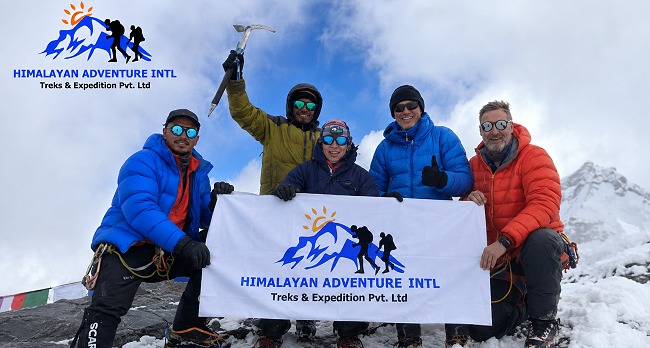
Pokalde Peak Climbing is an exciting Himalayan climbing adventure in Nepal’s Everest region, combining high-altitude trekking, Sherpa culture, dramatic mountain scenery, and a rewarding summit experience at 5,806 meters. Also known as Dolma Ri, Pokalde Peak is situated close to the famous Kongma La Pass and within the spectacular landscapes of the Khumbu Himalaya.
For trekkers who have already experienced high-altitude hiking and want to take their first step into Himalayan peak climbing, Pokalde Peak offers an excellent opportunity. The mountain is regarded as a relatively accessible, non-technical trekking peak under normal conditions, although its altitude, steep terrain, changing weather, and remote mountain environment require proper preparation, acclimatization, and experienced guidance.
At Himalayan Adventure Intl Treks, we combine careful itinerary planning, experienced local guides, reliable logistics, and personalized support to make your Pokalde Peak expedition safe, enjoyable, and memorable. The journey is much more than reaching a summit. It takes you through the heart of the Khumbu, where spectacular Himalayan landscapes meet the centuries-old traditions of the Sherpa people.
From the exciting flight toward Lukla and the bustling mountain town of Namche Bazaar to the peaceful surroundings of Tengboche, the high alpine valleys of Dingboche, the dramatic landscapes around Everest Base Camp, and the challenging approach toward Pokalde Peak, every section of this adventure offers something different.
Pokalde Peak is an excellent option for adventurers looking for something beyond a conventional Everest trek. While the Everest Base Camp Trek takes you into the heart of the Khumbu and offers spectacular views, adding a summit climb introduces an additional mountaineering challenge.
At 5,806 meters, Pokalde is high enough to provide a genuine Himalayan climbing experience while remaining comparatively accessible. The route involves steep sections, rocky ground, scree, glacial terrain, and high-altitude conditions. Under normal conditions, the climb does not involve the same level of technical mountaineering required on more difficult Himalayan peaks. However, this does not mean the mountain should be underestimated.
Altitude is one of the major challenges. Above 5,000 meters, the amount of available oxygen is significantly lower, and even experienced trekkers can find simple physical activities demanding. A gradual itinerary, appropriate acclimatization, hydration, sensible pacing, and careful monitoring of your physical condition are therefore essential.
Pokalde Peak is particularly appealing because it can be incorporated into a broader Everest-region itinerary. Rather than traveling exclusively for the summit, you can experience the culture, landscapes, monasteries, villages, glaciers, and iconic viewpoints of the Khumbu before undertaking the climb.
Pokalde Peak is located in the Khumbu region of northeastern Nepal, within the Everest mountain area. The mountain lies close to Kongma La Pass, at approximately 5,535 meters, and is positioned along one of the high-altitude routes connecting the Everest Base Camp area with the Chhukung Valley.
The surrounding landscape is distinctly alpine. As you climb higher, forests and settlements gradually disappear, giving way to rocky slopes, glacial moraines, snow-covered mountains, and expansive Himalayan valleys.
The location also makes Pokalde Peak an attractive extension to established Everest trekking routes. Trekkers undertaking the Everest Base Camp Trek or Three Passes Trek can incorporate a Pokalde summit attempt into their adventure depending on their itinerary, experience, weather, and climbing conditions.
Pokalde Peak is also known as Dolma Ri. The name has cultural and spiritual significance within the Himalayan Buddhist tradition. “Dolma” refers to Tara, a revered figure associated with compassion and protection, while “Ri” means mountain.
The name reflects the close relationship between the mountains and spiritual traditions in the Khumbu. For Sherpa communities, the Himalayan landscape is deeply connected with Buddhism, sacred places, protective deities, prayer flags, mani walls, monasteries, and traditional practices.
Traveling through the Khumbu therefore provides much more than impressive mountain photography. You have the opportunity to observe a living Himalayan culture that has developed over generations in one of the world's highest inhabited mountain environments.
The Pokalde Peak Climbing itinerary generally begins with your journey from Kathmandu to Lukla, the principal gateway for trekking in the Everest region. Depending on the season and flight operations, domestic flights to Lukla may operate from Ramechhap/Manthali rather than Kathmandu.
After arriving in Lukla, the trekking route follows the famous trail toward Namche Bazaar. The journey passes through traditional settlements, suspension bridges, forests, rivers, and increasingly dramatic mountain landscapes.
Lukla to Namche Bazaar
The trek begins in the lower Khumbu, where the landscape is greener and the trail passes through forests and traditional villages. As you gain elevation, the surrounding mountains become increasingly prominent.
Namche Bazaar is the major commercial and cultural center of the Khumbu region. The town provides an important acclimatization point and is surrounded by spectacular mountain scenery.
Namche Bazaar to Tengboche
From Namche, the trail continues toward Tengboche. The route offers magnificent views of Ama Dablam and other Himalayan peaks.
Tengboche is particularly famous for Tengboche Monastery, an important center of Tibetan Buddhist culture in the Everest region. Visiting the monastery provides an opportunity to experience the spiritual character of the Khumbu before continuing toward the higher valleys.
Tengboche to Dingboche
The trail then continues through the alpine landscape toward Dingboche. Vegetation becomes increasingly sparse as altitude increases, while the surrounding peaks appear larger and more imposing.
Dingboche is an important acclimatization location and a common stop on Everest-region trekking itineraries. Proper rest here helps prepare your body for the significantly higher elevations ahead.
Toward Everest Base Camp and Kala Patthar
Depending on your selected itinerary, the Pokalde Peak adventure can be combined with the classic Everest Base Camp route. The journey toward Everest Base Camp introduces you to the Khumbu Glacier and some of the world's most recognizable Himalayan scenery.
A climb of Kala Patthar is another major highlight. From this famous viewpoint, trekkers can enjoy spectacular views of Mount Everest and surrounding peaks.
The combination of Everest Base Camp, Kala Patthar, and Pokalde Peak provides a diverse adventure that includes both classic trekking and Himalayan climbing.
After exploring the higher Everest region, the route moves toward the Pokalde Peak climbing area. The mountain is positioned near Kongma La Pass, and the landscape becomes increasingly rugged and exposed.
The approach involves rocky and uneven terrain, alpine slopes, and glacial landscapes. Weather can change quickly at these elevations, and wind and cold can significantly affect climbing conditions.
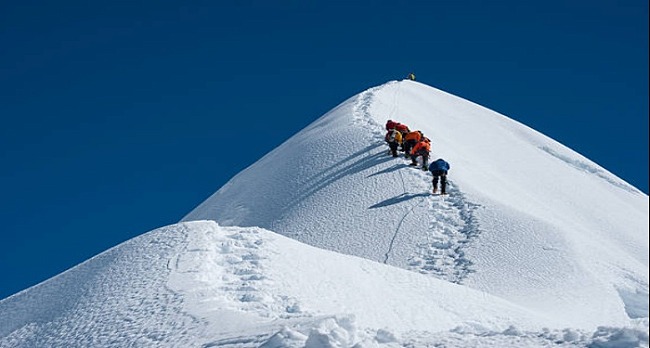
The final ascent requires concentration and endurance. Although Pokalde is considered a non-technical peak in normal conditions, the altitude and steep terrain make the summit attempt physically demanding.
Summit day is the most anticipated part of the expedition.
An early start is normally important because mountain weather can change throughout the day. After preparing your climbing equipment and checking the conditions, you begin the ascent toward the summit.
The terrain can include steep rocky sections, loose scree, and alpine slopes. Progress is generally slow because of the altitude. Your guide will help establish a comfortable pace and assess the changing conditions during the climb.
As you gain elevation, the surrounding Himalayan panorama becomes increasingly impressive. The view extends across the high mountains of the Khumbu and the wider Mahalangur Himalaya.
From the summit area, you can enjoy spectacular views toward some of Nepal's most famous peaks, including:
The summit is a rewarding moment after days of trekking, acclimatization, and preparation.
After spending an appropriate amount of time at the summit, you descend carefully. The descent is just as important as the ascent because tiredness and loose terrain can increase the risk of slips and falls.
Although Pokalde Peak is considered a relatively accessible trekking peak, it should not be described as an easy hike.
The main challenges include:
High altitude: At 5,806 meters, altitude is one of the most significant factors affecting climbers.
Steep terrain: Some sections require sustained effort over steep and uneven ground.
Loose rocks and scree: Higher sections can contain unstable rocks and loose terrain.
Weather: Himalayan weather can change quickly, particularly at high elevations.
Cold and wind: Temperatures can drop considerably around the summit area.
Endurance: Long trekking days combined with a summit attempt require good physical conditioning.
The supplied climbing information describes Pokalde as a non-technical peak but emphasizes the importance of acclimatization, physical endurance, and preparation for changing high-altitude conditions.
For this reason, we recommend that climbers have previous trekking or high-altitude hiking experience. A strong level of cardiovascular fitness and the ability to walk for several hours on consecutive days are important.
Acclimatization is one of the most important components of a successful Pokalde Peak expedition.
The body needs time to adjust to reduced oxygen availability as you gain elevation. A well-designed itinerary therefore includes gradual elevation gain and appropriate acclimatization stops.
During the trek, maintain a steady pace rather than trying to move too quickly. Drink sufficient water, eat regularly, sleep adequately, and communicate with your guide if you experience unusual symptoms.
Our guides monitor the group throughout the journey and can help make decisions based on weather, trail conditions, and individual circumstances.
The source material specifically recommends gradual ascent, hydration, steady pacing, monitoring physical condition, and using experienced guides familiar with the route.
The principal climbing seasons in the Everest region are spring and autumn.
Spring is an excellent period for Himalayan trekking and climbing. Temperatures become more favorable, weather conditions are generally suitable, and lower elevations may feature blooming rhododendrons.
Mountain visibility can also be excellent, providing outstanding opportunities for photography and panoramic views.
Autumn: September to November
Autumn follows the monsoon season and is traditionally one of the most popular trekking periods in Nepal.
Clear mountain views, generally stable weather, and dry trails make September, October, and November attractive months for Pokalde Peak climbing. The source material identifies autumn as particularly favorable for visibility and trekking conditions.
Winter brings much colder conditions and a greater possibility of snow at higher elevations. While experienced climbers may undertake the adventure during winter with appropriate preparation, conditions can be significantly more demanding.
The monsoon season brings rainfall to much of Nepal. In the Everest region, cloud, wet trails, poor visibility, and potential flight disruptions can make travel more complicated. The supplied source therefore does not recommend this period for Pokalde Peak climbing.
Pokalde Peak climbing requires appropriate permits and entry documentation for the relevant protected and climbing areas. Permit requirements can change, so Himalayan Adventure Intl Treks handles the necessary arrangements according to the applicable regulations at the time of your expedition.
We recommend completing permit arrangements before beginning the trek so you can focus on the journey itself.
Our team can also advise you about required documentation, climbing procedures, national park entry requirements, and other logistics during the preparation stage.
Accommodation on the Pokalde Peak route generally consists of mountain teahouses and lodges in established villages, with more basic arrangements at higher elevations depending on the itinerary.
Rooms in the lower villages generally provide greater comfort, while accommodation becomes simpler as you move deeper into the high mountains.
Meals commonly include a mixture of traditional Nepali dishes and familiar trekking food. Dal bhat, noodles, soups, potatoes, rice, pasta, vegetables, eggs, bread, and other simple meals are widely available along established trekking routes.
At high altitude, maintaining sufficient nutrition and hydration is particularly important because your body is working harder in a low-oxygen environment.
Although Pokalde Peak is classified as a non-technical trekking peak, proper clothing and equipment remain essential.
Your packing list should include appropriate trekking clothing, insulated layers, waterproof outerwear, trekking boots, warm gloves, headwear, sunglasses, sun protection, a sleeping bag suitable for cold conditions, a backpack, water bottles, personal medication, and other essential trekking items.
Depending on current conditions and the specific route, your climbing guide will advise you about additional equipment required for the summit attempt.
The objective is to remain warm, dry, comfortable, and prepared for changing conditions throughout the expedition.
Safety is our priority throughout every Pokalde Peak expedition.
The high Himalayas can present unpredictable conditions, so flexibility is essential. Weather, trail conditions, altitude, and individual health can all influence the itinerary.
Our experienced guides monitor the group and provide practical guidance throughout the trek. If conditions become unsuitable for a safe summit attempt, the climbing plan may need to be adjusted.
A successful Himalayan expedition is not simply about reaching the highest point. It is also about returning safely and enjoying the journey.
One of the most rewarding aspects of Pokalde Peak climbing is the opportunity to experience Sherpa culture.
The Khumbu is home to communities whose traditions are deeply connected with Tibetan Buddhism and the Himalayan environment. Throughout the trek, you encounter prayer flags, mani walls, prayer wheels, monasteries, chortens, traditional houses, and mountain communities.
Namche Bazaar provides an excellent introduction to the region's culture and trading history, while Tengboche offers a particularly important spiritual experience through its monastery.
As you travel farther into the mountains, the landscape becomes increasingly remote and the connection between people and their environment becomes more apparent.
One of the greatest advantages of Pokalde Peak climbing is its location near the Everest Base Camp trekking route.
Rather than completing a standalone peak climb, you can combine Pokalde with Everest Base Camp, Kala Patthar, Gokyo Lakes, or the Three High Passes depending on your available time and trekking experience.
This creates a comprehensive Everest-region adventure that combines iconic trekking destinations with the personal achievement of reaching a Himalayan summit.
The supplied source specifically identifies Pokalde as an option that can be integrated with Everest Base Camp, Gokyo, and Three Passes itineraries.
For travelers planning a Pokalde Peak Climbing itinerary, domestic flight logistics are an important consideration.
During busy trekking seasons, flights to and from Lukla may operate from Ramechhap (Manthali) Airport rather than Kathmandu due to air traffic management and airport operational arrangements.
For the 2026 spring and autumn seasons, the flight arrangement stated in the original itinerary is:
Travelers should therefore plan an additional transfer between Kathmandu and Ramechhap/Manthali when required.
A practical arrangement is to drive from Kathmandu toward the Manthali/Ramechhap area and stay overnight, followed by an early transfer to the airport for the Lukla flight. On the return journey, travelers can fly back to Manthali and continue by road to Kathmandu.
Because domestic flight operations and airport arrangements can change, our team will provide the applicable transfer and flight information for your departure date.
At Himalayan Adventure Intl Treks, we understand that a successful mountain expedition depends on more than simply following a trail.
Our approach focuses on careful preparation, experienced local staff, practical logistics, responsible trekking, and personal attention throughout the journey.
Our services include:
We work to make the logistics straightforward so you can concentrate on experiencing the mountains.
The Everest region is a fragile Himalayan environment and a culturally important landscape. Responsible tourism is therefore an important part of the Pokalde Peak experience.
Travelers should respect local customs, avoid unnecessary waste, use established trails, protect natural resources, and treat monasteries and religious sites with respect.
Supporting local teahouses, guides, porters, and community businesses also helps tourism contribute directly to the people who live and work in the region.
Pokalde Peak is suitable for physically fit trekkers who want to progress from high-altitude trekking toward Himalayan peak climbing.
Previous trekking experience is strongly recommended, particularly experience at altitude. You should be comfortable walking for several hours per day over uneven terrain and be prepared for cold, wind, steep sections, and basic mountain accommodation.
Pokalde is comparatively accessible, but its 5,806-meter elevation means that appropriate preparation is essential.
If you are unsure whether your previous experience is suitable, our trekking specialists can review your experience, proposed itinerary, fitness level, and climbing goals before you book.
Pokalde Peak Climbing is an extraordinary way to experience the Everest region from a different perspective. The adventure combines the classic Himalayan trekking experience with the challenge of reaching a 5,806-meter summit.
The journey takes you from the lower Khumbu through Sherpa villages and Buddhist monasteries into a dramatic alpine world of glaciers, rocky ridges, high valleys, and towering Himalayan peaks.
Along the way, you can experience Namche Bazaar, Tengboche Monastery, Dingboche, Everest Base Camp, Kala Patthar, and the spectacular mountain landscapes surrounding Kongma La and Pokalde Peak.
The summit itself provides a memorable panorama of Everest, Lhotse, Makalu, Ama Dablam, Pumori, and the surrounding Mahalangur Himalaya.
For experienced trekkers seeking their first Himalayan peak-climbing experience, Pokalde Peak offers a combination of adventure, culture, scenery, and personal achievement. With careful acclimatization, suitable preparation, experienced guides, and responsible planning, the journey can become one of the most memorable adventures of your time in Nepal.
Plan your Pokalde Peak Climbing adventure with Himalayan Adventure Intl Treks and discover the high-altitude beauty of the Everest region beyond the classic trekking trails.
Trek Distance: —
Highest Elevation: 1,350m
Highlights: Arrival in Kathmandu, airport reception, traditional Nepali welcome, trek briefing.
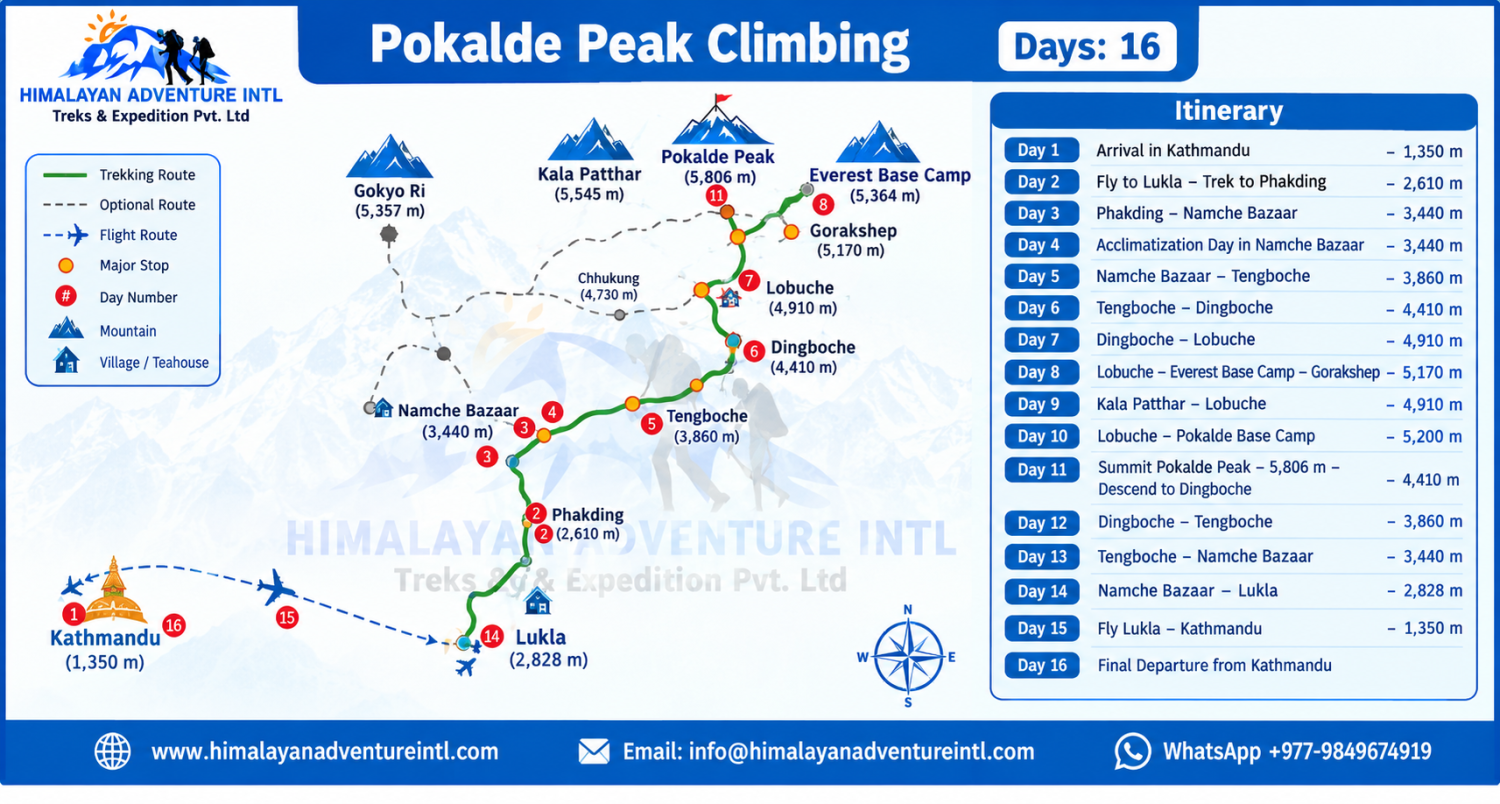
Welcome to Nepal and Kathmandu, the vibrant gateway to the Himalayas. Upon your arrival at Tribhuvan International Airport, a representative from Himalayan Adventure Intl Treks will meet you and transfer you to your hotel. After check-in, you can relax and recover from your journey.
Depending on your arrival time, you may have an opportunity to explore the surrounding streets of Kathmandu or simply rest at the hotel. In the evening, your trekking team will provide a detailed briefing about the Everest Base Camp and Pokalde Peak adventure, including the itinerary, trekking conditions, equipment, safety procedures, and acclimatization strategy.
Overnight in Kathmandu.
Flight Elevation: 2,828m
Trek Distance: Approx. 7–8 km
Trekking Time: 3–4 hours
Highlights: Scenic mountain flight, Lukla airstrip, Dudh Koshi Valley, first Himalayan trekking experience.
An early morning flight takes you from Kathmandu to Lukla, one of the world's most famous mountain airstrips. The short flight offers spectacular views of the Himalayan landscape before landing at Lukla.
After meeting the porters and organizing your trekking equipment, you begin walking through the green foothills of the Khumbu region. The trail passes through small Sherpa settlements, prayer stones, mani walls, and forested terrain.
Following the Dudh Koshi Valley, you gradually descend toward Phakding. This relatively gentle opening trek allows your body to begin adapting to the increasing altitude.
Overnight in Phakding.
Trek Distance: Approx. 10–12 km
Trekking Time: 5–6 hours
Highlights: Sagarmatha National Park, suspension bridges, Dudh Koshi River, first views of Everest region peaks, Namche Bazaar.
Today marks the first substantial climbing day of the trek. After breakfast, follow the Dudh Koshi River through pine and rhododendron forests, crossing several suspension bridges decorated with colorful prayer flags.
You enter Sagarmatha National Park and continue toward the famous Hillary Suspension Bridge. Beyond the bridge, the trail climbs steadily toward Namche Bazaar. The ascent is demanding but rewarding as the landscape becomes increasingly mountainous.
With clear weather, you may catch your first distant views of Everest and surrounding Himalayan peaks. Namche Bazaar, situated in a natural amphitheater, is the commercial and cultural heart of the Khumbu region.
Overnight in Namche Bazaar.
Hiking Distance: Approx. 4–6 km
Highest Point: Approx. 3,800m
Highlights: Acclimatization hike, Everest viewpoints, Sherpa culture, Himalayan panoramas.
Today is dedicated to acclimatization. Rather than remaining completely inactive, you take a gradual hike to a higher elevation before returning to Namche for the night.
A popular option is to hike toward the Everest View Hotel area, where spectacular panoramas may include Everest, Lhotse, Ama Dablam, Thamserku, and Kongde. The surrounding trails also provide an opportunity to observe traditional Sherpa villages and Buddhist monuments.
Back in Namche, you can explore the lively market area, visit local shops, or learn more about Sherpa culture and Himalayan mountaineering.
A properly managed acclimatization day is an important part of preparing for the higher elevations ahead.
Overnight in Namche Bazaar.
Trek Distance: Approx. 9–10 km
Trekking Time: 5–6 hours
Highlights: Panoramic Himalayan trail, Ama Dablam views, Tengboche Monastery, rhododendron forests.
Leaving Namche behind, the trail initially follows a scenic contour route above the Dudh Koshi Valley. This section offers some of the most impressive mountain scenery of the trek, with views toward Everest, Lhotse, Nuptse, Ama Dablam, and Thamserku.
The path gradually descends toward the river before climbing through beautiful rhododendron, pine, and fir forests. The final ascent brings you to Tengboche, one of the most important Buddhist centers in the Khumbu.
Tengboche Monastery is surrounded by magnificent Himalayan peaks, making it an exceptional place to pause and appreciate the spiritual character of the region.
Overnight in Tengboche.
Trek Distance: Approx. 11–12 km
Trekking Time: 5–6 hours
Highlights: Impressive Ama Dablam views, alpine landscapes, Pangboche, Imja Valley.
The morning begins with a descent through forest toward the Dudh Koshi before the trail gradually climbs toward the higher alpine settlements.
Passing through Pangboche, one of the oldest settlements in the region, you enter the increasingly rugged Imja Valley. The vegetation becomes thinner as you gain altitude, while the surrounding mountains appear larger and more dramatic.
Ama Dablam dominates the landscape throughout much of today's walk. Continuing along the valley, you eventually reach Dingboche, a traditional settlement surrounded by stone-walled fields.
Dingboche is an important acclimatization point before the trail climbs toward Lobuche and Everest Base Camp.
Overnight in Dingboche.
Trek Distance: Approx. 11 km
Trekking Time: 5–6 hours
Highlights: High-altitude landscape, Thukla Pass, Everest memorials, panoramic Khumbu peaks.
Today's route takes you deeper into the high Himalayas. Leaving Dingboche, the trail gradually follows the broad valley toward the settlement of Duglha.
Beyond Duglha, the trail climbs more steeply toward the Thukla Pass. Along the ascent, you encounter memorials dedicated to climbers and mountaineers who lost their lives in the Everest region. The memorials create a peaceful and reflective atmosphere amid the enormous Himalayan landscape.
From the pass, the route continues over rocky terrain toward Lobuche. At this elevation, the air is noticeably thinner, so maintaining a steady pace and staying well hydrated becomes increasingly important.
Overnight in Lobuche.
Trek Distance: Approx. 12–13 km
Trekking Time: 7–8 hours
Highlights: Everest Base Camp, Khumbu Glacier, moraine landscape, Gorakshep.
One of the most anticipated days of the adventure begins early. From Lobuche, the trail follows the rugged lateral moraine of the Khumbu Glacier toward Gorakshep.
After a short break at Gorakshep, continue toward Everest Base Camp. The trail crosses a dramatic glacial landscape of rocks, ice, and moraine formations.
Reaching Everest Base Camp is a major milestone. From here, you can admire the surrounding peaks and the famous Khumbu Icefall area. During the main climbing season, the atmosphere at Base Camp can be especially lively with expedition teams preparing for their summit attempts.
After spending time at Base Camp, retrace the trail toward Gorakshep for an overnight stay.
Overnight in Gorakshep.
Trek Distance: Approx. 7–8 km
Trekking Time: 5–6 hours
Highest Elevation: 5,545m
Highlights: Kala Patthar sunrise, Everest panorama, Khumbu Glacier views, descent to Lobuche.
Today begins with an early ascent of Kala Patthar, the highest point reached on the Everest Base Camp trekking section. The climb is steep and slow due to the altitude, but the panoramic views from the summit are spectacular.
From Kala Patthar, you can enjoy an expansive Himalayan panorama featuring Everest, Nuptse, Lhotse, Pumori, and surrounding peaks. Sunrise from this viewpoint can create unforgettable views across the Everest massif.
After spending time at the viewpoint, descend toward Gorakshep and continue to Lobuche. The downhill section provides a welcome change after several days of climbing at high altitude.
Overnight in Lobuche.
Trek Distance: Approx. 8–10 km
Trekking Time: 5–7 hours
Highlights: Off-the-beaten-path trail, Kongma La region, remote alpine scenery, Pokalde Peak Base Camp.
Today the trek becomes more adventurous as you leave the main Everest Base Camp route and move toward Pokalde Peak.
The trail traverses rugged high-altitude terrain with expansive views of the surrounding mountains. Depending on trail and weather conditions, the route may involve steep sections and rocky ground, requiring careful footing.
As you approach Pokalde Base Camp, the landscape becomes increasingly remote and barren. The dramatic setting provides an excellent introduction to the mountaineering environment that awaits the following day.
Your climbing guide will inspect equipment, discuss the summit strategy, and review safety procedures. Rest and hydration are particularly important at this altitude.
Overnight at Pokalde Base Camp.
Trek/Climb Distance: Approx. 12–14 km
Trekking & Climbing Time: 8–10 hours
Highest Elevation: 5,806m
Highlights: Pokalde Peak summit, panoramic Himalayan views, challenging ascent, descent to Dingboche.
Today is the principal mountaineering day of the journey. You begin early, following your climbing guide toward the summit of Pokalde Peak.
The ascent involves steep and rocky high-altitude terrain, and conditions can vary significantly according to weather and season. Your guide will determine the safest route and manage the pace according to the group's condition.
From the summit at 5,806 meters, you can enjoy magnificent views across the Khumbu Himalaya, with numerous major peaks visible on clear days.
After celebrating the successful summit—or completing the highest safe point according to conditions—you begin the long descent. Descending to Dingboche provides a significant loss of elevation and allows your body to recover from the summit effort.
Overnight in Dingboche.
Trek Distance: Approx. 11–12 km
Trekking Time: 5–6 hours
Highlights: Descending alpine trail, Ama Dablam views, Pangboche, Tengboche Monastery.
After the demanding Pokalde Peak summit day, today's route provides a more relaxed rhythm as you descend through the Imja Valley.
The trail passes through Pangboche and continues toward the forested landscapes below. As you lose elevation, the air becomes noticeably richer and vegetation gradually returns.
Ama Dablam remains a spectacular presence throughout the journey. Eventually, the trail reaches Tengboche, where you can revisit the monastery and enjoy the peaceful surroundings.
The combination of mountain scenery, forests, and Buddhist heritage makes this section particularly rewarding after the strenuous high-altitude days.
Overnight in Tengboche.
Trek Distance: Approx. 9–10 km
Trekking Time: 5–6 hours
Highlights: Forest descent, Himalayan viewpoints, Dudh Koshi Valley, return to Namche.
The trail descends from Tengboche through beautiful rhododendron and pine forests. After reaching the Dudh Koshi River, you follow the route through familiar villages and mountain landscapes.
The path then climbs gradually toward Namche Bazaar. Compared with the earlier ascent, this section feels easier because you are now descending overall and have already adapted to the high altitude.
Arriving back in Namche provides an opportunity to relax and enjoy the lively atmosphere of this famous Sherpa trading center. You may spend the afternoon exploring the market or simply resting after the long mountain journey.
Overnight in Namche Bazaar.
Trek Distance: Approx. 18–20 km
Trekking Time: 6–7 hours
Highlights: Final day on the trail, Hillary Suspension Bridge, Dudh Koshi Valley, Lukla celebration.
Today is the final trekking day. Leaving Namche, the trail descends steadily toward the lower Khumbu, passing through forests, villages, suspension bridges, and sections of the Dudh Koshi Valley.
You retrace the route toward Phakding and continue onward to Lukla. Although the distance is relatively long, the decreasing elevation makes the walk considerably more comfortable than the high-altitude sections.
Upon reaching Lukla, you can relax and celebrate the completion of the Everest Base Camp and Pokalde Peak adventure with your trekking team.
Overnight in Lukla.
Flight Duration: Approx. 25–30 minutes
Highlights: Scenic Himalayan flight, return to Kathmandu, leisure time.
Weather permitting, take an early morning flight from Lukla back to Kathmandu. The short flight provides another opportunity to enjoy aerial views of the Himalayan landscape before returning to the Kathmandu Valley.
Upon arrival, our representative will assist with your transfer to the hotel. The remainder of the day is free for relaxation, shopping, sightseeing, or enjoying a well-deserved rest after your Himalayan adventure.
You may explore Kathmandu's cultural attractions or purchase traditional handicrafts and souvenirs to remember your journey.
Overnight in Kathmandu.
Elevation: 1,350m
Highlights: Airport transfer, farewell to Nepal.
Your Himalayan adventure officially comes to an end today. Depending on your flight schedule, you can enjoy your final hours in Kathmandu at leisure.
A representative from Himalayan Adventure Intl Treks will arrange your transfer to Tribhuvan International Airport in time for your international departure.
We sincerely hope that the mountains, Sherpa culture, Buddhist heritage, and unforgettable experiences of the Everest region have created lasting memories.
Himalayan Adventure Intl Treks wishes you a safe journey home and looks forward to welcoming you again for another Himalayan adventure.
Pokalde Peak Climbing is an exciting introduction to Himalayan mountaineering for trekkers who are ready to move beyond ordinary trekking and experience the thrill of standing on a Himalayan summit. Rising to 5,806 meters (19,049 feet) above sea level, Pokalde Peak is situated in the spectacular Everest region of Nepal, close to the famous Kongma La Pass and surrounded by some of the world's highest mountains.
Organized by Himalayan Adventure Intl Treks, the Pokalde Peak climbing adventure combines scenic trekking, Sherpa culture, high-altitude acclimatization and basic mountaineering skills in one memorable journey. The route takes you through the famous Khumbu landscape, traditional Sherpa settlements, alpine valleys, glacial terrain and high mountain passes before reaching the climbing area.
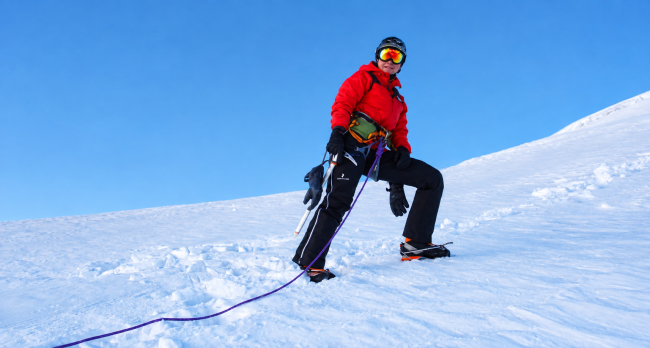
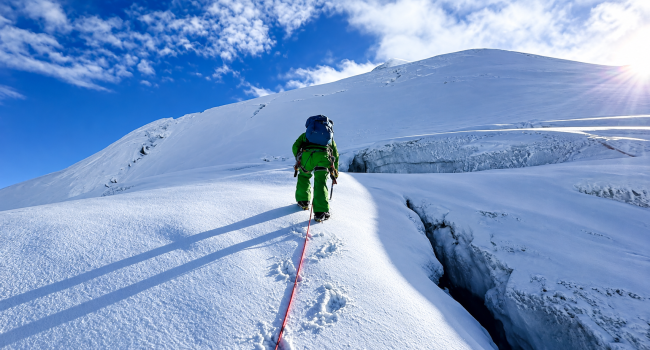
Pokalde is considered one of Nepal's more accessible trekking peaks, but it should not be underestimated. The altitude itself creates a significant physical challenge, and summit conditions can change quickly. Depending on the season, snow and ice may be encountered during the ascent, requiring the use of equipment such as crampons, an ice axe, ropes and appropriate climbing protection. For this reason, climbers should have good physical fitness, proper acclimatization and professional mountain guidance.
The mountain is particularly attractive to trekkers who have already completed adventures such as Everest Base Camp Trek, Gokyo Valley Trek, or other high-altitude journeys and now want to gain their first Himalayan climbing experience.
At the summit, climbers can enjoy impressive views of Mount Everest, Lhotse, Makalu, Ama Dablam, Nuptse, Baruntse and numerous surrounding peaks. However, Pokalde Peak is about more than reaching 5,806 meters. It is an opportunity to build confidence, learn fundamental mountaineering techniques and experience the demanding but rewarding environment of the high Himalayas.
Pokalde Peak is an excellent option for adventure seekers who want to experience Himalayan climbing without immediately committing to a highly technical expedition.
The journey offers several attractions:
For many trekkers, Pokalde becomes the bridge between trekking and mountaineering. You can begin the journey as a trekker and finish it with the experience of climbing a Himalayan summit.
Pokalde Peak is located in the Khumbu region of Nepal, within the broader Everest mountain area. It lies close to Kongma La Pass, one of the three major high passes of the Everest Three Passes route.
Its location makes Pokalde particularly interesting because the climb can be incorporated into a wider Everest-region itinerary. Instead of traveling exclusively for a short climbing expedition, climbers can combine the mountain with a scenic trek through Namche Bazaar, Tengboche, Dingboche, Lobuche and other famous settlements.
The surrounding landscape changes dramatically as you gain altitude. Green hills and forests around the lower Khumbu gradually give way to alpine meadows, rocky valleys, glaciers and snow-covered mountains.
Your Pokalde Peak climbing adventure begins with your arrival in Kathmandu, Nepal's vibrant capital. Himalayan Adventure Intl Treks arranges the necessary preparation and provides an opportunity to meet your climbing guide, review the itinerary and check your equipment.
Depending on the travel plan, you can spend time exploring Kathmandu and preparing for the expedition before traveling toward the Everest region.
The classic journey begins with a flight toward Lukla, the gateway to the Khumbu region. From Lukla, the adventure continues on foot through beautiful mountain landscapes and traditional Sherpa communities.
The route generally passes through famous destinations such as Phakding, Namche Bazaar, Tengboche, Dingboche and Lobuche, depending on the selected itinerary. Gradual altitude gain is an important part of the journey because proper acclimatization is essential before attempting the summit.
After reaching the appropriate high-altitude area, your climbing guide will review the summit plan, weather conditions, equipment and safety procedures. Basic training can be provided for crampon movement, ice-axe use, rope techniques and safe movement on snow or icy terrain when required.
The exact itinerary can be customized according to the climber's experience, acclimatization needs, weather and whether Pokalde is combined with Everest Base Camp or the Three Passes route.
A typical adventure may follow this general pattern:
Kathmandu – Lukla – Phakding – Namche Bazaar – Tengboche – Dingboche – Lobuche – Kongma La/Pokalde area – Pokalde Summit – return toward the Khumbu – Lukla – Kathmandu.
Some climbers choose to combine Pokalde Peak with Everest Base Camp, creating a longer and more comprehensive Everest-region adventure.
Others may combine the peak with the Everest Three Passes Trek, particularly those who want a more challenging high-altitude itinerary.
Himalayan Adventure Intl Treks can design the program around your available time, previous trekking experience and climbing goals.
The summit of Pokalde Peak stands at approximately 5,806 meters (19,049 feet).
This elevation places the mountain firmly in a high-altitude environment. Even fit trekkers can experience fatigue, reduced appetite, headaches or breathing difficulties at this elevation.
The importance of acclimatization therefore cannot be overstated. A carefully designed itinerary allows your body to gradually adjust to decreasing oxygen levels while you continue toward the summit.
The starting elevation at Lukla is approximately 2,800 meters, creating a substantial elevation gain over the course of the expedition.
The total trekking distance depends on the selected route and whether the climbing itinerary includes Everest Base Camp, Kongma La or other destinations.
A typical trekking day can involve approximately 5 to 7 hours of walking, although some days may be shorter and summit day can be considerably longer.
Depending on terrain, altitude and itinerary, daily walking distances may commonly range from approximately 8 to 12 kilometers, but these figures should be treated as general guidelines rather than fixed measurements.
High-altitude trekking is not simply about distance. A short route at 5,000 meters can be considerably more demanding than a longer walk at lower altitude.
Our guides therefore focus on a comfortable pace, regular breaks, hydration and gradual acclimatization rather than rushing to cover a particular number of kilometers each day.
Pokalde Peak is generally regarded as an accessible trekking peak, but it still requires preparation.
The approach trek is physically demanding because of the increasing altitude. The summit section can involve steep terrain, snow and ice depending on the season and current mountain conditions.
The difficulty can therefore vary considerably from one climbing season to another.
For an experienced high-altitude trekker, Pokalde can provide an excellent introduction to Himalayan mountaineering. For someone completely new to both trekking and altitude, additional preparation may be necessary.
The most important factors are:
Yes, a physically fit beginner with appropriate preparation may consider Pokalde Peak, particularly when joining a professionally guided expedition.
Previous trekking experience is helpful but does not necessarily mean that you need extensive technical mountaineering experience. The mountain is often selected by trekkers seeking their first Himalayan peak.
However, "beginner-friendly" does not mean "easy." High altitude presents genuine risks, and conditions can become challenging very quickly.
Himalayan Adventure Intl Treks provides guidance and basic climbing instruction before the summit attempt. Climbers should be comfortable following instructions, moving carefully on uneven terrain and using basic mountaineering equipment when necessary.
If you have never climbed at altitude before, we recommend discussing your previous trekking experience with our team before finalizing the itinerary.
Good preparation can make a significant difference to your Pokalde Peak experience.
You should ideally begin physical training several weeks or months before departure. Cardiovascular activities such as:
can help develop endurance.
Strength training for the legs and core is also useful because the route includes long ascents and descents.
Regular hiking with a backpack can help your body become accustomed to carrying equipment for several hours.
You should also practice walking consistently rather than relying only on occasional intense workouts. The goal is to develop sustainable endurance for consecutive trekking days.
Mental preparation is equally important. High-altitude climbing involves cold temperatures, early mornings, changing weather and long days on the trail. Patience and a positive attitude are valuable qualities during the expedition.
Before the summit attempt, your climbing guide can provide practical instruction appropriate to the conditions.
This may include:
The amount of technical equipment and instruction required depends on the route and conditions during your expedition.
You do not need to arrive as an expert mountaineer, but you should be willing to learn and carefully follow the instructions of your climbing team.
The most popular climbing periods are spring and autumn.
Spring is one of Nepal's principal trekking and climbing seasons. Temperatures gradually become more comfortable, visibility can be excellent and the lower valleys become particularly beautiful.
The hills around the Khumbu region can also display colorful rhododendron blossoms during spring.
Autumn generally provides favorable trekking conditions following the monsoon season. The atmosphere can become clearer, and mountain visibility is often excellent.
September can still receive some residual monsoon influence, while October and November are traditionally popular months for trekking and mountaineering.
Winter brings colder temperatures and increased snow at higher elevations. Experienced climbers may still travel during winter, but conditions can be significantly more demanding.
Monsoon brings substantial rainfall to many parts of Nepal. Lower trails can become wet and slippery, while cloud cover may affect mountain visibility and flight operations.
For most climbers, spring and autumn are the preferred seasons.
Altitude sickness, also known as Acute Mountain Sickness (AMS), is one of the major concerns during high-altitude trekking and climbing.
Possible symptoms can include headache, nausea, dizziness, unusual tiredness and difficulty sleeping.
The best approach is prevention and early recognition.
A responsible itinerary includes gradual altitude gain and appropriate acclimatization. Climbers should maintain hydration, avoid overexertion and communicate honestly with their guide about how they are feeling.
Alcohol should be avoided at high altitude because it can contribute to dehydration and may interfere with proper acclimatization.
If symptoms become serious or worsen, descending to a lower elevation is an important safety measure. No summit is more important than your health.
Our experienced mountain guides monitor climbers throughout the expedition and can recommend changes to the itinerary when necessary.
Climbing Pokalde Peak requires the appropriate permissions and permits for the mountain and the areas through which the expedition travels.
Depending on the current regulations, the expedition may involve the relevant Nepal mountaineering/trekking peak permit, Sagarmatha National Park entry permit, and Khumbu Pasang Lhamu Rural Municipality fee.
Permit requirements and fees can change according to government regulations, seasons and administrative policies. Himalayan Adventure Intl Treks handles the required permit arrangements as part of the organized expedition and provides current information before departure.
Food is an important part of maintaining energy at altitude.
Accommodation along the trekking route is generally provided by local teahouses and lodges. Typical meals include:
The selection can vary depending on the location and altitude.
Dal Bhat is especially popular among trekkers because it provides a filling combination of rice, lentils and vegetables.
At higher elevations, food choices become more limited because supplies must be transported from lower areas.
Most nights are spent in local teahouses or mountain lodges.
Rooms are generally simple, clean and comfortable, often with twin beds. Bathrooms may be shared, particularly at higher elevations.
Facilities become more basic as you climb higher. Heating is generally available in communal dining areas rather than bedrooms.
For the climbing portion, camping may be required depending on the selected route and expedition plan. Himalayan Adventure Intl Treks will organize the necessary camping arrangements when required.
Communication facilities vary throughout the Everest region.
Mobile phone service may be available in major settlements, while connectivity can become limited in remote and higher areas.
Many teahouses offer Wi-Fi for an additional charge, although connection speeds may be slow and unreliable.
Electricity is available in many lodges, but charging may involve an additional fee.
It is recommended to bring a power bank and spare batteries for essential devices. During remote climbing sections, communication arrangements may rely on the climbing team's equipment and established emergency procedures.
The traditional approach to the Everest region begins with a flight from Kathmandu toward Lukla.
During busy trekking seasons, flight operations may be scheduled through Manthali Airport in Ramechhap rather than directly from Kathmandu. Manthali is several hours by road from Kathmandu, so the itinerary may require an early morning road transfer.
Flight schedules are highly dependent on weather, airport operations and airline scheduling. Delays and changes are possible, particularly in mountain environments.
Himalayan Adventure Intl Treks monitors the travel arrangements and assists with necessary adjustments when flight schedules change.
For travelers who prefer greater convenience or have limited time, a helicopter transfer between Kathmandu and Lukla may be arranged subject to availability, weather and operational conditions.
A helicopter flight can provide a scenic and time-saving alternative to the standard approach.
Helicopter services are also sometimes considered when regular flights are disrupted, although availability and pricing depend on the situation.
Pokalde Peak can be incorporated into several different Everest-region adventures.
Pokalde with Everest Base Camp
Combining Pokalde with Everest Base Camp is an excellent option for trekkers who want both a famous trekking destination and a Himalayan summit experience.
Pokalde with Three Passes Trek
The Everest Three Passes route provides a more demanding high-altitude adventure. Combining Pokalde with this itinerary creates a challenging journey through some of the most dramatic landscapes of the Khumbu.
Pokalde and Other Peaks
Depending on experience, schedule and climbing conditions, Pokalde may also be considered as part of a broader climbing program involving other trekking peaks. Any multi-peak itinerary requires additional planning, acclimatization and appropriate technical preparation.
Travel insurance is strongly recommended for every Pokalde Peak climber.
Your policy should specifically cover:
Always check the policy wording carefully. Some standard travel insurance policies do not cover mountaineering above specific elevations.
Summit day is usually the most demanding and memorable part of the expedition.
The team normally starts very early to take advantage of favorable morning conditions. Temperatures can be extremely cold, and climbers should be prepared for a long day.
Your guide will assess the weather, snow conditions and overall safety before proceeding.
As you climb higher, the landscape becomes increasingly dramatic. The surrounding peaks appear closer, while the valleys and glaciers stretch far below.
Reaching the summit of Pokalde Peak is a major personal achievement.
From the top, climbers may enjoy spectacular views toward Everest, Lhotse, Makalu, Ama Dablam, Nuptse and other Himalayan peaks, subject to weather and visibility.
After spending an appropriate amount of time at the summit, the team begins the descent. Descending safely is just as important as reaching the summit.
The equipment list depends on the season, route and climbing conditions, but typical equipment can include:
Our team can provide a detailed packing list before your departure and advise which technical equipment should be brought personally and which items can be arranged locally.
At Himalayan Adventure Intl Treks, we believe that a successful mountain journey is about more than reaching the summit.
It is about careful planning, responsible guiding, acclimatization, local knowledge and creating a safe and enjoyable experience.
Our Pokalde Peak climbing service can include:
We welcome solo travelers, couples, friends, families, private groups and climbers who wish to join a fixed departure.
Pokalde Peak can be suitable for:
The mountain should not be approached casually. Proper preparation, equipment and professional guidance remain essential.
Pokalde Peak can be an important first step toward more ambitious Himalayan climbing.
After developing confidence and basic mountaineering skills, some climbers choose to progress toward peaks such as:
Progression should always depend on your experience, technical skills, physical preparation and the requirements of the individual mountain.
The Everest region is one of Nepal's most valuable natural and cultural destinations.
Travelers should help protect the environment by minimizing plastic waste, carrying reusable water bottles, respecting local customs and disposing of waste responsibly.
We encourage our guests to support local teahouses, guides, porters and communities whenever possible.
Respect for Sherpa culture and Buddhist traditions is an important part of the journey. Temples, monasteries, prayer flags, mani walls and chortens should be treated with appropriate respect.
Pokalde Peak Climbing is an adventure that brings together the best elements of a Himalayan journey: spectacular mountains, challenging trails, Sherpa culture, high-altitude landscapes and the excitement of reaching a Himalayan summit.
At 5,806 meters, Pokalde Peak offers a meaningful mountaineering challenge without requiring the level of commitment associated with Nepal's highest and most technical mountains. Its location near Kongma La and the major Everest-region trails also makes it possible to combine the climb with Everest Base Camp or other high-altitude adventures.
For a prepared and properly guided climber, standing on the summit can become a powerful personal achievement. You will experience cold mornings, steep trails, changing weather, thin air and demanding trekking days—but you will also experience unforgettable mountain scenery and the satisfaction of achieving something beyond an ordinary trek.
Himalayan Adventure Intl Treks is ready to help you plan your Pokalde Peak adventure with a customized itinerary, professional mountain guide, permit arrangements, accommodation, transportation and climbing support.
Whether this is your first Himalayan peak or another achievement on your mountaineering journey, Pokalde Peak offers an unforgettable opportunity to experience the high Himalayas of Nepal.
Book your Pokalde Peak Climbing adventure with Himalayan Adventure Intl Treks and take your next step from trekking into Himalayan mountaineering.