
Have Questions? Talk to Expert (Binod)
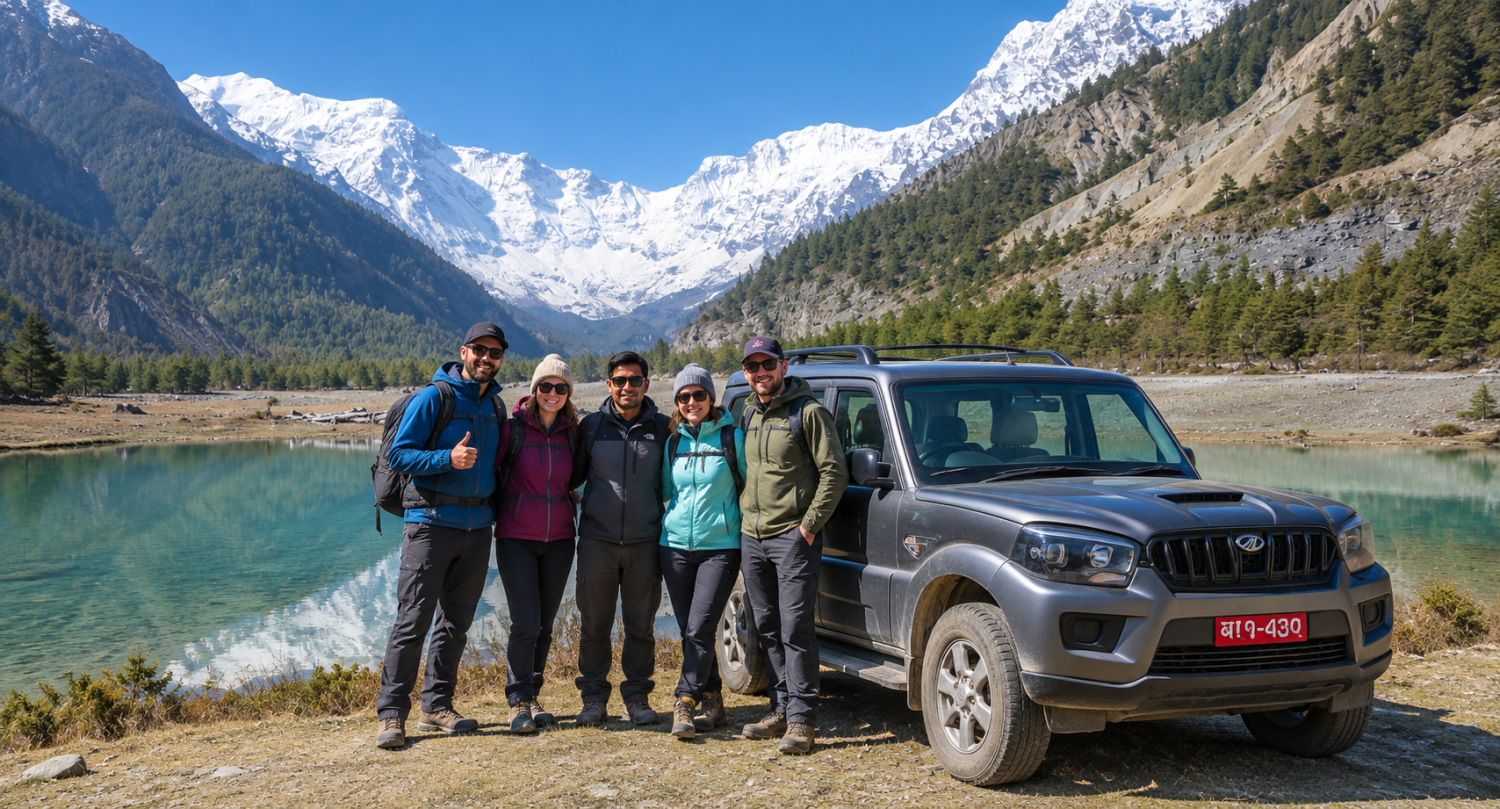
Manang Overland Tour Nepal is one of the most exciting Himalayan road journeys for travelers who want to experience the dramatic landscapes, ancient Buddhist culture, mountain villages, waterfalls, caves, monasteries, apple farms, and spectacular Annapurna views without undertaking a long multi-day trek. Organized by Himalayan Adventure Intl Treks, this overland jeep tour is suitable for travelers from India, Asia, NRI communities, and visitors from all over the world who are looking for a comfortable and adventurous way to discover the remote Manang region of Nepal.
Located in the spectacular Annapurna region, Manang offers a remarkable combination of high Himalayan scenery and traditional mountain culture. The journey takes you from the busy streets of Kathmandu through river valleys, waterfalls, forests, agricultural settlements, dramatic mountain roads, Tibetan-influenced villages, and finally into the dry, high-altitude landscape of Manang.
The Manang Jeep Tour from Kathmandu follows the route through Besisahar and the Marshyangdi River valley. As the road climbs higher, the scenery changes dramatically. Green hills and subtropical vegetation gradually give way to pine forests, rocky cliffs, deep gorges, waterfalls, traditional villages, and the semi-arid landscapes characteristic of the upper Manang region.
One of the major advantages of a Manang overland journey is that you can enjoy the Himalayan environment without having to walk continuously for many days. The majority of the journey is completed by a comfortable 4WD jeep, while you can stop for sightseeing, photography, short walks, cultural exploration, meals, and village visits.
For families, couples, senior travelers, groups of friends, photographers, Indian tourists, NRI travelers, and international visitors with limited time, the Manang Overland Jeep Tour provides an excellent way to experience the Annapurna Himalayas.
The Manang region is completely different from the lower valleys of Nepal. As you travel deeper into the Annapurna region, the landscape becomes more dramatic and remote. The journey combines natural beauty, traditional Himalayan settlements, Buddhist heritage, agriculture, mountain scenery, and an adventurous off-road experience.
The route follows the Marshyangdi River for much of the journey. Waterfalls cascade down steep cliffs, forests cover the hillsides, and traditional villages appear along the valley. Further north, the landscape becomes drier and more rugged as you approach the high-altitude Manang region.
The cultural side of the journey is equally fascinating. Communities in the upper Manang region have strong Tibetan Buddhist influences. Monasteries, prayer flags, mani walls, chortens, traditional houses, caves, and religious sites provide opportunities to understand the spiritual heritage of the Himalayas.
The Manang Valley is also famous among trekkers because it is an important acclimatization area on the Annapurna Circuit. Travelers who normally reach Manang on foot can experience this remarkable region by jeep during an overland tour.
The adventure normally begins in Kathmandu. From the capital city, the jeep travels toward the western Himalayan region, passing through scenic river valleys and hill settlements.
As the journey progresses, the road follows the Marshyangdi River, one of the major rivers of the region. The valley becomes increasingly dramatic, with steep cliffs, waterfalls, suspension bridges, forests, agricultural land, and traditional villages.
Places such as Ngadi, Jagat, Chamje and Tal provide opportunities to stop, stretch your legs, take photographs, enjoy local food, and observe village life.
After reaching Chame, the district headquarters of Manang, the scenery changes further. Pine forests, rocky mountains and impressive views of the Annapurna range begin to dominate the landscape.
Continuing toward Manang, the road passes through places such as Bhratang, Pisang and other traditional settlements. The dry landscape, dramatic cliffs and high Himalayan peaks create an unforgettable atmosphere.
Chame is the administrative center of Manang District and one of the important settlements on the Annapurna Circuit route. It is surrounded by beautiful Himalayan scenery and provides an excellent opportunity to experience the transition from the lower river valley to the high-altitude environment.
Visitors can explore the village, enjoy mountain views, visit local cultural sites, and experience the atmosphere of a traditional Himalayan settlement.
The journey around Chame also provides impressive views of the Annapurna mountain range and surrounding peaks.
One of the most enjoyable aspects of the Manang Overland Jeep Tour from Kathmandu is the number of waterfalls found along the road.
The route passes through a landscape where water descends dramatically from the surrounding mountains. Depending on the season and road conditions, waterfalls can be especially impressive after the monsoon.
Major waterfall areas include:
Chamje is particularly famous for its impressive waterfall scenery. Tal Village is also surrounded by beautiful natural landscapes and waterfalls, making it a worthwhile stopping point for photography and sightseeing.
The Milarepa Cave and Monastery is one of the culturally fascinating attractions associated with the Manang region.
Milarepa is one of the most famous figures in Tibetan Buddhist tradition, and caves associated with meditation and spiritual practice hold an important place in Himalayan Buddhist culture.
Visiting the cave and monastery adds a spiritual dimension to the overland journey. Travelers can experience a quieter side of the Himalayas while learning about the religious traditions that have shaped communities in this region for generations.
Visitors should maintain respectful behavior when visiting monasteries, caves and religious sites. Photography should always be done with consideration for local customs.
The Manang region is rich in Buddhist heritage. Depending on the route and available time, travelers may encounter several monasteries and religious sites, including:
These sites offer opportunities to learn about Himalayan Buddhism, local architecture, prayer traditions, meditation practices and village life.
Manang is also famous for its apple production. The dry climate and high-altitude environment create favorable conditions for apple farming.
Apple farms can be found around areas such as Danakyu and Bhratang, and visitors can enjoy views of orchards, mountain landscapes and agricultural settlements.
Depending on the season, travelers may have opportunities to taste locally produced apples, apple juice and other apple-based products.
For food lovers and photographers, the apple farms are another memorable feature of the Manang Valley Jeep Tour.
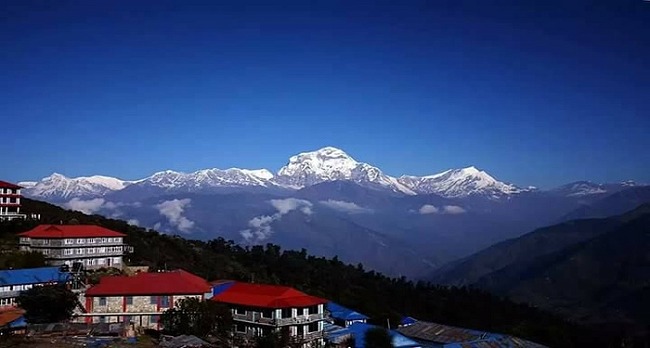
The mountain scenery is one of the main reasons travelers choose a Manang overland adventure.
During the journey, you can enjoy impressive views of peaks including:
The combination of towering mountains, deep valleys, pine forests, rocky cliffs and traditional villages makes the journey highly rewarding for photographers and nature lovers.
The clearest mountain views are generally experienced during the stable weather periods of spring and autumn.
The best seasons for the Manang Jeep Tour Nepal are generally spring and autumn.
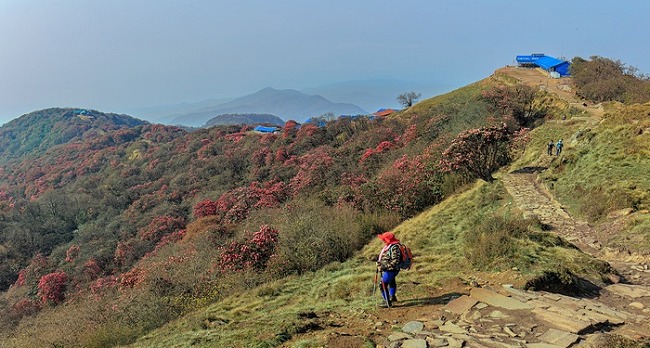
Spring is one of the most beautiful periods for traveling through Nepal's Himalayan regions. Temperatures become more comfortable, mountain visibility is often good, and lower elevations become colorful with flowers and vegetation.
The forests and hillsides may display rhododendrons and other wildflowers, creating beautiful scenery along the road.
For travelers interested in photography, nature and comfortable mountain exploration, spring provides an excellent combination of scenery and weather.
Autumn is another excellent season for the Manang Overland Tour.
After the monsoon, the atmosphere is generally clearer and the mountains can appear sharp against the blue sky. Waterfalls may still be impressive, while the surrounding landscape remains relatively fresh and green at lower elevations.
Autumn also coincides with important festivals in Nepal, including Dashain and Tihar. Travelers visiting during this period may experience the cultural energy of Nepal alongside the Himalayan landscapes.
Winter brings a completely different atmosphere to Manang. Higher villages can become very cold, and snow may cover parts of the landscape.
The skies can be beautifully clear, but temperatures can fall significantly, especially at night. Some facilities in remote villages may operate at a simpler level during winter.
Winter travel therefore requires warm clothing, flexibility and careful planning.
The summer monsoon can make the lower sections of the road challenging because heavy rain may create muddy conditions and increase the possibility of landslides.
The upper Manang region lies in the rain-shadow of the Annapurna range and is considerably drier than many other areas of Nepal. However, road conditions on the lower sections can still be affected by monsoon rainfall.
For this reason, travelers choosing a monsoon Manang Jeep Tour should remain flexible regarding road conditions and travel schedules.
Compared with a long trekking journey, the Manang Jeep Tour is physically easier because most of the distance is covered by vehicle.
However, it is still an adventure through rugged Himalayan roads. Travelers should be prepared for winding roads, uneven sections, long hours in a jeep and occasional dusty or bumpy conditions.
Altitude is another consideration. Manang is situated above 3,500 meters, so travelers may notice the thinner air even though they are not undertaking strenuous trekking.
A gradual itinerary, sufficient rest, hydration and avoiding excessive physical exertion can help travelers adjust more comfortably.
Food is an important part of the journey.
Along the route, travelers can enjoy traditional Nepali dishes such as Dal Bhat, vegetables, curry, pickles and other local meals. In the Tibetan-influenced upper Manang region, travelers can also find dishes such as thukpa, momos, chow mein and potato-based meals.
Manang is also known for bakeries where travelers can enjoy pastries, cakes, apple products and other snacks.
Indian, Chinese and continental food options may also be available at restaurants and lodges along the route.
Himalayan Adventure Intl Treks can discuss dietary preferences in advance so the trip can be organized according to the traveler's needs and available local facilities.
Accommodation varies depending on the location.
In Kathmandu and major towns, travelers can stay in comfortable hotels with modern facilities. As the jeep travels farther into the mountains, accommodation becomes simpler.
Local teahouses and lodges generally provide basic but comfortable rooms, often with twin beds and shared bathroom facilities. In popular settlements such as Manang and Braka, accommodation facilities are generally more developed because of the large number of trekkers and travelers visiting the region.
Travelers should understand that this is a Himalayan overland adventure rather than a luxury road holiday. The appeal comes from the landscapes, culture, villages and remote mountain environment.
Himalayan Adventure Intl Treks offers both group joining and private Manang Jeep Tour packages.
A group joining tour is suitable for solo travelers and budget-conscious visitors who want to share the transportation and guide services with other travelers.
Sharing a jeep can reduce the overall cost and creates an opportunity to meet travelers from different countries.
The main consideration is that group tours normally follow a fixed itinerary and schedule, with less flexibility for spontaneous detours or extended photography stops.
Private Manang Jeep Tour
A private tour provides greater flexibility.
Families, couples, friends, photographers and small groups can travel at their preferred pace and spend more time at locations that interest them.
A private jeep tour can be customized according to your available time, budget, preferred accommodation and sightseeing interests.
Himalayan Adventure Intl Treks can customize the journey from Kathmandu or Pokhara to Manang, depending on your travel plans.
The final Manang Jeep Tour cost depends on several factors, including the number of travelers, private or group arrangement, vehicle type, accommodation standard, guide services, meals, permits and additional activities.
As a general reference, a seven-day Manang Jeep Tour package may fall within a broad range depending on the selected services. Himalayan Adventure Intl Treks provides a customized quotation after considering your group size, travel dates and preferred services.
A typical package can be arranged to include:
Personal expenses such as drinks, snacks, laundry, souvenirs and optional activities are normally excluded unless specifically mentioned in your quotation.
Because this is an overland journey rather than a long trek, travelers do not need to carry extensive trekking equipment. However, the altitude and changing temperatures mean that layered clothing is important.
The supplied preparation material similarly recommends lightweight, layered clothing and basic equipment for changing valley and high-altitude conditions.
The Manang region forms part of the Annapurna Conservation Area, so travelers should arrange the required conservation-area permit before entering the relevant protected region.
The Annapurna Conservation Area Permit (ACAP) is an important requirement for travel through the Annapurna region.
Himalayan Adventure Intl Treks can assist with the necessary permit arrangements as part of your tour planning.
Travelers should carry a valid passport and the required travel documentation.
Although the Manang Jeep Tour is less physically demanding than trekking, altitude should still be taken seriously because Manang is above 3,500 meters.
Possible symptoms of altitude-related illness can include headache, nausea, fatigue, dizziness and shortness of breath.
To reduce risk:
Serious altitude-related symptoms require prompt medical attention and descent. Travelers with existing medical concerns or sensitivity to altitude should seek professional medical advice before traveling.
Internet and electricity are available in many major settlements, but services become less reliable as you travel into remote areas.
Some lodges use local electricity networks or solar power, and charging facilities may be limited. A power bank is therefore highly recommended.
Mobile network coverage can also vary along the route. Travelers should not expect uninterrupted high-speed internet throughout the entire journey.
This is part of the charm of traveling through the remote Himalayas: there are opportunities to disconnect from busy city life and focus on mountains, culture and nature.
Manang is home to communities with strong Buddhist traditions and unique Himalayan cultural practices.
Travelers should dress respectfully when visiting monasteries and religious sites. Always ask permission before photographing local people, religious ceremonies or private homes.
When entering monasteries, follow local instructions, remove shoes when requested, avoid touching sacred objects and maintain a quiet environment.
Do not litter, damage religious structures or disturb local customs.
Learning a simple Nepali greeting such as “Namaste” is a friendly way to connect with local people.
Respecting the community makes the journey more meaningful and helps support responsible tourism.
The Manang Overland Tour is suitable for a wide range of travelers, including:
Because the itinerary can be customized, Himalayan Adventure Intl Treks can design the journey according to your available days, preferred comfort level and budget.
The journey can be organized from Kathmandu or Pokhara, depending on your overall Nepal itinerary.
Travelers arriving in Kathmandu can begin their journey directly from the capital after completing their city sightseeing or arrival arrangements.
Travelers who have already visited Kathmandu or are staying in Pokhara can also discuss starting the overland journey from Pokhara.
The route, duration and overnight stops can be adjusted according to road conditions and the traveler's preferences.
Himalayan Adventure Intl Treks is committed to creating memorable and well-organized Himalayan journeys for travelers from Nepal, India, Asia and around the world.
We can arrange:
Our team can customize your Manang Overland Tour Nepal according to your travel dates, group size, budget and interests.
The Manang Overland Jeep Tour is much more than a road trip. It is a journey from Nepal's busy urban environment into one of the most fascinating high-altitude landscapes of the Annapurna region.
From the waterfalls of Chamje and Tal to the forests and river valleys, from the traditional villages and Buddhist monasteries to the Milarepa Cave, from the apple farms of Manang to the spectacular views of Annapurna II, III, IV and Lamjung Himal, every section of the journey provides something different to discover.
For Indian tourists, NRI travelers, Asian visitors and international travelers seeking an unforgettable Himalayan holiday, this overland journey provides an opportunity to explore Manang with less physical strain than a conventional trek while still experiencing the dramatic beauty and culture of the high mountains.
Whether you want a private Manang Jeep Tour for your family, a budget group joining Manang tour, a customized adventure for friends, or a comfortable Himalayan road trip for a couple, Himalayan Adventure Intl Treks can help organize your journey.
Contact us with your preferred travel dates, number of travelers, starting point and desired comfort level. We will prepare a customized Manang Overland Tour itinerary and cost for you.
Book your Manang Jeep Tour Nepal with Himalayan Adventure Intl Treks and discover the hidden beauty, culture, waterfalls, caves, monasteries, apple farms and magnificent Himalayan landscapes of Manang.
Elevation: 1,350 m / 4,429 ft
Driving Distance: Approximately 5–8 km, depending on hotel location
Driving Time: Approximately 30 minutes
Meals: Welcome dinner
Accommodation: Hotel in Kathmandu
Your exciting Nepal adventure begins with your arrival at Tribhuvan International Airport in Kathmandu. After completing immigration, baggage collection, and customs formalities, our representative from Himalayan Adventure Intl Treks will welcome you at the airport and transfer you comfortably to your hotel.
During the drive, you will receive your first introduction to Kathmandu, Nepal’s historic capital city. After checking into your hotel, you can relax and recover from your journey.
Later, your tour guide will conduct a detailed briefing about the Kathmandu to Manang Overland Tour. The briefing covers the daily itinerary, road conditions, accommodation, meals, vehicle arrangements, weather, safety information, and the major attractions you will visit during the journey.
If time permits, you can take a short walk around the nearby streets of Thamel and experience the lively atmosphere of Kathmandu.
In the evening, enjoy a traditional Nepali welcome dinner, providing an opportunity to taste authentic local cuisine and meet your tour team.
Highlights: Airport welcome, Kathmandu Valley, tour briefing, Thamel, Nepali dinner.
Elevation: Tal – approximately 1,700 m / 5,577 ft
Driving Distance: Approximately 180–200 km
Driving Time: Approximately 7–8 hours
Meals: Breakfast, lunch, dinner
Accommodation: Lodge/Guesthouse in Tal
After breakfast, your overland adventure officially begins. We leave Kathmandu and drive westward toward the Himalayan foothills. The road initially follows the scenic Prithvi Highway, passing through busy towns, green hills, terraced farmland, rivers, and countryside settlements.
After reaching the Dumre/Besisahar area, the journey continues toward the Marsyangdi River Valley. The scenery gradually becomes more dramatic as the road enters the mountains.
Along the way, you will pass through traditional villages, suspension bridges, waterfalls, forests, and narrow river valleys. The changing landscape provides an excellent introduction to the Annapurna region.
The drive continues toward Tal Village, a beautiful settlement beside the Marsyangdi River. Tal is famous for its spectacular waterfall and charming mountain scenery. The village is surrounded by steep green hills and dramatic cliffs, making it one of the memorable stops on the journey.
After arriving in Tal, check into your lodge and enjoy the peaceful mountain environment. You can explore the village in the afternoon or take a short walk beside the river.
Highlights: Marsyangdi River, waterfalls, mountain villages, terraced fields, suspension bridges, Tal waterfall and village.
Elevation: Ngawal – approximately 3,660 m / 12,008 ft
Driving Distance: Approximately 75–90 km
Driving Time: Approximately 4–6 hours
Meals: Breakfast, lunch, dinner
Accommodation: Lodge/Guesthouse in Ngawal
Today is one of the most spectacular days of the overland journey as we drive deeper into the Annapurna mountains. After breakfast, we follow the Marsyangdi Valley toward Dharapani, Chame, and Pisang.
The road passes through pine and fir forests, waterfalls, steep cliffs, and traditional mountain settlements. Chame, the administrative center of Manang District, is an important stop where travelers can enjoy views of the surrounding Himalayan peaks.
Continuing onward, the landscape becomes increasingly dry and alpine. We pass through Lower Pisang and Upper Pisang, with magnificent views of Pisang Peak and the Annapurna mountain range.
From Pisang, the road climbs toward the high village of Ngawal, located above the Marsyangdi Valley. Ngawal is known for its traditional stone houses, ancient Buddhist culture, barley fields, and panoramic Himalayan views.
On a clear afternoon, you may see spectacular views of Annapurna II, Annapurna III, Annapurna IV, Gangapurna, and Pisang Peak.
After reaching Ngawal, check into your lodge and enjoy the high-altitude mountain atmosphere.
Highlights: Chame, Pisang, Pisang Peak, Annapurna range, pine forests, waterfalls, traditional villages, Ngawal viewpoint.
Elevation: Manang – 3,519 m / 11,545 ft
Driving Distance: Approximately 30–40 km
Driving Time: Approximately 3 hours
Meals: Breakfast, lunch, dinner
Accommodation: Lodge/Hotel in Manang
After breakfast, we continue our journey toward Manang, the cultural heart of the upper Marsyangdi Valley. The road passes through dramatic high-altitude landscapes where the vegetation becomes sparse and the surrounding mountains become increasingly impressive.
The journey can include scenic stops around Pisang, Braga, and Manang, depending on road and local conditions. We also explore the traditional settlements and landscapes around Tanki Manang and Khangsar.
Khangsar is a fascinating Himalayan village with traditional Tibetan-style architecture and spectacular mountain surroundings. The area is also an important access point toward Tilicho Lake.
As we approach Manang, the views become breathtaking. The huge walls of the Annapurna and Gangapurna ranges dominate the horizon.
Manang, situated at approximately 3,519 meters, is one of the most famous settlements in the Annapurna region. The village combines traditional Himalayan culture with modern trekking facilities.
After checking into your hotel or lodge, you can explore the village streets, visit local shops, and enjoy views of the surrounding peaks.
Highlights: Khangsar Village, Tanki Manang, Braga area, Gangapurna Glacier, Annapurna mountains, Tibetan-style architecture, Manang village.
Elevation: Manang – 3,519 m / 11,545 ft
Walking/Driving: Local sightseeing, depending on selected sites
Driving Time: Flexible/local transportation
Meals: Breakfast, lunch, dinner
Accommodation: Lodge/Hotel in Manang
Today is dedicated to exploring the remarkable cultural, spiritual, and natural attractions around Manang.
After breakfast, we begin a full day of sightseeing. One of the fascinating attractions is the Milarepa Cave, associated with the famous Tibetan Buddhist yogi Milarepa. The surrounding area provides a peaceful atmosphere and impressive mountain scenery.
We may also visit the Guru Rinpoche Cave, sometimes referred to locally as the Nae Cave, depending on accessibility and local conditions. These sacred sites reflect the deep Buddhist traditions that have shaped the Manang region for generations.
You can also visit a local Buddhist monastery, where you can observe traditional architecture, prayer flags, prayer wheels, murals, and other elements of Himalayan Buddhist culture.
Another scenic attraction is Green Lake, a beautiful high-altitude landscape surrounded by rugged mountains and natural scenery. The exact access and visiting conditions depend on road, weather, and local circumstances.
Throughout the day, you will have opportunities to photograph the surrounding mountains, glaciers, traditional villages, and landscapes.
Return to Manang in the evening for dinner and overnight accommodation.
Highlights: Milarepa Cave, Guru Rinpoche Cave, Buddhist monastery, Green Lake, traditional Manang culture, Himalayan landscapes, mountain photography.
Elevation: Bandipur – approximately 1,030 m / 3,379 ft
Driving Distance: Approximately 180–220 km
Driving Time: Approximately 6–7 hours
Meals: Breakfast, lunch, dinner
Accommodation: Hotel/Guesthouse in Bandipur
Today we begin our return journey from the high Himalayas toward the middle hills of Nepal. After breakfast, we leave Manang and follow the Marsyangdi River Valley.
The scenery gradually changes as we descend from the dry alpine environment into greener landscapes. Along the way, you can enjoy views of waterfalls, forests, rivers, agricultural terraces, villages, and mountain foothills.
We pass through settlements including Besisahar and Dumre before continuing toward historic Bandipur.
Bandipur is one of Nepal’s most attractive hill towns, famous for its preserved Newari architecture, traditional houses, stone-paved streets, temples, and panoramic Himalayan views.
After reaching Bandipur, check into your accommodation. If time permits, take an evening walk through the old town and enjoy the peaceful atmosphere.
The sunset from Bandipur can be particularly beautiful when the weather is clear.
Highlights: Marsyangdi Valley, changing Himalayan landscapes, Besisahar, Dumre, Bandipur old town, traditional Newari architecture, sunset views.
Elevation: Bandipur – 1,030 m / 3,379 ft; Pokhara – approximately 822 m / 2,697 ft
Driving Distance: Approximately 80 km
Driving Time: Approximately 2.5–3.5 hours, plus sightseeing
Meals: Breakfast, lunch, dinner
Accommodation: Hotel in Pokhara
Wake up early to enjoy the beautiful morning atmosphere of Bandipur. After breakfast, explore the historic town and its surrounding viewpoints.
Bandipur is well known for its traditional Newari culture, beautifully preserved buildings, temples, narrow stone-paved streets, and mountain views. You can visit local temples and walk through the old bazaar while observing everyday village life.
After lunch, we leave Bandipur and drive toward Pokhara, one of Nepal’s most popular tourist destinations.
As we approach Pokhara, the landscape becomes greener and more open. Pokhara is famous for its lakes, waterfalls, caves, viewpoints, and spectacular Himalayan panorama.
After checking into your hotel, you can relax or take an evening walk around Lakeside Pokhara. The area offers restaurants, cafés, shops, and views of Phewa Lake.
Highlights: Bandipur old town, Newari culture, temples, mountain views, scenic drive, Pokhara, Phewa Lake, Lakeside.
Elevation: Pokhara – 827 m / 2,697 ft; Ghandruk – approximately 1,940 m / 6,365 ft
Driving Distance: Approximately 55–65 km
Driving Time: Approximately 3–4 hours, plus sightseeing
Meals: Breakfast, lunch, dinner
Accommodation: Lodge/Guesthouse in Ghandruk
Today combines the highlights of Pokhara with a scenic journey into the Annapurna foothills.
After breakfast, visit some of Pokhara's famous attractions. Depending on available time and road conditions, sightseeing can include Phewa Lake, Davis Falls, Gupteshwor Cave, the International Mountain Museum, or the World Peace Pagoda.
After lunch, we drive toward Ghandruk, one of the most beautiful traditional villages in the Annapurna region.
The road passes through green hills, terraced farmland, forests, rivers, and mountain settlements. As we climb higher, the scenery becomes increasingly spectacular.
Ghandruk is a traditional Gurung village known for its stone houses, mountain views, cultural heritage, and welcoming local community. On a clear day, you may enjoy views of Annapurna South, Hiunchuli, Machhapuchhre (Fishtail), and surrounding peaks.
In the evening, explore the village and experience traditional Himalayan culture.
Highlights: Phewa Lake, Davis Falls, Gupteshwor Cave, Pokhara Valley, Gurung culture, Ghandruk village, Annapurna and Machhapuchhre views.
Elevation: Kathmandu – 1,350 m / 4,429 ft
Driving Distance: Approximately 250–280 km
Driving Time: Approximately 7–9 hours
Meals: Breakfast, lunch, dinner
Accommodation: Hotel in Kathmandu
After breakfast, we leave beautiful Ghandruk and begin the scenic drive back toward Kathmandu.
The journey takes us through the middle hills of Nepal, passing terraced farmland, traditional villages, rivers, forests, and busy local towns. We gradually descend toward the lower valleys before joining the main highway toward Kathmandu.
The drive offers another opportunity to observe everyday life in rural Nepal, including farming communities, roadside markets, temples, schools, and traditional houses.
Depending on traffic and road conditions, we arrive in Kathmandu later in the afternoon or evening.
After checking into your hotel, you can relax and enjoy your final evening in the capital. You may also have time for shopping for souvenirs, handicrafts, trekking equipment, tea, spices, or traditional Nepali products.
Highlights: Ghandruk departure, Nepalese countryside, terraced farmland, river valleys, local villages, Kathmandu Valley.
Elevation: Kathmandu – 1,350 m / 4,429 ft
Driving Distance: Approximately 30–40 km for sightseeing
Driving Time: Approximately 2–4 hours, depending on traffic
Meals: Breakfast, lunch, dinner
Accommodation: Hotel in Kathmandu
Today is dedicated to discovering the cultural and historical treasures of Kathmandu.
After breakfast, begin a guided sightseeing tour of the Kathmandu Valley. Depending on your interests and available time, the sightseeing program can include Pashupatinath Temple, Boudhanath Stupa, Swayambhunath (Monkey Temple), and Kathmandu Durbar Square.
Pashupatinath Temple is one of the most important Hindu pilgrimage sites in Nepal and lies beside the sacred Bagmati River.
Boudhanath Stupa is one of the largest Buddhist stupas in Nepal and an important center of Tibetan Buddhist culture.
Swayambhunath, located on a hill overlooking Kathmandu, provides panoramic views of the city and surrounding hills.
Kathmandu Durbar Square showcases traditional architecture, historic courtyards, temples, and monuments that reflect Nepal's rich artistic heritage.
In the evening, return to your hotel and enjoy your final dinner in Kathmandu.
Highlights: Pashupatinath Temple, Boudhanath Stupa, Swayambhunath, Kathmandu Durbar Square, Newari architecture, Buddhist and Hindu heritage.
Elevation: Kathmandu – 1,350 m / 4,429 ft
Driving Distance: Approximately 5–10 km to the airport
Driving Time: Approximately 30 minutes to 1 hour
Meals: Breakfast
Accommodation: Not included
Your memorable Kathmandu to Manang Overland Tour comes to an end today.
After breakfast, you will have free time depending on your international flight schedule. You can use the remaining time for relaxing, shopping, or enjoying a final cup of Nepali tea.
Our representative will transfer you to Tribhuvan International Airport according to your flight departure time. We recommend arriving at the airport approximately three hours before your international flight.
As you leave Nepal, you will take home unforgettable memories of the Marsyangdi Valley, Manang, ancient caves and monasteries, Himalayan villages, Bandipur, Pokhara, Ghandruk, and Kathmandu.
Thank you for traveling with Himalayan Adventure Intl Treks. We hope to welcome you again for another Himalayan adventure in Nepal.
Highlights: Final Kathmandu experience, souvenir shopping, airport transfer, farewell to Nepal.