
Have Questions? Talk to Expert (Binod)
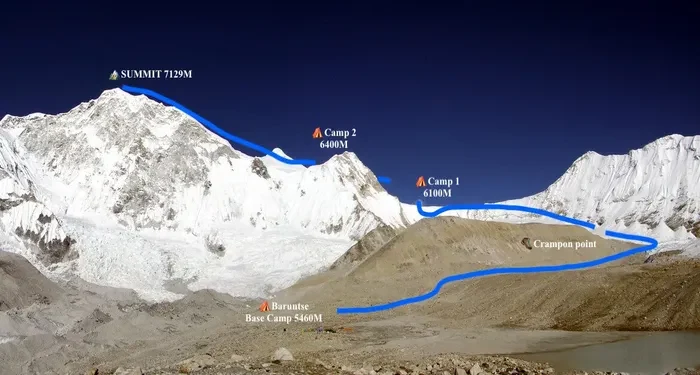
Rising to 7,129 meters (23,389 ft), Baruntse Peak is one of the most spectacular yet underrated mountains in the Nepal Himalayas. Nestled between the iconic Everest and Makalu regions, Baruntse offers seasoned climbers a perfect combination of technical ascent, awe-inspiring vistas, and Himalayan solitude. The Baruntse Peak climb is gaining popularity among mountaineers seeking a rewarding alternative to more crowded peaks.
Organized professionally by Himalayan Adventure International Treks, the Baruntse expedition offers a full-service experience — from logistics and guides to safety and summit support. For many, this expedition is a stepping stone toward even more ambitious summits like Manaslu, Makalu, or Shishapangma.
One of the most popular combinations for acclimatization and adventure is the Baruntse and Mera climbing expedition. Mera Peak, standing at 6,476 meters, is often used as a warm-up climb before Baruntse. This combination not only aids in gradual acclimatization but also offers the thrill of conquering two significant Himalayan peaks in one expedition.
The route typically begins with the Mera Peak expedition, allowing climbers to gain valuable high-altitude experience and confidence before tackling the more technical Baruntse climb. Himalayan Adventure International Treks offers a comprehensive Baruntse expedition itinerary including Mera Peak, ensuring climbers are well-prepared for the challenges ahead.
A common question among climbers is: How hard is climbing Baruntse? The difficulty level of Baruntse is considered moderate to challenging. While not as technically demanding as Ama Dablam or Annapurna I, it requires solid alpine skills. Climbers will encounter steep ice and snow slopes (up to 50°), crevasse zones, and knife-edged ridges.
The key technical challenge is the ascent to the East Col and the summit ridge, which may require fixed rope climbing and the use of ascenders and jumar devices. Hence, Baruntse is best suited for climbers with prior high-altitude experience and good physical fitness. It’s often graded as Alpine PD+ to AD, answering the question: What is the grade of Baruntse?
Here is a typical Baruntse expedition itinerary including Mera Peak with Himalayan Adventure International Treks:
Airport pickup, welcome dinner, and expedition briefing.
Final gear checks, permit processing, and cultural sightseeing.
Scenic walk through Hinku Valley.
Pre-climb training and summit push.
Rotations to Camp I (6,000m) and Camp II (6,400m), followed by summit push.
Adventurous descent with rope-assisted crossing.
This itinerary ensures progressive acclimatization and gives climbers ample time for summit attempts, weather contingencies, and rest days.
The Baruntse Expedition Cost depends on group size, support levels, and whether you include Mera Peak in the package. On average, a full-service expedition ranges from USD 8,500 to USD 11,000 per person with Himalayan Adventure International Treks. This includes:
Climbing permits (Baruntse + Mera Peak)
Domestic flights (Kathmandu–Lukla–Kathmandu)
All meals and accommodations during the trek
Base camp setup, tents, kitchen staff
Professional climbing guides and porters
Group climbing equipment and fixed ropes
Insurance for Nepali staff
Government taxes
Additional costs may include personal gear, travel insurance, tips, and emergency evacuation (if needed).