
Have Questions? Talk to Expert (Binod)

The Mardi Himal Trek in Winter is one of Nepal’s most rewarding short Himalayan adventures for trekkers who want spectacular mountain scenery, peaceful trails, traditional villages, and an authentic high-altitude experience away from the busier trekking routes. Located in the Annapurna region, Mardi Himal lies east of the famous Annapurna Base Camp route and offers close-up views of Mardi Himal, Machhapuchhre (Fishtail), Annapurna South, and Hiunchuli.
Winter transforms this already beautiful trekking route into a completely different Himalayan landscape. From December to February, the forests become quieter, the mountain air becomes crisp and clear, and the higher sections of the trail can be covered with snow. On clear mornings, the snow-covered peaks rise dramatically above the ridgeline, creating exceptional conditions for photography and mountain views.
Although winter brings colder temperatures and possible snowfall, the season also has several advantages. The trails are generally quieter than during the peak autumn and spring trekking seasons, and the dry mountain air can provide excellent visibility. For adventurous trekkers who are properly equipped and prepared for cold conditions, Mardi Himal Winter Trek can be an unforgettable experience.
Himalayan Adventure Intl Treks organizes Mardi Himal trekking journeys with experienced local guides, carefully planned itineraries, transportation arrangements, accommodation, and practical support throughout the trek.
Mardi Himal is a relatively short trek, making it an excellent choice for travelers who have limited time in Nepal but still want to experience the Himalayan wilderness. The source itinerary describes the trek as moderate, with daily walking generally around five to six hours and the highest point listed as Mardi Himal Base Camp at approximately 4,500 meters.
Winter adds a special character to the route. The lower forests remain peaceful while the upper ridges may receive snow. The combination of forests, open ridges, traditional settlements, and enormous Himalayan peaks makes Mardi Himal particularly attractive during the colder months.
Some of the main reasons to choose this trek include:
The original source similarly highlights the remote character of the route, Himalayan scenery, Gurung culture, and changing landscapes from forests to rugged high-altitude terrain.
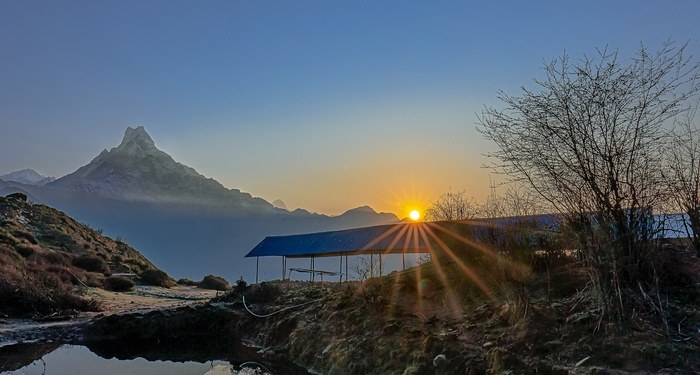
One of the greatest attractions of Mardi Himal is the extraordinary view of Machhapuchhre, also known as Fishtail Mountain. The distinctive double summit is one of Nepal’s most recognizable Himalayan landmarks.
During winter, clear skies can create magnificent views of the mountain, particularly around sunrise and sunset.
The trail provides impressive views of Annapurna South and Hiunchuli. As you climb toward the upper ridges, these mountains become increasingly prominent.
The source specifically identifies Machhapuchhre, Annapurna South, Hiunchuli, and Dhaulagiri among the major Himalayan spectacles associated with the trek.
Snow is one of the major reasons adventurous trekkers choose Mardi Himal in winter. Depending on weather conditions, snow can cover sections of the trail around the higher camps.
Walking through a snow-covered mountain landscape beneath the Annapurna range creates a memorable Himalayan experience.
Compared with the busiest trekking routes in Nepal, Mardi Himal offers a quieter atmosphere. Winter can make the route even more peaceful because fewer trekkers travel during the coldest months.
The lower and middle sections pass through beautiful forests containing rhododendron, maple, oak, and other vegetation. During winter, the forest landscape is calm and atmospheric, while the higher areas gradually open into mountain ridges.
Mardi Himal also provides an opportunity to experience traditional mountain communities. Villages such as Siding preserve a quieter rural atmosphere, and travelers can experience local hospitality and traditional lifestyles.
Himalayan Adventure Intl Treks can customize the itinerary according to weather, trail conditions, transportation, and the trekking experience of the group.
The following six-day route follows the structure of the supplied source itinerary, beginning from Kande and ending at Siding. The source lists the route from Kande to Deurali, then Low Camp, High Camp, Mardi Himal Base Camp, Siding, and finally Pokhara.
Altitude: Kande 1,770m / Deurali 2,200m
Walking: Approximately 5–6 hours
Your Mardi Himal Winter Trek begins from the beautiful lakeside city of Pokhara. After breakfast, you drive toward Kande, the starting point of the trek.
From Kande, the trail climbs through the countryside toward Australian Camp and continues through forest and mountain settlements toward Deurali.
Australian Camp is particularly attractive on a clear day because it offers wide Himalayan views. The original itinerary describes views toward the Annapurna range, Dhaulagiri, Machhapuchhre, and Manaslu from this area.
In winter, the lower sections can be cold in the morning, but walking gradually warms the body. As you approach Deurali, the surrounding hills become increasingly mountainous.
You spend the night at a local lodge or teahouse.
Overnight: Deurali
Altitude: Deurali 2,200m to Low Camp 2,900m
Walking: Approximately 6–7 hours
After breakfast, you leave Deurali and enter the peaceful forest section of the Mardi Himal route.
The trail passes through forests of rhododendron, maple, oak, and hemlock. The source describes Forest Camp as an important point along this section and notes the increasing density of rhododendron vegetation as the trail continues upward.
Winter trekking here can be especially atmospheric. Frost, cold air, and occasional snow may change the appearance of the forest. Depending on recent weather, some sections may be slippery.
The trail continues gradually upward toward Low Camp. As you gain elevation, the forest begins to change and mountain views become more visible.
Arriving at Low Camp in the afternoon gives you time to rest and enjoy the surrounding Himalayan landscape.
Overnight: Low Camp
Altitude: Low Camp 2,900m to High Camp 3,585m
Walking: Approximately 5–6 hours
Today is one of the most scenic days of the Mardi Himal Winter Trek.
You begin by walking gradually uphill toward Middle Camp and Badal Danda. The forest gradually becomes thinner as you approach the open ridgeline.
Badal Danda is an excellent viewpoint. From here, trekkers can enjoy impressive mountain scenery including Annapurna South, Hiunchuli, Machhapuchhre, and Mardi Himal.
Beyond Badal Danda, the trail leaves much of the tree line behind. The landscape becomes more open, with grass-covered ridges and mountain slopes.
In winter, this section can be covered by snow. The trail may therefore require more careful footing than during the warmer seasons.
The final approach to High Camp provides increasingly dramatic views. On clear days, Machhapuchhre and Annapurna South dominate the horizon.
High Camp is situated at approximately 3,585 meters according to the supplied itinerary.
Because you are now at significant altitude, the evening should be spent resting and preparing for the next morning’s hike.
Overnight: High Camp
Maximum altitude: Approximately 4,500m
Walking: Approximately 5–6 hours
Today is the major highlight of the trek.
You wake early and begin the climb toward Mardi Himal Base Camp. The trail becomes steeper and more exposed as you leave High Camp.
The source identifies this as the most challenging section of the trek because the trail can be rocky, uneven, and slippery.
Winter conditions require additional care. Snow and ice can make the trail slippery, and conditions can change according to recent snowfall and temperature.
Your guide will assess the trail and weather before continuing toward the upper viewpoint and base camp. A slower pace is important at this altitude.
As you climb higher, the Himalayan panorama becomes increasingly impressive. The trail crosses pastureland and narrow ridges before reaching the upper viewpoints and eventually Mardi Himal Base Camp.
From the upper section, you can enjoy dramatic views of the surrounding mountains, including Machhapuchhre, Annapurna South, and Hiunchuli.
After spending time at the viewpoint or base camp, you retrace your route toward High Camp.
Because this is the highest day of the trek, it is important not to rush. Stay hydrated, maintain a comfortable pace, and communicate with your guide if you experience unusual symptoms.
Overnight: High Camp
Altitude: 3,585m to approximately 1,750m
Walking: Approximately 6 hours
After breakfast, you begin the long descent from High Camp.
You initially retrace part of the trail toward Low Camp before taking the route toward Siding. Most of today's journey is downhill through forested terrain.
The source describes this section as a gradual descent beneath dense forest and identifies Siding as a traditional Gurung settlement with a quiet atmosphere.
After several days in the high mountains, reaching a lower-elevation village provides a pleasant change of environment.
Siding is a peaceful place to spend the final trekking night. You can relax at the lodge, enjoy local food, and reflect on your Himalayan journey.
Overnight: Siding
Altitude: Approximately 1,750m to Pokhara 900m
Driving: Approximately 2–3 hours
Today marks the end of the Mardi Himal trekking adventure.
After breakfast, you take a local jeep from Siding toward Pokhara. The road is rough and gravelled in sections before joining the main highway. The source estimates approximately two to three hours of driving from Siding to Pokhara.
Once you arrive in Pokhara, you can relax beside Phewa Lake, enjoy a comfortable hotel, or continue with your onward travel arrangements.
For travelers who want to extend their Nepal experience, Himalayan Adventure Intl Treks can also arrange additional tours and activities in Pokhara and other destinations.
Winter in Nepal generally covers December, January, and February. At lower elevations, daytime conditions can remain relatively comfortable, while temperatures become significantly colder at higher elevations.
The source specifically notes that winter brings cold conditions and that snow can cover upper sections of the Mardi Himal trail. It also emphasizes that winter skies can be clear and rewarding for mountain views.
The actual amount of snow varies from year to year. Some winter periods may have relatively dry trails, while a fresh snowfall can temporarily make upper sections more difficult.
December usually provides increasingly cold conditions as winter develops. Early mornings and evenings at higher elevations can be particularly cold.
January is normally among the coldest periods. Snow and icy conditions are more likely at higher elevations, so appropriate winter equipment is especially important.
February remains cold at higher elevations, but conditions gradually begin transitioning toward spring later in the month.
For winter trekking, the most important factor is not simply the calendar date but the actual weather and recent snowfall along the trail.
Mardi Himal is generally considered a moderate trek, but winter conditions can make it more demanding.
The lower portions of the route are relatively manageable, while the trail becomes steeper and more exposed as you approach High Camp and Mardi Himal Base Camp.
The source identifies the High Camp to Base Camp section as the most challenging part because of steep, rocky, uneven, and potentially slippery terrain.
Winter adds several considerations:
Good physical preparation is recommended. You do not need to be an elite athlete, but regular walking and cardiovascular exercise before the trek can help.
Mardi Himal reaches a high elevation, with the supplied source listing approximately 4,500 meters as the maximum point.
Altitude sickness can affect trekkers at high elevations. Even fit travelers can experience altitude-related symptoms.
Important precautions include:
Your safety is more important than reaching a particular viewpoint.
The supplied source states that trekkers require TIMS and Annapurna Conservation Area Project (ACAP) permits for Mardi Himal.
Permit rules and fees can change, so Himalayan Adventure Intl Treks will verify the applicable requirements before your departure.
When trekking with an organized agency, permit arrangements are normally handled as part of the trip preparation.
Accommodation on Mardi Himal is primarily through local teahouses and lodges.
The source describes the accommodation as basic, generally with rooms containing two beds and shared bathroom facilities. Hot showers, charging, Wi-Fi, and boiled water may be available at additional cost.
Winter requires additional consideration because temperatures can be very low at High Camp.
Teahouses may have limited heating, and availability at higher elevations can be more restricted during winter. For this reason, advance planning is strongly recommended.
Himalayan Adventure Intl Treks coordinates suitable accommodation according to the itinerary, group size, and trail conditions.
Local teahouses provide a selection of meals suitable for trekkers.
Popular options include:
Dal Bhat is particularly popular because it provides carbohydrates and other nutrients needed during long trekking days.
In winter, hot meals and drinks are especially welcome after spending several hours outdoors.
Proper equipment is essential for a successful winter trek.
The supplied source specifically recommends a warm sleeping bag for winter because lodge blankets may not be sufficient for cold nights.
Pack as lightly as practical while ensuring you have adequate protection against cold weather.
Travel insurance is strongly recommended for Himalayan trekking.
Your insurance should be checked carefully to ensure that it covers the activities and elevations included in your itinerary. Depending on the policy, useful coverage may include emergency medical treatment, evacuation, trip interruption, and other relevant travel risks.
Because winter weather can change quickly in mountain areas, comprehensive insurance is an important part of responsible trekking preparation.
Mobile coverage can be variable along the Mardi Himal route.
The source states that NTC and Ncell can work in parts of the trekking area, but coverage is not consistent throughout the trail. Some teahouses also offer Wi-Fi, usually for an additional charge.
Trekkers should not depend completely on mobile connectivity.
It is advisable to inform family members that communication may occasionally be unavailable.
Choosing an experienced local trekking company helps simplify the logistics of a Himalayan adventure.
Himalayan Adventure Intl Treks provides trekking services in Nepal with a focus on organized itineraries, experienced local trekking staff, transportation, accommodation arrangements, permits, and practical assistance.
Our team can help with:
We can also adjust the itinerary according to your available time, fitness level, preferred route, and weather conditions.
The final cost of a Mardi Himal Winter Trek depends on several factors, including:
Because winter conditions can influence transportation and accommodation arrangements, Himalayan Adventure Intl Treks provides a customized quotation based on your travel dates and group requirements.
For a current quotation and customized itinerary, contact:
Winter days are shorter, and morning conditions are often clearer. Starting early provides more daylight for trekking.
Mountain weather can change quickly. Always follow your guide’s assessment before attempting the higher sections.
Cold weather can reduce the sensation of thirst, but your body still needs sufficient fluids.
Snow and high-altitude sunlight can be intense. Sunglasses, sunscreen, and lip protection are important.
Poles provide additional stability on uneven, snowy, or slippery trails.
Cold temperatures can reduce battery performance. Keep spare batteries and power banks protected from extreme cold.
There may be no reliable ATM facilities along the trekking route, so carry enough Nepalese currency before leaving Pokhara.
Local guides understand the trail and changing mountain conditions. Their advice is particularly important during winter.
The supplied source similarly recommends carrying sufficient cash, using appropriate waterproof footwear, maintaining physical preparation, arranging insurance, and taking care with winter trail conditions.
Although the Kande–Siding route is a popular standard option, Mardi Himal can be approached through different trail combinations.
The supplied source identifies several route options, including:
For winter, route selection should be based not only on distance but also on current snow conditions, accommodation availability, road access, and the group's ability.
Himalayan Adventure Intl Treks can recommend the most practical route according to current conditions.
Mardi Himal Winter Trek is suitable for travelers who have a reasonable level of fitness and are prepared for cold-weather trekking.
It can be suitable for:
However, winter trekking should not be treated casually. The upper trail can be affected by snow and ice, and the weather can change quickly.
Mardi Himal is an excellent destination for mountain photography.
The changing landscapes offer opportunities to photograph:
Winter can provide especially dramatic photography because snow contrasts with the darker ridges and forests.
Photographers should protect cameras, batteries, and other electronics from cold and moisture.
Yes, for properly prepared trekkers, Mardi Himal Winter Trek can be an outstanding Himalayan experience.
The trek combines a relatively short duration with spectacular mountain views and diverse landscapes. Unlike some of the more heavily visited routes, Mardi Himal can provide a greater feeling of solitude.
Winter adds an adventurous element. Snow, cold temperatures, and shorter days require greater preparation, but they can also produce some of the most beautiful Himalayan scenery.
The original source describes Mardi Himal as a short, remote trek suited to travelers with limited time who want to experience forests, remote villages, and close mountain views.
Yes. Mardi Himal can be trekked during winter, although snow and cold weather can make the upper trail more demanding. Proper winter clothing, footwear, and preparation are essential.
Temperatures become increasingly cold as you climb toward High Camp and the upper viewpoints. Exact conditions vary according to weather, elevation, and the specific month.
Yes, snowfall can occur on the upper sections during winter. The amount and duration of snow vary from season to season.
The trek is generally moderate, but winter conditions can increase the difficulty. The High Camp to Mardi Himal Base Camp section is particularly demanding because of steep and potentially slippery terrain.
An organized guide is strongly recommended for winter trekking, especially for trekkers without previous high-altitude winter experience. A local guide can monitor weather, trail conditions, accommodation, and altitude-related concerns.
The supplied itinerary lists Mardi Himal Base Camp at approximately 4,500 meters.
A standard itinerary can be completed in around six trekking days, although Himalayan Adventure Intl Treks can customize the duration according to your route, transportation, and preferences.
Basic teahouses and lodges are available along the route. Facilities can be limited at higher elevations, particularly during winter.
A warm sleeping bag is strongly recommended for winter. Lodge blankets may not provide sufficient warmth during very cold nights.
Mobile and Wi-Fi connectivity can be available in some locations but is not guaranteed throughout the route.
Beginners with reasonable fitness can undertake the trek with proper preparation and an experienced guide. Winter conditions require additional caution and suitable equipment.
The Mardi Himal Winter Trek is an excellent way to discover the quieter side of Nepal's Annapurna region. The journey takes you from the comfortable surroundings of Pokhara through traditional villages and peaceful forests toward high mountain ridges with spectacular views of Machhapuchhre, Annapurna South, Hiunchuli, and Mardi Himal.
Winter transforms the route into a peaceful Himalayan landscape. Snow-covered trails, crisp mountain air, clear skies, quiet villages, and magnificent mountain panoramas make the journey particularly appealing to adventurous trekkers.
Although winter requires additional preparation, it rewards travelers with a unique experience that is very different from trekking during the busier seasons.
With careful planning, appropriate winter equipment, an experienced guide, and a flexible approach to mountain weather, Mardi Himal can become one of the most memorable short treks in Nepal.
Plan your Mardi Himal Winter Trek with Himalayan Adventure Intl Treks and experience the spectacular Annapurna Himalayas in their peaceful winter atmosphere.
Your Mardi Himal winter adventure begins with your arrival in Kathmandu, the cultural and adventure capital of Nepal.
A representative from Himalayan Adventure Intl Treks welcomes you at Tribhuvan International Airport and assists with your transfer to the hotel. After checking in, you can rest after your journey or explore the surrounding area.
Depending on your arrival time, our team can organize a short briefing about the trek. Your guide will explain the itinerary, winter conditions, equipment, accommodation, transportation and general trekking safety.
This is also an opportunity to check your trekking equipment before leaving Kathmandu.
Overnight: Hotel in Kathmandu
After breakfast, you travel by road from Kathmandu to Pokhara. The journey takes approximately seven hours depending on road and traffic conditions.
The drive offers an interesting introduction to Nepal's countryside. Along the route, you pass rivers, hills, forests, terraced farmland and traditional settlements.
Pokhara is one of Nepal's most popular tourist destinations and provides spectacular views of the surrounding Himalayan landscape. During winter, the weather can be particularly pleasant in the daytime, while the evenings can be cool.
After arriving in Pokhara, you check into your hotel and have time to relax. If conditions are clear, you may enjoy beautiful mountain scenery from the city.
Overnight: Hotel in Pokhara
Driving: Approximately 7 hours
After breakfast, the journey continues toward the trekking starting point at Pitam Deurali, situated at approximately 1,750 meters.
From here, the Mardi Himal trail begins.
The route gradually moves through beautiful forests and mountain landscapes. The peaceful environment makes this section particularly enjoyable during winter, when the trails are generally quieter.
As you climb toward Lovely Hill, the landscape begins to change. Depending on weather and visibility, you may catch impressive views of the Annapurna range and Machhapuchhre.
Winter sunsets can be especially beautiful from elevated viewpoints.
After reaching Lovely Hill, you settle into your lodge and enjoy a warm meal before resting for the night.
Overnight: Lodge/teahouse
Trek: Pitam Deurali to Lovely Hill
Today you continue higher toward Low Camp.
The trail passes through beautiful rhododendron and Himalayan forest. During winter, parts of the trail may be covered with frost or snow depending on recent weather conditions.
The gradual increase in elevation provides an opportunity to enjoy the changing scenery. As the trees become thinner, mountain views begin to open up.
Machhapuchhre, commonly known as Fishtail because of its distinctive shape, becomes increasingly impressive as you approach the higher sections of the route.
Our guide maintains a comfortable pace so that trekkers can adjust naturally to the increasing altitude.
After reaching Low Camp, you have time to relax and enjoy the surrounding mountain landscape.
Overnight: Lodge/teahouse at Low Camp
Elevation: 2,970m / 9,744ft
Today is one of the most exciting days of the Mardi Himal winter trek.
After breakfast, you begin ascending from Low Camp toward High Camp, situated at approximately 3,540 meters.
The forest gradually becomes more open as you gain elevation. The views become increasingly dramatic, with the Annapurna range and Machhapuchhre dominating the horizon.
In winter, snow can sometimes cover sections of the higher trail. Your guide will assess the trail conditions and recommend appropriate footwear and pacing.
As you approach High Camp, the surrounding landscape becomes increasingly alpine. The feeling of being deep in the Himalayas becomes unmistakable.
After reaching High Camp, you have time to rest and prepare for the following day's early-morning excursion to the Upper View Point.
The evening is an excellent time to appreciate the Himalayan scenery and, if skies are clear, the stars above the mountains.
Overnight: High Camp
Elevation: 3,540m / 11,614ft
High Camp: 3,540m / 11,614ft
Upper View Point: 4,250m / 13,944ft
Badal Danda: 3,210m / 10,531ft
Today is the major highlight of your Mardi Himal winter adventure.
You begin early from High Camp, aiming to reach the Upper View Point at approximately 4,250 meters. The early start gives you an opportunity to experience the Himalayan sunrise and morning mountain scenery.
As you climb higher, the surrounding landscape becomes increasingly spectacular. On a clear day, the views can include magnificent Himalayan peaks and dramatic ridgelines.
The combination of winter snow, clear mountain air and panoramic Himalayan scenery makes this section especially memorable.
The trail can be challenging in winter because of snow and icy conditions. Therefore, proper footwear, warm clothing and careful walking are important. Your guide will monitor the trail and weather conditions throughout the ascent.
After enjoying the mountain panorama, you descend toward Badal Danda, situated at approximately 3,210 meters.
The descent provides a welcome change after the early-morning climb. You arrive at Badal Danda and rest at the lodge.
Overnight: Lodge at Badal Danda
Maximum Elevation: 4,250m / 13,944ft
After breakfast, you begin descending from Badal Danda toward Liding.
The trail gradually moves into lower elevations, bringing you back through forests and changing vegetation.
After several days in the high mountains, the descent provides a completely different landscape. You pass through quieter sections of the trail and eventually reach Liding at approximately 1,500 meters.
From Liding, you take a vehicle toward Pokhara.
Upon arrival in Pokhara, you check into your hotel and have time to relax. You can enjoy the lakeside atmosphere, have dinner at a local restaurant or simply rest after the trek.
Overnight: Hotel in Pokhara
Trek: Badal Danda to Liding
Drive: Liding to Pokhara
After breakfast, you begin the return journey from Pokhara to Kathmandu.
The drive takes approximately seven hours depending on road and traffic conditions.
During the journey, you can enjoy views of Nepal's countryside, rivers, hills, villages and agricultural landscapes.
After arriving in Kathmandu, you transfer to your hotel and have the remainder of the day free.
This is a good opportunity to purchase souvenirs, explore Kathmandu's streets or simply relax after completing the Mardi Himal Trek.
Overnight: Hotel in Kathmandu
The Mardi Himal Trek is generally considered a moderate Himalayan trek, but winter conditions can make it more demanding.
The main challenge is the combination of increasing altitude, cold temperatures, snow and potentially slippery trails. The ascent to the Upper View Point at 4,250 meters is the most physically demanding section of this itinerary.
A reasonable level of fitness and previous hiking experience is helpful, although experienced beginners can also undertake the trek with appropriate preparation and a suitable pace.
Our trekking guides focus on gradual walking, regular breaks, hydration and monitoring the group's condition.
Accommodation is generally provided in local trekking lodges and teahouses along the route.
Rooms are usually simple and comfortable, making them ideal for experiencing the authentic atmosphere of the Nepal Himalayas.
At higher elevations, facilities may be more basic than in Kathmandu and Pokhara. Winter nights can be very cold, so having a suitable sleeping bag and warm clothing is highly recommended.
Local teahouses offer a selection of meals, including traditional Nepali dishes and familiar trekking foods.
Dal bhat is a popular choice because it provides a filling combination of rice, lentils and vegetables. Other meals can include noodles, soups, potatoes, pasta, eggs and other simple dishes depending on the lodge.
Staying hydrated is important, particularly as you climb above 3,000 meters.
Choosing an experienced local trekking company can make a significant difference to your Himalayan journey.
Himalayan Adventure Intl Treks provides personalized trekking arrangements designed around safety, comfort and authentic Himalayan experiences.
Our knowledgeable guides understand the Mardi Himal trail and local conditions. They help trekkers manage altitude, walking pace, weather changes and trail conditions.
Winter trekking requires additional preparation. Our team provides practical advice regarding clothing, equipment, snow conditions and itinerary management.
We can arrange private treks, small groups and customized itineraries according to your travel schedule.
Our team coordinates transportation between Kathmandu, Pokhara and the trekking areas, along with hotel and lodge arrangements.
Traveling with a local company provides an opportunity to experience Nepal beyond the main tourist routes while supporting local communities and mountain businesses.
Although Mardi Himal can be trekked during several seasons, winter offers a distinctive experience.
December: Cold but potentially clear, with increasing chances of snow at higher elevations.
January: Generally the coldest period. Snow and icy trails can occur around higher elevations.
February: Winter conditions remain, while the days gradually become longer and warmer toward the end of the month.
For trekkers who enjoy snow, quiet trails and dramatic winter landscapes, these months can be highly rewarding.
The Mardi Himal Trek Nepal in Winter is an excellent choice for travelers who want to experience the Annapurna region away from the busiest trekking periods.
From the cultural energy of Kathmandu and beautiful lakeside Pokhara to peaceful forest trails, mountain villages, High Camp and the spectacular 4,250-meter Upper View Point, this 9-day journey offers an impressive combination of adventure and Himalayan scenery.
Winter adds another dimension to the experience. Snow-covered trails, crisp mountain air, quiet trekking paths and clear Himalayan horizons can make the journey particularly memorable.
With Himalayan Adventure Intl Treks, you can enjoy a professionally organized trek supported by an experienced local team. We can arrange your transportation, accommodation, trekking guide, porter and other necessary services to make your Nepal adventure comfortable and well organized.
Plan your Mardi Himal Winter Trek with Himalayan Adventure Intl Treks and experience the beauty of the Annapurna Himalayas in the peaceful winter season.