

Find Your Tour

Any Question? Email Us

info@himalayanadventureintl.com

Have Questions? Talk to Expert (Binod)
Binod Karki

Pikey Peak Winter Trek Nepal

Pikey Peak Winter Trek Nepal

Pikey Peak Winter Trek Nepal Overview

Key Information

Duration

9 Days

Maximum altitude

2920m

The Pikey Peak Trek in Winter is one of the most rewarding short Himalayan journeys in Nepal, combining spectacular mountain scenery, peaceful Sherpa villages, ancient Buddhist monasteries, traditional Hindu and Prakriti Pujak culture, and an unforgettable sunrise from Pikey Peak at 4,065 meters (13,336 feet).

Organized by Himalayan Adventure Intl Treks, this 8-day budget adventure trek follows a scenic route from Kathmandu through Dhap, Jhapre, Pikey Base Camp, Pikey Peak, Jasmane Bhanjyang, and Junbeshi before returning to Kathmandu. Unlike the busy trails of the Everest Base Camp region, Pikey Peak offers a quieter Himalayan experience where travelers can enjoy the mountains at a slower pace and interact more closely with local communities.

Winter transforms the Pikey region into a magnificent landscape of snow-covered ridges, frozen trails, clear blue skies, frosty forests, and spectacular Himalayan panoramas. On clear mornings, the summit and surrounding ridges provide extraordinary views toward Mount Everest, Lhotse, Makalu, Kanchenjunga, Mera Peak, Numbur, Karyolung and numerous other Himalayan peaks.

The trek reaches a maximum elevation of approximately 4,065 meters, making it a manageable high-altitude adventure for properly prepared trekkers. Although winter temperatures can be cold, especially before sunrise and at higher elevations, the generally dry atmosphere can provide exceptionally clear mountain views.

For travelers looking for a combination of affordability, Himalayan scenery, Sherpa culture, monasteries, peaceful trails, and a moderate physical challenge, the Pikey Peak Winter Trek is an excellent choice.

Pikey Peak Trek Winter Highlights

  • Sunrise from Pikey Peak at approximately 4,065 meters
  • Magnificent views of Mount Everest and other Himalayan giants
  • Panoramic views toward Kanchenjunga, Makalu, Lhotse and numerous peaks
  • Peaceful and less crowded alternative to the classic Everest Base Camp route
  • Traditional Sherpa villages and hospitality
  • Buddhist monasteries, chortens, mani walls and prayer flags
  • Opportunities to experience Hindu and Prakriti Pujak traditions
  • Beautiful rhododendron and pine forests
  • Winter landscapes covered with frost and occasional snow
  • Traditional mountain settlements and yak pastures
  • Family-run teahouse accommodation
  • Local Himalayan food and warm hospitality
  • Suitable for beginners with reasonable preparation
  • Female guides available
  • Language-speaking guides available
  • Porter-guide option available
  • Private and group-joining arrangements
  • Budget-friendly full package from USD 650–750 per person

Why Trek Pikey Peak in Winter?

Winter is a special season for exploring Pikey Peak. The landscape becomes quieter, the air is often exceptionally clear, and the Himalayan peaks can appear remarkably close.

December, January and February are the main winter months. Temperatures are cold, particularly during the early morning and nighttime, so proper clothing and equipment are essential. Snow conditions can vary from year to year, and higher sections of the trail may become icy or snow-covered.

The advantage of winter is the possibility of magnificent visibility. On clear days, trekkers can enjoy a huge Himalayan panorama stretching across eastern and central Nepal.

The sunrise from Pikey Peak is the major attraction. Trekkers normally start early from their accommodation so that they can reach the viewpoint before sunrise. As the first light reaches the Himalayan horizon, the surrounding mountains gradually change color, creating one of the most memorable moments of the trek.

About Pikey Peak

Pikey Peak stands at approximately 4,065 meters (13,336 feet) in the Solukhumbu region of eastern Nepal.

The peak is associated with local Sherpa culture and is considered an important natural and cultural landscape. The name "Pikey" is connected with a Sherpa clan deity, and local traditions surrounding the mountain reflect the spiritual relationship between Himalayan communities and their natural environment.

The summit area is particularly famous for its extensive mountain panorama.

From favorable viewpoints, trekkers may see:

  • Mount Everest
  • Lhotse
  • Makalu
  • Kanchenjunga
  • Mera Peak
  • Numbur
  • Karyolung
  • Kusum Kanguru
  • Gaurishankar
  • Rolwaling ranges
  • Numerous other Himalayan peaks

Rather than seeing only one famous mountain, Pikey Peak provides an expansive Himalayan panorama.

8-Day Pikey Peak Winter Trek Itinerary

Day 1: Drive from Kathmandu to Dhap – 2,850 m

Your Pikey Peak adventure begins in Kathmandu.

After breakfast, you travel by road toward Dhap, a beautiful settlement in the lower Solukhumbu region. The journey passes through changing landscapes, including river valleys, terraced farmland, forested hills and mountain communities.
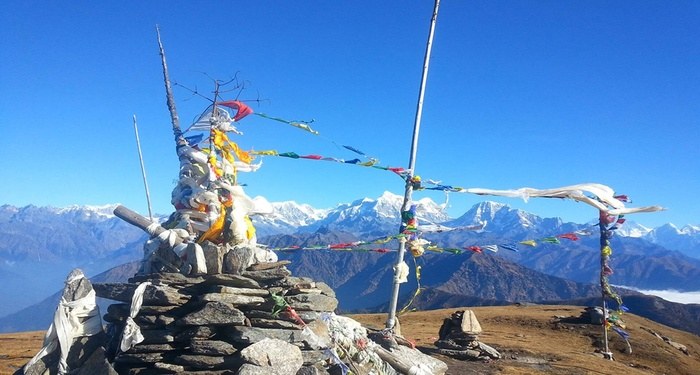
The drive itself is part of the Himalayan experience. Gradually, the busy environment around Kathmandu gives way to quieter rural landscapes.

Dhap is situated at approximately 2,850 meters, so winter temperatures can already be considerably colder than Kathmandu.

After arriving at Dhap, check into a local teahouse and relax.

If the weather is clear, you may already begin seeing mountain landscapes around the settlement.

Accommodation: Local teahouse
Meals: Lunch and dinner
Altitude: Approximately 2,850 m

Day 2: Dhap to Jhapre – 4–5 Hours

Today begins the trekking portion of the journey.

The trail gradually passes through forests, open hillsides, agricultural land and traditional settlements. Winter vegetation is quieter than during spring, but the forests and surrounding mountains create beautiful scenery.

Jhapre is a traditional Himalayan settlement where trekkers can experience local hospitality and observe everyday mountain life.

The area has strong Buddhist cultural influences, and prayer flags, mani walls, chortens and traditional houses can be seen along the route.

Your guide will explain local customs and help you understand the cultural significance of the villages.

Because this is winter, afternoon temperatures can remain cool, particularly if clouds develop.

Walking: 4–5 hours
Accommodation: Teahouse
Meals: Breakfast, lunch and dinner

Day 3: Jhapre to Pikey Base Camp – Approximately 6 Hours

Today is one of the most scenic stages of the trek.

After breakfast, the trail gradually climbs through forests and open mountain terrain toward Pikey Base Camp.

Depending on winter conditions, sections of the trail may be covered with frost or snow. Your guide will assess the trail and choose the safest route.

The surrounding landscape becomes increasingly alpine as you gain elevation.

The vegetation includes pine, fir, rhododendron and other Himalayan trees. During winter, many sections of the forest are quiet and covered with frost.

As you approach Pikey Base Camp, the landscape opens into mountain meadows and high ridges.

The afternoon and evening can be very cold, so warm clothing should be easily accessible.

After reaching your teahouse, enjoy a hot meal and prepare for the early morning hike to Pikey Peak.

Walking: Approximately 6 hours
Accommodation: Teahouse
Meals: Breakfast, lunch and dinner
Destination: Pikey Base Camp area

Day 4: Pikey Peak Sunrise and Trek to Jasmane Bhanjyang

Today is the highlight of the entire trek.

You wake very early, usually before sunrise, and begin hiking toward Pikey Peak at approximately 4,065 meters.

Winter mornings can be extremely cold at this altitude. Gloves, warm jackets, hats and headlamps are essential.

As you approach the viewpoint, the horizon gradually becomes brighter.

Then comes the spectacular sunrise.

The first rays of sunlight illuminate the Himalayan peaks, producing a dramatic panorama. Mount Everest and other major peaks may appear across the horizon when weather conditions are favorable.

Spend time enjoying the panorama and taking photographs before descending.

After returning from the summit area, have breakfast and continue toward Jasmane Bhanjyang.

The descent provides a welcome opportunity to recover after the early morning climb.

Maximum altitude: Approximately 4,065 m
Walking: Approximately 5–6 hours including the summit excursion
Accommodation: Teahouse
Meals: Breakfast, lunch and dinner

Day 5: Jasmane Bhanjyang to Junbeshi – 5–6 Hours

Today you descend toward Junbeshi, one of the most culturally significant settlements in the Pikey and lower Solukhumbu region.

The trail passes through beautiful forests, mountain ridges and traditional villages.

Junbeshi is a historic Sherpa settlement with strong Buddhist traditions. The village provides an excellent opportunity to experience Himalayan culture away from the crowded trekking routes.

The descent also allows your body to recover after spending time at higher elevations.

After reaching Junbeshi, check into a local teahouse.

Enjoy a warm meal and explore the village if time and weather permit.

Walking: 5–6 hours
Accommodation: Teahouse
Meals: Breakfast, lunch and dinner

Day 6: Explore Junbeshi – Monasteries and Sherpa Culture

Today is dedicated to cultural exploration.

Junbeshi and the surrounding area are particularly valuable for travelers interested in Himalayan culture.

You can visit local monasteries and observe Buddhist traditions, prayer flags, mani walls, chortens and religious artwork.

One of the highlights is a visit to Thupten Chholing Monastery, an important Buddhist center in the region. Depending on local conditions and monastery activities, travelers may have the opportunity to observe prayer rituals and learn about Buddhist traditions.

Your guide can explain the meaning of prayer wheels, mani stones, chortens and prayer flags.

The region also demonstrates the interaction between Buddhist, Hindu and indigenous Prakriti Pujak traditions.

Prakriti Pujak traditions emphasize reverence for nature, mountains, forests, water sources and other natural elements. In the Himalayan environment, spirituality and nature are deeply interconnected.

You may also encounter Hindu shrines and cultural practices, demonstrating Nepal's remarkable religious diversity.

This cultural day makes the Pikey Peak Trek much more than a mountain journey.

Accommodation: Teahouse
Meals: Breakfast, lunch and dinner
Activity: Cultural exploration and monastery visit

Day 7: Trek Back Toward Dhap or Nearby Village

After breakfast, begin the return journey toward Dhap or a suitable nearby settlement depending on trail conditions and transportation arrangements.

The route passes through forests, villages, cultivated hillsides and mountain landscapes.

Winter trekking requires flexibility. Snow, ice, local road conditions and weather can affect the exact overnight location.

Himalayan Adventure Intl Treks therefore maintains a practical approach to winter trekking rather than forcing the itinerary when conditions are unsuitable.

Your guide will coordinate with local accommodation providers and transportation teams.

Spend the final evening in the mountains enjoying a traditional meal and reflecting on your Pikey Peak experience.

Walking: Approximately 4–6 hours
Accommodation: Teahouse
Meals: Breakfast, lunch and dinner

Day 8: Drive Back to Kathmandu

After breakfast, take the road journey back toward Kathmandu.

The drive provides another opportunity to enjoy Nepal's changing landscapes, from mountain villages and terraced hills to lower valleys and eventually the Kathmandu Valley.

After arriving in Kathmandu, the Pikey Peak Winter Trek officially concludes.

Himalayan Adventure Intl Treks can also arrange airport transfers, hotel accommodation, sightseeing tours and additional trekking or adventure programs for travelers who wish to extend their Nepal holiday.

Pikey Peak Winter Trek Difficulty

The Pikey Peak Trek is considered a moderate trekking adventure.

There are no technical climbing sections on the standard route. However, winter conditions can increase the difficulty.

Trekkers should be prepared for:

  • Cold temperatures
  • Snow or icy trails
  • Early morning summit hiking
  • Several hours of walking per day
  • Uphill and downhill sections
  • High-altitude conditions
  • Simple mountain accommodation
  • Limited facilities in remote villages

The trek can be suitable for beginners, families and older travelers who are physically fit, provided they trek at a comfortable pace and prepare properly.

Winter conditions should always be taken seriously.

High Altitude Sickness and Prevention

Altitude sickness can affect anyone, regardless of age or previous trekking experience.

Although Pikey Peak is not an extreme Himalayan altitude, the trek still reaches approximately 4,065 meters, where reduced oxygen availability can affect some people.

Common symptoms can include:

  • Headache
  • Tiredness
  • Dizziness
  • Loss of appetite
  • Nausea
  • Difficulty sleeping
  • Unusual weakness

Prevention

Ascend gradually: Avoid rushing through the itinerary.

Drink enough fluids: Regular hydration is important, especially in cold and dry conditions.

Eat properly: Consume sufficient calories and carbohydrates to support your trekking effort.

Avoid alcohol: Alcohol can contribute to dehydration and can make altitude-related symptoms harder to recognize.

Sleep well: Adequate rest is important during acclimatization.

Listen to your body: Tell your guide immediately if you feel unwell.

Do not ignore worsening symptoms: A person with serious or worsening altitude symptoms should not continue ascending. The guide will help determine whether descent and medical assistance are necessary.

Himalayan Adventure Intl Treks places safety above reaching a particular destination.

Winter Weather on Pikey Peak

Winter conditions can vary.

Typical winter characteristics include:

  • Cold mornings
  • Freezing nights at higher elevations
  • Dry weather
  • Clear mountain views on favorable days
  • Occasional snowfall
  • Icy trails
  • Strong winds around exposed ridges

The coldest period is generally December through February.

Because weather can change quickly in the mountains, trekkers should carry adequate winter clothing and follow the advice of their guide.

Accommodation During the Trek

The Pikey Peak route uses local teahouses and family-run lodges.

Accommodation is generally simple but provides the essentials required by trekkers.

Facilities may include:

  • Twin-sharing rooms
  • Shared bathrooms
  • Dining rooms
  • Hot meals
  • Tea and coffee
  • Basic heating in common areas
  • Blankets where available

During winter, the sleeping environment can be very cold. A good sleeping bag suitable for winter conditions is strongly recommended.

Food During the Pikey Peak Trek

The cost of food and accommodation is approximately USD 30–40 per person per day, depending on the season, accommodation and menu.

Typical meals include:

Breakfast

  • Tibetan bread
  • Eggs
  • Porridge
  • Pancakes
  • Toast
  • Tea or coffee

Lunch

  • Dal bhat
  • Noodles
  • Rice
  • Pasta
  • Soup
  • Momos
  • Vegetables

Dinner

  • Dal bhat
  • Sherpa-style dishes
  • Noodles
  • Soup
  • Rice and vegetables

Dal bhat is particularly useful for trekkers because it provides carbohydrates, protein and energy for long trekking days.

Pikey Peak Trek Cultural Experience

One of the strongest reasons to choose this trek is its cultural diversity.

The route passes through communities influenced by Sherpa Buddhist traditions, Hindu practices and indigenous Prakriti Pujak beliefs.

Buddhist Culture

Trekkers may see:

  • Monasteries
  • Chortens
  • Mani walls
  • Prayer wheels
  • Prayer flags
  • Buddhist paintings
  • Traditional religious ceremonies

Always walk around religious monuments in the appropriate direction and follow your guide's cultural advice.

Prakriti Pujak Traditions

The indigenous relationship with nature is another fascinating aspect of the region.

Nature is not simply viewed as scenery. Mountains, forests, rivers and other natural elements can have spiritual significance.

This relationship provides visitors with a deeper understanding of the Himalayan landscape.

Hindu Culture

Hindu traditions are also present throughout Nepal's mountain communities.

Local shrines, religious ceremonies and shared cultural practices demonstrate how different spiritual traditions coexist within Nepal.

Monastery, Chorten and Mani Wall Experience

The Pikey region offers numerous opportunities to observe traditional Himalayan religious architecture.

Monasteries are centers of Buddhist learning, meditation and religious practice.

Chortens are sacred structures commonly found along Himalayan trails.

Mani walls are built from stone slabs inscribed with sacred Buddhist mantras.

Prayer flags are placed in mountain passes, ridges, monasteries and sacred locations. Their colors and inscriptions are associated with prayers and blessings.

Trekkers should treat these cultural sites respectfully and ask permission before photographing people during religious ceremonies.

Pikey Peak Winter Trek Packing List

Proper equipment is especially important in winter.

Clothing

  • Thermal base layers
  • Fleece jacket
  • Down or insulated jacket
  • Waterproof/windproof jacket
  • Trekking trousers
  • Thermal trousers
  • Waterproof trousers
  • Warm hat
  • Sun hat
  • Gloves
  • Warm socks
  • Spare socks
  • Lightweight T-shirts

Footwear

  • Good trekking boots
  • Warm trekking socks
  • Camp shoes or sandals
  • Gaiters if snow conditions require them

Sleeping Equipment

  • Four-season or suitable winter sleeping bag
  • Sleeping bag liner
  • Sleeping bag compression bag

Backpack Equipment

  • 30–40 liter daypack
  • Duffel bag if using a porter
  • Rain cover
  • Water bottles
  • Headlamp
  • Spare batteries
  • Trekking poles

Personal Items

  • Sunglasses with UV protection
  • Sunscreen
  • Lip balm
  • Personal toiletries
  • Small first-aid kit
  • Personal medications
  • Water purification tablets or suitable water treatment
  • Hand sanitizer
  • Tissue paper
  • Reusable water bottle

Documents

  • Passport
  • Travel insurance documents
  • Trekking permits where applicable
  • Emergency contact information
  • Copies of important documents

Your guide can provide additional advice based on the actual weather and trail conditions before departure.

Pikey Peak Trek Guide Cost

Himalayan Adventure Intl Treks provides professional trekking guides to support navigation, communication, cultural interpretation and safety.

Guide

USD 30 per day

Female Guide

USD 30 per day

Female guides are available on request, subject to availability.

Language-Speaking Guide

USD 50–70 per day

Language-speaking guides can be arranged according to the required language and availability.

Porter and Porter-Guide Cost

Porter

USD 20 per day

A porter can carry the majority of your trekking equipment, allowing you to walk with a lighter daypack.

Porter-Guide

USD 25 per day

The porter-guide option is useful for travelers looking for a more economical arrangement while still receiving basic assistance with trekking logistics.

Guide and Porter Insurance

USD 50

Guide and porter insurance arrangements are included according to the agreed trekking package and applicable service conditions.

Transportation Cost

Transportation is one of the important components of the Pikey Peak Trek.

Sharing Jeep

Approximately:

USD 30–40 per person, one way

The final cost may depend on road conditions, group size, vehicle availability and seasonal transportation demand.

Private Jeep

Approximately:

USD 200 for a vehicle accommodating up to 7 people

Private transportation offers greater flexibility and can be particularly useful for families or private groups.

Pikey Peak Trek Food and Accommodation Cost

The estimated cost for food and accommodation is:

USD 30–40 per person per day

Costs can vary depending on the season, local lodge rates, meal selections and itinerary requirements.

Pikey Peak Trek Full Package Cost

Himalayan Adventure Intl Treks offers a budget-oriented Pikey Peak Trek package designed to provide good value without compromising essential trekking services.

Estimated Full Package

USD 650–750 per person

Group Joining Package

USD 750 per person

The exact final price can depend on group size, transportation arrangements, accommodation requirements, guide language, private services and itinerary modifications.

For travelers seeking a private experience, Himalayan Adventure Intl Treks can customize the itinerary according to group requirements.

What the Pikey Peak Trek Package Can Include

Depending on the selected package, Himalayan Adventure Intl Treks can arrange:

  • Trekking guide
  • Porter service
  • Guide and porter insurance arrangements
  • Transportation
  • Sharing or private jeep
  • Teahouse accommodation
  • Meals during the trek
  • Trekking permits and applicable local fees
  • Kathmandu airport transfer
  • Trek preparation assistance
  • Route planning
  • Cultural interpretation
  • First-aid support
  • Emergency coordination
  • Government and local documentation
  • Sleeping bag arrangement if requested
  • Female guide on request
  • Language-speaking guide on request
  • Porter-guide option
  • Group joining departure
  • Private trekking arrangements

The exact inclusion list should be confirmed before booking because government fees, transportation requirements and individual services can change.

Why Choose Himalayan Adventure Intl Treks?

Himalayan Adventure Intl Treks specializes in trekking and adventure travel throughout Nepal.

For the Pikey Peak Winter Trek, our team focuses on combining affordability with practical mountain support.

We understand that every traveler has different requirements. Some visitors want a budget group experience, while others prefer private transportation, a female guide, a language-speaking guide or a customized itinerary.

Our trekking team can help organize the trip according to your requirements.

Our advantages include:

Experienced local guides: Our guides understand the trails, weather, local communities and mountain environment.

Flexible transportation: Choose between sharing transportation and private vehicles.

Budget options: The Pikey Peak trek can be organized without unnecessary luxury expenses.

Cultural experience: Our guides explain Buddhist, Hindu and indigenous traditions.

Safety-oriented trekking: We monitor weather, altitude, physical condition and trail circumstances.

Personalized service: Private groups can modify the itinerary according to their needs.

Local knowledge: Working with local communities provides travelers with a more authentic Himalayan experience.

Is Pikey Peak Trek Suitable for Families?

Yes, Pikey Peak can be a good option for active families.

The route is shorter and generally less demanding than many high-altitude Himalayan trekking programs. However, winter conditions make preparation particularly important.

Children should be physically capable of walking several hours per day, and parents should discuss the itinerary with the trekking company before departure.

A slower itinerary can be arranged for families who want more time at each village.

Pikey Peak Compared with Everest Base Camp

Pikey Peak offers a different experience from the Everest Base Camp Trek.

Everest Base Camp is famous for its legendary route, Khumbu villages, Namche Bazaar, Tengboche and Everest Base Camp itself.

Pikey Peak is quieter and shorter.

The Pikey route provides:

  • Fewer crowds
  • Shorter trekking duration
  • Peaceful villages
  • Strong cultural experiences
  • Exceptional sunrise views
  • Wide Himalayan panoramas
  • Lower overall trekking cost
  • More flexible itineraries

For travelers who have limited time but still want to experience the Himalayas and see Mount Everest, Pikey Peak is an excellent alternative.

Responsible and Sustainable Trekking

Himalayan Adventure Intl Treks encourages responsible tourism.

Trekkers are encouraged to:

  • Avoid single-use plastics
  • Carry reusable water bottles
  • Use designated waste facilities
  • Respect local customs
  • Avoid damaging religious structures
  • Ask permission before photographing people
  • Stay on established trails
  • Respect wildlife
  • Conserve water
  • Support local teahouses and businesses
  • Avoid unnecessary noise around monasteries

Responsible trekking helps protect the mountains and supports the communities that depend on tourism.

Best Time for Pikey Peak Trek

The traditional best trekking seasons are spring and autumn, but winter offers a unique experience.

Winter: December–February

Best for:

  • Crisp mountain landscapes
  • Fewer trekkers
  • Snow and frost scenery
  • Clear winter atmosphere
  • Peaceful trails

However, trekkers must be prepared for cold and potentially snowy conditions.

Spring: March–May

Spring brings warmer conditions and blooming rhododendrons.

Autumn: September–November

Autumn generally provides stable weather, comfortable trekking conditions and excellent mountain visibility.

Final Tips

The Pikey Peak Winter Trek is an outstanding choice for travelers who want a quieter and more culturally immersive Himalayan adventure.

From the road journey to Dhap to the sunrise over the Himalayas from Pikey Peak, every stage offers something different.

The trail passes through forests, mountain meadows and traditional villages before reaching the high ridge at 4,065 meters. The sunrise viewpoint provides extraordinary Himalayan scenery, while the journey toward Junbeshi introduces travelers to Sherpa culture, monasteries, chortens, mani walls, prayer flags and centuries-old spiritual traditions.

The combination of Buddhist culture, Hindu practices and indigenous Prakriti Pujak traditions makes the region particularly interesting for travelers who want more than just mountain scenery.

Winter adds another dimension to the journey. Frost-covered forests, cold mountain mornings, occasional snow and crystal-clear Himalayan views can make the trek especially memorable.

With guide services from USD 30 per day, porter services from USD 20 per day, sharing transportation around USD 30–40 per person one way, private transportation around USD 200 for up to seven people, food and accommodation around USD 30–40 per day, and full-package options around USD 650–750 per person, the trek provides an attractive budget adventure in the Nepal Himalayas.

Whether you are a first-time Himalayan trekker, a family looking for a manageable adventure, a photographer searching for extraordinary mountain landscapes, or an experienced traveler wanting a quieter alternative to the Everest Base Camp trail, Pikey Peak deserves a place on your Nepal itinerary.

Himalayan Adventure Intl Treks can arrange your Pikey Peak Winter Trek as a group-joining or private adventure, with professional guides, porters, transportation, accommodation, meals and other necessary trekking arrangements.

Come to Pikey Peak in winter, walk through peaceful Himalayan villages, experience authentic Sherpa culture, discover monasteries and sacred landscapes, and stand above the clouds as the first sunlight illuminates the world's highest mountains.

Pikey Peak Winter Trek Nepal Itinerary

Expand All
Food

Breakfast

Accomodation

Hotel

Elevation

1350 m.

Walking Duration

25 minute

Starts From

TIA

Ends At

Thamel Kathmandu

ransfer to Hotel in Thamel

Your Pikey Peak Winter Trek begins with your arrival in Kathmandu, the capital city of Nepal.

Upon arrival, a representative from Himalayan Adventure Intl Treks will assist with your airport transfer and take you to your hotel in Thamel, one of Kathmandu's most popular tourist districts.

After checking into the hotel, you can rest after your journey or take a short walk around Thamel.

Thamel offers trekking shops, restaurants, cafes, souvenir stores and travel services. It is also a convenient place to purchase or rent any last-minute trekking equipment.

Your trekking guide will meet you and provide a briefing about the upcoming Pikey Peak Winter Trek. The team can check your equipment and make recommendations about warm clothing, sleeping bags, trekking shoes and other essential winter gear.

Altitude: 1,350m
Accommodation: Hotel in Kathmandu
Meals: Welcome arrangements according to package
Activity: Arrival, hotel transfer and trek briefing

Food

BLD

Accomodation

Homestay

Elevation

2850 m.

Walking Duration

6–7 hours

Starts From

Kathmandu

Ends At

Dhhap

After breakfast, your journey toward the Pikey Peak trekking region begins.

You drive from Kathmandu toward Dhap Bazaar, situated at approximately 2,850 meters (9,350 feet).

The road journey passes through changing landscapes, including river valleys, terraced farmland, forested hills and rural settlements. Gradually, the landscape becomes more mountainous as you approach the Solukhumbu region.

Dhap is an important starting point for the Pikey Peak route.

Winter temperatures are considerably cooler at this elevation than in Kathmandu, especially after sunset. Once you arrive at Dhap, you check into a local teahouse and have time to relax.

If the weather is clear, you may already enjoy beautiful mountain scenery from the surrounding hills.

Your guide will also provide final instructions for the trekking days ahead.

Altitude: 2,850m
Distance: Approximately 250 km by road
Driving: 6–7 hours
Accommodation: Local teahouse
Meals: Breakfast, lunch and dinner

Food

BLD

Accomodation

Homestay

Walking Duration

5–6 hours

Starts From

Dhap Bazaar

Ends At

Jhapre

Today is your first full trekking day.

After breakfast, you leave Dhap Bazaar and begin walking toward Jhapre, situated at approximately 2,815 meters.

The trail passes through beautiful mountain landscapes, forests, open hillsides and traditional settlements. The region is known for its peaceful atmosphere and spectacular views.

Winter gives the landscape a different appearance. Frost can cover vegetation in the morning, while the higher ridges may have patches of snow depending on recent weather.

The trail is not a technical climbing route, but some uphill and downhill sections require steady walking.

Your guide will maintain a comfortable pace and arrange regular rest stops.

Jhapre is a traditional mountain settlement where you can experience local hospitality. The village provides an excellent opportunity to observe rural Himalayan life.

You can see traditional houses, prayer flags and Buddhist cultural features around the settlement.

Altitude: 2,815m
Distance: 13 km
Walking: 5–6 hours
Accommodation: Teahouse
Meals: Breakfast, lunch and dinner

Food

BLD

Accomodation

Homestay

Walking Duration

6–7 hours

Starts From

Jhapre

Ends At

Pikey Base Camp

Today is one of the more demanding trekking days because you gain significant elevation.

After breakfast, you continue toward Pikey Base Camp at approximately 3,640 meters (11,942 feet).

The route passes through pine, fir and rhododendron forests before gradually reaching more open mountain terrain.

During winter, the forest can be covered with frost and sections of the trail may become icy. Your guide will monitor trail conditions and advise you where additional care is required.

As you climb higher, the surrounding landscape becomes increasingly spectacular.

The forest gradually gives way to open ridges and highland meadows. The views toward the Himalayan range become wider and more impressive.

After approximately 6–7 hours of trekking, you reach the Pikey Base Camp area.

The temperature can fall significantly after sunset, so this is the time to prepare your warm clothing and sleeping equipment.

A hot dinner and warm tea at the teahouse will be especially welcome after the day's trek.

Rest well because tomorrow is the highlight of the journey.

Altitude: 3,640m
Distance: 14 km
Walking: 6–7 hours
Accommodation: Teahouse
Meals: Breakfast, lunch and dinner

Food

BLD

Accomodation

Homestay

Elevation

2680 m.

Walking Duration

6–7 hours

Starts From

Pikey Peak Base Camp

Ends At

Junbeshi

Today is the most memorable day of the Pikey Peak Winter Trek.

You wake very early, often before sunrise, and begin hiking toward Pikey Peak at 4,065 meters.

The early morning temperature can be extremely cold during winter, so warm layers, gloves, a warm hat, headlamp and appropriate trekking boots are essential.

As you approach the summit, the horizon begins to brighten.

The sunrise from Pikey Peak is extraordinary.

When weather conditions are favorable, you can see an extensive panorama of the Himalayan range. The view may include Mount Everest, Lhotse, Makalu, Kanchenjunga, Mera Peak, Numbur, Karyolung, Gaurishankar and numerous surrounding peaks.

The panoramic view is one of the principal reasons trekkers choose Pikey Peak instead of more crowded trekking destinations.

After enjoying the sunrise and taking photographs, you descend and continue toward Junbeshi at approximately 2,680 meters.

The trail gradually moves into lower elevations and passes through beautiful forests and mountain landscapes.

The descent can be physically demanding because of the long distance, but reaching Junbeshi provides an opportunity to relax and enjoy the hospitality of this historic Sherpa settlement.

Highest altitude: 4,065m
Destination: Junbeshi, 2,680m
Distance: 17 km
Walking: 6–7 hours
Accommodation: Teahouse
Meals: Breakfast, lunch and dinner

Food

BLD

Accomodation

Homestay

Elevation

2920 m.

Walking Duration

4 hour

Starts From

Junbeshi

Ends At

Thupten Choling Gompa

After the demanding previous day, today is dedicated to cultural exploration.

Junbeshi is one of the most culturally significant settlements on the route. The village and surrounding area provide an excellent introduction to Sherpa Buddhist culture.

You will explore the area around Thupten Choling Gompa, located at approximately 2,920 meters.

The monastery is an important religious center and offers insight into Tibetan Buddhist traditions.

Along the route and around the villages, you can observe:

  • Buddhist monasteries
  • Chortens
  • Mani walls
  • Prayer wheels
  • Prayer flags
  • Traditional houses
  • Religious artwork
  • Local cultural practices

Your guide will explain the significance of these cultural features and help you visit religious sites respectfully.

The Pikey region is also interesting because of its combination of Buddhist, Hindu and indigenous traditions. Prakriti Pujak, or nature-oriented spiritual traditions, reflect the close relationship between local communities and the mountains, forests and natural environment.

After approximately four hours of exploration, return to Junbeshi for another night.

Altitude: Junbeshi 2,680m
Thupten Choling: Approximately 2,920m
Activity: Cultural exploration and monastery visit
Accommodation: Teahouse
Meals: Breakfast, lunch and dinner

Food

BLD

Accomodation

Lodge

Elevation

2380 m.

Walking Duration

5-6 hour

Starts From

Junbesi

Ends At

Phaplu

After breakfast, you begin the final major trekking section toward Phaplu, situated at approximately 2,380 meters (7,808 feet).

The trail gradually descends through forests and mountain settlements.

Compared with the higher sections around Pikey Base Camp, the lower elevation feels warmer and the vegetation becomes more diverse.

The journey provides another opportunity to enjoy the peaceful landscapes of Solukhumbu.

You may encounter local farmers, mountain communities and traditional houses along the route.

After approximately 5–6 hours, you arrive in Phaplu.

Phaplu is an important transportation hub in the region and serves as the end point of the trekking section for this itinerary.

Enjoy your final evening in the mountains with your guide and trekking team.

Altitude: 2,380m
Distance: 13 km
Walking: 5–6 hours
Accommodation: Teahouse/lodge
Meals: Breakfast, lunch and dinner

Food

Breakfast

Accomodation

Hotel

Elevation

1350 m.

Walking Duration

9–10 hours

Starts From

Phaplu

Ends At

Kathmandu

Today you return to Kathmandu.

The road journey from Phaplu to Kathmandu takes approximately 9–10 hours, depending on road and traffic conditions.

For travelers who prefer a faster return, a flight option may be available, with approximately 30 minutes of flight time, subject to flight schedules, weather and operational conditions.

The drive provides a final opportunity to enjoy the changing landscapes of Nepal as you travel from the Himalayan foothills toward the Kathmandu Valley.

Upon reaching Kathmandu, you will be transferred to your hotel.

You can spend the evening relaxing, shopping for souvenirs or enjoying a farewell dinner.

Driving: Approximately 9–10 hours
Flight option: Approximately 30 minutes, subject to availability
Accommodation: Hotel in Kathmandu
Meals: Breakfast and other meals according to package

Food

Breakfast

Your Pikey Peak Winter Trek officially concludes today.

Depending on your flight schedule, Himalayan Adventure Intl Treks can arrange your airport transfer.

If you have additional time in Nepal, our team can also organize another adventure, including:

  • Everest Base Camp Trek
  • Annapurna Base Camp Trek
  • Langtang Valley Trek
  • Ganja La Pass Trek
  • Manaslu Circuit Trek
  • Upper Mustang Trek
  • Mountain expedition
  • Peak climbing
  • Kathmandu cultural tours
  • Bhaktapur Durbar Square tour
  • Chitwan Jungle Safari
  • Lumbini tour
  • Mountain flight
  • Helicopter sightseeing

We are happy to customize your next Nepal adventure.

Altitude Graph

Trip Map

Tripadvisor Reviews

Similar Packages

Winter Annapurna Base Camp Trek

Winter Annapurna Base Camp Trek

Winter Trek Langtang Valley

Winter Trek Langtang Valley

Everest Base Camp Winter Trek

Everest Base Camp Winter Trek