
Have Questions? Talk to Expert (Binod)

Standing at 8,163 meters (26,781 feet) above sea level, Mount Manaslu is the world's eighth-highest mountain and one of Nepal's most rewarding Himalayan climbing destinations. Located in the spectacular Mansiri Himal Range of the Gorkha District, Manaslu attracts ambitious mountaineers seeking the challenge of an 8,000-meter peak while avoiding the extreme crowds found on some of Nepal's more commercial mountains.
The Mount Manaslu Expedition 2027 with Himalayan Adventure Intl Treks is carefully designed for experienced climbers looking to achieve a significant Himalayan milestone under the guidance of highly skilled Sherpa climbers and professional expedition leaders. Combining expert logistics, personalized support, and an exceptional safety-first approach, our expedition provides everything required for a successful ascent of one of the world's most magnificent mountains.
Often regarded as the ideal preparation before attempting Mount Everest, Manaslu offers technical climbing, glacier travel, high-altitude camping, and valuable experience above 8,000 meters. Climbers benefit from outstanding Himalayan scenery, rich Tibetan Buddhist culture, and an unforgettable journey through one of Nepal's most beautiful mountain regions.
Our expedition typically lasts 35 to 40 days, beginning and ending in Kathmandu. The journey includes scenic drives, trekking through traditional villages, gradual acclimatization, extensive climbing preparation, multiple rotations between high camps, and a summit attempt during the best available weather window.
Whether your goal is your first 8,000-meter mountain or an important step toward completing the world's highest peaks, the Mount Manaslu Expedition 2027 promises a lifetime achievement supported by the experience and dedication of Himalayan Adventure Intl Treks.
Mount Manaslu has steadily become one of the most popular 8,000-meter peaks for experienced climbers from around the world. While it remains a demanding Himalayan expedition requiring excellent physical fitness and previous mountaineering experience, many climbers consider it more accessible than several other mountains in the 8,000-meter category.
The mountain offers a perfect combination of:
Unlike extremely crowded mountains, the Manaslu region maintains a quieter atmosphere, allowing climbers to experience authentic Himalayan wilderness while enjoying modern expedition logistics.
| Feature | Details |
|---|---|
| Mountain | Mount Manaslu |
| Elevation | 8,163 m (26,781 ft) |
| Ranking | World's 8th Highest Mountain |
| Country | Nepal |
| Mountain Range | Mansiri Himal |
| Region | Gorkha District |
| Expedition Duration | 35–40 Days |
| Base Camp Elevation | Approximately 4,800 m |
| Highest Camp | Camp IV (approximately 7,450 m) |
| Climbing Route | Northeast Face |
| Number of High Camps | Four |
| Best Seasons | Spring (March–May) & Autumn (September–November) |
| Difficulty | Extremely Challenging |
| Required Experience | Previous 7,000-meter expedition recommended |
The name Manaslu originates from the Sanskrit word "Manasa," meaning mind, intellect, or spirit. As a result, Mount Manaslu is often referred to as the Mountain of the Spirit, reflecting both its majestic appearance and spiritual significance among local communities.
The mountain is also known locally by Tibetan names such as Kutang I and Kampunge Himal, demonstrating the region's deep cultural and historical ties with Tibetan Buddhism.
The first successful ascent of Mount Manaslu took place on 9 May 1956, when Japanese climber Toshio Imanishi and Sherpa Gyalzen Norbu reached the summit via the Northeast Face. Their achievement marked an important milestone in Himalayan mountaineering and established Manaslu as one of the world's great expedition peaks.
For many years, Japanese expeditions frequently visited the mountain, earning Manaslu the nickname "The Japanese Mountain."
Although exploration began decades earlier, Nepal officially opened Mount Manaslu to international mountaineering expeditions in the early 1990s, allowing climbers from around the globe to experience its remarkable beauty and challenge.
Today, thousands of climbers have attempted Manaslu, and it continues to grow in popularity due to its excellent expedition infrastructure, reliable climbing routes, and impressive summit success rates when weather conditions cooperate.
Mount Manaslu lies in Nepal's Gorkha District, approximately 160 kilometers northwest of Kathmandu. It forms part of the magnificent Mansiri Himal Range, situated near the Nepal–Tibet border.
The expedition begins with a scenic drive from Kathmandu before trekking through the famous Manaslu Conservation Area. The trail passes traditional Gurung and Tibetan-influenced villages, lush forests, suspension bridges, dramatic river gorges, and alpine meadows before reaching Manaslu Base Camp.
This journey is considered one of Nepal's most scenic trekking approaches, offering spectacular views of peaks including:
The rich cultural heritage of villages such as Jagat, Deng, Namrung, Lho, and Sama Gaun adds another unforgettable dimension to the expedition.
Choosing the right expedition company is one of the most important decisions for any high-altitude climber. At Himalayan Adventure Intl Treks, we believe that successful expeditions are built on careful planning, experienced leadership, and unwavering commitment to climber safety.
Our Mount Manaslu Expedition 2027 includes:
Every expedition is carefully planned to maximize acclimatization while maintaining flexibility to adapt to weather conditions and the health of each climber.
The complete Mount Manaslu Expedition generally requires 35 to 40 days, allowing sufficient time for safe acclimatization, climbing rotations, weather delays, and the summit attempt.
A typical schedule includes:
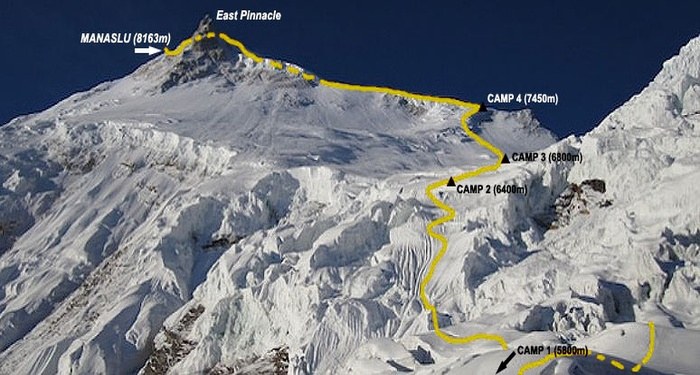
This carefully structured itinerary significantly improves the chances of a successful summit while reducing the risks associated with rapid altitude gain.
The standard route to the summit of Mount Manaslu follows the Northeast Face, which is considered the safest and most frequently climbed route. Although technically less demanding than some other 8,000-meter peaks, Manaslu remains a serious high-altitude expedition requiring excellent physical conditioning, glacier travel experience, fixed-rope climbing skills, and the ability to perform in extreme environments.
The journey begins in Kathmandu before traveling overland to the trailhead. The trekking approach passes through the spectacular Manaslu Conservation Area, where climbers experience diverse landscapes ranging from subtropical forests and deep river gorges to alpine valleys and glacial terrain. After approximately nine to ten days of trekking, the expedition reaches Manaslu Base Camp at around 4,800 meters, where the climbing phase officially begins.
Unlike trekking peaks, climbing Manaslu requires multiple acclimatization rotations between Base Camp and higher camps. These rotations allow climbers to adapt gradually to the decreasing oxygen levels before making a summit attempt during a favorable weather window.
Base Camp serves as the operational center of the expedition for nearly three weeks. Situated on a rocky glacial moraine with panoramic views of the mountain, it is fully equipped to support climbers throughout the expedition.
At Himalayan Adventure Intl Treks, our Base Camp is designed to provide comfort and efficiency in a remote alpine environment. Facilities typically include:
During the stay at Base Camp, climbers participate in:
Our experienced expedition leaders carefully assess each climber's physical condition before moving to higher camps.
The climb from Base Camp to Camp I begins with glacier travel across snowfields and crevassed terrain. Climbers use fixed ropes, crampons, ice axes, harnesses, and ascenders throughout much of the route.
This section demands concentration as several glacier crossings contain hidden crevasses. Climbers move in teams under the supervision of experienced Sherpa guides, who ensure safe movement through technical sections.
Camp I is established on a relatively gentle snow plateau where climbers spend one or more nights during acclimatization rotations.
The objectives at Camp I include:
Above Camp I, the route becomes steeper and more technical. Climbers ascend sustained snow slopes protected by fixed ropes while negotiating icy sections that require careful footwork.
The terrain between Camp I and Camp II presents several challenges, including:
Camp II is positioned on a broad snowfield and serves as one of the expedition's most important acclimatization camps.
Most climbers spend multiple nights here during rotation schedules before descending to Base Camp for recovery.
The route above Camp II enters increasingly exposed alpine terrain. The climb becomes more demanding due to thinner air and longer stretches of steep snow climbing.
Climbers rely heavily on fixed ropes while ascending sustained snow slopes leading toward Camp III.
At this altitude, oxygen levels are less than half of those at sea level. Every movement requires more energy, making efficient pacing essential.
Camp III provides one of the most spectacular viewpoints on the mountain, offering breathtaking panoramas across the Nepal Himalaya.
Expedition leaders carefully monitor:
Proper acclimatization at Camp III significantly improves summit success.
Camp IV is established high on the mountain beneath the final summit ridge.
This is the final staging camp before the summit push.
The climb from Camp III to Camp IV follows increasingly steep snow slopes where fixed ropes provide essential security.
Conditions at Camp IV are extremely harsh.
Typical temperatures may fall below –30°C, while strong winds frequently affect the upper mountain.
Most climbers spend only a short period at Camp IV before beginning their summit attempt during the early evening or around midnight, depending on weather conditions.
Summit day is the most demanding stage of the entire expedition.
Climbers leave Camp IV in darkness wearing full high-altitude equipment, including:
The ascent follows a steep snowy ridge requiring continuous fixed-rope climbing.
As dawn breaks, climbers witness unforgettable views across the Himalayas, with Everest, Lhotse, Makalu, Annapurna, Dhaulagiri, Ganesh Himal, and countless other peaks stretching across the horizon.
Reaching the summit of Mount Manaslu (8,163 m) is an extraordinary achievement that rewards weeks of preparation, determination, and teamwork.
After celebrating briefly on the summit, climbers descend carefully to Camp IV or Camp III, as descending safely remains equally important as reaching the top.
One of the primary reasons for summit success on Manaslu is a carefully planned acclimatization schedule.
At Himalayan Adventure Intl Treks, we follow the internationally recognized principle of "Climb High, Sleep Low."
A typical acclimatization strategy includes:
This gradual progression allows the body to produce more red blood cells, improving oxygen transport and reducing the risk of Acute Mountain Sickness (AMS).
Our expedition leaders continuously evaluate every climber before approving progression to higher camps.
Choosing the right season greatly influences climbing success.
Spring offers stable weather, moderate temperatures, and longer daylight hours.
Advantages include:
Spring is an excellent choice for climbers seeking reliable climbing conditions.
Autumn is traditionally considered the most popular season for climbing Manaslu.
Advantages include:
Following the monsoon, the surrounding valleys become lush and vibrant, making the approach trek especially scenic.
All foreign climbers must obtain official climbing permits issued by the Government of Nepal.
Current permit fees are:
| Season | Permit Cost (USD) |
|---|---|
| Autumn (Sep–Nov) | $1,800 |
| Spring (Mar–May) | $1,500 |
| Summer/Winter | $900 |
Permit fees are generally included in guided expedition packages offered by Himalayan Adventure Intl Treks.
The cost of a professionally organized Mount Manaslu Expedition depends on the level of service, group size, logistics, and support provided.
For 2027, fully guided commercial expeditions generally range from USD 15,500 and above.
Typical expedition packages include:
Personal expenses such as travel insurance, international airfare, personal climbing gear, and gratuities are usually not included.
Mount Manaslu is not recommended for beginner mountaineers.
Participants should ideally have:
Our team carefully reviews each climber's experience to ensure they are adequately prepared for the demands of an 8,000-meter expedition.
Climbing an 8,000-meter mountain requires specialized equipment that can withstand extreme cold, strong winds, and challenging alpine terrain. Selecting the right gear is one of the most important factors for a safe and successful expedition.
At Himalayan Adventure Intl Treks, our expedition leaders inspect every climber's equipment in Kathmandu before departure to ensure it meets high-altitude expedition standards.
Layering is essential for maintaining body temperature in changing Himalayan conditions. Climbers should pack:
Each climber should bring:
Essential camping gear includes:
A successful Manaslu expedition begins months before arriving in Nepal. Climbers should follow a structured training program for at least six months, focusing on:
Training at altitude, when possible, is highly beneficial. Previous ascents of peaks above 6,500–7,000 meters provide valuable experience for managing the physical and mental demands of an 8,000-meter expedition.
Weather in the Himalayas can change rapidly, making flexibility an essential part of every expedition.
Spring offers:
Autumn is equally popular due to:
At higher camps, temperatures commonly fall below -30°C, and wind chill can make conditions even more severe. Summit attempts are scheduled only after careful analysis of weather forecasts to maximize safety and success.
The approach trek features comfortable tea houses and lodges offering:
Our Base Camp is fully equipped with:
Our experienced kitchen team prepares nutritious meals rich in carbohydrates, proteins, and essential nutrients to support acclimatization and recovery.
Meals at higher camps are lightweight, energy-rich, and easy to prepare. Typical options include:
Proper hydration is critical throughout the expedition, especially above 6,000 meters.
Safety is the highest priority on every Himalayan Adventure Intl Treks expedition.
Our experienced Sherpa team plays a vital role in expedition success by:
Our expedition leaders maintain regular communication between Base Camp and higher camps to monitor progress and respond promptly to changing conditions.
Comprehensive travel insurance is mandatory for all participants and should include:
Participants should verify that their insurance policy specifically covers expedition climbing above 8,000 meters.
At Himalayan Adventure Intl Treks, we are committed to preserving Nepal's fragile mountain environment.
We encourage all climbers to follow responsible expedition practices by:
Our team works closely with local staff and authorities to ensure that every expedition contributes positively to the communities and landscapes of the Manaslu region.
High-altitude expeditions are subject to changing weather, road conditions, and other unforeseen circumstances. While Himalayan Adventure Intl Treks carefully plans every itinerary during the most favorable climbing seasons, flexibility is essential when traveling in remote Himalayan regions.
Heavy rainfall, snowfall, landslides, road closures, or severe weather may occasionally cause delays to transportation or adjustments to the planned itinerary. In such situations, additional accommodation, meals, transportation, or other personal expenses resulting from extended stays are the responsibility of the participant. Himalayan Adventure Intl Treks will make every effort to organize necessary arrangements for climbers, guides, and support staff while maintaining the highest standard of service.
International flight schedules may also be affected by weather-related delays or itinerary changes. We recommend allowing extra days in Nepal before and after the expedition to reduce the risk of missing onward international flights. While we will gladly assist with alternative travel arrangements whenever possible, Himalayan Adventure Intl Treks cannot accept liability for expenses arising from missed or rescheduled international connections.
Throughout the expedition, our leaders continuously assess weather conditions, trail safety, and the health of participants. If adjustments to the itinerary are required for safety reasons, they will be made in consultation with the expedition team. These changes are implemented to enhance safety and improve the overall success of the climb without compromising the quality of the expedition experience.
Choosing the right expedition operator can make a significant difference in your climbing experience. Himalayan Adventure Intl Treks combines local expertise with international standards to provide a safe, professional, and rewarding expedition.
Whether you are attempting your first 8,000-meter summit or adding another major peak to your climbing achievements, our dedicated team is committed to supporting you every step of the way.
Reaching the summit of Mount Manaslu (8,163 m) is more than a mountaineering achievement—it is a journey of determination, resilience, and personal transformation. From the culturally rich villages of the Manaslu region to the breathtaking summit overlooking the Himalayan giants, every stage of the expedition offers unforgettable experiences.
Join Himalayan Adventure Intl Treks for a professionally organized Mount Manaslu Expedition 2027 -30 and climb with confidence under the guidance of experienced Sherpas and expedition leaders. With meticulous planning, comprehensive logistical support, and a strong focus on safety, we are dedicated to helping you achieve your dream of standing atop the world's eighth-highest mountain.
Contact Himalayan Adventure Intl Treks today to reserve your place for the Mount Manaslu Expedition 2027 -30 and begin preparing for one of the greatest adventures on Earth.
Arrive in the bustling city of Kathmandu and transfer to your hotel with a Bed and Breakfast (BB) plan. Take the day to relax and adjust to the new surroundings.
Attend to official formalities, including obtaining permits and a comprehensive briefing about the expedition. Rest at the hotel, preparing for the journey ahead. Enjoy a free day in Kathmandu. Explore the historic sites, and vibrant markets, or simply unwind at the hotel. Prepare for the upcoming adventure.
Embark on a scenic drive to Machha Khola, the gateway to the Manaslu region. Witness the changing landscapes as you leave the city behind and enter the picturesque countryside.
Begin the trek with a challenging trail to Nero, passing through Yaru Khola and Jagat. Experience the first glimpses of the mountainous terrain.
Continue the trek through undulating landscapes to Umbale. Enjoy the serene beauty of the surroundings as you gradually ascend in elevation.
Climb higher as you trek to Namrug, surrounded by panoramic mountain views. Immerse yourself in the unique culture of the region.
Reach the charming village of Sama Gaon, nestled against the backdrop of majestic peaks. Take in the local culture and hospitality.
Ascend to the awe-inspiring Manaslu Base Camp, marking the beginning of the climbing period. Marvel at the grandeur of the Himalayan landscape.
Participate in a traditional pooja ceremony for a safe and successful climb. Use this day for final preparations and acclimatization.
Embark on the thrilling climb of Manaslu, experiencing the challenges and triumphs of high-altitude mountaineering.
Gradually descend from the base camp, reflecting on the achievement of reaching the summit.
Resume the trek, making your way to Dharamshala, a resting point amid stunning landscapes.
Continue the descent to Bimthang, surrounded by lush alpine meadows and breathtaking mountain vistas.
Descend further to Tilje, passing through quaint villages and enjoying the changing scenery.
Continue the trek to Tal, absorbing the natural beauty and cultural richness of the region.
Conclude the trek with a scenic drive back to Kathmandu. Rest at the hotel and celebrate the successful expedition.
Enjoy a free day in Kathmandu for personal exploration or relaxation.
Bid farewell to Nepal as you depart, carrying with you the memories of an unforgettable Manaslu Expedition.
The Manaslu Climbing Expedition is a challenging mountaineering adventure to the summit of Mount Manaslu, the eighth-highest peak in the world at 8,163 meters, located in the Nepalese Himalayas.
Manaslu is called the "Mountain of the Spirit" due to its name derived from the Sanskrit word "Manasa," meaning soul or intellect, reflecting the spiritual experience climbers often seek on this sacred mountain.
The best time to climb Manaslu is during the pre-monsoon (spring) season from April to May and the post-monsoon (autumn) season from September to October when the weather is most favorable.
The Manaslu Climbing Expedition is considered highly challenging, requiring technical climbing skills, physical endurance, and experience in high-altitude mountaineering.
Climbing Manaslu requires a Manaslu Restricted Area Permit, a Manaslu Conservation Area Permit, and an expedition permit from the Nepal government.
The Manaslu Expedition typically takes around 40 to 45 days, including acclimatization, trekking to base camp, and summit attempts.
The itinerary usually includes trekking from Kathmandu to Sama Gaun, acclimatization days, climbing from base camp to higher camps, and the summit push, followed by the return journey.
The cost of the Manaslu Expedition varies depending on the services offered but typically ranges from $10,000 to $20,000, including permits, logistics, and guide services.
Yes, a professional guide is mandatory for the Manaslu Expedition due to the technical difficulty and the need for proper route navigation and safety.
Essential equipment includes climbing gear (crampons, ice axes, ropes), high-altitude clothing, tents, sleeping bags, and oxygen systems for the summit push.
Preparation involves rigorous physical training focusing on endurance, strength, and altitude acclimatization, along with technical climbing practice.
The success rate for summiting Manaslu is approximately 70-75%, depending on weather conditions and the climber's experience.
Yes, Manaslu is often considered a less crowded and equally challenging alternative to Everest, offering a similar high-altitude climbing experience.
Risks include avalanches, crevasses, altitude sickness, extreme weather, and technical challenges on steep sections.
Manaslu Base Camp is located at an altitude of approximately 4,800 meters (15,748 feet).
Acclimatization days are spent at strategic points like Sama Gaun and Manaslu Base Camp to help climbers adjust to the altitude and reduce the risk of altitude sickness.
Yes, climbers should have experience in high-altitude expeditions and technical climbing before attempting Manaslu.
The weather on Manaslu can be unpredictable, with temperatures ranging from mild at lower altitudes to extreme cold (-30°C) near the summit.
Sherpas play a crucial role in setting up camps, carrying loads, fixing ropes, and guiding climbers safely to the summit.
Proper acclimatization, staying hydrated, and recognizing early symptoms of altitude sickness are key to managing it during the expedition.
The summit push involves navigating through steep, icy slopes, dealing with high winds, and enduring extreme cold at high altitudes.
The food typically includes a mix of local Nepali dishes and high-energy meals designed to sustain climbers during the rigorous ascent.
While some climbers have summited Manaslu without supplemental oxygen, it is generally recommended due to the extreme altitude and difficulty.
The descent is often as challenging as the ascent, requiring careful navigation down steep, icy slopes and maintaining focus despite exhaustion.
Look for an expedition company with experienced guides, a good safety record, comprehensive services, and positive client testimonials.
The expedition offers a rich cultural experience, passing through traditional Tibetan-influenced villages, and monasteries, and experiencing the local lifestyle.
Training should include cardiovascular workouts, strength training, altitude acclimatization hikes, and technical climbing practice.
Solo climbing on Manaslu is not recommended due to the technical difficulties and high risks involved; a team approach is safer.
The average age of climbers varies, but most participants are between 30 and 50 years old, with a good level of fitness and experience.
Climbers should undergo a thorough medical check-up before the expedition, ensuring they are fit to handle the physical and altitude-related challenges.
The Larkya La Pass is one of the most challenging and scenic passes in the Manaslu region, often crossed during the Manaslu Circuit Trek.
Manaslu is considered slightly less technical than K2 or Everest but still requires significant skill and endurance, making it a preferred option for climbers looking to summit an 8,000-meter peak.
Base camp logistics include setting up tents, preparing meals, managing supplies, and ensuring communication and safety protocols are in place.
Mental preparation, maintaining a positive mindset, and building resilience through training are crucial for handling the psychological demands of the expedition.
Communication options include satellite phones, walkie-talkies, and in some cases, mobile networks in lower regions, but connectivity is limited at higher altitudes.
The region is home to diverse wildlife, including blue sheep, Himalayan Tahr, snow leopards (rarely seen), and various bird species.
Environmental concerns include waste management, minimizing the impact on fragile ecosystems, and respecting local customs and wildlife.
Acclimatization hikes are essential to prepare the body for higher altitudes, reducing the risk of altitude sickness and improving summit success rates.
Staying hydrated involves drinking plenty of water, using hydration systems, and avoiding diuretics like caffeine at high altitudes.
Safety protocols include regular health checks, weather monitoring, using ropes and safety equipment, and having evacuation plans in place.
Sherpas undergo extensive training in mountaineering, high-altitude work, first aid, and route fixing to ensure climbers' safety and success.
Coping with the cold involves wearing layered clothing, using quality sleeping bags, keeping extremities warm, and consuming high-energy foods.
Summit day challenges include extreme cold, high winds, steep icy slopes, low oxygen levels, and the need for careful pacing and teamwork.
The advanced base camp (ABC) serves as a staging point for higher climbs, providing a place to rest, acclimatize, and prepare for summit attempts.
Protecting yourself from the sun involves wearing high-SPF sunscreen, sunglasses, a wide-brimmed hat, and long-sleeve clothing to prevent sunburn and snow blindness.
Proper pacing is crucial to conserve energy, prevent exhaustion, and ensure a successful summit, especially at high altitudes where oxygen is limited.
Dealing with emergencies requires having a well-prepared team, access to communication, first aid knowledge, and a clear evacuation plan.
Accommodation options include teahouses in villages along the trek and tents at higher altitudes near the base camp.
Common injuries include frostbite, altitude sickness, sprains, and minor cuts or bruises from falls on icy terrain.
Oxygen systems are used to supplement climbers' breathing at extreme altitudes, helping to prevent hypoxia and ensuring a safer summit attempt.
Choose a climbing partner with similar experience, fitness levels, and compatible personalities to ensure a harmonious and successful expedition.
Waste management practices include packing out all trash, using designated toilet areas, and minimizing environmental impact by following Leave No Trace principles.
The expedition supports local communities by employing local guides, porters, and Sherpas, purchasing supplies locally, and respecting local customs and traditions.
Acclimatization camps provide climbers with a safe environment to adjust to higher altitudes, practice climbing skills, and prepare for the summit push.
Choosing the right gear involves selecting high-quality, lightweight, and durable equipment that can withstand extreme conditions on the mountain.
Sama Gaun is a key acclimatization stop and the last village before Manaslu Base Camp, offering insights into local culture and traditions.
Maintaining motivation involves setting small goals, staying positive, supporting teammates, and reminding yourself of the ultimate goal of reaching the summit.
Dietary considerations include consuming high-calorie, nutrient-dense foods, staying hydrated, and avoiding alcohol and heavy foods that can hinder acclimatization.
Crampons are essential for providing traction on icy and snowy slopes, ensuring climbers' stability and safety during the ascent.
Protect electronics by keeping them in waterproof and insulated cases, using solar chargers, and storing them close to your body to prevent freezing.
The Manaslu Circuit Trek is a popular trekking route that circumnavigates Mount Manaslu, offering stunning views and a chance to acclimatize before the expedition.
Managing fatigue involves pacing yourself, taking regular breaks, staying hydrated, eating energy-rich foods, and getting enough rest.
signs of hypothermia include uncontrollable shivering, slurred speech, confusion, loss of coordination, and drowsiness, requiring immediate action to warm the affected person.
Mental preparation involves visualization techniques, building resilience through challenging training, staying focused on goals, and developing coping strategies for stress.
Strong team dynamics are essential for a successful expedition, ensuring effective communication, mutual support, and coordinated efforts during challenging climbs.
High-altitude porters assist in carrying heavy loads, setting up camps, and supporting climbers, playing a critical role in the logistics of the expedition.
The Manaslu Conservation Area protects the unique biodiversity and cultural heritage of the region, requiring climbers to obtain special permits and follow conservation guidelines.
Avoid frostbite by wearing insulated clothing, keeping extremities warm, avoiding prolonged exposure to cold, and monitoring for early signs like numbness and tingling.
Accurate weather forecasting is crucial for planning summit attempts, avoiding storms, and ensuring climbers' safety during the expedition.
Deal with altitude headaches by staying hydrated, resting, taking pain relievers if necessary, and descending to a lower altitude if symptoms persist.
Sleeping arrangements typically involve sharing tents with teammates at base camps and higher camps, with sleeping bags designed for extreme cold.
Maintain hygiene by using biodegradable wipes, and hand sanitizer, and following proper waste disposal practices to prevent illness in remote areas.
Prayer flags are often hung by climbers and locals to seek blessings for a safe journey, reflecting the spiritual significance of the mountain.
Manage appetite loss by eating small, frequent meals, focusing on high-calorie snacks, and ensuring adequate hydration, even when not feeling hungry.
Transportation options include a combination of road travel from Kathmandu to Arughat or Soti Khola and trekking from there to Manaslu Base Camp.
Choose climbing boots that are insulated, waterproof, and provide ankle support, ensuring they are comfortable for long climbs in cold conditions.
Respect cultural customs by dressing modestly, seeking permission before entering religious sites, and being mindful of local traditions and practices.
Deal with boredom by bringing books, music, games, or engaging in conversations with teammates to pass the time and keep spirits high.
Fixed ropes provide safety and guidance on steep and technical sections, allowing climbers to ascend and descend safely in challenging terrain.
Manage communication by scheduling regular check-ins via satellite phone or messaging, keeping family informed of progress and any changes in plans.
Acclimatization strategies include ascending gradually, spending extra nights at higher altitudes, and conducting acclimatization hikes to higher elevations before sleeping at lower camps.
Stay motivated by setting short-term goals, celebrating small victories, and maintaining a positive mindset throughout the expedition.
A medical kit is essential for treating minor injuries, managing altitude sickness, and addressing other health issues that may arise during the expedition.
Handle summit delays by staying patient, flexible, and prepared for weather changes, and by maintaining communication with the team and guides.
Descending challenges include navigating steep and icy slopes, managing fatigue, and maintaining focus after the physical and mental exertion of the ascent.
Prepare for crevasse crossings by practicing rope techniques, following guides' instructions, and using safety gear like harnesses and carabiners.
Mental resilience is crucial for overcoming challenges, staying focused, and pushing through difficult moments during the expedition.
Celebrate a successful summit by sharing the achievement with your team, documenting the moment, and reflecting on the journey.
Long-term benefits include personal growth, increased resilience, improved mountaineering skills, and the sense of accomplishment from conquering an 8,000-meter peak.
Prepare for the descent by resting at the summit, rehydrating, eating energy-rich foods, and carefully planning the route down with the team.
Common challenges at Camp 4 include extreme cold, high winds, low oxygen levels, and the physical and mental demands of the final push to the summit.
Maintain a positive attitude by focusing on the journey, supporting teammates, practicing mindfulness, and celebrating small milestones.
A climbing permit is required for legal access to Manaslu, ensuring that climbers adhere to regulations and contribute to the conservation of the area.
Handle emotional highs and lows by staying connected with teammates, practicing stress-relief techniques, and keeping the end goal in mind.
The Manaslu summit is significant as it is the eighth-highest peak in the world, offering climbers a prestigious achievement and stunning views of the Himalayas.
Prepare physically by engaging in endurance training, strength exercises, altitude conditioning, and specific mountaineering skills practice.
Communication options include satellite phones, walkie-talkies, and messaging devices, ensuring contact with the team and emergency services.
Stay focused by setting clear goals, avoiding distractions, practicing mental discipline, and regularly reviewing the plan with the team.
Cultural experiences include interacting with local communities, visiting monasteries, participating in traditional ceremonies, and learning about the region's history.
Document the expedition by keeping a journal, taking photographs and videos, recording key moments, and sharing your experience through blogs or social media.
The Manaslu Expedition is one of the most rewarding 8,000-meter climbing adventures in the Himalayas. Rising to 8,163 meters (26,781 feet) above sea level, Mount Manaslu is the world's eighth-highest mountain and offers an unforgettable combination of technical climbing, breathtaking scenery, Tibetan Buddhist culture, and true Himalayan wilderness.
For climbers seeking an authentic high-altitude expedition away from the crowds of Everest, Manaslu has become one of the most attractive Himalayan objectives. Between 2027 and 2030, the mountain is expected to remain one of Nepal's premier expedition destinations due to improved route management, enhanced rescue capabilities, better weather forecasting, and sustainable expedition practices.
Himalayan Adventure International Treks proudly offers professionally organized Manaslu expeditions designed for experienced mountaineers who demand exceptional logistics, expert Sherpa support, and uncompromising safety standards. Our experienced expedition leaders, certified climbing guides, dedicated high-altitude Sherpas, and comprehensive base camp services ensure every participant has the best possible opportunity for a successful and safe summit.
Whether your goal is your first 8,000-meter peak or preparation for Everest, K2, Makalu, or other Himalayan giants, our Manaslu Expedition provides an ideal balance of technical climbing, altitude experience, and expedition management.
Known as the "Mountain of the Spirit," Manaslu derives its name from the Sanskrit word Manasa, meaning soul or intellect. Located in Nepal's Gorkha District near the Tibetan border, the mountain lies within the protected Manaslu Conservation Area and offers one of the most beautiful approaches of any Himalayan expedition.
Unlike Everest, Manaslu retains a genuine expedition atmosphere. Climbers pass through remote villages, ancient monasteries, glacier valleys, and dramatic alpine landscapes before reaching Base Camp.
Major reasons to choose Manaslu include:
Himalayan Adventure International Treks is one of Nepal's trusted government-registered expedition companies specializing in high-altitude mountaineering, trekking, and peak climbing throughout the Himalayas.
Our mission is simple:
Safety, Professionalism, Sustainability, and Success.
From your arrival in Kathmandu until your international departure, our experienced team manages every aspect of the expedition.
Our services include:
Every expedition is operated according to international mountaineering standards.
The cost of a professionally organized Manaslu Expedition depends on group size, guiding ratio, oxygen usage, logistics, and personal requirements.
Group Expedition
USD $12,500–$17,500 per person
Private Expedition
USD $18,000–$25,000
Prices may vary depending on:
Our pricing remains transparent with no hidden charges.
Our comprehensive expedition package includes:
Participants should budget separately for:
Every climber requires several government permits.
Estimated permit costs for Autumn Expeditions include:
Permit fees are subject to changes announced by the Government of Nepal.
Himalayan Adventure International Treks arranges all permit applications before the expedition begins.
The best climbing seasons are:
Advantages:
Advantages:
Autumn remains the preferred season for most climbers.
Manaslu is suitable only for experienced high-altitude climbers.
Participants should have:
Previous climbs above 6,000–7,000 meters are highly recommended.
Although often considered easier than some other 8,000-meter peaks, Manaslu is still a serious Himalayan expedition.
Technical challenges include:
The final summit ridge requires careful climbing and concentration.
Proper acclimatization greatly improves summit success.
Our expedition follows a rotation schedule:
This gradual approach allows the body to adapt to extreme altitude.
Day 1: Arrival in Kathmandu
Day 2: Expedition briefing and equipment check
Day 3: Final permit preparation
Day 4: Drive to Machha Khola
Day 5–10: Trek through Jagat, Deng, Namrung, Lho, Sama Gaun, Samdo
Day 11: Trek to Manaslu Base Camp
Day 12–33: Acclimatization, climbing rotations, Camp I, II, III and IV
Summit attempt
Return to Base Camp
Day 34–39: Trek back to roadhead
Day 40: Return to Kathmandu
Day 41: International departure
Extra contingency days are built into every expedition to accommodate weather delays.
Safety is the highest priority at Himalayan Adventure International Treks.
Our expedition safety measures include:
No summit is worth risking a life.
Summit success depends on:
Our experienced leadership emphasizes safe decision-making over summit pressure.
Many climbers ask whether Manaslu is harder than Everest.
Everest is significantly higher at 8,848.86 meters, making altitude a greater physiological challenge. However, Manaslu often involves more objective hazards such as avalanche-prone terrain, crevasses, and changing snow conditions.
Manaslu is widely regarded as an excellent preparation climb for Everest because it allows climbers to gain valuable experience living and climbing above 8,000 meters while operating in a less crowded environment.
Mountaineering always carries inherent risks. Historical fatality statistics for Manaslu have improved considerably over recent decades thanks to better forecasting, fixed routes, improved rescue capabilities, and experienced guiding teams. While older historical estimates placed the fatality rate around six percent, current expedition safety has improved significantly. Nevertheless, success depends on proper preparation, conservative decision-making, and favorable mountain conditions.
Essential equipment includes:
A complete equipment checklist is provided after booking.
We are committed to sustainable Himalayan tourism.
Our expedition follows Leave No Trace principles by minimizing waste, using environmentally responsible camp practices, and complying with Nepal's expedition waste management regulations. We work closely with local communities and ensure ethical treatment, fair wages, and proper insurance for our Sherpas and support staff.
If you are considering additional Himalayan objectives between 2027 and 2030, Himalayan Adventure International Treks also organizes professionally guided expeditions to Cho Oyu, Baruntse, Annapurna I, Makalu, Ama Dablam, Himlung Himal, Lobuche East, Island Peak, and Mount Everest. Each expedition is supported by experienced logistics teams, professional Sherpas, and comprehensive safety systems.
Choosing the right expedition company is one of the most important decisions a climber can make.
We offer:
Our goal is not simply to help you reach the summit, but to ensure you return safely with unforgettable memories of the Himalayas.
The Manaslu Expedition represents one of the finest mountaineering adventures in the Himalayas. Combining technical climbing, breathtaking scenery, Tibetan culture, and true expedition spirit, it offers experienced climbers an unforgettable journey to the summit of the world's eighth-highest mountain.
Whether your ambition is to climb your first 8,000-meter peak or prepare for future expeditions to Everest, Makalu, or other Himalayan giants, Himalayan Adventure International Treks is committed to delivering a professionally organized, safe, and rewarding expedition.
Join us between 2027 and 2030 and experience the adventure of a lifetime. From meticulous planning and expert guidance to world-class logistics and unwavering safety standards, our dedicated team will support you every step of the way—from Kathmandu to the summit of Mount Manaslu and safely home again.