
Have Questions? Talk to Expert (Binod)
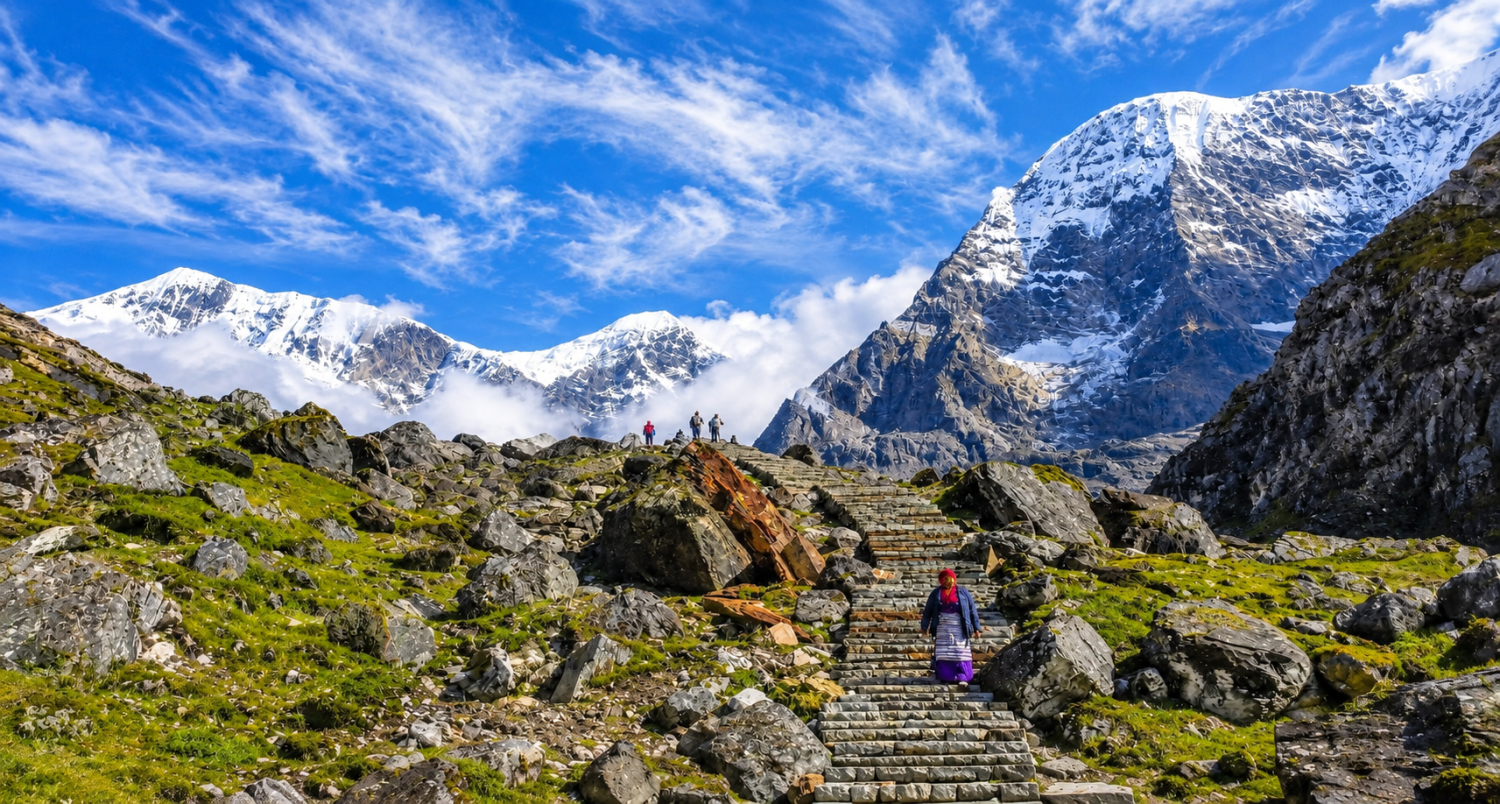
The Dudh Kunda Trek is a remarkable Himalayan adventure that takes you into the quieter and culturally rich landscapes of Nepal’s Solukhumbu region. Unlike the heavily traveled Everest Base Camp route, this trek combines peaceful mountain trails, traditional Sherpa villages, ancient monasteries, rhododendron forests, alpine landscapes, and the sacred Dudh Kunda Lake, situated at around 4,560 meters above sea level.
Dudh Kunda, meaning “Milk Lake,” is regarded as a sacred pilgrimage site by both Hindus and Buddhists. Surrounded by dramatic Himalayan peaks and peaceful highland scenery, the lake provides a deeply rewarding destination for trekkers seeking something beyond Nepal’s mainstream trekking routes.
The journey also offers an authentic introduction to Sherpa culture, Buddhist traditions, mountain lifestyles, and rural Nepalese hospitality. Throughout the trail, you encounter prayer flags fluttering in the mountain wind, mani walls, chortens, prayer wheels, monasteries, traditional stone houses, and welcoming local communities.
With professional trekking arrangements from Himalayan Adventure Intl Treks, the Dudh Kunda Trek can be organized as a camping adventure or a more comfortable lodge-supported journey according to your preferences. It is an excellent choice for travelers who want spectacular Himalayan scenery while experiencing a less crowded side of the Everest region.
Highlights of Dudh Kunda Trek
Your Dudh Kunda adventure begins in Kathmandu, where you can complete sightseeing, trekking preparation, permit arrangements, equipment checks, and a pre-trek briefing with our team. Depending on the selected itinerary and current transportation conditions, the journey toward the Solukhumbu region can be arranged by road or through a flight connection to the lower Everest area.
The trail gradually moves away from busy settlements and into peaceful mountain landscapes. Instead of following the classic Everest Base Camp route, you travel through less-frequented paths connecting traditional villages, forests, ridges, valleys, and highland pastures.
One of the attractions of this route is its variety. Some days involve walking through lush forests, while other sections open into broad mountain landscapes with impressive Himalayan views. As you gain elevation, the vegetation changes and the environment becomes increasingly alpine.
The approach toward Dudh Kunda is particularly memorable. The landscape becomes more rugged, the air cooler, and the surrounding mountains increasingly impressive. Finally, you reach the sacred lake, where the peaceful surroundings provide an opportunity to rest, explore, photograph the landscape, and appreciate the spiritual atmosphere of this remote Himalayan destination.
After visiting Dudh Kunda, the route continues through places such as Saharsbeni, Taksindu, and Phaplu, depending on the itinerary chosen. From Phaplu, you can return toward Kathmandu by road or flight according to the transportation arrangement.
Dudh Kunda Lake is the spiritual and scenic centerpiece of this trek. Located high in the mountains, the lake is surrounded by rugged Himalayan terrain and open alpine landscapes.
The name “Dudh Kunda” translates approximately as Milk Lake, referring to the lake's distinctive appearance and its religious associations. For generations, local communities and pilgrims have considered the lake sacred.
The experience is not simply about reaching a high-altitude lake. Standing beside Dudh Kunda offers a sense of remoteness and tranquility that is difficult to find on Nepal's more commercial trekking routes.
Dudh Kunda is an important pilgrimage destination for Hindu devotees. During religious occasions, pilgrims travel to the lake to perform prayers and rituals. Many devotees believe that bathing in its holy water has spiritual significance and helps cleanse sins.
The lake becomes especially significant during Janai Purnima, the full-moon festival traditionally observed in July or August. Pilgrims may travel from different parts of Nepal and neighboring regions to participate in religious activities around the lake.
The region is also deeply connected with Himalayan Buddhist traditions. Sherpa communities living throughout Solukhumbu practice Tibetan-influenced Buddhism, and monasteries, stupas, mani walls, and prayer flags form an important part of everyday life.
Visitors can observe local religious customs respectfully while learning about the spiritual traditions that have shaped communities in this part of the Himalayas for generations.
One of the strongest reasons to choose the Dudh Kunda Trek is the opportunity to experience authentic Sherpa culture away from the busier tourist centers.
Sherpa communities are internationally recognized for their deep knowledge of the Himalayan environment, mountaineering traditions, resilience, and hospitality. Along the trail, you can observe traditional lifestyles that remain closely connected with agriculture, livestock, Buddhism, and mountain tourism.
The route passes through villages where traditional stone houses stand against spectacular mountain scenery. Prayer wheels, colorful prayer flags, chortens, and mani stones provide constant reminders of the region's Buddhist heritage.
Monasteries are another important attraction. A visit to Taksindu Monastery and other religious sites along the route provides an opportunity to learn about Buddhist practices and local spiritual life.
Travelers can also enjoy traditional Nepalese and Sherpa-influenced foods, including dal bhat, vegetables, noodles, soups, Tibetan-style bread, potatoes, and momos.
The Dudh Kunda region passes through varied ecological zones. Lower sections of the trail may feature dense forests containing rhododendron, pine, fir, birch, and other Himalayan vegetation.
During spring, rhododendron forests can become particularly attractive as flowers add color to the landscape. Higher sections gradually transition into alpine meadows and rocky mountain terrain.
The region is also home to Himalayan wildlife. Depending on season, location, and luck, trekkers may encounter or observe signs of animals such as Himalayan thar, musk deer, pheasants, and other mountain species. Sightings of elusive animals are never guaranteed, but the diversity of the surrounding ecosystem adds another dimension to the trek.
The panoramic Himalayan scenery is one of the major rewards of this journey. Depending on weather and viewing conditions, the trek provides impressive perspectives toward several major peaks of the eastern Nepal Himalayas.
The surrounding mountain panorama can include views toward Mount Everest, Lhotse, Nuptse, Makalu, and numerous other peaks in the region.
However, the mountain scenery is not limited to individual summits. The changing landscape itself is part of the experience—from forested hills and deep valleys to open ridges, alpine pastures, glacial terrain, and snow-covered peaks.
For photographers, sunrise and sunset can create particularly memorable scenes when the mountains are illuminated by changing Himalayan light.
Choosing the right season can significantly improve your trekking experience.
Spring is one of the best seasons for Dudh Kunda trekking.