
Have Questions? Talk to Expert (Binod)
The Arun Valley Trek is one of Nepal’s most rewarding off-the-beaten-path trekking experiences, offering an exceptional combination of pristine Himalayan landscapes, traditional mountain communities, rich biodiversity, and spectacular views of some of the world’s highest peaks. Unlike the heavily traveled trekking routes of Nepal, the Arun Valley remains relatively peaceful, making it an excellent choice for travelers who want to experience the mountains away from large crowds.
Organized by Himalayan Adventure Intl Treks, the Arun Valley Trek takes you through remote hills, terraced farmland, dense forests, traditional villages, dramatic river valleys, and high mountain passes before connecting with the famous Everest trekking region. Depending on the itinerary, the journey can be combined with the Everest Base Camp route, providing a remarkable adventure that begins in the lower Arun Valley and eventually reaches the high Himalayas.
The region lies between the Everest and Makalu areas and is closely associated with Makalu-Barun National Park and Conservation Area, one of Nepal’s most spectacular wilderness regions. The landscape changes dramatically throughout the trek. You may begin your journey in warm subtropical surroundings and gradually move through temperate forests, rhododendron woodland, alpine terrain, and eventually snow-covered highlands.
Along the way, trekkers can encounter traditional Rai, Sherpa, and other Himalayan communities whose lifestyles, architecture, festivals, songs, dances, and religious traditions have developed over generations. The Arun Valley therefore offers much more than mountain scenery—it provides a fascinating cultural journey through some of Nepal’s less-explored landscapes.
The views are equally impressive. Depending on weather and location, the route provides opportunities to admire Mount Everest, Mount Makalu, Lhotse, Nuptse, Baruntse, Ama Dablam, Thamserku, Mera Peak and numerous other Himalayan summits.
The Arun Valley Trek is a wilderness journey through one of the most geographically and culturally diverse areas of eastern Nepal. The classic adventure begins around the Arun River basin and gradually climbs toward the higher valleys before connecting with the Khumbu trekking region.
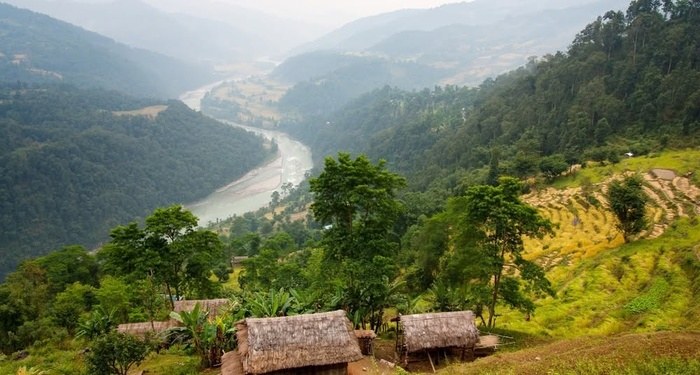
One of the most attractive aspects of this trek is its changing environment. At lower elevations, the trail passes through lush vegetation, farms, forests, waterfalls and villages. As the altitude increases, the scenery becomes increasingly alpine, with rocky landscapes, mountain valleys, glaciers and snow-covered peaks dominating the horizon.
The Arun River is one of the defining geographical features of the region. Originating in the Tibetan Plateau, the river flows through the Himalayas and creates a spectacular valley system in eastern Nepal. The trekking trail follows sections of this river and its tributaries while gradually gaining altitude.
The route is particularly appealing to experienced trekkers who want something different from Nepal’s busiest trails. Instead of immediately joining a crowded trekking route, you spend considerable time walking through quiet villages and wilderness areas where encounters with other trekking groups can be limited.
A major attraction is the opportunity to experience the transition from the lower hills to the high Himalayas. The journey can begin in relatively warm surroundings and eventually reach elevations where snow, freezing temperatures, strong winds and rapidly changing mountain weather become important considerations.
Depending on the selected itinerary, the Arun Valley route can eventually connect with the Everest region near the Pangom area. This creates an extraordinary long-distance trekking experience combining the remote Arun Valley with the legendary Khumbu landscape.
For travelers who appreciate wilderness, cultural encounters, biological diversity and challenging trails, the Arun Valley Trek is an outstanding alternative to more conventional Nepal trekking holidays.
There are many reasons to consider the Arun Valley Trek for your next Nepal adventure.
The Arun Valley is significantly quieter than many of Nepal’s better-known trekking routes. The lower sections of the trail allow travelers to enjoy peaceful surroundings, traditional villages and natural landscapes without the constant flow of trekkers found on some popular routes.
The trek provides opportunities to see some of the highest and most famous mountains in the world. Mount Makalu, rising above 8,000 meters, is one of the great highlights of the journey. Depending on the route and visibility, trekkers may also see Everest, Lhotse, Nuptse, Ama Dablam, Baruntse, Thamserku and other spectacular peaks.
Few trekking routes in Nepal provide such dramatic ecological changes. The Arun Valley route moves from lower-elevation forests and agricultural settlements toward alpine environments and high Himalayan terrain.
The trek provides opportunities to meet communities including Rai and Sherpa people. Traditional houses, farming practices, religious traditions, local celebrations, songs and dances add an important cultural dimension to the journey.
The Arun and Barun landscapes support an impressive range of flora and fauna. The region is renowned for its forests, orchids, rhododendrons, birds and butterflies, while the wider conservation area provides habitat for rare Himalayan wildlife.
For travelers who want a longer Himalayan adventure, the Arun Valley route can connect with the classic Everest trekking corridor. This makes it possible to combine remote eastern Nepal with the famous Khumbu region.
The Arun Valley Trek is not simply about reaching a particular destination. The journey itself is the main attraction.
The trail passes through forests, villages, agricultural terraces, river valleys and mountain landscapes before gradually entering more rugged terrain.
Lower sections of the route are characterized by warm weather, lush vegetation and cultivated hillsides. The trail then moves through forests where rhododendrons, orchids and other Himalayan plants can be found.
During spring, rhododendrons can transform sections of the forest into colorful corridors. The combination of flowering woodland, mountain streams and distant Himalayan peaks creates some of the most memorable scenery of the trek.
As the trail continues northward, the environment becomes increasingly remote. Traditional settlements appear at intervals along the route, providing opportunities to learn about the daily lives of mountain communities.
Crossing high passes is another major feature of the adventure. The Barun La, commonly associated with an elevation of around 4,110 meters, is one of the important high points on routes through this region. Weather conditions can change quickly around high passes, so careful planning and appropriate equipment are essential.
The upper Barun Valley provides a dramatically different landscape. Steep mountain walls, waterfalls, glaciers, rocky slopes and snow-covered summits create a powerful Himalayan atmosphere.
For trekkers continuing toward the Everest region, the landscape gradually transitions into the more recognizable Khumbu environment. The eventual connection with the classic Everest Base Camp trekking route makes the Arun Valley adventure particularly appealing to travelers seeking a longer and more diverse Himalayan journey.
One of the greatest attractions of the Arun Valley region is its proximity to Mount Makalu, one of the world's highest mountains.
Makalu rises to more than 8,400 meters and is recognized for its distinctive pyramid-shaped summit and dramatic surrounding landscape. The mountain dominates the skyline from various viewpoints along the Makalu region.
The Arun Valley and Barun Valley together create an extraordinary mountain environment. Deep gorges sit below enormous Himalayan peaks, while waterfalls descend from steep slopes and glaciers feed mountain rivers.
The contrast between the powerful river systems and enormous snow-covered mountains is one of the defining characteristics of the region.
Trekkers should be prepared for a gradual transition in climate. Lower sections can be warm and humid, while higher elevations can be cold, windy and snowy. This variation is one of the reasons proper clothing and equipment are so important.
The Arun Valley is especially attractive to travelers interested in nature and wildlife.
The region contains several ecological zones, resulting in remarkable biological diversity. Depending on altitude, trekkers may pass through subtropical forests, broadleaf woodland, rhododendron forests, coniferous forests and alpine environments.
Rhododendrons are particularly prominent during spring. Nepal has numerous rhododendron species, and the flowering forests can become one of the most beautiful features of a spring trek.
Orchids and other wildflowers can also be found along the trail.
The wider Makalu-Barun region is known for its biodiversity, supporting numerous species of birds, butterflies and mammals. The conservation area provides habitat for wildlife adapted to different