
Find Your Tour

Any Question? Email Us

info@himalayanadventureintl.com

Have Questions? Talk to Expert (Binod)
Binod Karki
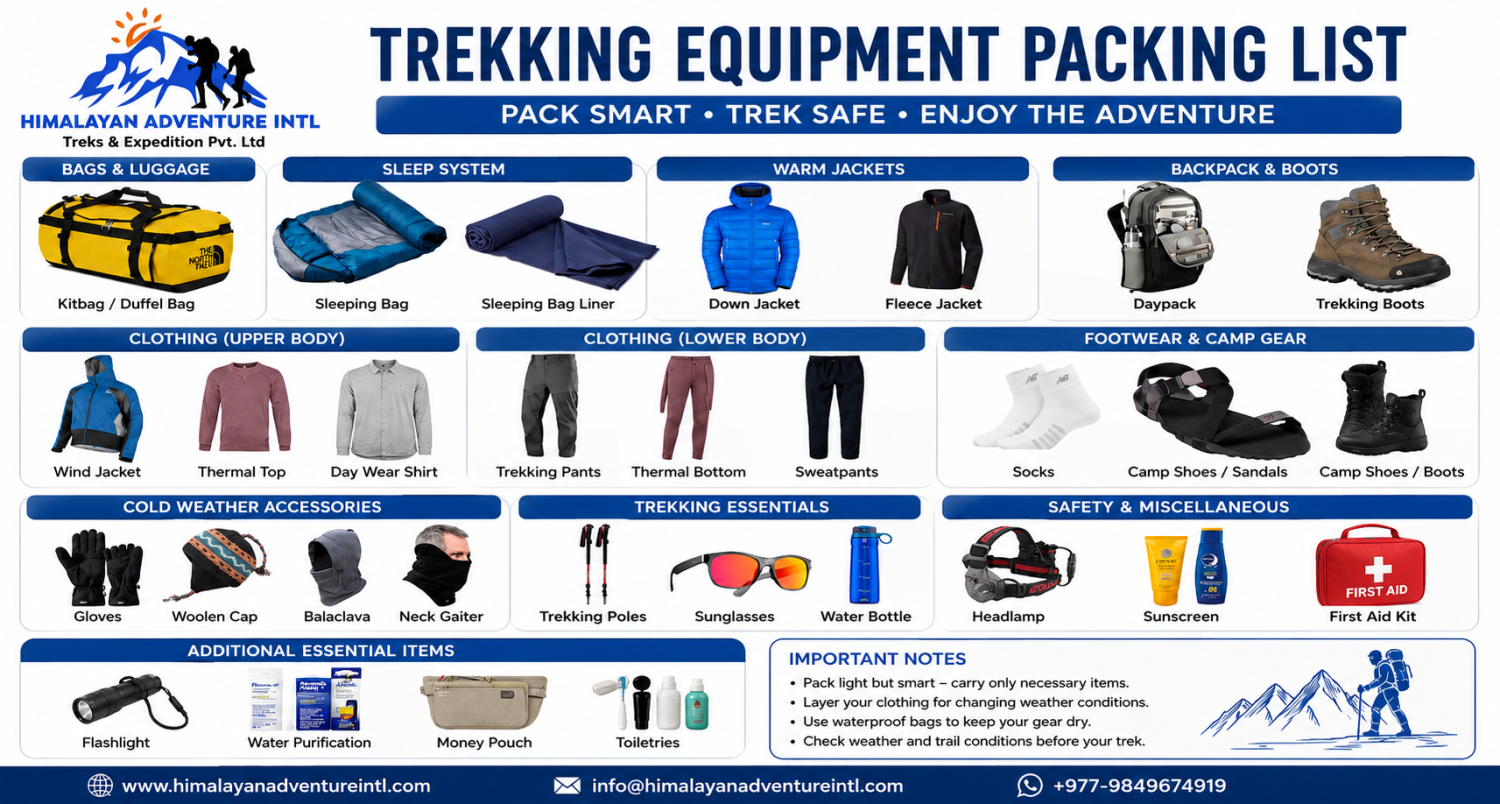
Trekking Equipment Packing List

Trekking Equipment Packing List

  • Home »
  • Trekking Equipment Packing List

Trekking Equipment Packing List

A successful trekking adventure in Nepal begins long before you step onto the trail. Whether you are planning the Everest Base Camp Trek, Annapurna Circuit Trek, Manaslu Circuit Trek, Langtang Valley Trek, Upper Mustang Trek, Kanchenjunga Trek, or any Himalayan expedition, packing the right equipment is one of the most important parts of your preparation.

At Himalayan Adventure Intl Treks, we have guided thousands of trekkers through the Himalayas. We understand that carrying too much weight can make trekking uncomfortable, while forgetting essential equipment can affect your safety and enjoyment. The key is to pack smart, stay organized, and prepare for changing mountain weather.

The Himalayan climate can change within minutes. Warm sunshine in the morning may become snowfall by afternoon, especially above 3,000 meters. Therefore, every trekker should carry proper clothing, quality trekking gear, personal medical supplies, and essential accessories.

This detailed trekking packing list has been carefully prepared by our experienced trekking guides to help you enjoy a safe, comfortable, and memorable journey in Nepal.

Why Proper Packing Matters

A well-planned packing list provides numerous advantages:

  • Reduces unnecessary luggage weight
  • Keeps your body warm in cold conditions
  • Protects you from rain, snow, and strong winds
  • Prevents altitude-related discomfort
  • Makes trekking more comfortable
  • Protects expensive equipment
  • Improves your overall trekking experience
  • Helps maintain personal hygiene during long trekking days

Remember, porters carry your duffel bag, but your daypack remains with you throughout the trek. Every item should have a purpose.

Main Trekking Bag

Duffel Bag (60–90 Liters)

A strong waterproof duffel bag is the preferred luggage for Nepal treks. Porters carry this bag during the trek.

Your duffel bag should contain:

  • Clothing
  • Sleeping bag
  • Extra footwear
  • Toiletries
  • Personal items
  • Extra snacks
  • Spare batteries

Waterproof duffel bags are highly recommended.

Day Backpack (25–35 Liters)

Your daypack carries items needed during daily walking.

Recommended items include:

  • Water bottles
  • Rain jacket
  • Down jacket
  • Camera
  • Sunglasses
  • Passport
  • Snacks
  • Gloves
  • Hat
  • Sunscreen
  • First aid kit
  • Power bank

Choose a backpack with padded shoulder straps and a waist belt.

Sleeping Equipment

Sleeping Bag

Choose a sleeping bag rated between:

  • -10°C for lower altitude treks
  • -15°C to -20°C for Everest and Manaslu
  • -25°C for winter trekking

Down sleeping bags provide the best warmth-to-weight ratio.

Sleeping Bag Liner

A sleeping bag liner:

  • Adds warmth
  • Keeps the sleeping bag clean
  • Improves sleeping comfort
  • Dries quickly

Silk or fleece liners are popular choices.

Clothing System

Layering is the secret to staying comfortable.

Base Layer

Carry:

  • 2 thermal tops
  • 2 thermal bottoms

These keep your body warm by trapping heat.

Trekking Shirts

Bring:

  • 2–3 quick-dry trekking shirts
  • Long sleeves for sun protection

Avoid cotton clothing.

Fleece Jacket

A fleece jacket provides insulation during cool mornings and evenings.

Down Jacket

A quality down jacket is essential above 3,500 meters.

It protects against:

  • Snow
  • Wind
  • Freezing temperatures
  • Cold evenings

Many trekking companies provide complimentary down jackets for rent.

Waterproof Jacket

A waterproof breathable jacket protects against:

  • Rain
  • Snow
  • Strong mountain winds

Choose one with adjustable hood and ventilation.

Trekking Pants

Carry:

  • Two lightweight trekking pants
  • One waterproof over-trouser

Quick-drying fabrics are best.

Thermal Pants

Thermal pants are essential during:

  • Winter treks
  • High altitude camping
  • Cold evenings

Comfortable Camp Pants

After trekking all day, changing into lightweight camp trousers improves comfort.

Footwear

Trekking Boots

Good trekking boots should have:

  • Waterproof membrane
  • Strong ankle support
  • Excellent grip
  • Comfortable fit

Always break in new boots before arriving in Nepal.

Camp Shoes

Lightweight sandals or camp shoes help your feet relax after walking.

Trekking Socks

Carry:

  • 4–5 trekking socks
  • 2 thermal socks

Avoid cotton socks.

Headwear

Carry:

Warm Wool Hat

Keeps your head warm during cold mornings.

Sun Hat

Protects against strong Himalayan sunlight.

Buff or Neck Gaiter

Useful against:

  • Dust
  • Wind
  • Cold air
  • Snow

Hand Protection

Carry:

  • Lightweight gloves
  • Waterproof insulated gloves

Layering gloves improves warmth.

Eye Protection

Sunglasses

Choose UV400 polarized sunglasses.

Snow reflects sunlight, increasing UV exposure.

Water System

Carry:

  • Two 1-liter water bottles
  • Optional hydration bladder

Water purification methods:

  • Purification tablets
  • Water filter
  • UV purifier

Avoid buying plastic bottles every day.

Trekking Poles

Trekking poles help by:

  • Reducing knee pressure
  • Improving balance
  • Crossing rivers safely
  • Descending steep trails

Highly recommended.

Lighting

Carry a quality headlamp with:

  • Extra batteries
  • Rechargeable option

Essential for early morning summit hikes and power cuts.

Personal Toiletries

Pack:

  • Toothbrush
  • Toothpaste
  • Soap
  • Shampoo
  • Moisturizer
  • Lip balm
  • Wet wipes
  • Hand sanitizer
  • Tissue paper
  • Small towel
  • Nail clipper
  • Razor

Personal Medical Kit

Include:

  • Personal medication
  • Diamox (consult your doctor)
  • Pain reliever
  • Bandages
  • Blister treatment
  • Antiseptic cream
  • Elastic bandage
  • Oral rehydration salts
  • Anti-diarrhea medicine
  • Cold medicine
  • Altitude medicine
  • Insect repellent (lower regions)

Electronics

Recommended:

  • Mobile phone
  • Camera
  • Charger
  • Universal adapter
  • Power bank
  • Spare batteries
  • Extra memory cards

Cold weather drains batteries quickly.

Important Documents

Carry:

  • Passport
  • Nepal Visa
  • Travel Insurance
  • Flight Tickets
  • Trekking Permits
  • Emergency Contacts
  • Passport Photos
  • Cash (Nepalese Rupees)

Keep copies in separate waterproof bags.

Personal Accessories

Useful items include:

  • Money pouch
  • Dry bags
  • Zip-lock bags
  • Notebook
  • Pen
  • Lightweight towel
  • Ear plugs
  • Small sewing kit

Food and Snacks

Energy snacks are highly recommended.

Examples:

  • Chocolate
  • Energy bars
  • Nuts
  • Dried fruits
  • Electrolyte powder
  • Cookies

These provide energy between tea houses.

Winter Trekking Essentials

If trekking during winter (December–February), pack additional gear:

  • Heavy insulated gloves
  • Extra thermal clothing
  • Thicker socks
  • Hand warmers
  • Gaiters
  • Microspikes (if required)
  • Balaclava
  • Extra down jacket
  • Face protection

Summer and Monsoon Trekking

For monsoon trekking:

  • Waterproof backpack cover
  • Rain poncho
  • Waterproof trousers
  • Waterproof gloves
  • Quick-dry clothing
  • Extra socks
  • Waterproof phone pouch

Items Usually Provided by Himalayan Adventure Intl Treks

Depending on your trekking package, we can provide:

  • Sleeping Bag
  • Down Jacket
  • Duffel Bag
  • Trekking Map
  • Government Licensed Guide
  • Porter Service
  • First Aid Kit
  • Oxygen Meter
  • Emergency Support
  • Trekking Permits
  • Airport Transfers
  • Hotel Booking Assistance

Packing Tips from Our Expert Guides

  • Pack only essential items.
  • Keep your duffel bag under 10–15 kg.
  • Use packing cubes to organize clothing.
  • Place electronics in waterproof bags.
  • Carry valuables in your daypack.
  • Test your boots before your trek.
  • Dress in layers instead of wearing one heavy jacket.
  • Keep rain gear easily accessible.
  • Drink plenty of water every day.
  • Pack a positive attitude—the mountains reward patience and preparation.

Recommended Trekking Packing Checklist

Bags

  • Waterproof Duffel Bag
  • Day Backpack
  • Rain Cover
  • Dry Bags

Sleeping Gear

  • Sleeping Bag
  • Sleeping Bag Liner

Clothing

  • Thermal Tops
  • Thermal Bottoms
  • Trekking Shirts
  • Fleece Jacket
  • Down Jacket
  • Waterproof Jacket
  • Trekking Pants
  • Waterproof Pants
  • Camp Pants

Footwear

  • Trekking Boots
  • Camp Shoes
  • Trekking Socks
  • Thermal Socks

Accessories

  • Warm Hat
  • Sun Hat
  • Buff
  • Gloves
  • Sunglasses
  • Water Bottles
  • Trekking Poles

Health & Safety

  • Sunscreen SPF 50+
  • Lip Balm
  • Personal Medicines
  • First Aid Kit
  • Water Purification Tablets
  • Hand Sanitizer

Electronics

  • Camera
  • Mobile Phone
  • Headlamp
  • Charger
  • Power Bank
  • Spare Batteries

Documents

  • Passport
  • Insurance
  • Trekking Permits
  • Visa
  • Cash
  • Passport Photos

Why Choose Himalayan Adventure Intl Treks?

With years of experience leading trekking and climbing adventures across Nepal, Himalayan Adventure Intl Treks is committed to providing safe, reliable, and unforgettable Himalayan experiences. Our expert local guides, carefully planned itineraries, quality equipment support, and personalized service ensure that every trek is enjoyable and worry-free. Whether you are a beginner or an experienced mountaineer, we help you prepare thoroughly—including expert advice on packing the right equipment—so you can focus on enjoying Nepal's breathtaking mountains, rich culture, and warm hospitality.

A properly packed backpack is the foundation of every successful trek. When you carry the right equipment, stay organized, and prepare for changing mountain conditions, you will enjoy every step of your Himalayan journey. Let Himalayan Adventure Intl Treks help you turn your dream adventure into a safe, comfortable, and unforgettable experience in the heart of the Himalayas.